Our verdict
Frittola di Ballarò serves Traditional Sicilian Frittola Street Food from Via Nino Martoglio, with counter service, a quick-bite rhythm, and street scene views.

Pearl is the En Primeur Club membership app — saves, bookings, and concierge access live there. Same editors, same standards.
- Address
- Via Nino Martoglio, 2, 90134 Palermo PA, Italy
- Hours
- Mon–Fri 8:30 AM–1 PMSat 8 AM–1 PMSun 6:30–11:30 AM
- Directions
- Get directions
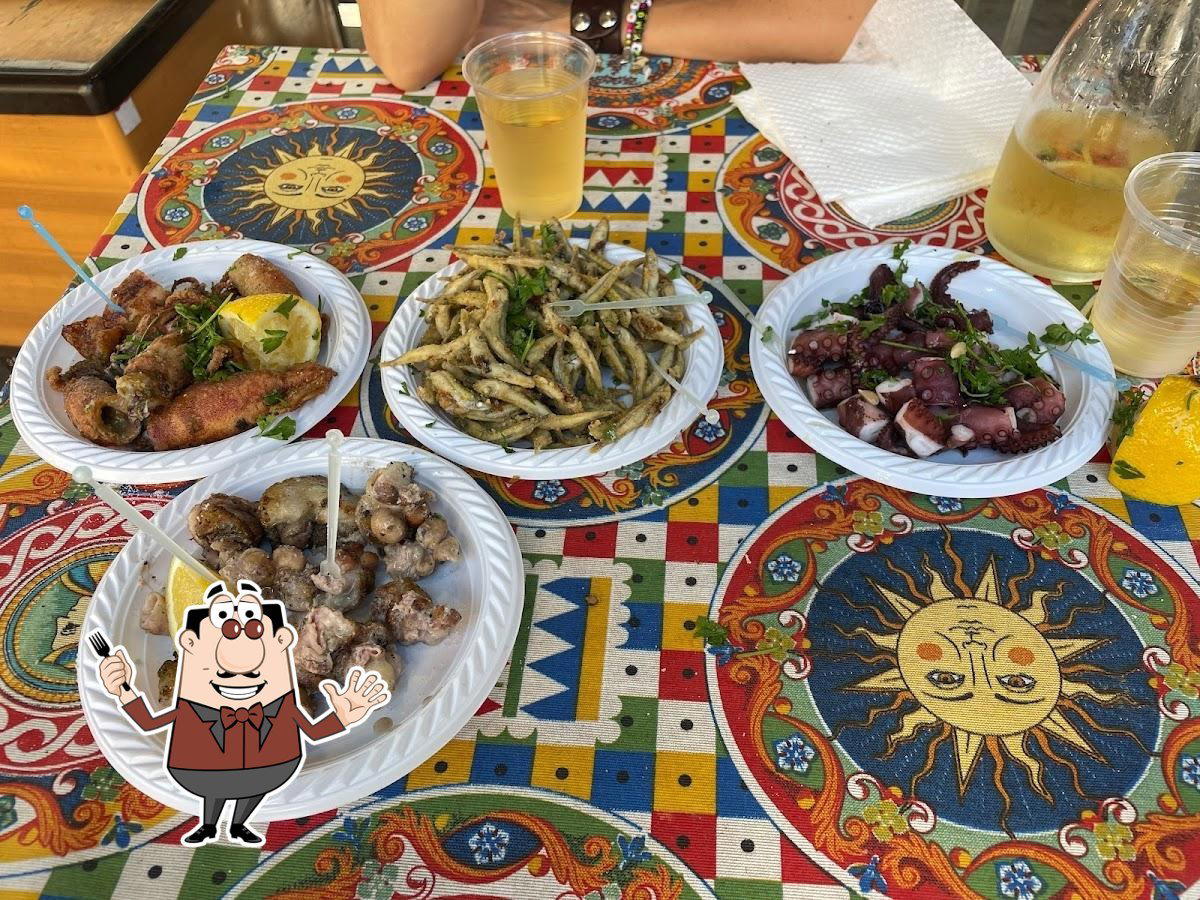
The menu
What to order
- Frittola
Street Food at the Edge of Ballarò
Palermo's street food tradition is one of the oldest continuous urban food cultures in the Mediterranean, shaped by centuries of Arab, Norman, and Spanish influence working simultaneously on the same narrow streets. Ballarò market, one of the city's oldest and most densely layered bazaars, sits at the western edge of the historic centre where Via Nino Martoglio cuts through a neighbourhood that still functions primarily as a place where locals shop, eat standing up, and argue loudly about football. Frittola di Ballarò operates inside that context, not apart from it. The address alone places it at the convergence of two distinct Palermo realities: the ancient market rhythm that begins before dawn, and the slow uptick of visitor interest in the city's street food circuit that has accelerated markedly since the early 2010s.
The Physical Container
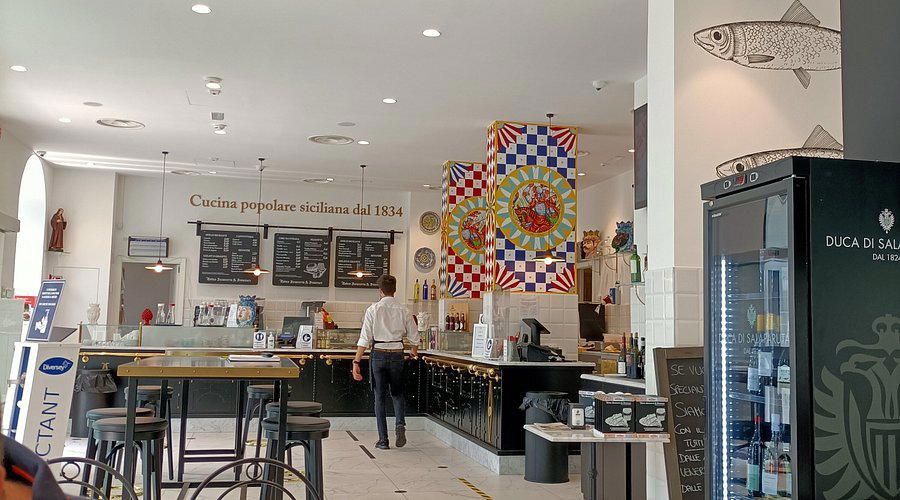
Palermo's street food counters rarely offer much in the way of designed interiors. The form is the function: a small opening onto the street, a workspace visible from outside, and whatever handful of surfaces exist for eating standing or perching. Frittola di Ballarò fits that format. The spatial logic of these counters is partly practical and partly cultural. In a neighbourhood where most transactions still happen at pavement level, interior seating signals a different kind of establishment entirely. Here, the architecture is the street itself. The threshold between inside and outside is not a clear boundary but a gradual one, with the smells and sounds of the market diffusing into the preparation area and back out again. This is not a design choice so much as a structural condition of the location, and it places Frittola di Ballarò firmly within the older, unself-conscious tier of Palermo food culture rather than the newer wave of curated street food concepts that have appeared in more tourist-adjacent corridors.
Compared to the formal dining register of somewhere like Mec Restaurant with its Sicilian fine dining positioning, or the creative contemporary approach at A' Cuncuma, the spatial character of Frittola di Ballarò is closer to zero. It is not trying to be a restaurant. The distinction matters because Palermo's food identity is genuinely bifurcated: the city supports high-end Sicilian cooking and ancient street formats simultaneously, and conflating the two produces inaccurate expectations in both directions.
Frittola: What the Dish Actually Is
Frittola is a distinctly Palermitan preparation, uncommon outside the city and relatively unknown even within Italy's broader culinary geography. It consists of fried offal scraps, typically cartilage, fat, and various offcuts rendered from pork or mixed meats, sold hot and often dusted with black pepper or dressed simply. The preparation descends from the practice of using every part of the animal, a necessity in a city where poverty historically required that nothing go to waste. That origin is not background colour: it is the dish's entire logic. There is no version of frittola that makes sense as a refined or reconstructed preparation. Its legitimacy comes directly from continuity with how it has always been made and where it has always been eaten, which is in markets, standing up, cheaply. Among Palermo's classic street foods, it occupies the same conceptual space as stigghiola (grilled intestines) and quarume (offal broth): preparations that define the lower end of the food cost spectrum but the upper end of local cultural specificity.
Visitors who have only engaged with Palermo's street food through the sfincione or arancina entry points are operating in the relatively accessible tier of that tradition. Frittola sits further along the spectrum toward the confrontational and the acquired. This is not a complaint about the food; it is a description of where it sits in the city's culinary hierarchy of accessibility.
Ballarò as Context
Understanding Frittola di Ballarò requires understanding Ballarò market, which functions differently from the more photographed Vucciria or the tourist-facing sections of the Capo. Ballarò remains genuinely functional as a neighbourhood market: produce prices are real prices, the clientele is predominantly local, and the rhythm of the day is determined by supply rather than visitor flow. That context shapes what eating at a frittola counter here means. It is not a reconstructed experience or a curated encounter with tradition. It is a food stop that happens to be located inside an ongoing, working urban market.
For visitors arriving from the formal dining tier, including Michelin-recognised tables like Osteria Francescana in Modena or Piazza Duomo in Alba, the shift in register required to engage with Palermo's market food culture is considerable. That shift is precisely what makes the city's street food worth the effort. Palermo does not produce the kind of street food that is easily assimilated into an international fine dining trip; it produces food that is native to specific streets, specific hours, and specific social conditions.
Where This Fits in Palermo's Food Circuit
Palermo's street food geography has a loose centre-of-gravity in the historic district, with clusters around each major market. The focaccia tradition is covered in depth by establishments like Antica Focacceria San Francesco and the adjacent Ancient Saint Francis Focaccia Shop, which operate in a slightly more structured format. Pizza has its own distinct operators, including AMMODO. Frittola di Ballarò operates in a different register from all of them: lower formality, lower price point, higher specificity to the market district. It is one stop within a circuit, not a standalone destination. Planning a Palermo food day around multiple formats, including a market stop at Ballarò, a focaccia moment, and at minimum one sit-down Sicilian meal, reflects how the city's food culture actually works. See the full Palermo restaurants guide for a wider view of how the city's dining tiers connect.
Italy's dining scene at the formal end runs deep, with tables like Dal Pescatore, Uliassi, Reale, Le Calandre, Quattro Passi, Enoteca Pinchiorri, Enrico Bartolini, and Atelier Moessmer Norbert Niederkofler representing a very different point on the country's food spectrum. What Palermo's market counters offer is not a counterpoint to that tradition so much as a parallel one, with roots that go considerably further back.
Planning a Visit
Ballarò market operates in the morning and early afternoon, and any counter embedded in it follows that rhythm. Arriving mid-morning on a weekday gives the leading read of how the market actually functions; weekend mornings draw a larger crowd and a slightly more chaotic pace. Via Nino Martoglio sits inside the UNESCO-listed historic centre, reachable on foot from most central accommodation. No booking mechanism applies to a street food counter of this format; the transaction is immediate and cash-based. For visitors building a broader Italy itinerary that includes destinations like Lazy Bear in San Francisco or Le Bernardin in New York, Ballarò represents the opposite end of the planning spectrum: no reservation, no dress consideration, no set duration.
Frequently asked questions
Is Frittola di Ballarò suitable for children?
The setting — an open street counter inside Ballarò market on Via Nino Martoglio — is informal and fast-moving, which works well for children comfortable with crowds and outdoor eating. The dish itself, frittola, involves rendered pork offal and fat, which some children will reject on texture alone. It's worth ordering a small portion first before committing. The market environment is lively but not enclosed, so there's no issue of noise or confinement.
What's the overall feel of Frittola di Ballarò?
This is a working street counter embedded in one of Palermo's oldest daily markets, not a curated food experience. The format is transactional: you approach, you order, you eat standing at or near the stall. Ballarò operates as a neighbourhood market serving local residents first, which keeps the atmosphere distinctly un-touristy compared to Vucciria. The pace is quick, the surroundings are loud with vendors, and that friction is inseparable from the food.
How does frittola differ from other Palermo street foods like pane ca' meusa or stigghiole?
Where pane ca' meusa centres on spleen and lung served inside a sesame roll, and stigghiole involves grilled lamb or goat intestine cooked over open charcoal, frittola is a slow-rendered preparation: pork offal and cartilage cooked down in fat and served wrapped rather than grilled or assembled. The technique is closer to confit than to grilling, which gives frittola a softer, fattier texture distinct from the char-forward profile of stigghiole. All three belong to Palermo's Arab- and Norman-influenced tradition of using the entire animal, but frittola is the least visible of the three outside the Ballarò market specifically.
What should I eat at Frittola di Ballarò?
Frittola is the reason to come. The preparation consists of pork scraps, cartilage, and offal slow-cooked in their own fat, then served wrapped in paper or bread — a technique rooted in the city's centuries-old tradition of zero-waste cooking. It is uncommon outside Palermo and largely absent from restaurant menus across Italy. Ordering anything else at this counter misses the point entirely.
How do I find Frittola di Ballarò?
Frittola di Ballarò is located at Via Nino Martoglio, 2, 90134 Palermo PA, Italy, Palermo.
Do I need a reservation for Frittola di Ballarò?
No reservation is possible or necessary. Frittola di Ballarò operates as a street counter within Ballarò market, functioning on a walk-up, cash-in-hand basis. The counter follows market hours, typically active through the morning and into early afternoon. Arriving mid-morning on a weekday gives you the best chance of catching it in full operation without the weekend crowd.
What has Frittola di Ballarò built its reputation on?
Its reputation rests on serving one of the most specific and least-exported preparations in Palermo's street food tradition. Frittola is not a dish that travelled — it remained concentrated in the city's historic market circuit, and Ballarò is its most consistent address. That specificity, not a critic's award or a chef's name, is what draws food-focused visitors to Via Nino Martoglio rather than to the more photographed stalls elsewhere in the district.
At a Glance
Comparable venues nearby, for context on price, style, and recognition.
| Venue | Cuisine | Price | Awards | Notes |
|---|---|---|---|---|
| Frittola di BallaròThis venue — the venue you are viewing | Traditional Sicilian Frittola Street Food | $1–10 | Not listed | Not listed |
| FUD | Sicilian Street Food & Burgers | $10–20 | Not listed | Olivella, Sicilian Street Food & Burgers |
| Da Umberto | Sicilian Street Food | $10–20 | Not listed | Ballaro, Sicilian Street Food |
| Sapurito Cucina Povera e Pizza | Ristorante tipico Siciliano Palermo centro | Traditional Sicilian Cucina Povera and Pizza | $20–30 | Not listed | Politeama, Traditional Sicilian Cucina Povera and Pizza |
| CR21 | Contemporary Sicilian | $50–100 | Michelin Plate | Historic Center (Via dei Cartari), Contemporary Sicilian |
| Badalamenti Cucina e Bottega | Traditional Sicilian Italian | $30–50 | Michelin Plate | Mondello, Traditional Sicilian Italian |
Continue exploring
More in Palermo
Restaurants in Palermo
Browse all →
Bars in Palermo
Browse all →
Hotels in Palermo
Browse all →
Details
- Lively
- Rustic
- Casual Hangout
- Historic Building
- Street Scene
- Small Plates
Current opening hours
- Monday
- 8:30 AM–1 PM
- Tuesday
- 8:30 AM–1 PM
- Wednesday
- 8:30 AM–1 PM
- Thursday
- 8:30 AM–1 PM
- Friday
- 8:30 AM–1 PM
- Saturday
- 8 AM–1 PM
- Sunday
- 6:30–11:30 AM
Hours can change for holidays and private events. Last verified .
Bustling market street atmosphere with lively vendors and authentic historic charm amid the Ballarò market chaos.