Planque




Michelin Plate · Star Wine List · National Restaurant Awards Top 100 #11
Our verdict
Set under two railway arches in Haggerston, Planque operates as a wine drinker's clubhouse with a French-accented restaurant open to all. Chef Seb Myers produces modern British small plates of considerable technical depth — three-ingredient compositions that consistently reward attention. A Michelin Plate holder ranked 82nd in Opinionated About Dining's 2025 Casual Europe list, it pairs serious cooking with a wine list built around low-intervention producers and grower Champagne.

Pearl is the En Primeur Club membership app — saves, bookings, and concierge access live there. Same editors, same standards.
- Address
- 322-324 Acton Mews, London E8 4EA, United Kingdom
- Phone
- +44 20 7254 3414
- Hours
- Mon ClosedTue–Thu 6–11 PMFri 6–11:30 PMSat 12–4 PM, 6–11:30 PMSun Closed
- Website
- planque.co.uk
- Directions
- Get directions
- Booking
- Book on SevenRooms
The menu
What to order
- Beef tartare
- Hen of the wood mille feuille
- Comte tarte
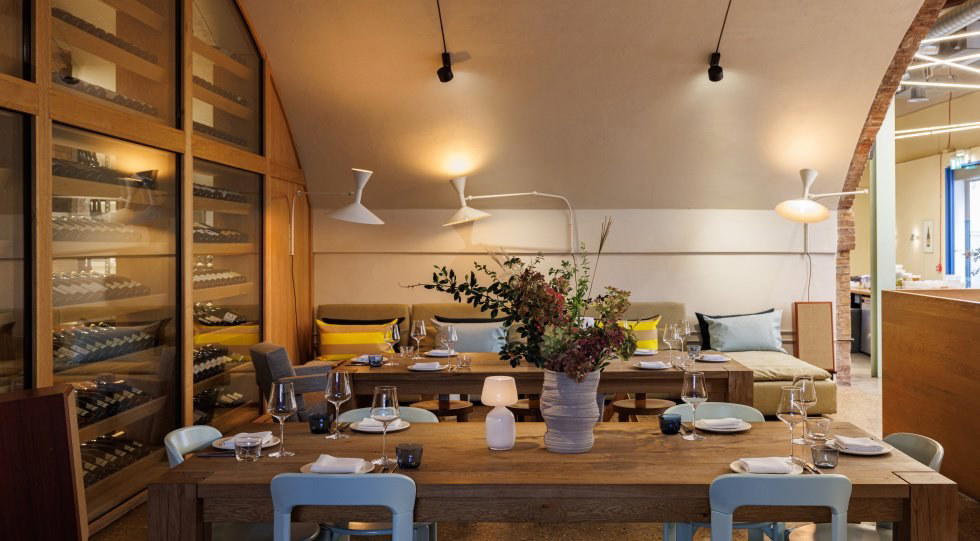
A Communal Table Under the Arches
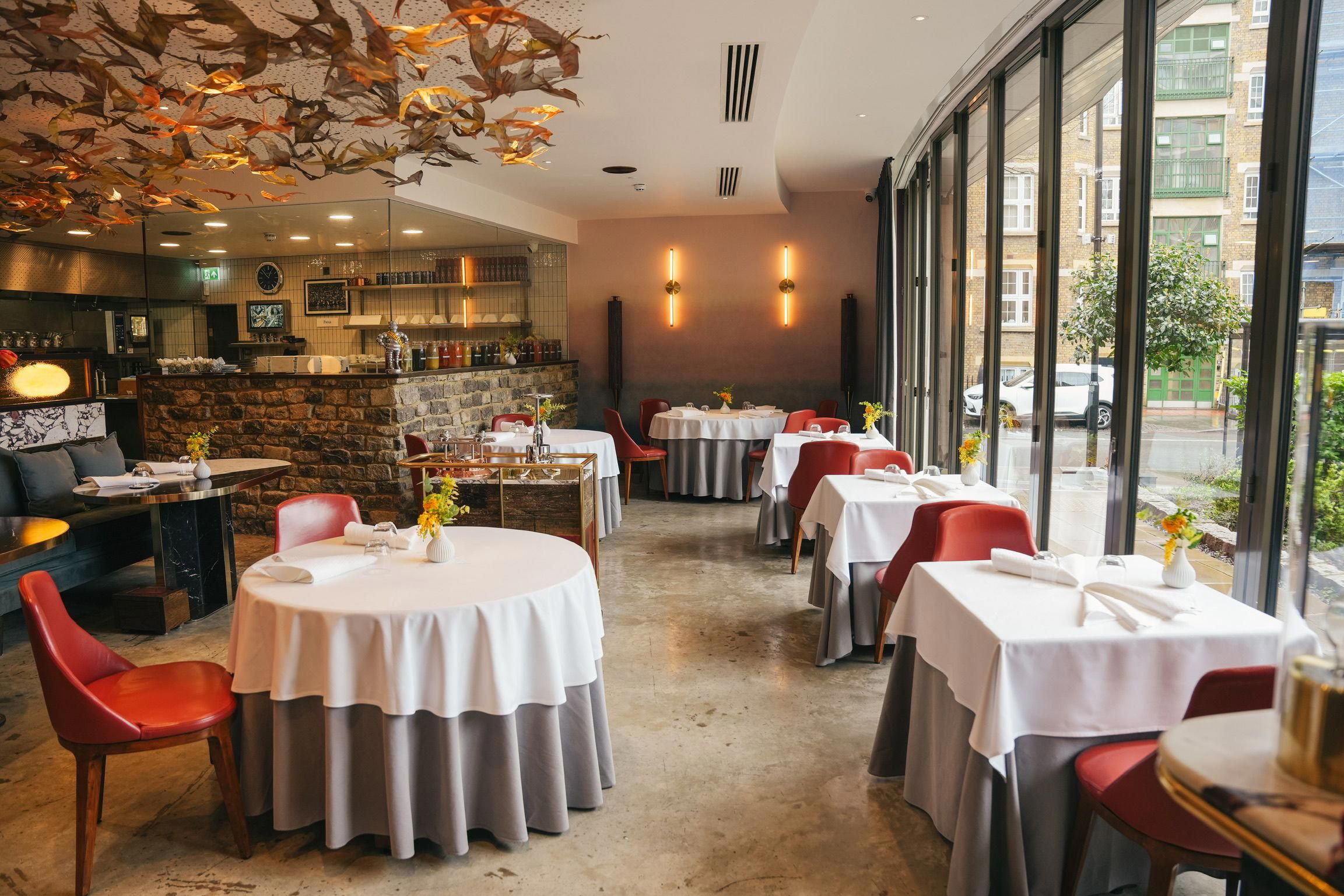
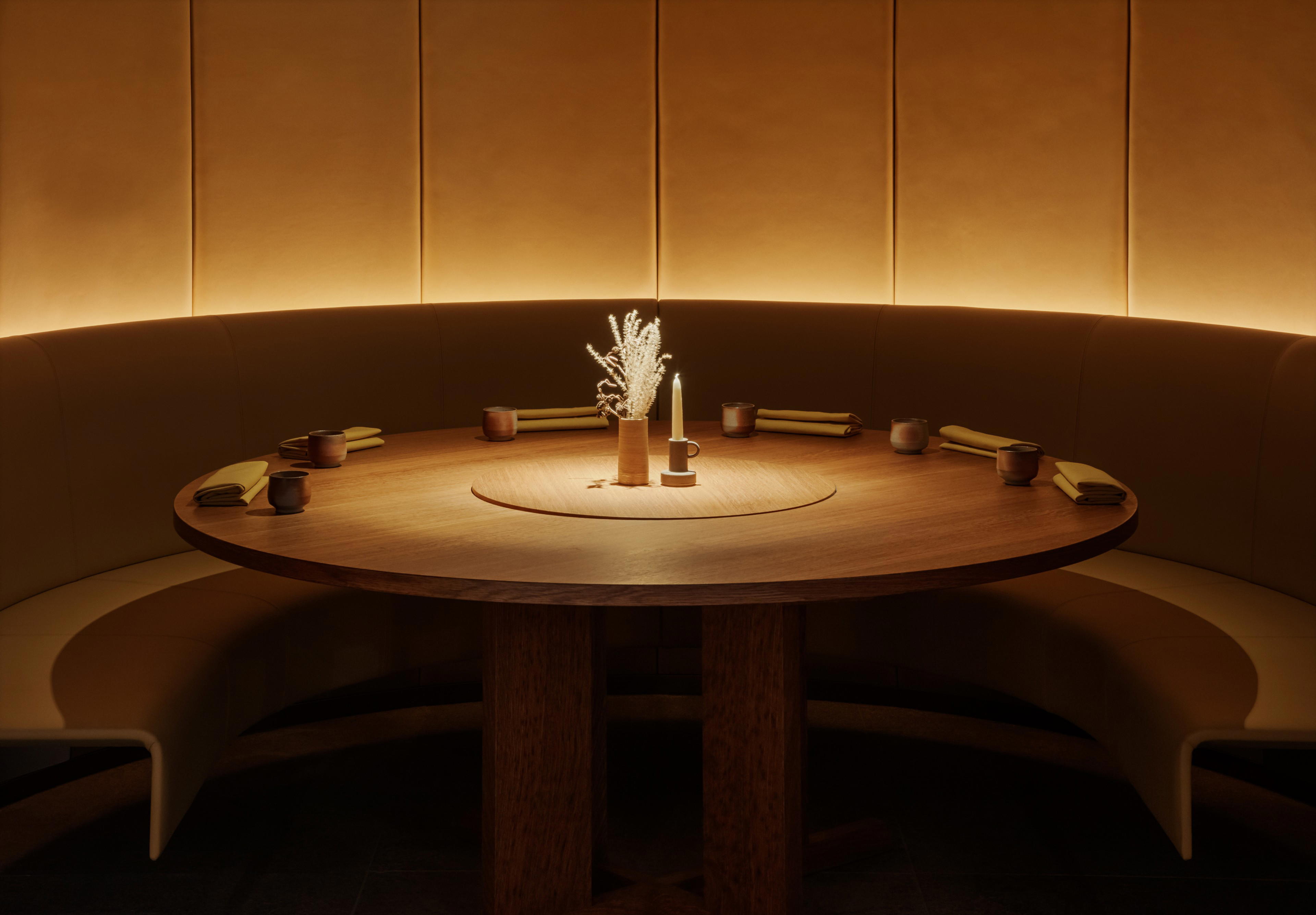
East London's restaurant corridor between Dalston and Haggerston has produced some of the city's most consequential openings of the past decade, and the format that keeps recurring there is not the chef's table or the tasting menu marathon, but the convivial, wine-forward room where the food earns its place beside the list rather than the other way around. Planque, set under two railway arches at Acton Mews, is the clearest expression of that tendency London currently has. Its centrepiece is a large communal table, the kind of seating arrangement that signals an intention: you are here to share, to talk, and very likely to order one more glass than planned.
The space draws on polished concrete and mid-century minimalism rather than the mahogany-and-claret register of St James's. That contrast is deliberate. Planque describes itself as a wine drinker's clubhouse, and the reference point is emphatically not the traditional London members' club. Members pay £880 a year for access to the lounge and cellar space, but the restaurant operates as a public room, and the kitchen performs for whoever shows up.
The Menu's Structural Logic
Modern British small plates have become a broad and sometimes imprecise category in London. At the £££ tier, where CORE by Clare Smyth and Dinner by Heston Blumenthal operate at ££££ and above with tasting formats, Planque occupies a different register entirely: a la carte, shareable, and built around restraint rather than spectacle. The dishes are listed by size, which is a more useful organising principle than it might sound, and they are almost always composed of three primary ingredients. That constraint is a choice, not a limitation, and it forces a precision that many larger menus obscure.
Guinea fowl with Jerusalem artichoke and radicchio is the kind of dish the format produces: one protein, one earthy supporting note, one bitter counterpoint. The balance is achieved through proportion and timing rather than technique-stacking. Cured bream, cut into thick sashimi-style slices and placed in habanero chilli oil, moves French curing tradition toward something that owes as much to Japanese handling as to European classical training. A dish described as courgette tart arrives as four pastry puffs with goat's curd and an anchovy fillet on each, the courgette working as a sweet base note beneath the salt and acid above it. These are not simple preparations dressed in simple language; the simplicity is the point of arrival, not the starting condition.
Across the river, the £££££ rooms at Sketch, The Lecture Room and Library and Restaurant Gordon Ramsay deliver maximalist French classical technique in formal surroundings. Planque operates with the same seriousness of intention but a completely different register of presentation. The cooking here has been described by multiple critics as more complex than it first appears, which is precisely the compliment that separates it from rooms that lead with spectacle. The Ledbury, in Notting Hill, represents the end-point of that formal modern European tradition in London. Planque is arguing for a different outcome from broadly comparable ambition.
The Wine Program as Editorial Statement
The list at Planque carries more editorial weight than the food, in the sense that it makes the strongest argument about what kind of place this is. There is no Bordeaux. Burgundy appears in only a handful of positions. What fills the space instead are grower Champagnes, cult producers from Jura and Beaujolais, and small-scale low-intervention names that the wine trade refers to collectively as the new-generation list.
Bottles open at £40 and climb from there, which at Haggerston prices means the wine spend will reliably exceed the food spend for a table that engages with the list. That is, again, a structural choice. The membership model, the cellar space, the retail component, and the ongoing wine programming all point toward a venue that uses food as the anchor but wine as the reason to return repeatedly.
For readers exploring London's broader dining scene, the full London restaurants guide covers the city's range from casual to formal. The London bars guide and London hotels guide provide complementary planning context, and the London wineries guide and London experiences guide round out the city picture.
Recognition and Competitive Position
Planque holds a Michelin Plate (2024), which signals food quality acknowledged without a full star. Its trajectory on Opinionated About Dining's Casual Europe ranking tells the more dynamic story: ranked 113th in 2023, 152nd in 2024, and climbing to 82nd in 2025. Movement of that kind across a ranking that covers the continent's most closely watched casual-format restaurants reflects consistent execution and a growing critical consensus. Chef Seb Myers, Australian-born, is described in London kitchen circles as a cook other chefs follow with attention, which is a form of peer recognition that rarely travels far from rooms that genuinely earn it.
The casual British format Planque represents is distinct from destination dining in the classic sense. For that register, UK readers already know The Fat Duck in Bray, L'Enclume in Cartmel, Moor Hall in Aughton, Gidleigh Park in Chagford, Hand and Flowers in Marlow, and Le Manoir aux Quat' Saisons in Great Milton. Planque is not competing in that register. It is making a different case: that the wine-centred, communal, technically serious neighbourhood restaurant is a format worth taking as seriously as a Michelin-starred room, and that East London is the right place to make it.
For international context, the low-intervention wine list and spare, precise plating find loose parallels at Atomix in New York City, though the formats diverge sharply. Le Bernardin in New York City represents the opposite end of the formality spectrum, useful as a calibration point for how differently the same level of technical seriousness can be packaged.
The Afternoon and Evening Format
Saturday is the day Planque most closely approximates the kind of extended, ritual meal that the afternoon tea tradition in London has always been about, even if the format here shares nothing with the tiered stands and Earl Grey of a Mayfair hotel. The Saturday lunch service runs noon to 4pm, giving the table space to spread across several hours. The small-plates format rewards an unhurried approach: order progressively, let the wine list do its work, and treat the communal table as the social instrument it was designed to be. The evening services run to 11pm Monday through Thursday and 11:30pm on Friday and Saturday. Sunday the kitchen is closed.
Know Before You Go
- Address: 322–324 Acton Mews, London E8 4EA
- Hours: Monday to Thursday 6–11pm; Friday 6–11:30pm; Saturday 12–4pm and 6–11:30pm; Sunday closed
- Price range: £££ (bottles from £40)
- Membership: £880/year for lounge and cellar access; restaurant open to non-members
- Awards: Michelin Plate 2024; Opinionated About Dining Casual Europe #82 (2025); Star Wine List #1 UK 2022 and 2023
- Nearest area: Haggerston, East London
What People Recommend at Planque
The consistent recommendations from diners and critics converge on the three-ingredient small plates, particularly preparations involving guinea fowl and the kitchen's handling of fish through curing and Japanese-adjacent slicing technique. The courgette tart (four pastry puffs with goat's curd and anchovy) draws repeated attention as the kind of dish where the description undersells the result. On the wine side, the list's emphasis on grower Champagne, Jura, and Beaujolais producers is the feature that earns most comment, backed by Star Wine List's consecutive leading UK rankings. Chef Seb Myers is referenced in critical coverage not through any single signature dish but through a consistent quality of restraint: the sense that every element on the plate is there for a reason, and that reason is audible in the eating.
At-a-Glance Comparison
A quick peer check to anchor this venue’s price and recognition.
| Venue | Cuisine | Price | Awards | Notes |
|---|---|---|---|---|
| PlanqueThis venue — the venue you are viewing | Modern British | $100–150 | Michelin Plate · Star Wine List | Not listed |
| The Ledbury | Modern British Fine Dining | $300–500 | 3 Michelin Stars · World's 50 Best #42 | Modern European, Modern Cuisine |
| Sketch, The Lecture Room and Library | Modern French Fine Dining | $200–300 | 3 Michelin Stars · World's 50 Best #18 | Modern French |
| CORE by Clare Smyth | Modern British Fine Dining | $150–200 | 3 Michelin Stars · World's 50 Best #97 | Modern British |
| Restaurant Gordon Ramsay | French Fine Dining | $200–300 | 3 Michelin Stars · World's 50 Best #13 | Contemporary European, French |
| Dinner by Heston Blumenthal | Historic British Fine Dining | $200–300 | 2 Michelin Stars · World's 50 Best #45 | Modern British, Traditional British |
Recognition history
Dated appearances from independent guides and award organizations, with the underlying list record or original source where available.
Michelin Plate
Michelin
Star Wine List
Star Wine List
National Restaurant Awards Top 100 #11 · No. 11
National Restaurant Awards · 2026 National Restaurant Awards Top 100
Opinionated About Dining Casual in Europe Ranked #60
Opinionated About Dining
The Good Food Guide GFG Very Good
The Good Food Guide
Full recognition history (13 entries)
Michelin Plate
Michelin
National Restaurant Awards Top 100 #91
National Restaurant Awards
Opinionated About Dining Casual in Europe Ranked #82
Opinionated About Dining
Michelin Plate
Michelin
Opinionated About Dining Casual in Europe Ranked #152
Opinionated About Dining
Opinionated About Dining Casual in Europe Ranked #113
Opinionated About Dining
Star Wine List
Star Wine List
Star Wine List
Star Wine List
Continue exploring
More in London
Restaurants in London
Browse all →
Bars in London
Browse all →
Hotels in London
Browse all →



Planque
The wine
- Wine program
- Exceptional wine program
- Extensive wine list
- Natural wine
Details
- Modern
- Trendy
- Minimalist
- Cozy
- Elegant
- Date Night
- Special Occasion
- Group Dining
- Open Kitchen
- Extensive Wine List
- Natural Wine
- Small Plates
- A La Carte
- Gluten Free Options
Current opening hours
- Monday
- Closed
- Tuesday
- 6–11 PM
- Wednesday
- 6–11 PM
- Thursday
- 6–11 PM
- Friday
- 6–11:30 PM
- Saturday
- 12–4 PM, 6–11:30 PM
- Sunday
- Closed
Hours can change for holidays and private events. Last verified .
Cozy and atmospheric with well-suited lighting in a minimalist, industrial chic space under railway arches, featuring an open kitchen and spacious table arrangements.