PIZZ'AMICI


OpenTable Top 100 Restaurants · Esquire Best New Restaurants
Our verdict
What began as a Ukrainian Village apartment project, with friends making free pizzas and posting them on Instagram, became one of Chicago's most talked-about openings of 2024. PIZZ'AMICI on Grand Ave specializes in cracker-thin tavern-style pizza, the style that defines Chicago's neighborhood pie tradition, served in a community-forward setting that still carries the energy of its underground origins.

Pearl is the En Primeur Club membership app — saves, bookings, and concierge access live there. Same editors, same standards.
- Address
- 1215 W Grand Ave, Chicago, IL 60642
- Phone
- (312) 285-2382
- Hours
- Mon–Tue ClosedWed–Sun 4–9 PM
- Website
- pizz-amici.com
- Directions
- Get directions
- Booking
- Book on OpenTable
The menu
What to order
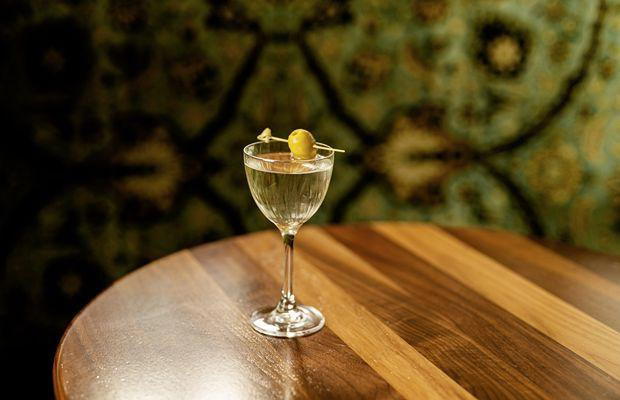
- Pepperoni Negroni
- Caesar Salad
- Tavern-Style Pizza
Where Tavern-Style Pizza Comes Back to Its Roots
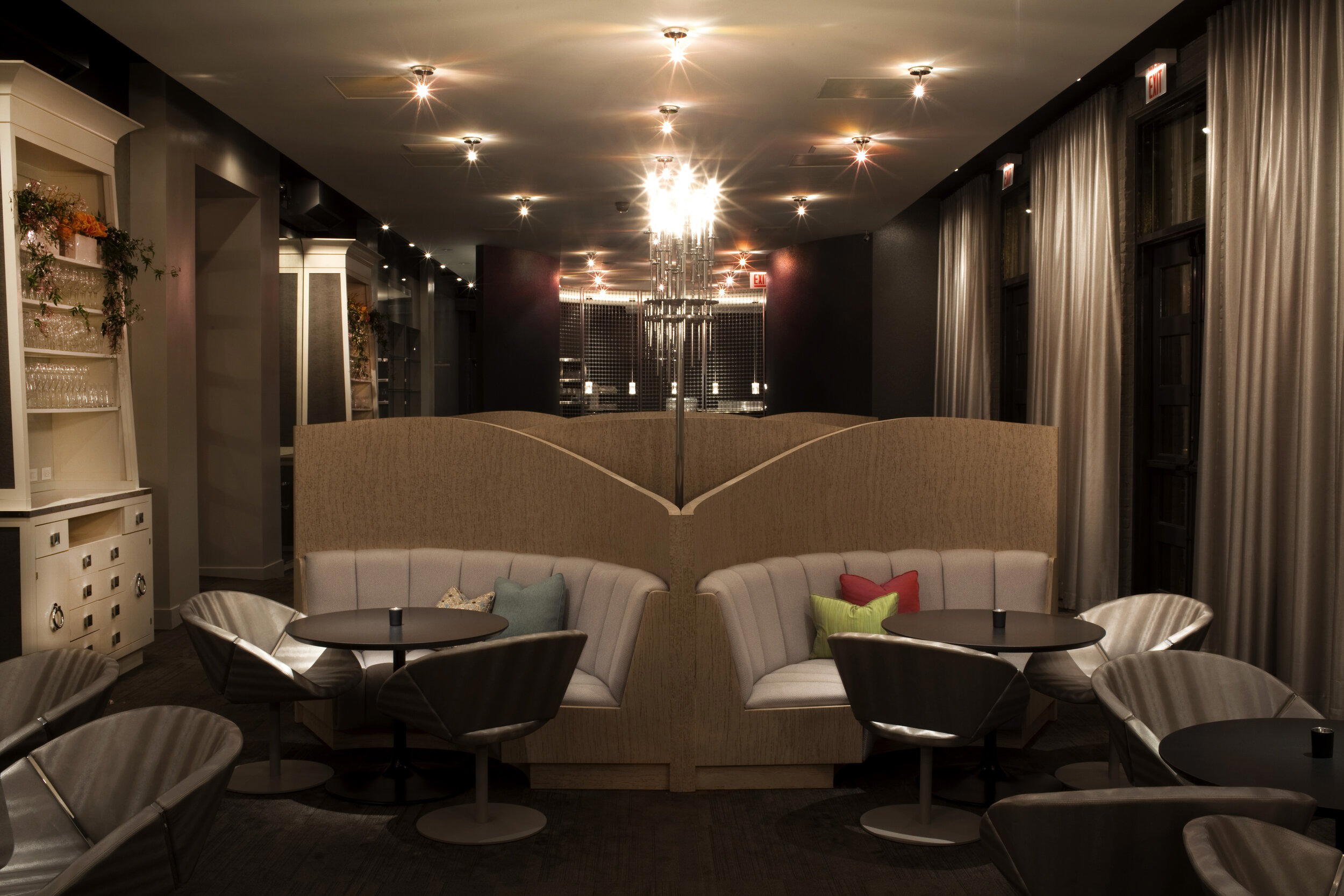
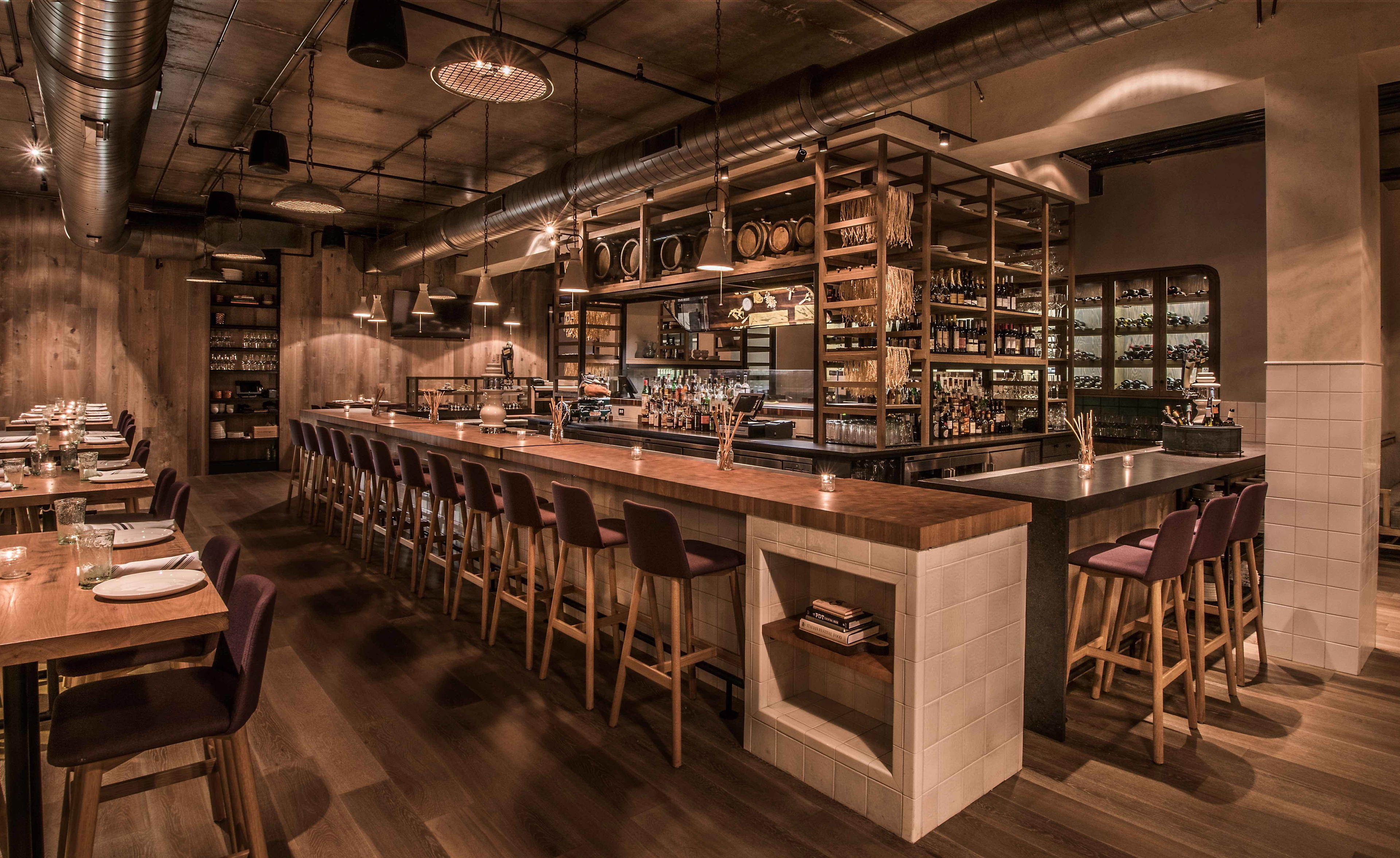
Grand Avenue in West Town has a particular quality on weekend evenings: the block hums with a kind of low-key confidence, the sort of neighborhood commercial strip that hasn't yet been smoothed into a dining corridor but is clearly moving in that direction. PIZZ'AMICI, which opened at 1215 W Grand Ave in 2024, fits the block's register well. The signage is modest, the energy inside runs warm rather than loud, and the pizza that comes out of the kitchen is the cracker-thin, tavern-cut style that Chicago's corner bars and neighborhood pizzerias have been producing for decades, long before the city's food press started paying serious attention to it.
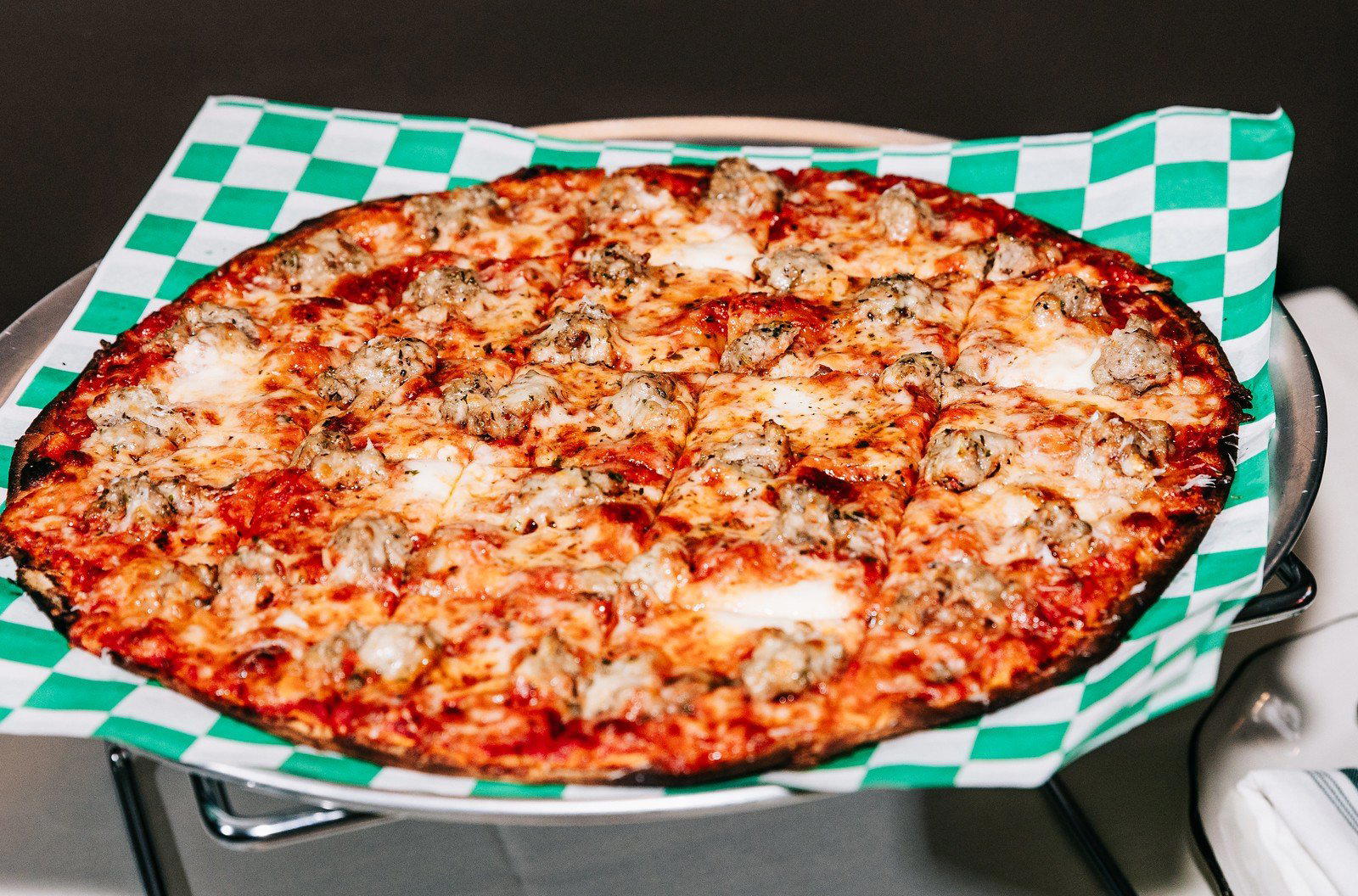
Tavern-style pizza is not the Chicago style that appears on most national food coverage. That spotlight tends to go to deep dish, a format built for spectacle and tourist-facing dining rooms downtown. Tavern-style, by contrast, is the pizza Chicagoans actually grew up eating: a thin, crisp crust cut into squares rather than triangles, toppings applied edge-to-edge, and a char-to-chew ratio that rewards a cold beer and a long table conversation more than it rewards reverent silence. PIZZ'AMICI arrived inside this tradition, not as a reinvention of it.
From Instagram to Grand Ave: The Community Logic
The restaurant's origin follows a pattern that has produced some of the more interesting dining rooms of the past few years, in Chicago and elsewhere. A group of friends begins cooking seriously for one another, quality outpaces the private context, and the project goes semi-public before becoming a brick-and-mortar operation. Lazy Bear in San Francisco traced a similar arc from underground supper club to recognized restaurant. What distinguishes these transitions, when they work, is that the community logic of the original project survives the formalization. At PIZZ'AMICI, the language of shared tables and free pies points toward a founding ethos that resists the transactional formality of a conventional restaurant opening.
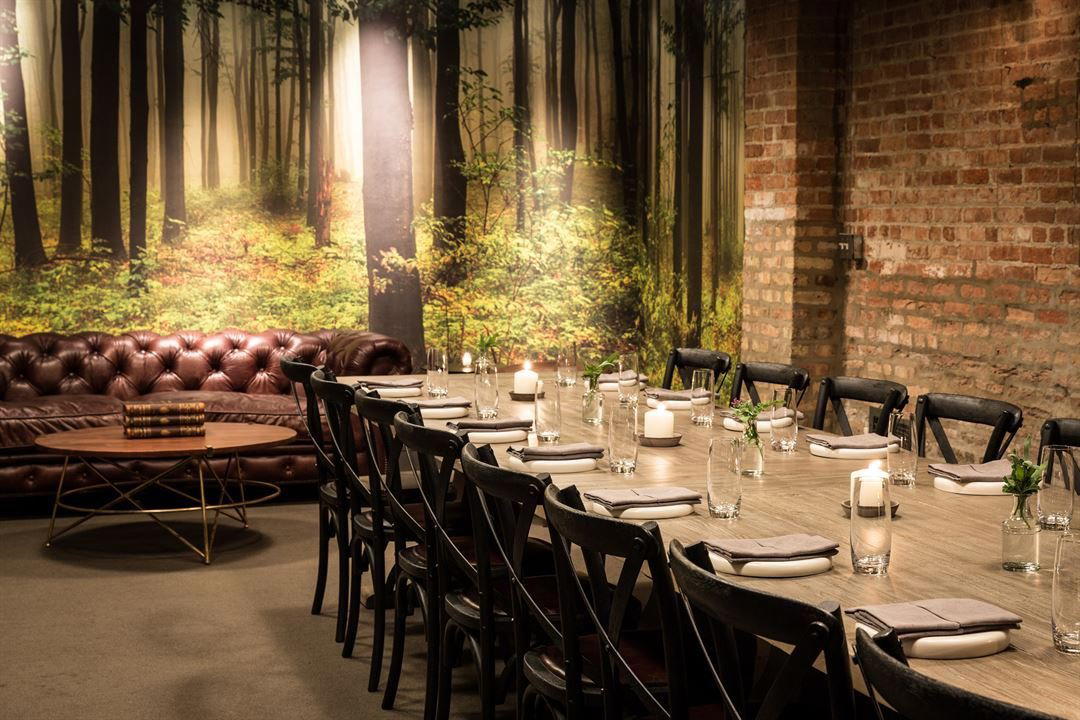
That community orientation also has practical implications for how the restaurant operates and, by extension, for what a visit feels like. The room isn't configured for quick turnover. Pizza cut into squares and passed across a table is inherently a sharing format, and the tavern-style tradition it draws from is one built around lingering. Chicago's neighborhood pizzerias at their leading have always functioned as gathering infrastructure as much as food businesses, and PIZZ'AMICI's framing places it consciously in that lineage.
The Sustainability Dimension: Small-Scale as Environmental Position
Chicago's dining conversation around sustainability tends to concentrate on the fine-dining tier. Smyth has built sourcing relationships that run through its basement preservation program. Kasama operates with a tightness of format that minimizes waste almost structurally. At the highest end, restaurants like Alinea, Oriole, and Next Restaurant approach sourcing as a programmatic commitment that generates both culinary identity and press coverage.
The sustainability argument at a neighborhood pizzeria like PIZZ'AMICI operates on a different register, but it is no less coherent. Tavern-style pizza is by design a low-waste format: thin crusts require less dough, toppings are applied with economy rather than excess, and the square-cut format means portions are variable and shareable rather than fixed and often unfinished. A restaurant that grew out of cooking for friends in an apartment is also a restaurant that likely developed its systems under conditions of genuine resource constraint, a different kind of discipline than the procurement-team sustainability of a $400-per-head tasting menu.
There is also something to be said for the community-anchored restaurant as a more durable model of ethical food culture than the nationally celebrated destination. The restaurants drawing visitors from across the country, including Chicago's own entries in the global fine-dining conversation, carry a significant carbon footprint in aggregate, from the flights of diners to the supply chains supporting imported luxury ingredients. A neighborhood pizzeria that draws its tables from the surrounding blocks and sources within the constraints of its price point is making a different set of choices, less visible but arguably more replicable at scale. For comparison, the sourcing ambitions of Single Thread Farm in Healdsburg or Providence in Los Angeles represent what ethical sourcing looks like with serious capital behind it. PIZZ'AMICI's version is necessarily more informal, but the underlying logic of cooking close to the community, at a price point that reflects it, is its own form of considered practice.
Chicago's Broader Dining Range
West Town and the surrounding neighborhoods represent the part of Chicago's dining map where the price-point spread is widest and the experimentation most varied. Grand Ave sits at a geographical midpoint between the high-concentration restaurant corridors of the West Loop and the quieter residential streets of Ukrainian Village, where PIZZ'AMICI's founding community comes from. Understanding the neighborhood means understanding that diners here are not choosing between fine dining and casual eating in the way that a River North visitor might be. They are choosing between multiple versions of serious, locally rooted cooking at different price points.
Chicago's fine-dining tier, represented in the national conversation by entries like Alinea and internationally by peers such as Le Bernardin in New York City, Atomix in New York City, and Emeril's in New Orleans, operates in a completely different competitive set. PIZZ'AMICI's peer group is the city's neighborhood pizza tradition, and within that tradition, the tavern-style category has been gaining critical attention as Chicago food writers and national outlets revisit what the city's pizza culture actually looks like when you get past the deep-dish shorthand.
For a fuller picture of where PIZZ'AMICI fits in Chicago's dining range, the full Chicago restaurants guide maps the city by neighborhood, price tier, and format. The Chicago bars guide is useful context for understanding the tavern culture that tavern-style pizza emerged from, and the Chicago experiences guide covers the city's broader cultural programming for visitors planning longer stays. The Chicago hotels guide and Chicago wineries guide round out the planning picture.
Planning a Visit
| Venue | Style | Price Tier | Booking | Leading For |
|---|---|---|---|---|
| PIZZ'AMICI | Tavern-style pizza | Casual/mid | Walk-in likely | Groups, neighborhood dining |
| Kasama | Filipino | $$$$ | Advanced reservation | Tasting menu experience |
| Next Restaurant | American Cuisine | $$$$ | Ticketed in advance | Concept-driven occasion dining |
| Smyth | Progressive American | $$$$ | Advanced reservation | Ingredient-focused fine dining |
PIZZ'AMICI opened in 2024, which means the operational details, including hours, booking method, and seasonal availability, are still settling. Visiting on a weekday evening or arriving early on weekends is a reasonable approach for a restaurant of this scale and format. The address is 1215 W Grand Ave, accessible from the Chicago Transit Authority's Grand Ave bus corridor and within a short ride of the Blue Line.
Frequently asked questions
Is PIZZ'AMICI good for families?
The community-driven setup at 1215 W Grand Ave lends itself to shared eating, and cracker-thin tavern-style pizza cut in squares is the format Chicago families have gathered around for generations. The pizzeria grew out of a movement built on feeding people together, which shapes how the room functions. It is not a fine-dining counter with a hushed atmosphere.
What's the vibe at PIZZ'AMICI?
PIZZ'AMICI opened on Grand Ave in 2024 after starting as a viral underground project where friends made free pies and shared them through Instagram. That origin is legible in the room: the energy is informal, the model is communal, and the West Town location puts it on a block with a low-key neighborhood confidence rather than a destination-dining corridor. Think Saturday-night local spot, not reservation-required event.
Is PIZZ'AMICI award-winning?
PIZZ'AMICI has received recognition including: A community-driven pizzeria in Chicago, IL, specializing in cracker-thin, flavorful tavern-style pizza. What started as an underground movement of friends making free pies turned into a celebrated brick-and-mortar spot on Grand Ave.; What s….
What's the best thing to order at PIZZ'AMICI?
The kitchen specializes in cracker-thin tavern-style pizza, which is the defining format here and the reason the underground version built a following before the brick-and-mortar opened. Tavern-style means a crisp, snapping crust cut into squares rather than wedges, a Chicago tradition distinct from the deep-dish identity the city exports. Order the pizza; that is the point of the place.
Credentials Lens
| Venue | Cuisine | Price | Awards | Notes |
|---|---|---|---|---|
| PIZZ'AMICIThis venue — the venue you are viewing | Chicago Tavern-Style Pizza | $30–50 | OpenTable Top 100 Restaurants · Esquire Best New Restaurants | Not listed |
| Alinea | Avant-Garde Molecular Gastronomy | $300–500 | 2 Michelin Stars · World's 50 Best #37 | Progressive American, Creative |
| Smyth | Modern American Tasting Menu | $200–300 | 3 Michelin Stars · World's 50 Best #1 | Progressive American, Contemporary |
| Kasama | Modern Filipino | $30–50 | 2 Michelin Stars · World's 50 Best #31 | Filipino |
| Next Restaurant | Avant-Garde Themed Tasting Menus | Not listed | 1 Michelin Star · We're Smart World 2 Radishes | American Cuisine |
| Boka | Modern American Seasonal Fine Dining | $150–200 | 1 Michelin Star · La Liste Top Restaurants | New American, Contemporary |
Recognition history
Dated appearances from independent guides and award organizations, with the underlying list record or original source where available.
Esquire Best New Restaurants
Esquire
OpenTable Top 100 Restaurants
OpenTable