Pizarro Fine Dining
.png)
Peru's kitchen rarely surfaces in small German towns, which makes Pizarro Fine Dining in Groß-Gerau an outlier worth the attention of anyone travelling through the Rhine-Main corridor. Consecutive Michelin Plate recognitions in 2024 and 2025 confirm a standard of cooking that punches well above its setting, and a 4.9 Google rating across 131 reviews suggests guests agree. At the €€€€ price tier, it operates as a serious fine-dining destination rather than a neighbourhood restaurant.
 Discover on Pearl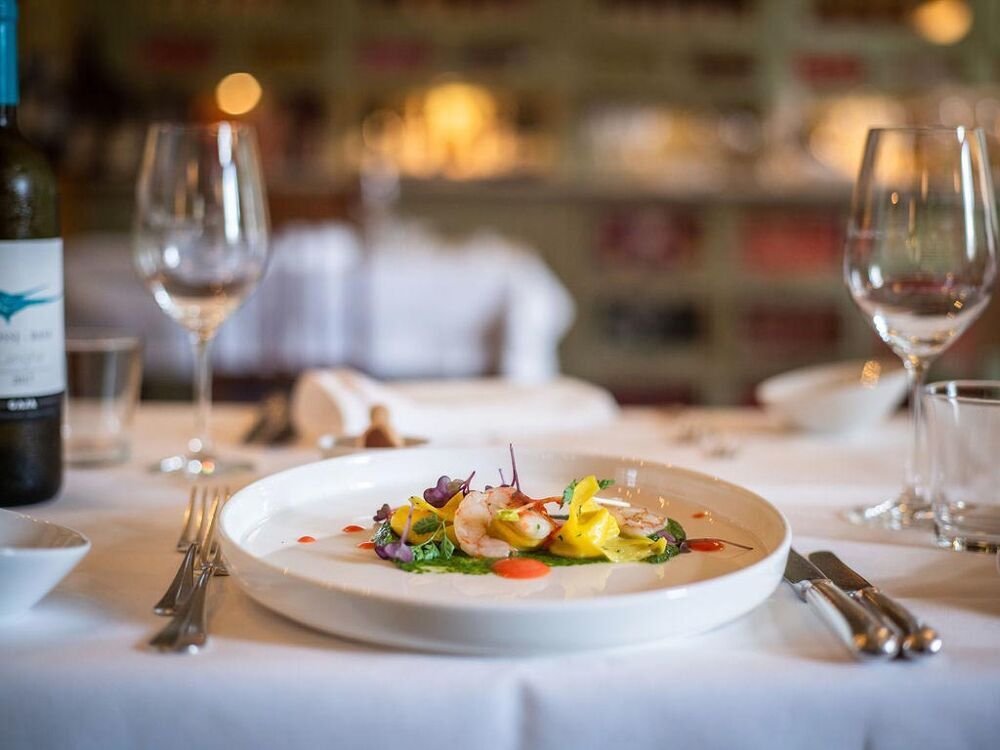
Peruvian Fine Dining in an Unlikely Corner of the Rhine-Main Region
The Rhine-Main corridor is well mapped for German and French-inflected fine dining — a tier where venues like JAN in Munich and Schwarzwaldstube in Baiersbronn set the template. Peruvian cuisine at fine-dining prices is another matter entirely. It is rare enough at this level in major European capitals; to find it operating with consecutive Michelin Plate recognition in Groß-Gerau, a small town in Hesse roughly 30 kilometres south of Frankfurt, requires a recalibration of expectations about where serious cooking can take root in Germany.
Pizarro Fine Dining, on Frankfurter Strasse 13, holds that Michelin Plate distinction for both 2024 and 2025, a signal that inspectors have returned and found the kitchen consistent. At the €€€€ price tier, it occupies the same bracket as Aqua in Wolfsburg, Vendôme in Bergisch Gladbach, and CODA Dessert Dining in Berlin — venues where the kitchen's ambition, not the postcode, drives the pricing. A 4.9 Google rating across 131 reviews reinforces the consistency signal: at that volume of responses, anomalies smooth out and what remains is a reliable read on the guest experience.
What Peruvian Fine Dining Actually Means at This Level
Peruvian cuisine, when executed at fine-dining scale, draws from a larder that most European kitchens have barely begun to understand. The foundational ingredients , native potato varieties numbering in the hundreds, chillies with distinct heat profiles and aromatic registers, the slow fermentation traditions of the Andes , create a grammar that is genuinely distinct from anything the French or German fine-dining canon has absorbed. The most technically demanding element, and the one that separates serious Peruvian kitchens from approximations, is corn.
Nixtamalization, the alkaline processing of dried maize that transforms it into masa, is one of the older and more consequential food technologies in the world. It unlocks nutrients, changes the protein structure of the kernel, and produces a flavour depth that untreated corn cannot replicate. In Peru, heirloom corn varieties carry colour, texture, and taste profiles specific to altitude and terroir , purple maize, choclo, cancha , each suited to different preparations. A kitchen that takes this seriously works with these varieties deliberately, treating corn the way a French house treats its butter sourcing or a Japanese kitchen treats its dashi components. Where that ingredient discipline shows up on the plate, in a preparation like causa (cold potato terrine layered with aji amarillo cream) or anticucho (offal skewers with aji panca marinade), the difference in depth registers immediately.
At the fine-dining tier, Peruvian technique also incorporates nikkei influences, the Japanese-Peruvian culinary crossover that arrived via twentieth-century immigration and has shaped the country's most sophisticated urban cooking. This is the same current that drives ITAMAE in Miami, where nikkei precision defines the tasting format. In Europe, it appears more sparsely , making its presence at a Michelin-recognised table in a small Hessian town worth noting for anyone tracking how global food traditions disperse.
The Setting and How to Approach It
Groß-Gerau sits on the rail line connecting Frankfurt and Mannheim, making it accessible from Frankfurt Hauptbahnhof in under 30 minutes by regional train. The town itself is a mid-sized administrative centre rather than a destination, which means the restaurant operates without the tourism infrastructure that supports high-end dining in larger cities. Arriving at Frankfurter Strasse 13, the address places the restaurant on a commercial street typical of the town's fabric , not the kind of approach that signals what's inside, which is consistent with the pattern seen at destination restaurants across the German countryside, from Schanz in Piesport to Waldhotel Sonnora in Dreis.
For those travelling specifically for the table, Frankfurt Airport is the logical hub, putting the restaurant within 45 minutes of an international arrival. Those already in the Frankfurt dining orbit will find that Pizarro adds a non-European fine-dining option to an itinerary that would otherwise run heavily toward modern German and classical French formats. For broader dining context in the region, our full Groß-Gerau restaurants guide maps the local picture.
Where Pizarro Sits in Germany's Fine-Dining Field
Germany's Michelin Plate tier covers a wide range: kitchens that are working toward star recognition, and kitchens that operate at a consistent technical level without pursuing the tasting-menu format or the front-of-house investment that stars typically require. The Plate designation is an editorial acknowledgement rather than a ranking , it means inspectors found food worth returning for. Consecutive Plates across two annual cycles carry more weight than a single appearance, because they confirm the kitchen hasn't plateaued or drifted.
Among Germany's €€€€ kitchens, Peruvian cuisine at this recognition level has essentially no peer set within the country. Venues like Restaurant Haerlin in Hamburg, ES:SENZ in Grassau, and Victor's Fine Dining by Christian Bau in Perl operate in European-inflected formats with French technical lineage. Bagatelle in Trier draws on French-Scandinavian registers. Pizarro occupies a structural gap in the German fine-dining map , a kitchen cooking from a South American tradition with Michelin visibility, which has no direct equivalent in the country at this price point. For comparison, the closest analogues in the broader Peruvian fine-dining conversation are operating in Washington D.C. (Causa) and Miami (ITAMAE), not in a mid-sized German town.
That structural singularity is itself a reason to pay attention. When a cuisine this specific achieves Michelin recognition outside its major urban footholds, it signals a kitchen with genuine technical command rather than novelty appeal.
Planning Your Visit
Pizarro Fine Dining sits at the €€€€ tier, which in the German fine-dining context typically implies tasting menu formats or multi-course prix-fixe pricing aligned with what you would pay at comparable Michelin-level addresses. Given the Michelin Plate status and the niche cuisine type, booking ahead is the only sensible approach , this is not a walk-in destination. Phone and online booking details are leading confirmed directly with the restaurant, as availability at this tier moves quickly once a table is released. Those planning an overnight stay in the area can reference our Groß-Gerau hotels guide, and the broader regional picture extends to bars, wineries, and experiences in the area.
Frequently Asked Questions
Fast Comparison
These are the closest comparables we have in our database for quick context.
| Venue | Cuisine | Price | Awards | Notes |
|---|---|---|---|---|
| Pizarro Fine Dining | Peruvian | €€€€ | Michelin Plate (2025); Michelin Plate (2024) | This venue |
| Schwarzwaldstube | French, Classic French | €€€€ | Michelin 3 Star | French, Classic French, €€€€ |
| Aqua | Contemporary German, Italian/Japanese, Creative | €€€€ | Michelin 3 Star | Contemporary German, Italian/Japanese, Creative, €€€€ |
| CODA Dessert Dining | Creative | €€€€ | Michelin 2 Star | Creative, €€€€ |
| Tantris | Modern French, French Contemporary | €€€€ | Michelin 2 Star | Modern French, French Contemporary, €€€€ |
| Vendôme | Modern European, Creative | €€€€ | Michelin 2 Star | Modern European, Creative, €€€€ |
Need a table?
Our members enjoy priority alerts and concierge-led booking support for the world's most difficult tables.
Get Exclusive Access