Our verdict
On Rue Coquillière in the 1st arrondissement, Pink Koï occupies a corner of Paris where the old Les Halles wholesale district once set the pace for the city's appetite. The address places it within walking distance of some of Paris's most frequented market-adjacent dining, where regulars return not for occasion dining but for the kind of consistency that earns a table a second time.

Pearl is the En Primeur Club membership app — saves, bookings, and concierge access live there. Same editors, same standards.
- Address
- 8 Rue Coquillière, 75001 Paris, France
- Phone
- +33142336793
- Hours
- Daily 12–2:30 PM, 7–11 PM
- Website
- pinkkoi.fr
- Directions
- Get directions
- Booking
- Book on Zenchef
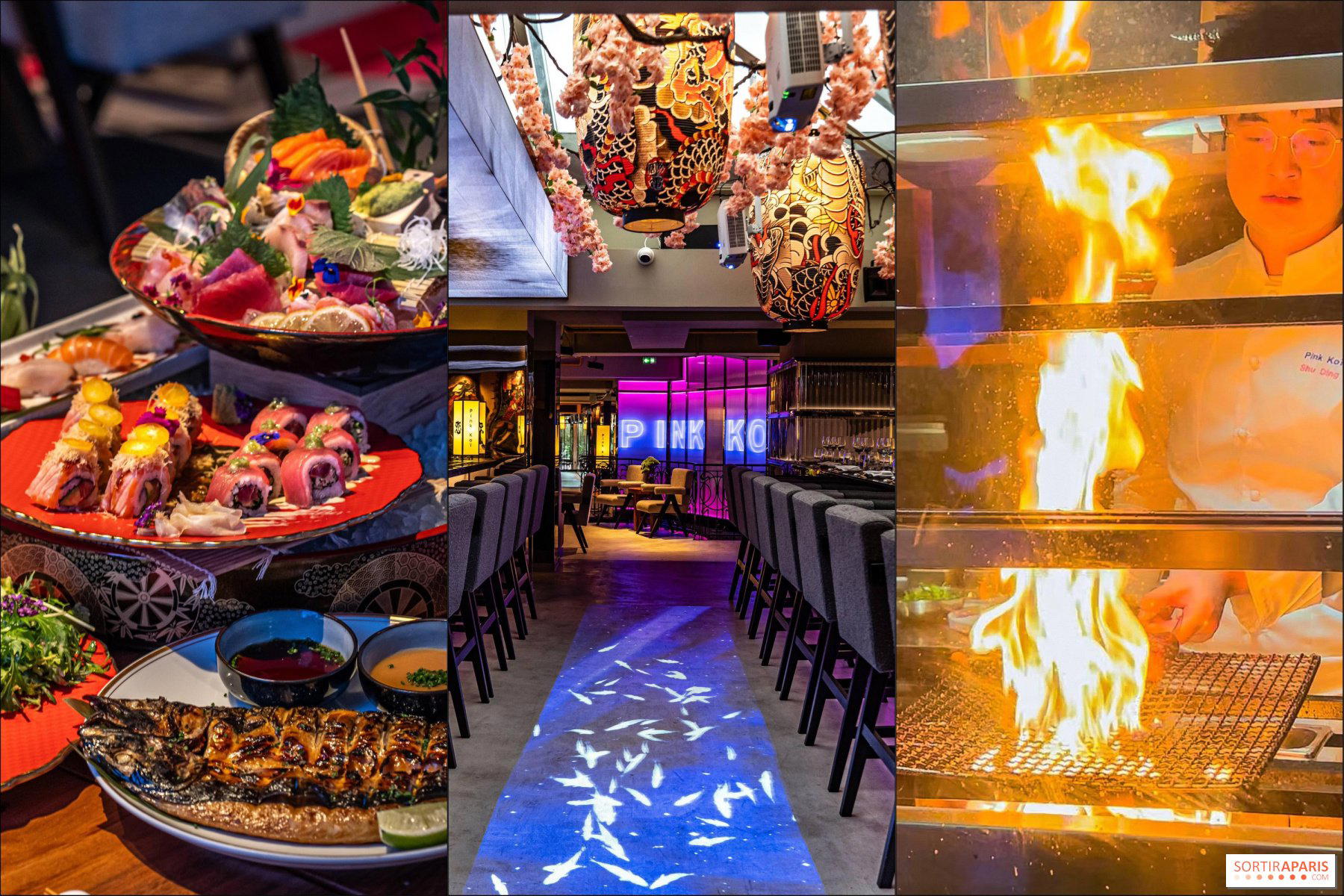
The menu
What to order
- KOI Spécial
- Millefoglie Green Lobster
- Pistache Roll
A Street With a Long Memory
Rue Coquillière runs through what was, for centuries, the commercial and gastronomic nervous system of Paris. The street sits at the edge of what the city once called its "belly" — the Les Halles wholesale market district that fed restaurants, bistros, and private kitchens from before the Revolution until the market's demolition in 1971. That history did not vanish with the pavilions. The 1st arrondissement's appetite for dining that earns its return visits, rather than merely its first booking, remained. The restaurants that have lasted along these streets tend to share a quality: regulars who come back not because the menu changed but because something about the offer holds up across visits. Pink Koï sits at number 8 on that street, and the address alone places it inside a dining corridor with more accumulated culinary context than most of the city's newer enclaves.
The Regulars' Logic
In Paris's 1st arrondissement, the most revealing question you can ask about any restaurant is not what critics said on opening week but who is sitting at the tables six months later. The neighborhood draws a working crowd from the financial and legal offices that concentrate around the Palais Royal and the Bourse de Commerce, alongside tourists navigating the Louvre and the Centre Pompidou. A restaurant that holds its regulars in that environment is making a case through consistency rather than novelty. Pink Koï's positioning on Rue Coquillière, a street that has hosted serious eating for generations, suggests an address aimed at the former category — the returning diner rather than the one-time visitor following a recent press mention.
That framing matters when placing Pink Koï against the broader Paris dining map. The 1st arrondissement is not where the city's most formally decorated tables concentrate: Alléno Paris au Pavillon Ledoyen, Arpège, and Le Cinq at the Four Seasons George V operate at price points and ambition levels that belong to a different category. The neighborhood's strength has historically been mid-register tables with strong daily trade, the kind of dining where the regulars' order is understood before they speak it, and where the kitchen's rhythm is shaped by who shows up rather than by tasting-menu choreography. Within that tradition, addresses in the Coquillière corridor function as anchors for the kind of consistent, repeatable dining that the arrondissement has historically supported.
Placing It in the Paris Asian-Influenced Scene
Paris's appetite for Asian-inflected cooking, whether Japanese minimalism, contemporary fusion, or hybrid Franco-Asian approaches, has matured considerably over the past decade. The city now supports a genuine spectrum, from high-end Japanese technique exemplified at tables like Kei, where Japanese precision meets French classical structure at the €€€€ tier, to more accessible neighborhood formats where the fusion logic is applied with less ceremony and more regularity. Pink Koï's name signals a deliberate aesthetic: the koi, a motif drawn from Japanese decorative tradition, has been adopted across European restaurant culture as shorthand for a certain kind of calm, considered space, one that positions itself against the loud brasserie or the high-concept gastronomy room with equal deliberateness.
The consistency question, what keeps regulars coming back, is partly answered by format and partly by the kind of hospitality that doesn't perform its welcome so much as maintain it across visits.
Context: French Fine Dining Beyond the Address
For readers calibrating Pink Koï against France's broader dining spectrum, the distance from the 1st arrondissement to the country's most decorated addresses is usefully clarifying. The hallmarks of French haute cuisine, Michelin stars, rigorous classical technique, generational kitchen lineages, are distributed far beyond Paris. Flocons de Sel in Megève and Mirazur in Menton represent the alpine and Mediterranean poles of that tradition. Troisgros in Ouches, Auberge de l'Ill in Illhaeusern, and Bras in Laguiole anchor the regional tradition. Paul Bocuse in Collonges-au-Mont-d'Or remains the historical reference point for the post-war French classical canon. Regional exemplars like AM par Alexandre Mazzia in Marseille, Assiette Champenoise in Reims, Au Crocodile in Strasbourg, and Auberge du Vieux Puits in Fontjoncouse each represent serious regional commitments that operate at a remove from the Paris market-driven dining culture that shapes Rue Coquillière's day-to-day. Internationally, the Franco-influenced fine dining tradition extends to rooms like Le Bernardin in New York and cross-cultural precision cooking like Atomix, which draws Korean and French technique into a shared grammar. Pink Koï's Rue Coquillière address keeps it firmly in the Paris daily-dining register rather than this ceremonial tier. That is not a limitation, it is a different purpose.
For the reader approaching Paris restaurants as a category, the distinction between tasting-menu destination dining and reliable neighborhood anchors is worth preserving. Paris supports both, and the city's dining culture at its healthiest depends on both. The 1st arrondissement's historic role as a market district made it a place where good eating was a daily fact rather than a special occasion. Pink Koï's address participates in that longer habit. Separately, for context on how classic French dining compares beyond Paris, see L'Ambroisie, which occupies a rare position in the city's haute cuisine tier at Place des Vosges.
Planning a Visit
Pink Koï is located at 8 Rue Coquillière in the 1st arrondissement, a ten-minute walk from the Louvre and directly accessible from Les Halles and Châtelet via the RER A and multiple Métro lines. The address sits in a part of the arrondissement that has historically seen strong lunchtime and early-evening trade from the surrounding professional and commercial districts. Diners considering the area for the first time should note that Rue Coquillière is a pedestrian-friendly street and the surrounding blocks are dense with independent dining options, making it practical to assess the neighborhood on foot before committing to a table. Visitors with specific dietary requirements should raise these at the time of booking rather than on arrival, this is standard practice across the neighborhood's Asian-influenced tables, where kitchen planning often depends on advance communication.
Frequently asked questions
What part of town is Pink Koï in?
Pink Koï is located at 8 Rue Coquillière, 75001 Paris, France, Paris.
Is Pink Koï a good option for a dinner near the Louvre in Paris?
Pink Koï sits at 8 Rue Coquillière in the 1st arrondissement, roughly a ten-minute walk from the Louvre and within the same neighbourhood grid as Les Halles and Châtelet. For visitors anchoring an evening around central Paris, the location makes it a geographically logical choice without requiring a cross-arrondissement journey. The Asian-influenced kitchen places it in a distinct category from the brasseries and traditional French addresses that dominate this part of the city.
What do people recommend at Pink Koï?
Without a published menu on record, the clearest signal comes from the regulars who return to Pink Koï on Rue Coquillière rather than the critics who covered opening week. In Paris's 1st arrondissement, repeat custom is the most reliable measure of what a kitchen does consistently well. Ask the room when you arrive — that intelligence is more current than any printed list.
What's the best way to book Pink Koï?
Pink Koï is located at 8 Rue Coquillière, 75001 Paris, directly accessible from Les Halles and Châtelet.
What's the defining dish or idea at Pink Koï?
Pink Koï operates within Paris's maturing Asian-influenced dining scene, where the strongest kitchens tend to commit to a clear point of view rather than covering every register. The address on Rue Coquillière — a street with centuries of gastronomic history at the edge of the old Les Halles market district — sets a particular expectation for seriousness. The defining idea is best read from the menu itself once you are seated.
Can Pink Koï adjust for dietary needs?
The standard approach in Paris's 1st arrondissement restaurants is to raise requirements at the time of booking or on arrival, and kitchens at this level of the market generally respond to direct, advance communication. Contacting the venue directly before your visit is the most reliable method.
Reputation Context
Comparable venues nearby, for context on price, style, and recognition.
| Venue | Cuisine | Price | Notes |
|---|---|---|---|
| Pink KoïThis venue — the venue you are viewing | Modern Japanese Fusion Robatayaki | $30–50 | Not listed |
| Tsukizi | Authentic Japanese Sushi | $30–50 | Saint-Germain-des-Prés |
| Benkay | Traditional Japanese Teppanyaki and Washoku | $50–100 | Front de Seine |
| Takara | Traditional Japanese | $50–100 | Louvre / Palais-Royal |
| Kunitoraya | Traditional Japanese Udon & Yakitori | $30–50 | Louvre / Palais-Royal |
| Momoka | Modern Japanese Tasting | $50–100 | Pigalle |