Our verdict
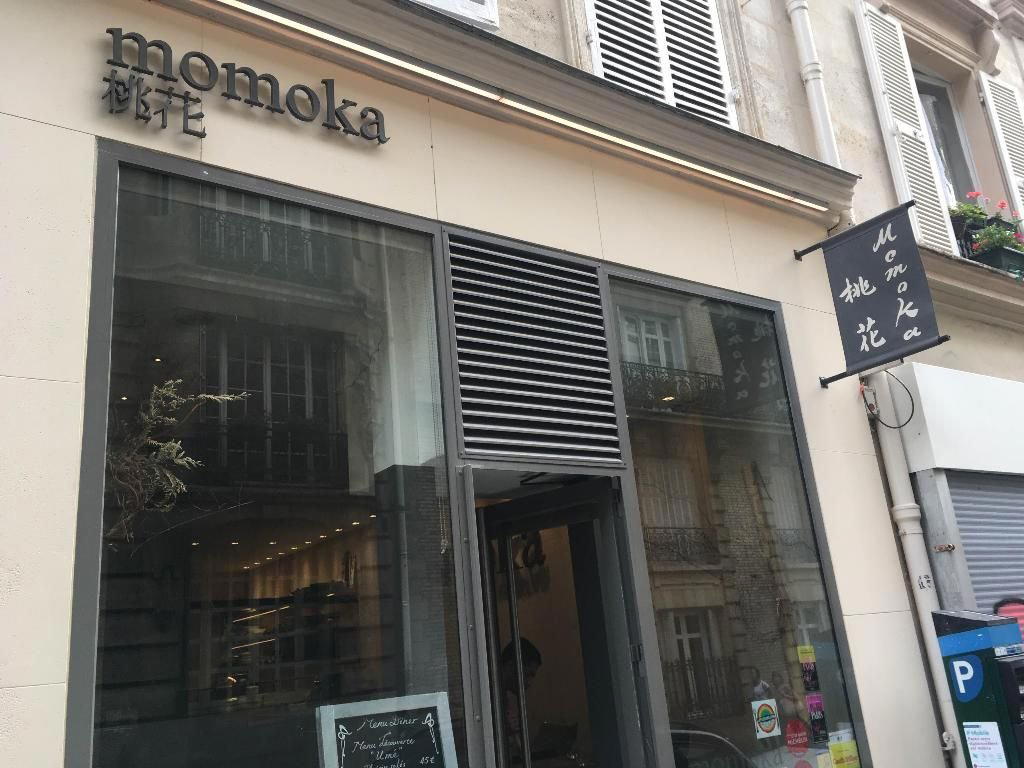
Located on Rue Jean-Baptiste Pigalle in Paris's 9th arrondissement, Momoka sits within a neighbourhood that has quietly accumulated some of the city's more considered small-format dining. The address places it among a generation of Paris restaurants that trade scale for specificity, operating at the precise intersection where Japanese sensibility meets French culinary structure.

Pearl is the En Primeur Club membership app — saves, bookings, and concierge access live there. Same editors, same standards.
- Address
- 24 Rue Jean-Baptiste Pigalle, 75009 Paris, France
- Phone
- +33670403468
- Hours
- Mon ClosedTue–Thu 12–10 PMFri 12–10:30 PMSat 12:30–10:30 PMSun Closed
- Website
- momoka.paris
- Directions
- Get directions
The 9th and the Question of Scale
Paris's 9th arrondissement has spent the better part of a decade repositioning itself. What was once a district known primarily for its theatres and the lower slopes of Montmartre has become, in dining terms, a testing ground for a particular kind of restaurant: small, specific, and resistant to the grand-room formality that still defines much of the city's Michelin-tracked upper tier. The address at 24 Rue Jean-Baptiste Pigalle places Momoka squarely inside that shift.
This part of the 9th sits a few streets below Pigalle's more recognisable commercial strip, in a zone where the buildings compress and the restaurants tend toward the intimate. The neighbourhood's dining character is defined less by any single culinary tradition than by a shared premise: that the room should serve the food, not the other way around. Momoka operates within that logic.
Japanese Precision in a French Register
Paris has developed a coherent, if still-evolving, niche of Japanese-inflected restaurants that do not belong to either the traditional Japanese restaurant category or the mainstream French kitchen. This is a distinct competitive tier, shaped by a generation of chefs who trained across both traditions and declined to resolve the tension between them. The result is a category of cooking in which French technique and Japanese sensibility are held in genuine dialogue rather than one subordinated to the other.
Kei, which holds Michelin recognition in central Paris, represents one model for this fusion: a formally structured tasting menu where the Japanese influence shows primarily in precision and restraint. Momoka, on the Pigalle address, operates in a less formal register but within the same broader movement. The 9th's smaller rooms and lower price ceilings mean that what arrives on the plate tends to carry more of the conceptual weight than the room itself.
Elsewhere in France, the conversation about cross-cultural culinary vocabulary is advanced by restaurants like Mirazur in Menton and AM par Alexandre Mazzia in Marseille, both of which have built recognised bodies of work by drawing on non-French culinary frameworks within a French structural logic. At the Parisian neighbourhood scale, the same instinct plays out at closer range and in smaller rooms.
The Sensory Register of the Pigalle Corridor
There is a particular atmospheric quality that characterises the dining rooms along this stretch of the 9th. They are rarely loud in the sense that larger brasseries are loud, but they are not silent either. The sound environment in these smaller spaces tends toward ambient conversation at close quarters, the periodic punctuation of a kitchen pass, the particular acoustic intimacy that comes from rooms where twenty covers constitute a full house. The effect is less the hushed reverence of a grand Parisian dining room and more the concentrated attention of a counter or a chef's table, even when neither is technically present.
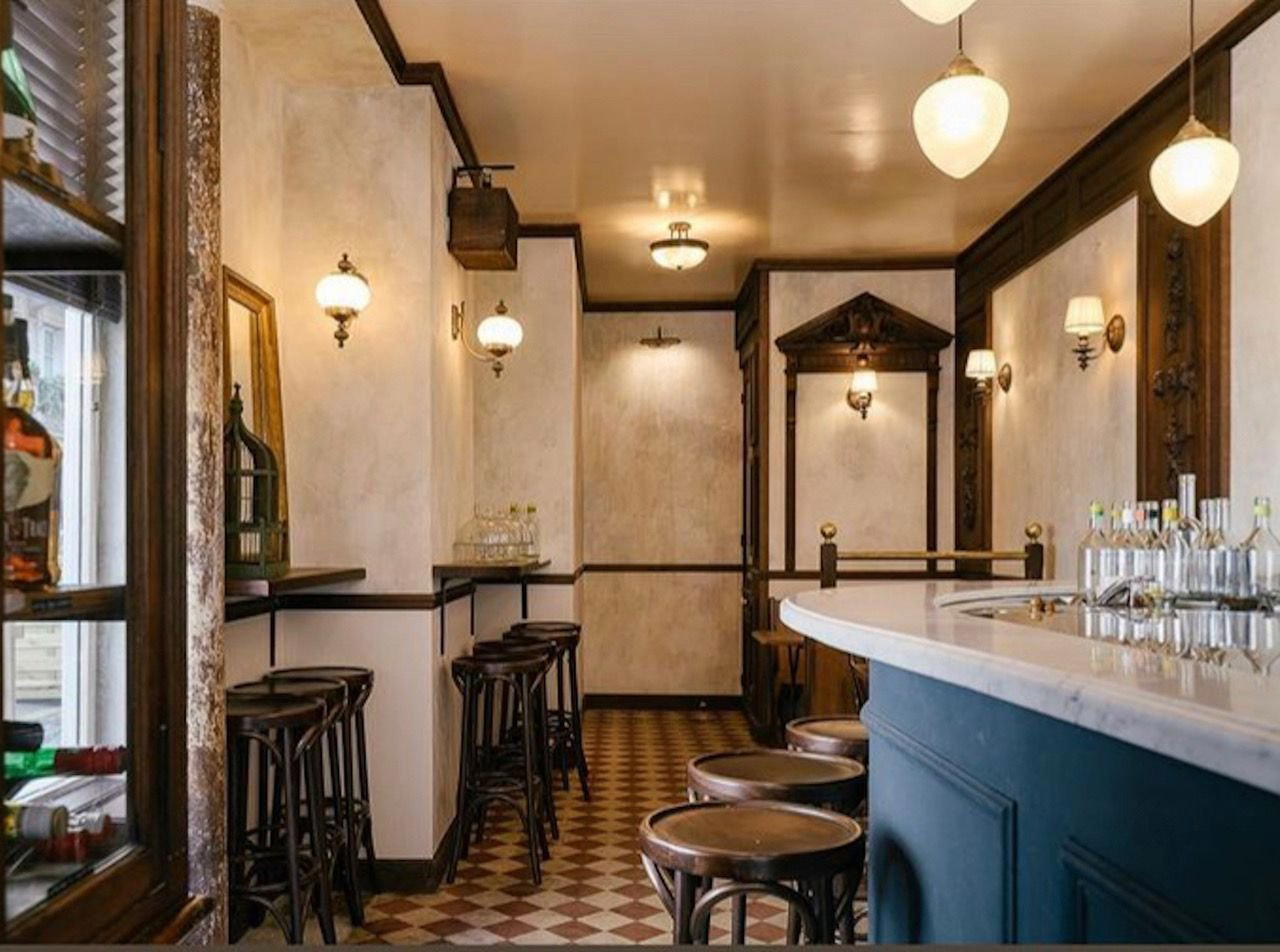
The visual register follows similar logic. Rooms in this tier of the 9th tend to strip back the decorative vocabulary to the essentials: ceramics that read as deliberately chosen rather than inherited, lighting calibrated to the plate rather than the ceiling, a general preference for materials that show their origin. This is a design posture that has become, in the past decade, as much a signal of culinary seriousness as any award or press mention.
Paris's upper tier, represented by rooms like Alléno Paris au Pavillon Ledoyen, Le Cinq at the Four Seasons Hôtel George V, and L'Ambroisie, operates on entirely different spatial and atmospheric terms. Those rooms are part of their offer; the architecture carries meaning that the food then reinforces. In the 9th's smaller format, that relationship inverts. The food arrives without architectural amplification, which either works or it does not.
Placing Momoka in the French Fine Dining Conversation
France's most discussed restaurants tend to cluster at the extremes: the three-star grandees with multigenerational histories, and the new-wave addresses that generate column inches through novelty. Between those poles, a significant number of restaurants do their leading work quietly, building a loyal clientele on the basis of consistency and craft rather than spectacle.
The regional comparison is instructive. Institutions like Auberge de l'Ill in Illhaeusern, Troisgros in Ouches, and Bras in Laguiole have built their reputations across decades, in some cases generations. Flocons de Sel in Megève and Auberge du Vieux Puits in Fontjoncouse demonstrate that serious cooking can hold its ground far from Paris. Assiette Champenoise in Reims and Au Crocodile in Strasbourg show what sustained regional commitment looks like.
For international reference points, the cross-cultural precision model has parallels at Atomix in New York, where Korean culinary logic meets fine dining structure, and at Le Bernardin, where a French foundation has been refined over decades into something almost elemental. The Arpège model, meanwhile, demonstrates how a Paris address can sustain decades of relevance through radical commitment to a singular ingredient philosophy. Momoka's Pigalle address positions it in a different conversation: smaller, less formally credentialled, but operating in a neighbourhood where that kind of focused ambition has increasingly found its audience.
For a broader view of where Momoka fits within the Paris dining scene, the EP Club Paris restaurants guide maps the full range from neighbourhood bistros to grand-room institutions.
The Paul Bocuse legacy, represented by L'Auberge du Pont de Collonges in Collonges-au-Mont-d'Or, is a reminder that French culinary identity has always absorbed outside influence while maintaining its structural core. The Japanese-French current running through Paris's smaller restaurants is, in that sense, less a disruption than a continuation.
Planning Your Visit
Momoka's address on Rue Jean-Baptiste Pigalle in the 9th is accessible via the Pigalle or Saint-Georges Métro stations, both within a short walk. The surrounding neighbourhood is leading explored on foot; the streets between Pigalle and the Grands Boulevards are dense with small restaurants, wine bars, and provisions shops that reward a slow approach. Given the small-format nature of restaurants in this tier of the 9th, advance booking is advisable. Availability at this category of Paris address tends to compress on weekends and during the autumn and spring dining peaks, when the city's restaurant-going population is at its most active.
Frequently asked questions
What's the address for Momoka?
Momoka is located at 24 Rue Jean-Baptiste Pigalle, 75009 Paris, France, Paris.
How does Momoka differ from other Japanese restaurants in Paris?
Momoka's address on Rue Jean-Baptiste Pigalle places it within the 9th arrondissement's evolving dining scene rather than the more established Japanese restaurant clusters around the Opéra or in the 1st. This positioning signals a restaurant oriented toward a French neighbourhood audience rather than a tourist or expatriate Japanese community, which typically produces a more hybridised menu sensibility. That geographic choice, in a district actively repositioning itself through food, tells you something about what the kitchen is trying to be.
What do people recommend at Momoka?
Regulars in the Pigalle corridor tend to highlight the precision of the kitchen's approach over individual dishes. Booking in advance gives you the best chance of experiencing the full scope of what's on offer at 24 Rue Jean-Baptiste Pigalle.
How hard is it to get a table at Momoka?
Momoka sits in a stretch of the 9th arrondissement where demand for smaller, focused restaurants consistently outpaces supply. Tables at addresses along this part of Rue Jean-Baptiste Pigalle are typically secured days to weeks ahead, particularly on weekends. Arriving without a reservation is a risk not worth taking in this neighbourhood.
What's Momoka best at?
Based on its positioning in Paris's 9th and the broader context of Japanese-influenced dining in the city, Momoka occupies the space between traditional Japanese restaurant formats and new-wave French bistro sensibility. That precise middle ground, applied to a Pigalle address that rewards intimate dining over spectacle, is what defines the kitchen's identity. It is not a maximalist room; the focus is on the plate.
Is Momoka good for vegetarians?
Japanese-inflected kitchens in Paris at this level often build menus around fish and seafood as core proteins, which can limit purely vegetarian options. Contacting the restaurant directly at 24 Rue Jean-Baptiste Pigalle before your visit is advisable if plant-based eating is a requirement.
Is Momoka worth the price?
Pricing for Momoka has not been publicly confirmed, so a direct cost-per-head comparison with peers in the 9th is not possible here. What is established is that the restaurant operates in a Paris arrondissement where the mid-to-upper tier of Japanese-influenced dining commands between €50 and €120 per person for a full meal. Whether that value equation holds depends on how the kitchen executes on the night, and Momoka's continued presence on the Pigalle corridor suggests it is sustaining its audience.
Budget Reality Check
Comparable venues nearby, for context on price, style, and recognition.
| Venue | Cuisine | Price | Notes |
|---|---|---|---|
| MomokaThis venue — the venue you are viewing | Modern Japanese Tasting | $50–100 | Not listed |
| Onii-San - Izakaya | Modern Japanese Izakaya | $30–50 | Marais, Modern Japanese Izakaya |
| Nanaumi | Traditional Japanese | $50–100 | Gaillon, Traditional Japanese |
| Pink Koï | Modern Japanese Fusion Robatayaki | $30–50 | Les Halles, Modern Japanese Fusion Robatayaki |
| Blueberry | Fusion Japanese Maki Bar | $30–50 | Saint-Germain-des-Prés, Fusion Japanese Maki Bar |
| Kunitoraya | Traditional Japanese Udon & Yakitori | $30–50 | Louvre / Palais-Royal, Traditional Japanese Udon & Yakitori |