Pingpong
Our verdict
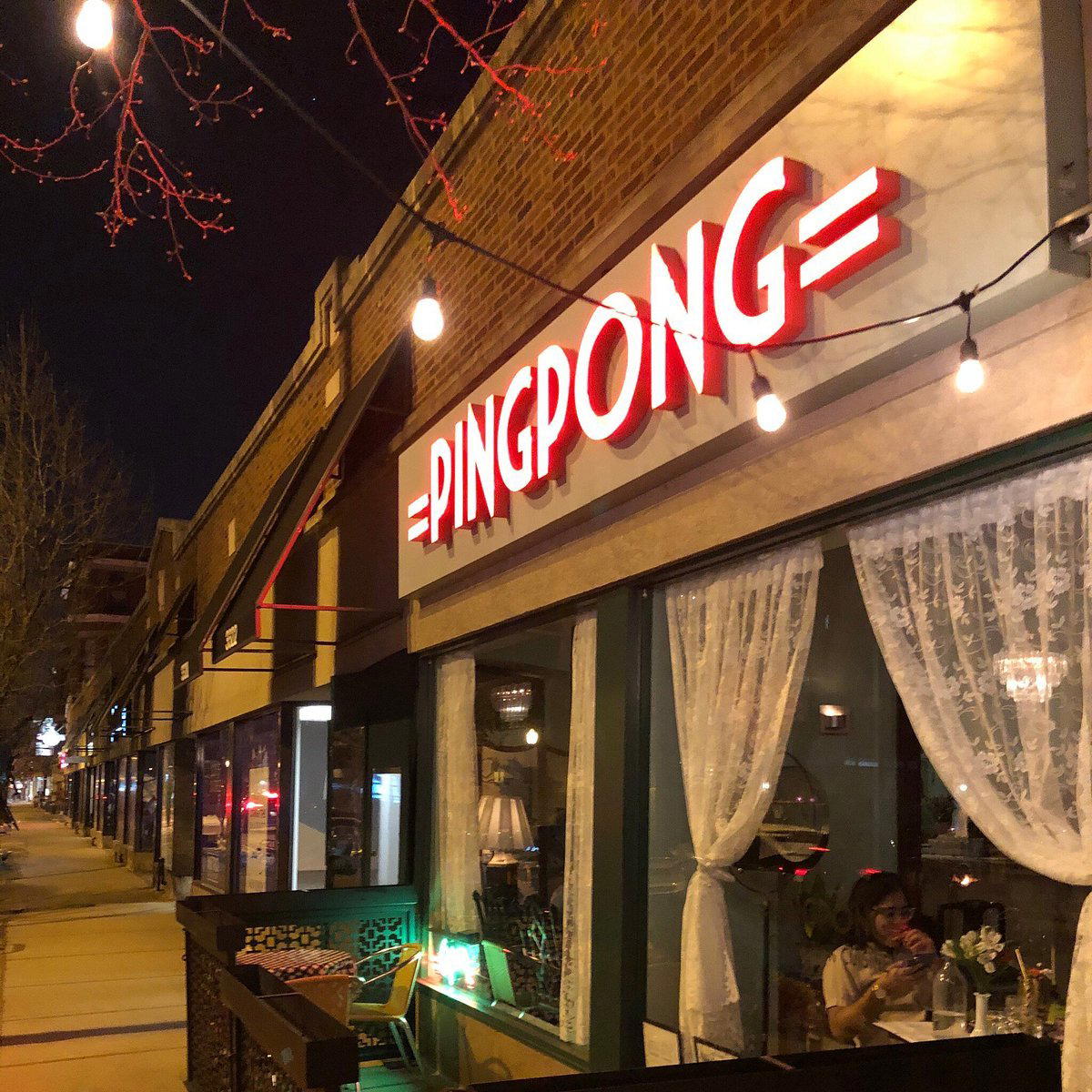
Pingpong occupies a stretch of North Broadway in Chicago's Lakeview neighbourhood, sitting in a dining corridor that has evolved considerably over the past two decades. Compared to the high-investment tasting-menu format that defines nearby fine-dining peers, Pingpong represents a more accessible register of Chicago's broader dining culture, drawing a neighbourhood crowd alongside destination visitors.

Pearl is the En Primeur Club membership app — saves, bookings, and concierge access live there. Same editors, same standards.
- Address
- 3322 N Broadway, Chicago, IL 60657
- Phone
- (773) 281-7575
- Hours
- Daily 4–11 PM
- Website
- pingpongrestaurant.com
- Directions
- Get directions
- Booking
- Book on Resy
The menu
What to order
- PingPong Chicken
- Tuna Tartare
- Crab Rangoon
North Broadway's Shifting Register
Lakeview's dining strip along North Broadway has gone through at least two visible cycles of reinvention in the past twenty years. What began as a neighbourhood convenience corridor gradually absorbed a layer of chef-driven ambition during the mid-2000s, then weathered the contraction that followed the 2008 financial crisis before finding a more settled identity in the 2010s. The restaurants that survived that cycle tended to do so by anchoring themselves firmly in the neighbourhood rather than pitching outward to destination diners. Pingpong, at 3322 N Broadway, operates within that tradition of neighbourhood-rooted dining in Lakeview, a part of Chicago where the clientele is largely local and the atmosphere reflects that familiarity.
That neighbourhood orientation matters when you place Pingpong against the tier of Chicago restaurants that absorbs most of the city's critical attention. Alinea, Smyth, and Oriole operate in a formal tasting-menu format with price points and booking lead times that place them in a different competitive set entirely. So does Kasama, which has built a national reputation from its Ukrainian Village base. Pingpong sits well outside that bracket, by geography and by intent, addressing a different question: what does a consistent neighbourhood restaurant look like on a street that keeps changing around it.
How the Format Has Shifted
The evolution of casual dining in American cities over the past fifteen years has followed a recognisable arc. The fast-casual boom of the early 2010s put pressure on mid-range sit-down restaurants from below, while the prestige-tasting-menu surge pressed from above. Venues caught in the middle either sharpened their identities or gradually faded into generic territory. In Chicago specifically, that pressure was compounded by a restaurant closure rate that accelerated sharply during the pandemic years, reshaping the mid-tier dining map in neighbourhoods across the city.
Restaurants on North Broadway felt that pressure in concentrated form. The corridor is dense enough that closures are visible, and Lakeview's demographic mix, younger professionals alongside longer-tenured residents, creates a clientele that is price-sensitive in ways that Lincoln Park or the Gold Coast are not. What survives tends to be either deeply embedded in its neighbourhood or differentiated enough to draw from outside it. Pingpong's continued presence on this stretch speaks to the former kind of durability, the kind that comes from becoming part of how a neighbourhood eats rather than from winning critical acclaim.
Across the broader American dining scene, the venues that have navigated this mid-tier pressure most successfully have generally done so by owning a specific format rather than trying to compete across multiple registers. Lazy Bear in San Francisco moved decisively into high-format communal dining. Blue Hill at Stone Barns anchored itself to farm-sourced provenance. At the other end of the formality scale, neighbourhood restaurants that thrived did so by becoming genuinely useful to the people who live near them, reliable in a way that more ambitious venues are not.
The Lakeview Context
Lakeview as a dining neighbourhood is often discussed in Chicago food circles as a place that produces loyal regulars rather than travelling critics. The density of residential blocks around North Broadway means foot traffic is genuinely local, and the rhythm of the street on a weekday evening looks different from the destination-driven energy of the West Loop or River North. Restaurants here compete less on press attention and more on repeat visits, which shapes how menus are priced and how formats evolve over time.
That context makes the evolution question more interesting than it might first appear. The venues that struggled were often those that tried to match the ambitions of higher-profile addresses without the customer base to support it. The ones that persisted tended to be those that read their neighbourhood accurately and adjusted accordingly.
For comparison, consider how Next Restaurant took the opposite approach, building a rotating-concept format specifically designed to generate ongoing press attention and keep its booking list active. That works at a certain price point and with a certain operator profile. It is not a model that transfers to a neighbourhood strip without significant capital and brand infrastructure behind it. Lakeview's most durable restaurants have generally operated closer to the ground.
Where Pingpong Sits Now
What the address and neighbourhood context make clear is that 3322 N Broadway is a legitimate Chicago dining location with a history of neighbourhood use, and that any restaurant operating there over time has had to adapt to the particular demands of Lakeview's evolving demographics and competitive environment.
For readers comparing across cities, analogues exist at the neighbourhood-casual tier in most major American dining markets: Bacchanalia in Atlanta operates at a higher formality level but has similarly maintained a long relationship with its city's dining culture. Providence in Los Angeles and Le Bernardin in New York City represent the fine-dining tier where sustained critical recognition drives the model. Atomix in New York City, Addison in San Diego, and The Inn at Little Washington all operate at the prestige end of American dining, which is a different conversation from what Lakeview's Broadway corridor typically produces. See our full Chicago restaurants guide for broader context on how the city's dining neighbourhoods compare.
Planning Your Visit
| Venue | Neighbourhood | Format | Price Tier | Booking Lead Time |
|---|---|---|---|---|
| Pingpong | Lakeview (N Broadway) | Neighbourhood casual | Not confirmed | Not confirmed |
| Alinea | Lincoln Park | Tasting menu | $$$$ | Several months |
| Smyth | West Loop | Tasting menu | $$$$ | Several weeks |
| Kasama | Ukrainian Village | Tasting menu / café | $$$$ | Several months |
| Next Restaurant | West Loop | Rotating concept tasting | $$$$ | Advance ticketing required |
Visitors planning a Chicago dining itinerary that includes Lakeview should note that North Broadway is accessible via the Red Line at Belmont or Addison, putting it within direct reach of the Loop and other dining neighbourhoods. If you are combining a Lakeview visit with coverage of the city's prestige dining tier, be aware that venues like Alinea and Kasama require booking well in advance and represent a significantly different commitment in both time and price than a neighbourhood restaurant visit.
For international context on dining at comparable prestige tiers, 8 1/2 Otto e Mezzo Bombana in Hong Kong, Emeril's in New Orleans, and Single Thread Farm in Healdsburg illustrate how different cities have approached the question of what sustained restaurant identity looks like across time, a question that is ultimately what makes the evolution of any long-running venue worth examining.
Frequently asked questions
What's the address for Pingpong?
Pingpong is located at 3322 N Broadway, Chicago, IL 60657, Chicago.
Is Pingpong on North Broadway good for a casual weeknight dinner in Chicago's Lakeview neighbourhood?
Pingpong's address at 3322 N Broadway places it along a stretch of Lakeview that has historically rewarded repeat visitors over one-time destination seekers. The North Broadway corridor in Chicago's 60657 zip code is dense with options, but venues that hold ground there tend to do so through format consistency rather than novelty.
What do people recommend at Pingpong?
Pingpong sits at 3322 N Broadway in Lakeview, a neighbourhood where regulars tend to return for consistent formats rather than rotating specials. Asking staff on arrival about current house favourites is the most reliable approach. Check the venue's official channels for the latest details.
How hard is it to get a table at Pingpong?
No booking data or reservation policy is documented for Pingpong at this time. Lakeview's North Broadway corridor draws a neighbourhood-first crowd, which means demand is typically steadier on weekends than destination-driven. Arriving early or calling ahead to 3322 N Broadway directly is the practical move.
What do critics highlight about Pingpong?
In Chicago food circles, Lakeview venues like this one are more often discussed for neighbourhood consistency than for marquee critical attention. That positioning has its own value in a city where loyal regulars sustain a dining room longer than press cycles do.
At a Glance
Comparable venues nearby, for context on price, style, and recognition.
| Venue | Cuisine | Price | Awards | Notes |
|---|---|---|---|---|
| PingpongThis venue — the venue you are viewing | Chinese-Thai Fusion | $20–30 | Not listed | Not listed |
| Lao Peng You | Northern Chinese Dumplings and Noodles | $20–30 | Not listed | Ukrainian Village, Northern Chinese Dumplings and Noodles |
| YooYee | Sichuan Chinese | $20–30 | Resy Best of the Hit List | Uptown, Sichuan Chinese |
| Qiao Lin Hotpot - Downtown | Authentic Chongqing Hotpot | $30–50 | Not listed | Downtown, Authentic Chongqing Hotpot |
| MCCB | Modern Sichuan & Cantonese | Not listed | Not listed | Chinatown, Modern Sichuan & Cantonese |
| Emperor's Choice | Cantonese Chinese | $20–30 | Not listed | Chinatown, Cantonese Chinese |