Google: 4.5 · 288 reviews

Petrus occupies Level 56 of the Island in Central, placing it among Hong Kong's most formally positioned European fine-dining rooms. The restaurant holds a 3-Star Accreditation from the World of Fine Wine Awards, signalling a wine program that operates at the level of the room's culinary ambition. For a long-format dinner with serious bottle service in one of the city's landmark hotels, Petrus is the reference point.
 Discover on Pearl
Pearl is the En Primeur Club membership app — saves, bookings, and concierge access live there. Same editors, same standards.
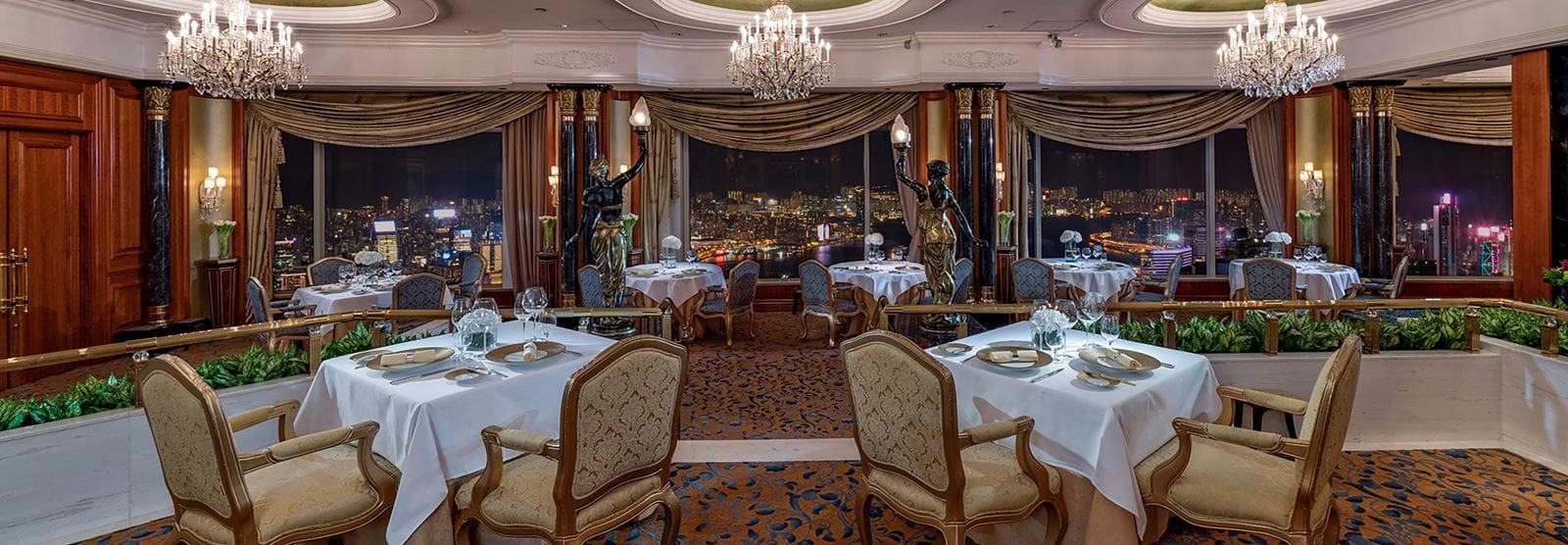
Fifty-Six Floors Above Central
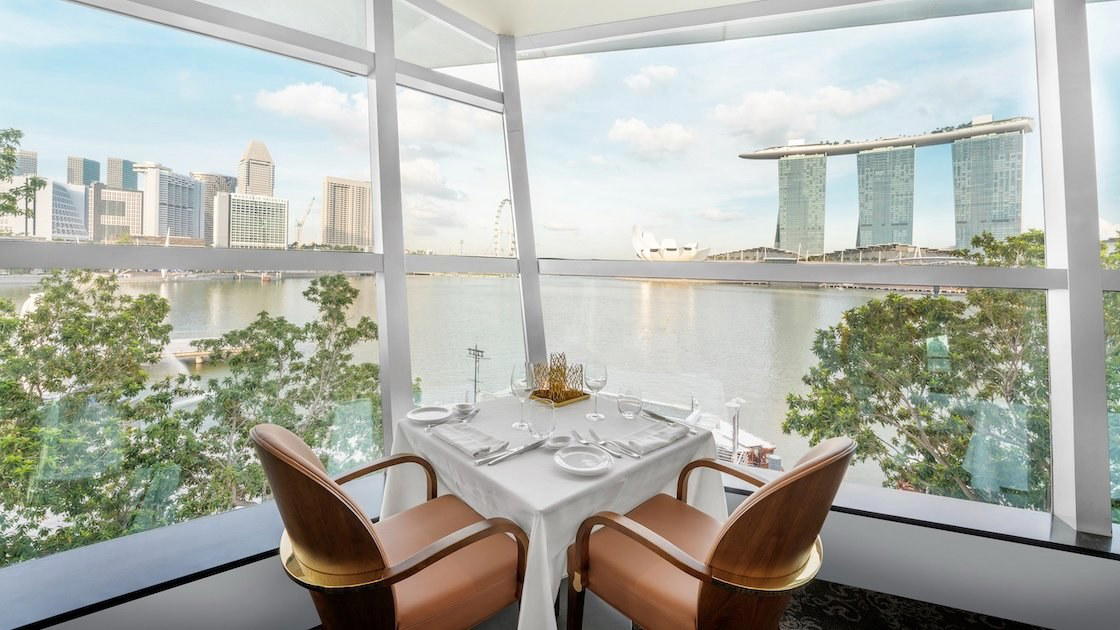
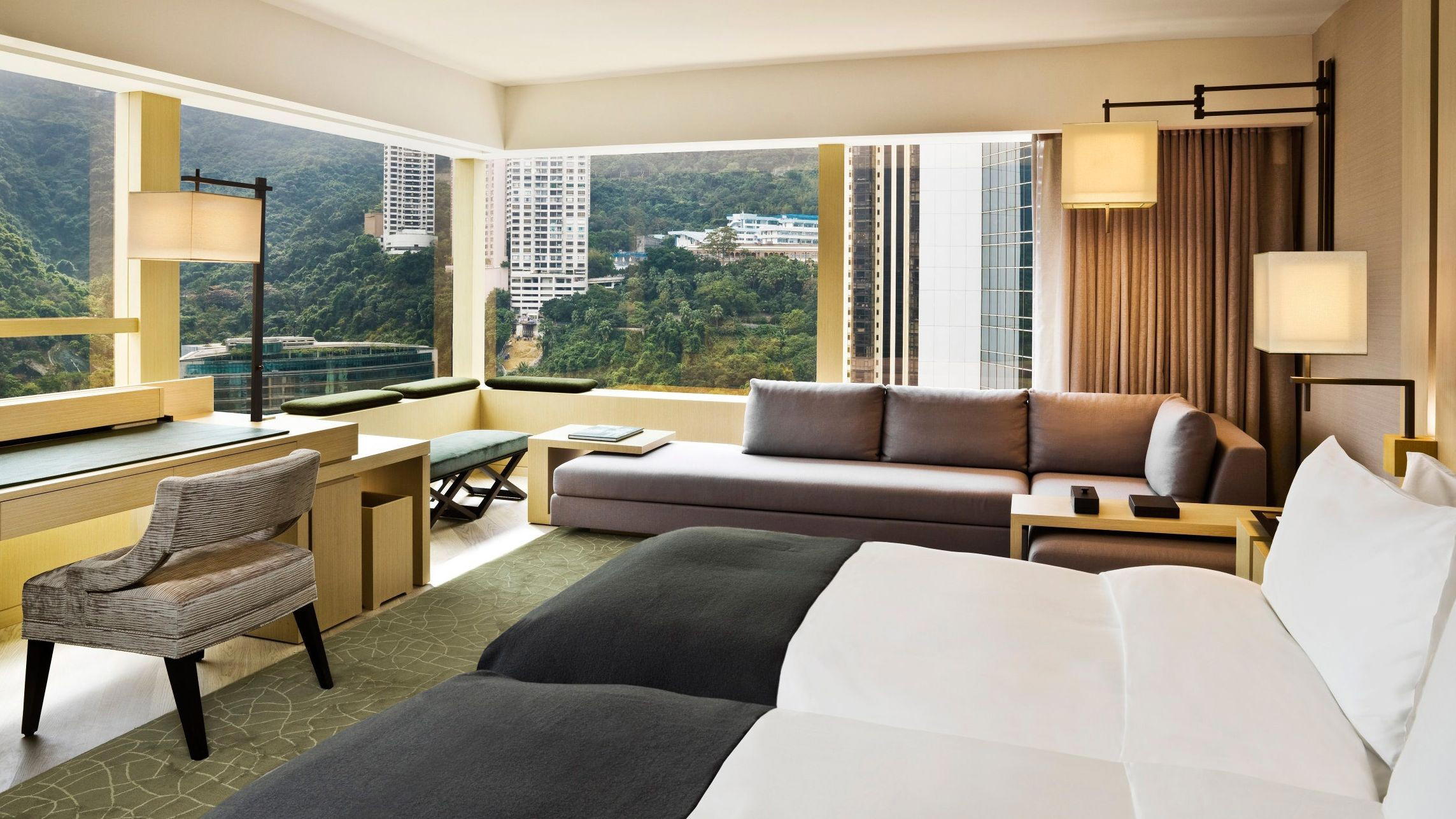
The approach to Petrus begins in a hotel lobby that is itself a statement: the Island 's atrium on Pacific Place, with its silk spanning multiple floors, establishes a visual register before you reach the lift. By the time the elevator opens on Level 56, the transition from street-level Hong Kong to a room oriented almost entirely around its view is complete. The harbour lights and the geometry of the Central skyline occupy the windows like a second menu, and the dining room is arranged to make the most of that orientation. This is how a significant portion of Hong Kong's formal European dining has always positioned itself: altitude as punctuation, the city as backdrop rather than context.
The category Petrus occupies is a specific one in Hong Kong's fine-dining structure. The city has a concentrated tier of hotel-anchored European restaurants that compete on service depth, wine program breadth, and room formality rather than on any single culinary identity. Caprice at the Four Seasons operates in a comparable register; Amber at the Landmark Mandarin Oriental brings a French contemporary approach to a similar price bracket. Petrus sits in that upper tier, defined less by a single signature style than by the consistency of the overall proposition: formal room, serious wine list, long-format dining.
The World of Fine Wine Recognition and What It Signals
Most verifiable credential for Petrus is its 3-Star Accreditation from the World of Fine Wine Awards, a program that evaluates wine lists against criteria of depth, provenance sourcing, and by-the-glass range. At the three-star level, this places the restaurant among a relatively small group of venues globally whose lists are treated as reference points rather than accompaniments. In Hong Kong's context, where wine duty was abolished in 2008 and the city subsequently became a primary Asian hub for fine wine trading and storage, a top-tier wine accreditation carries real market weight. The city's mature trade infrastructure means that a serious hotel restaurant has legitimate access to older vintages and broader regional depth than most equivalents in Southeast Asia.
For a dinner where the wine is as central to the progression as the food, this accreditation is the most actionable signal available. It suggests that the sommelier program operates at the same level as the kitchen, and that the list is structured to support a multi-course format rather than to pad a short menu with obvious labels. Comparable wine-forward rooms in other cities include Le Bernardin in New York City and Alain Ducasse at Louis XV in Monte Carlo, both of which treat the wine program as a structural element of the dining experience rather than an afterthought.
The Arc of a Long Dinner
In rooms like this, the meal tends to unfold as a sequence with its own internal logic. European fine dining at the hotel anchor tier has largely maintained a classical progression structure: aperitif service, a series of cold and warm starters, a fish course, a meat course, cheese if the list supports it, and a composed dessert sequence. The wine list at a three-star accreditation level is designed to move with that arc, offering pairing options at multiple price points across each stage rather than defaulting to a fixed pairing menu.
This format places Petrus in a different peer conversation from the more progressive European rooms in Hong Kong. Ta Vie, for instance, works in a Japanese-French idiom where the course structure is more fluid and the ingredient logic draws from both culinary traditions. 8 1/2 Otto e Mezzo Bombana operates as a high-formality Italian room where the progression follows Italian rather than French sequencing. Petrus, by contrast, holds to a European classical framework, which makes it the natural choice when the occasion calls for a format with well-understood structure and a room that operates accordingly. For those exploring other formats across the city, Forum represents the Cantonese equivalent of long-format dining at the high-formality tier.
Outside Hong Kong, rooms that share this approach to structured progression include Alléno Paris au Pavillon Ledoyen and, at a more experimental end, Alinea in Chicago, which deconstructs the progression format entirely. Petrus sits at the classical rather than experimental end of that spectrum.
Seasonal Timing and Booking Considerations
Hong Kong's formal dining calendar clusters around specific periods that affect availability and atmosphere. The weeks around Chinese New Year and the period from October through December, when the city's business and social calendar is at its most active, tend to fill the upper-tier hotel rooms earlier. A dinner at Petrus in November or December, when the harbour view includes the winter light and the room is operating at full capacity, reads differently from a quieter mid-summer booking when the city empties somewhat for summer travel. The Level 56 setting is most rewarding on a clear evening; the summer months bring haze that reduces the view's impact. For seasonal timing, October through December represents the strongest window for the full visual and atmospheric effect of the room.
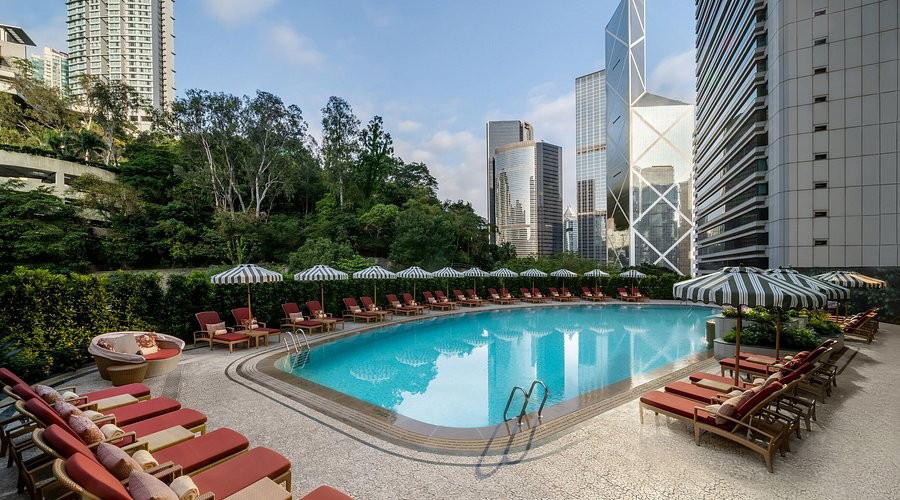
Petrus sits within the Island hotel on Pacific Place, which is directly connected to the Admiralty MTR station, making access direct from any part of the city without requiring a taxi through Central's traffic. For those staying elsewhere in Central or on the Peak, the Pacific Place location is among the more accessible of the high-floor hotel dining rooms. For broader planning across the city, see our full Hong Kong hotels guide and our full Hong Kong restaurants guide.
Nearby, Le Salon de Thé de Joël Robuchon at ifc mall in Central offers a different register for daytime or lighter-format occasions in the same neighbourhood. For drinking before or after, our full Hong Kong bars guide covers the Central options in detail.
For those building a broader itinerary, our Hong Kong wineries guide and experiences guide cover the full range of what the city offers beyond the restaurant tier.
Rooms at this formality level in other cities, including Emeril's in New Orleans, Lazy Bear in San Francisco, and Aponiente in El Puerto de Santa María, share the same fundamental proposition: a structured, long-format dining experience in which the room, the wine program, and the service are as load-bearing as the food itself. Petrus operates within that category in Hong Kong with the added variable of a city where wine culture has matured rapidly and where the list at a three-star accreditation level is a genuine competitive differentiator.
Planning Your Visit
What kind of setting is Petrus Island?
Petrus sits on Level 56 of the Island in Central, positioned in the formally structured tier of Hong Kong's hotel-anchored European fine-dining rooms. The room is oriented around its harbour and skyline view and operates at the upper end of the city's dining price spectrum, with a 3-Star World of Fine Wine Accreditation indicating a wine program built to match the room's ambition. It occupies a comparable position to Caprice and Amber in terms of formality and price register.
What should I eat at Petrus Island?
Specific menu items are not available in our current data. What the 3-Star World of Fine Wine Accreditation confirms is that the wine pairing is a serious component of the dining experience, and the European classical format suggests a multi-course progression where both the food and wine sequences are designed to work together. Book on the basis of a full evening rather than a single dish.
Does Petrus Island work for a family meal?
The room's formal register and long-format European structure make it a better fit for occasions where the dinner itself is the point: business entertaining, celebrations, or wine-focused evenings. Families with children accustomed to formal dining will find the setting manageable, but the price level and pacing are calibrated for adults who want to spend time in the room. For a more relaxed family format in Central, the neighbourhood around Pacific Place offers other options at a wider price range.
Peers in This Market
A compact comparison to help you place this venue among nearby peers.
| Venue | Cuisine | Price | Notes |
|---|---|---|---|
| Petrus Island Shangri-La | This venue | ||
| 8 1/2 Otto e Mezzo Bombana (Hong Kong) | Italian | $$$$ | Italian, $$$$ |
| Ta Vie | Japanese - French, Innovative | $$$$ | Japanese - French, Innovative, $$$$ |
| Estro | Wine Bar, Italian | $$$$ | Wine Bar, Italian, $$$$ |
| Feuille | French Contemporary | $$$ | French Contemporary, $$$ |
| Mono | Latin American | $$$ | Latin American, $$$ |
Continue exploring
More in Hong Kong
Restaurants in Hong Kong
Browse all →
Bars in Hong Kong
Browse all →
At a Glance
- Elegant
- Opulent
- Sophisticated
- Classic
- Date Night
- Special Occasion
- Business Dinner
- Panoramic View
- Hotel Restaurant
- Private Dining
- Extensive Wine List
- Sommelier Led
- Waterfront
- Skyline
Elegant décor evoking a grand Parisian salon or French chateau with heavy drapes, thick carpets, crystal chandeliers, marble columns, and old-world opulence.