On Sovetskaya Ulitsa in central Yaroslavl, Penaty occupies a position on one of the city's most historically layered streets, placing it within a dining scene that has grown quietly but deliberately over the past decade. The address alone signals a particular kind of ambition — one calibrated to a local audience with rising expectations rather than tourist footfall.
Pearl is the En Primeur Club membership app — saves, bookings, and concierge access live there. Same editors, same standards.
- Address
- Sovetskaya Ulitsa, 28, Yaroslavl, Yaroslavl Oblast, Russia, 150003
- Phone
- +74852721353
- Website
- penats-club.ru
- Directions
- Get directions
 Saves & bookings on Pearl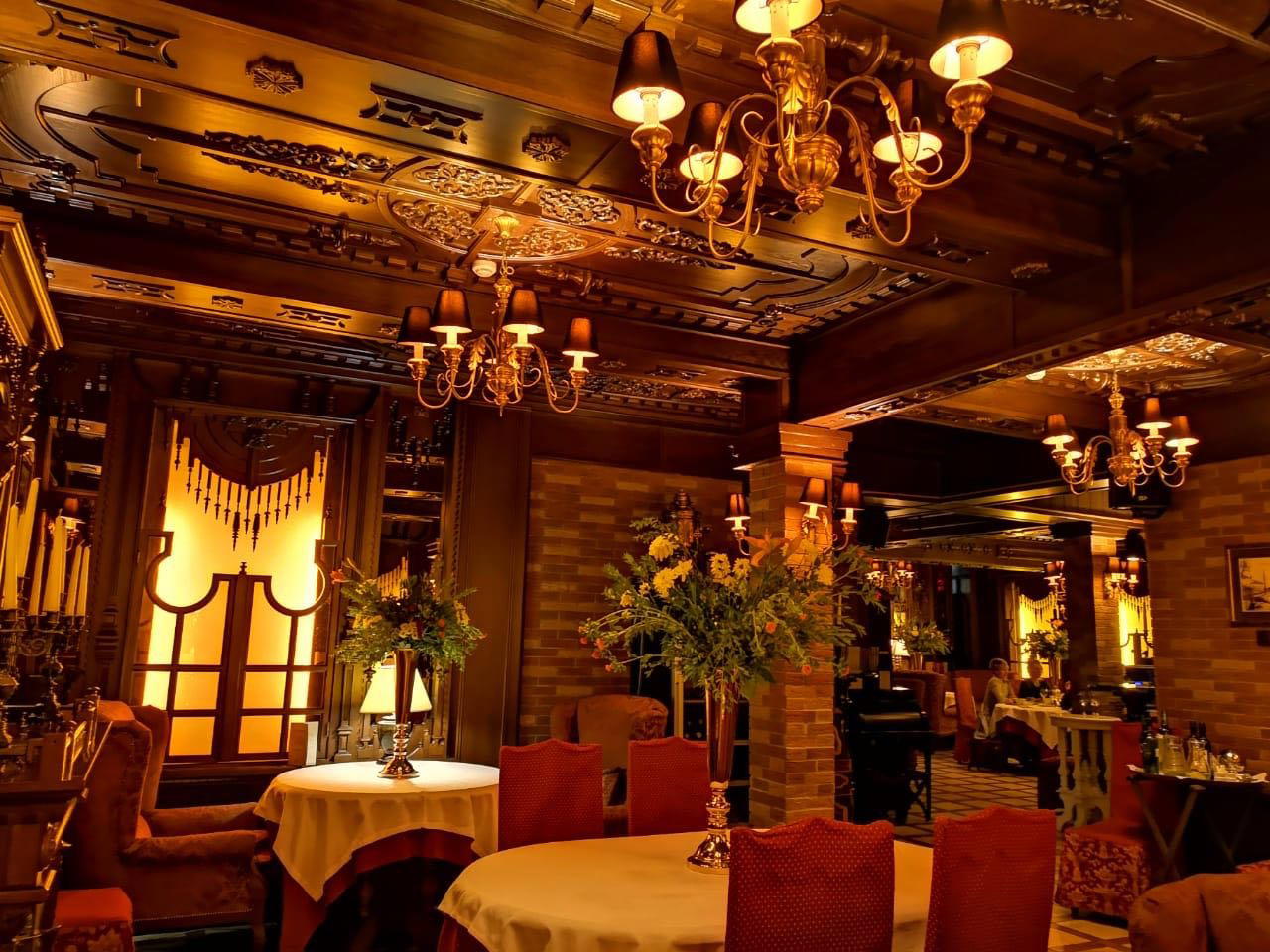
Yaroslavl's Dining Scene and Where Penaty Sits Within It
Yaroslavl is not a city that announces itself loudly on Russia's culinary map. That role belongs to Moscow, where Twins Garden has pushed modern European cooking toward international recognition, and to Saint Petersburg, where 1913 sustains a long tradition of refined Russian hospitality. But outside those two capitals, a quieter development has been underway in provincial cities — Nizhny Novgorod, Tomsk, Yaroslavl — where restaurants have been building serious dining programs for local audiences rather than chasing national press. Penaty, at Sovetskaya Ulitsa 28, belongs to that broader provincial shift.
Sovetskaya Ulitsa cuts through central Yaroslavl with the weight of Soviet-era architecture softened by the city's older merchant heritage. Walking toward number 28, the street carries the character common to Golden Ring towns: institutional facades giving way to 18th- and 19th-century merchant houses, the kind of built environment that in other European cities would be dense with wine bars and trattorias. In Yaroslavl, the dining offer along this corridor remains selective, which makes each address that commits to a serious format more legible against its surroundings.
The Cultural Weight of Russian Provincial Cooking
To understand what a restaurant in Yaroslavl is working with, and working against, it helps to know something about the culinary tradition of the Russian provincial city. The Golden Ring towns developed their own food cultures around river trade, Orthodox fasting cycles, and the produce of the Volga basin: freshwater fish, foraged mushrooms and berries, root vegetables, preserved dairy. That tradition largely disappeared from public dining during the Soviet period, when standardized canteen formats flattened regional distinction. What has been happening in Russian cities over the past fifteen years is, in part, a recovery project, chefs and restaurateurs reaching back past Soviet-era homogenization toward something more regionally specific.
The leading examples of this trend elsewhere in Russia's regions are instructive: Kukhterin in Tomsk and Dzhani Restorani in Nizhny Novgorod both demonstrate how provincial restaurants can draw on local culinary identity without becoming folkloric. Khmeli Suneli in Yekaterinburg shows how Caucasian traditions translate effectively to Ural cities. The question for any serious Yaroslavl restaurant is whether it engages with the Volga-basin food culture that surrounds it, or defaults to the Moscow-influenced modern European format that has become a default across Russian mid-tier cities.
For context on how this plays out at the capital level, Cafe Pushkin in Moscow has long operated as a reference point for what Russian culinary heritage can look like in a formal dining frame, though its approach leans heavily on 19th-century aristocratic coding rather than genuine regional particularity. The more interesting provincial operations tend to be less theatrical and more ingredient-driven.
Reading the Address
The address at Sovetskaya Ulitsa 28 places Penaty in a central but not overtly tourist-facing position. In a city of Yaroslavl's scale, roughly 600,000 residents, with a UNESCO-listed historic core that draws steady heritage tourism, the distinction matters. Restaurants on the main tourist circuit tend to price for visitors and adjust their offer accordingly. An address slightly off that circuit, while still central, suggests a primary orientation toward local regulars rather than passing trade. That tends to correlate with consistency of execution: kitchens cooking for the same audience week after week develop a different kind of discipline than those cycling through tour groups.
For comparison, Mamuka, another Yaroslavl entry in the EP Club index, operates in the same city environment and offers a useful peer reference for how the local dining tier is structured. Both sit within a market where expectations have risen but where the competitive set remains thin compared to major Russian cities. That thinness can be an advantage for restaurants willing to commit to format discipline, there is less noise to cut through, and a genuinely well-run room earns loyalty faster.
Across Russia's regional cities more broadly, the pattern is one of consolidation around a small number of addresses that take their programs seriously. Grisha in Omsk and Knyagininskiy Dvor in Volgograd each occupy analogous positions in their respective cities, central addresses, local-audience orientation, formats built for repeat visits rather than single occasions.
Planning a Visit
Yaroslavl sits approximately 280 kilometres northeast of Moscow, with regular rail service from Yaroslavsky Vokzal making it accessible as a weekend destination or a stop on a longer Golden Ring circuit. The city's compact historic centre means that Sovetskaya Ulitsa 28 is walkable from the main accommodation options in the old town. For a broader view of where Penaty fits within the city's wider restaurant offer, the EP Club Yaroslavl restaurants guide maps the full range of tracked addresses.
Visitors building a wider Russian itinerary around serious dining might note that the gap between Yaroslavl's restaurant tier and Saint Petersburg's is significant. Lev I Ptichka in Saint Petersburg and Made in China in St. Petersburg operate in a denser, more competitive environment that tends to accelerate format development. The provincial restaurant that survives and develops in a thinner market does so on a different logic, one where the local audience's loyalty, rather than critical attention, is the primary metric. That is not a lesser achievement; it is a different one, and often produces restaurants with a more settled, less performative character.
For those accustomed to the reference points of international fine dining, say, Le Bernardin in New York or Atomix, the provincial Russian restaurant represents an entirely different category of proposition. The interest is cultural and contextual as much as gastronomic: what it means to cook seriously in a city where the tradition was interrupted, where the supply chains are different, and where the audience is building its expectations in real time.
Continue exploring
More in Yaroslavl
Restaurants in Yaroslavl
Browse all →
At a Glance
- Cozy
- Elegant
- Classic
- Intimate
- Date Night
- Family
- Special Occasion
- Group Dining
- Historic Building
Current opening hours
- Monday
- 9 AM–11 PM
- Tuesday
- 9 AM–11 PM
- Wednesday
- 9 AM–11 PM
- Thursday
- 9 AM–11 PM
- Friday
- 9 AM–11 PM
- Saturday
- 12–11 PM
- Sunday
- 12–11 PM
Hours can change for holidays and private events. Last verified .
Cozy atmosphere with warm stained glass lighting, ancient Russian restaurant interior, and a sense of home-like comfort praised in guest reviews.
Know Before You Go
- Getting there
- Sovetskaya Ulitsa, 28, Yaroslavl, Yaroslavl Oblast, Russia, 150003