Patiala
Patiala occupies a corner of Midtown Manhattan's 35th Street dining corridor, where the concentration of South Asian kitchens runs deeper than most visitors expect. The address places it within reach of Penn Station and the Garment District's daytime crowd, situating it in a neighbourhood where lunch trade and dinner service operate at different tempos. For those tracking where serious Indian cooking is happening in New York, this block rewards attention.
Pearl is the En Primeur Club membership app — saves, bookings, and concierge access live there. Same editors, same standards.
- Address
- 240 W 35th St, New York, NY 10001
- Phone
- +12125648255
- Website
- 35.patialany.com
- Directions
- Get directions
 Saves & bookings on Pearl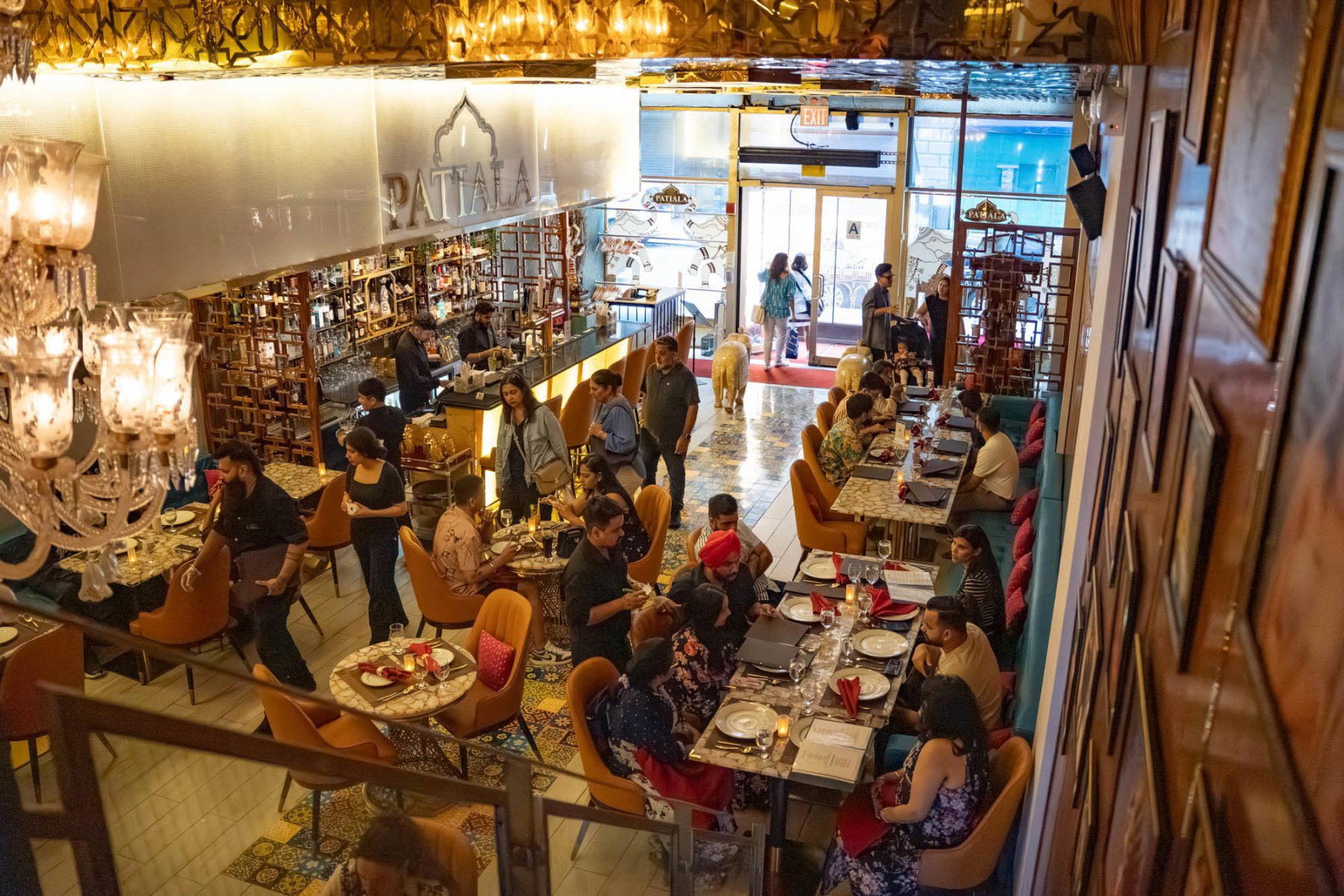
Midtown's South Asian Dining Corridor and Where Patiala Sits Within It
Patiala is an Indian restaurant in New York City, serving authentic North and South Indian cuisine at a price point around $25 per person. Midtown's 30s, by contrast, get less editorial attention, yet the stretch of West 35th Street around the Garment District has quietly accumulated one of the city's more consistent concentrations of South Asian kitchens. Patiala, at 240 W 35th St, occupies that corridor, where the dining population skews toward office workers at lunch and a more deliberate dinner crowd in the evening. The neighbourhood dynamic shapes the room in ways that matter: pacing, volume, and the degree to which a kitchen has to perform across two different service rhythms.
Midtown Indian dining in New York operates on a spectrum that runs from steam-table lunch counters to the handful of rooms that have drawn sustained press attention for technique-forward cooking. Patiala's name, drawn from the historic Punjabi royal city in what is now northern India, signals a regional specificity worth noting. Patiala as a culinary reference points toward the rich, cream- and ghee-forward cooking traditions of the Punjab, a cuisine with a strong claim on the tandoor, the slow-braised dal, and the kind of spicing that prioritises depth over heat. That regional framing places it in a different category from the broader pan-Indian menus that dominate the neighbourhood's mid-tier.
The Team Dynamic in a Room Where Service Has to Work Across Registers
In the finer South Asian restaurants that have earned sustained recognition in New York and beyond, the defining tension is usually between the kitchen's ambition and the floor's ability to translate it. At the more demanding end of the city's dining spectrum, venues like Atomix and Jungsik New York have built reputations partly on the precision with which front-of-house teams contextualise unfamiliar flavour traditions for guests who arrive without reference points. The same challenge applies, in different form, to serious Indian kitchens: spice nomenclature, regional distinctions, and the logic of a thali or a tasting progression all require a floor team that can explain clearly.
At a Midtown address like West 35th, the guest mix runs wide. A table of Garment District regulars who have eaten here a hundred times sits next to a couple who wandered in from Penn Station with no frame of reference. The front-of-house has to hold both, which is a different kind of service intelligence than what a single-demographic room requires. It is the kind of challenge that reveals whether the team operates as a coherent unit or whether the kitchen and the floor are running parallel tracks. The restaurants that get it right, whether in New York or at destinations like Le Bernardin where the fish knowledge of the floor team is as carefully maintained as the sourcing program, tend to treat service as a craft discipline in its own right rather than a support function.
The wine and beverage program in an Indian kitchen presents its own coordination question. The pairing logic for spiced, acidic, and fat-rich dishes simultaneously is genuinely complex, and the restaurants that have thought it through carefully, positioning the beverage side as an active part of the meal rather than an afterthought, tend to distinguish themselves from peers who treat the drinks list as a revenue line.
Placing Patiala in the Broader New York Dining Context
New York's upper tier of restaurants, the rooms where per-head spend and press attention both run high, skews heavily toward French and Japanese traditions. Per Se, Masa, and Le Bernardin collectively define a certain idea of what a landmark New York meal looks like. South Asian cooking, despite a long history of serious practitioners in the city, occupies a different register in that conversation, one that undersells what the tradition is capable of at its most rigorous. Across the wider American restaurant scene, the pattern holds: destination-level Indian cooking has been slower to receive the kind of institutional recognition that comparable European and East Asian kitchens have accumulated.
Compared with peers in serious American dining, from Alinea in Chicago to The French Laundry in Napa to Blue Hill at Stone Barns outside the city, the South Asian kitchen occupying a Midtown Manhattan address has a different set of pressures: a more mixed clientele, a lunch-heavy trade, and a cuisine tradition that awards bodies have been slower to engage with on their own terms. That context matters when assessing what a room like Patiala is doing and what it might become.
Planning a Visit
West 35th Street is accessible from Penn Station (two blocks) and the Herald Square subway hub, which serves the B, D, F, M, N, Q, R, W, 1, 2, and 3 lines. Midtown's lunch hour runs hard between noon and 1:30 pm; dinner service tends to be quieter and more paced. Reservations are recommended, and the restaurant is open daily from 11:30 AM to 11 PM.
Peer Comparison at a Glance
| Venue | Cuisine | Price Tier | Booking Lead Time | Neighbourhood |
|---|---|---|---|---|
| Patiala | Indian (Punjabi) | Not confirmed | Not confirmed | Midtown West / Garment District |
| Atomix | Modern Korean | $$$$ | Weeks to months in advance | Flatiron |
| Jungsik New York | Progressive Korean | $$$$ | 1-2 weeks typical | Tribeca |
| Per Se | French Contemporary | $$$$ | Several weeks | Columbus Circle |
| Le Bernardin | French Seafood | $$$$ | 1-2 weeks typical | Midtown West |
For reference points beyond New York, consider Providence in Los Angeles, Addison in San Diego, Lazy Bear in San Francisco, Single Thread Farm in Healdsburg, Bacchanalia in Atlanta, Emeril's in New Orleans, and The Inn at Little Washington in Washington. For international benchmarks in fine dining, 8 1/2 Otto e Mezzo Bombana in Hong Kong and Alain Ducasse at Louis XV in Monte Carlo represent the kind of sustained institutional recognition that sets a reference point for what serious fine dining achieves over decades.
Standing Among Peers
Comparable venues nearby, for context on price, style, and recognition.
| Venue | Cuisine | Price | Notes |
|---|---|---|---|
| PatialaThis venue — the venue you are viewing | Authentic North and South Indian | $$ | Not listed |
| Saar Indian Bistro | Modern Indian Bistro | $$ | Midtown-Times Square |
| Fonty’s Deli + Dukaan | Indian-ish Sandwiches | $$ | West Village |
| Spice Symphony Times Square | Authentic Indian with Indo-Chinese Fusion | $$ | Hell's Kitchen |
| Vatan | Gujarati Vegetarian Thali | $$ | Murray Hill-Kips Bay |
| Curry Heights | Authentic Indian Cuisine | $$ | Brooklyn Heights |
Continue exploring
More in New York City
Restaurants in New York City
Browse all →
Bars in New York City
Browse all →

Hotels in New York City
Browse all →





At a Glance
- Lively
- Casual Hangout
- Standalone
Current opening hours
- Monday
- 11:30 AM–11 PM
- Tuesday
- 11:30 AM–11 PM
- Wednesday
- 11:30 AM–11 PM
- Thursday
- 11:30 AM–11 PM
- Friday
- 11:30 AM–11 PM
- Saturday
- 11:30 AM–11 PM
- Sunday
- 11:30 AM–11 PM
Hours can change for holidays and private events. Last verified .
Casual and prompt service in a tiny, intimate setting seating about 15.