Palaty sits on Alexander Pushkin Street in central Kutaisi, operating within a Georgian dining tradition where sourcing proximity to the Imereti region's farms and markets shapes the plate as much as any kitchen technique. The address places it close to the city's older residential quarters, and the format reads as part of Kutaisi's growing roster of locally grounded restaurants rather than a venue chasing Tbilisi-style fusion.
Pearl is the En Primeur Club membership app — saves, bookings, and concierge access live there. Same editors, same standards.
- Address
- 2 Alexander Pushkin Street, Kutaisi 4600, Georgia
- Phone
- +995431243380
- Website
- rezto.ge
- Directions
- Get directions
 Saves & bookings on Pearl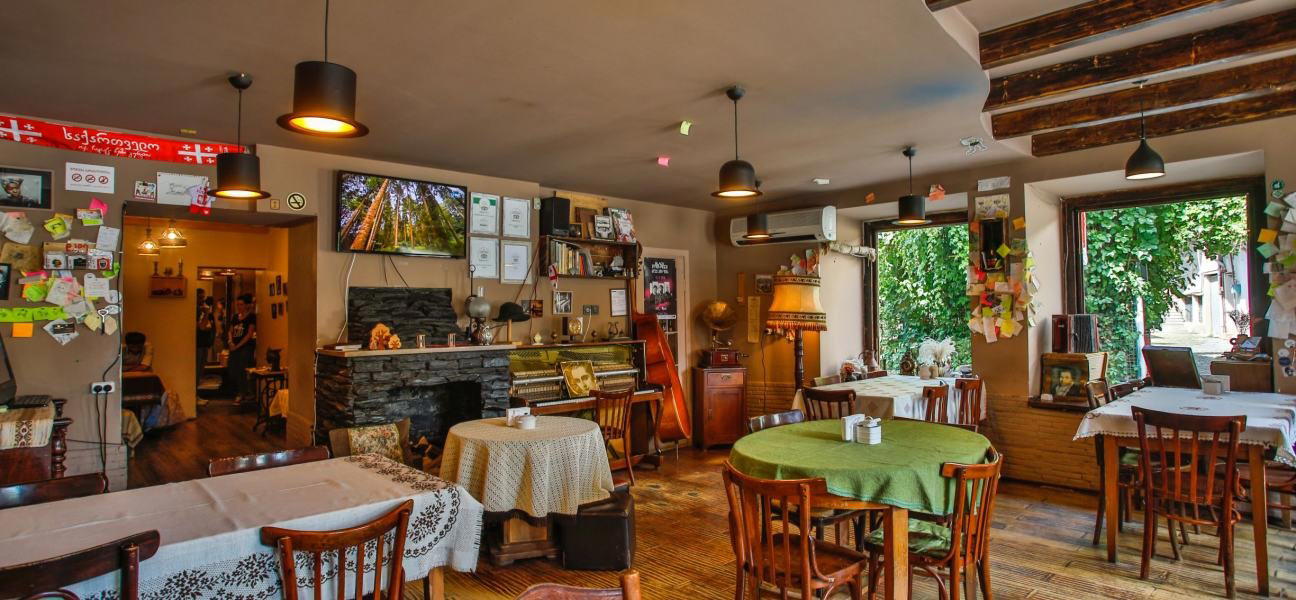
Where Imereti's Produce Does the Heavy Lifting
Kutaisi is not a dining city that announces itself. Georgia's second city draws visitors for Gelati Monastery and the Bagrati Cathedral, and its restaurant scene has historically served that pilgrim traffic with workmanlike khinkali and churchkhela rather than anything that would redirect attention from the architecture. That is changing, and the change is rooted less in Tbilisi-style modernism than in a quieter reckoning with what western Georgia's agricultural belt actually produces. The Imereti region sits at the confluence of the Rioni and Tskhaltsitela rivers, with a climate that supports walnut orchards, cornfields, and small-scale dairy operations that supply a distinctly different pantry from the Kakheti or Kartli traditions further east. Palaty is a Traditional Georgian restaurant in Kutaisi at 2 Alexander Pushkin Street, where regional specificity is legible on the plate.
The Approach to Alexander Pushkin Street
The address places Palaty in the older residential-commercial fabric of central Kutaisi, a part of the city where nineteenth-century balcony architecture sits alongside Soviet-era apartment blocks and the occasional renovated townhouse repurposed for hospitality. This is not the polished heritage streetscape of Tbilisi's Vera or Vake districts. Kutaisi's centre reads more lived-in, with the kind of neighbourhood texture that tends to produce restaurants oriented toward a local clientele as much as visiting guests. That framing matters: venues in this position generally price and format around what the city itself will sustain, which in Kutaisi means seasonal menus driven by whatever the Imereti markets are turning over rather than imported luxury ingredients performing against a global fine-dining benchmark.
The physical approach along Pushkin Street carries the atmosphere of a city that has not yet been heavily curated for tourism. Street vendors, older residents, and the ambient noise of a working urban centre accompany the walk. For a traveller arriving from the more polished hospitality corridors of Tbilisi, that difference registers immediately and is part of the point. Dining in Kutaisi is still, generally, an act of local participation rather than a transaction with a hospitality industry.
Imereti on the Table: What Regional Sourcing Means Here
Georgia's broader ingredient story is well-documented in international food media: qvevri wine, churchkhela, the walnut-heavy sauces of the west, the herb-dense preparations of Adjara. What gets less coverage is the degree to which western Georgia's sourcing geography diverges from the wine-country circuit of Kakheti. Imereti's dairy tradition produces a notably different class of sulguni than the eastern varieties, with a layered, slightly sour character tied to the grassland pastures of the region. Walnuts from Imereti orchards appear in dishes where eastern Georgian cooking would use pomegranate or tarragon, creating a richer, more oil-forward flavour register. Cornmeal, the basis of mchadi flatbreads, is a staple here in a way it is not in Kartli. A restaurant operating out of Kutaisi with genuine attention to provenance is working with a materially different larder than its Tbilisi counterparts.
For comparison, Tbilisi addresses like those covered in ATI in Tbilisi operate within a capital-city sourcing orbit that pulls from multiple regions and overlays international fine-dining logic. Kutaisi's most serious restaurants work narrower, which produces a more concentrated regional argument on the plate. That concentration is what distinguishes the better end of Kutaisi dining from mere rusticity: it is not unsophisticated to draw exclusively from a 100-kilometre sourcing radius when that radius contains Imereti sulguni, river fish from the Rioni, and walnuts with genuine terroir variation.
Georgia's wine-and-food pairing culture is covered extensively elsewhere in our guides, including at Pheasant's Tears Winery in Signagi, where the Alaverdi tradition informs the table. In Kutaisi, the Imeretian wine style, lighter and less tannic than Kakhetian amber wines, tends to appear on local lists and pairs differently against the region's dairy-forward, walnut-heavy preparations.
Kutaisi's Dining Scene: Where Palaty Fits
Kutaisi's restaurant map is smaller and less stratified than Tbilisi's. There is no clear equivalent to Tbilisi's upper tier of Georgian fusion addresses such as Café Littera or Barbarestan, where heritage recipes are reconstructed through a contemporary fine-dining lens with prix-fixe pricing and significant international press attention. Kutaisi's comparable set for a venue like Palaty is closer to the level where locally sourced cooking meets a more casual format without abandoning seriousness about ingredients. Sisters occupies a comparable position in the city, and together these addresses suggest Kutaisi is building a recognisable identity around ingredient-led, regionally grounded cooking rather than mimicking Tbilisi's fusion trajectory.
That is a meaningful distinction. Georgian regional cooking in Kutaisi is not a simplified or lesser version of what happens in the capital. It is a different argument, made with different ingredients, for a different audience. Visitors who arrive expecting the polished internationalism of, say, Umami at Clouds in Batumi will need to recalibrate. What Kutaisi offers at its better addresses is proximity to source and an absence of the self-consciousness that sometimes weights capital-city dining.
Across Georgia's broader hospitality circuit, from Doli in Telavi and Schuchman Wines Chateau in Telavi in the wine country to Gazaphkhuli in Chiatura and Chiko in Aspindza, the pattern holds: Georgia's most interesting regional dining is happening outside Tbilisi, in smaller cities where the sourcing story is tighter and the cooking has less pressure to perform for international food media. Kutaisi is the largest of these secondary dining cities, and Palaty sits within that developing identity.
Planning Your Visit
Palaty is located at 2 Alexander Pushkin Street in central Kutaisi, within walking distance of the city's main historic sites and the Rioni riverfront. Kutaisi's compact centre means most visitors staying near the cathedral or the White Bridge can reach the address on foot. Kutaisi dining in this tier is generally accessible without weeks-ahead reservations, though weekend evenings in the summer tourist season warrant earlier contact. The city is well-served by Kutaisi International Airport, which handles significant low-cost European traffic, making it a practical entry point for a western Georgia itinerary that might also include the cave city of Vardzia or the spa town of Borjomi, covered in our guide to Crowne Plaza Borjomi.
At-a-Glance Comparison
Comparable venues nearby, for context on price, style, and recognition.
| Venue | Cuisine | Price | Notes |
|---|---|---|---|
| PalatyThis venue — the venue you are viewing | Traditional Georgian | $$ | Not listed |
| Sisters | Georgian and European | $$ | city center |
| Dadiani | Traditional Georgian (Mingrelian) | $$ | Tbilisi |
| HOME 11 | Georgian | $$ | Tbilisi |
| Sazandari | Georgian | $$ | Batumi |
| Shavi Lomi | Modern Georgian Fusion | $$$ | Tbilisi |
At a Glance
- Cozy
- Casual Hangout
- Family
- Live Music
- Beer Program
Current opening hours
- Monday
- 10 AM–11:45 PM
- Tuesday
- 10 AM–11:45 PM
- Wednesday
- 10 AM–11:45 PM
- Thursday
- 10 AM–11:45 PM
- Friday
- 10 AM–11:45 PM
- Saturday
- 10 AM–11:45 PM
- Sunday
- 10 AM–11:45 PM
Hours can change for holidays and private events. Last verified .
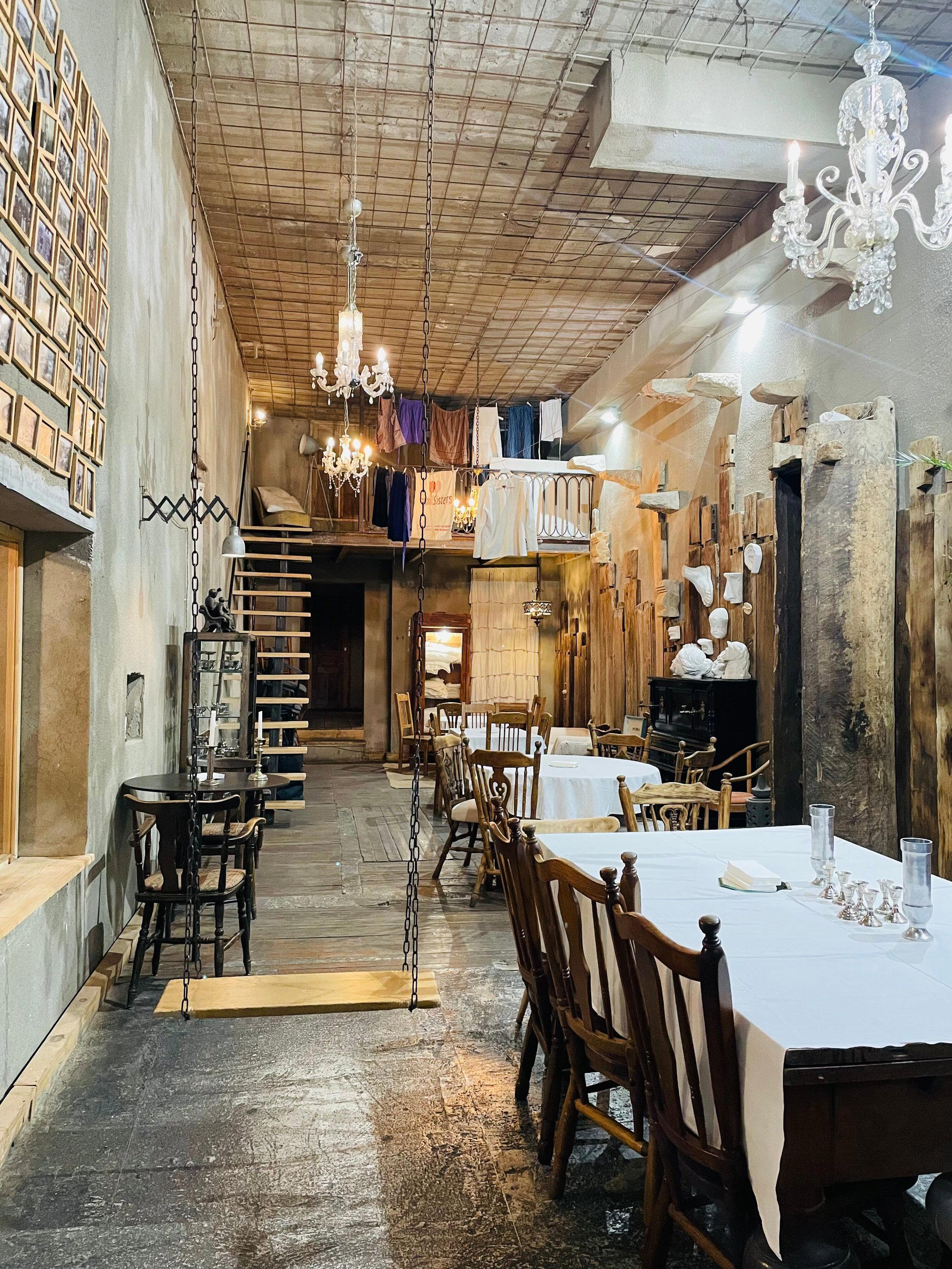
Nicely decorated cozy space with vintage charm, live piano tunes, and friendly atmosphere.