In Ayer Itam, claypot curry mee occupies a specific register of Penang hawker cooking where technique and vessel choice still determine the outcome. Padang Tembak Claypot Curry Mee sits within that tradition, serving a dish whose character depends on the slow heat transfer of clay and the layered sourcing of its components. For visitors already working through Penang's hawker circuit, this address in the 11400 postal zone is a logical next stop.
Pearl is the En Primeur Club membership app — saves, bookings, and concierge access live there. Same editors, same standards.
- Address
- Flat Padang Tembak, Taman Ayer Itam, 11500 George Town, Penang
 Saves & bookings on Pearl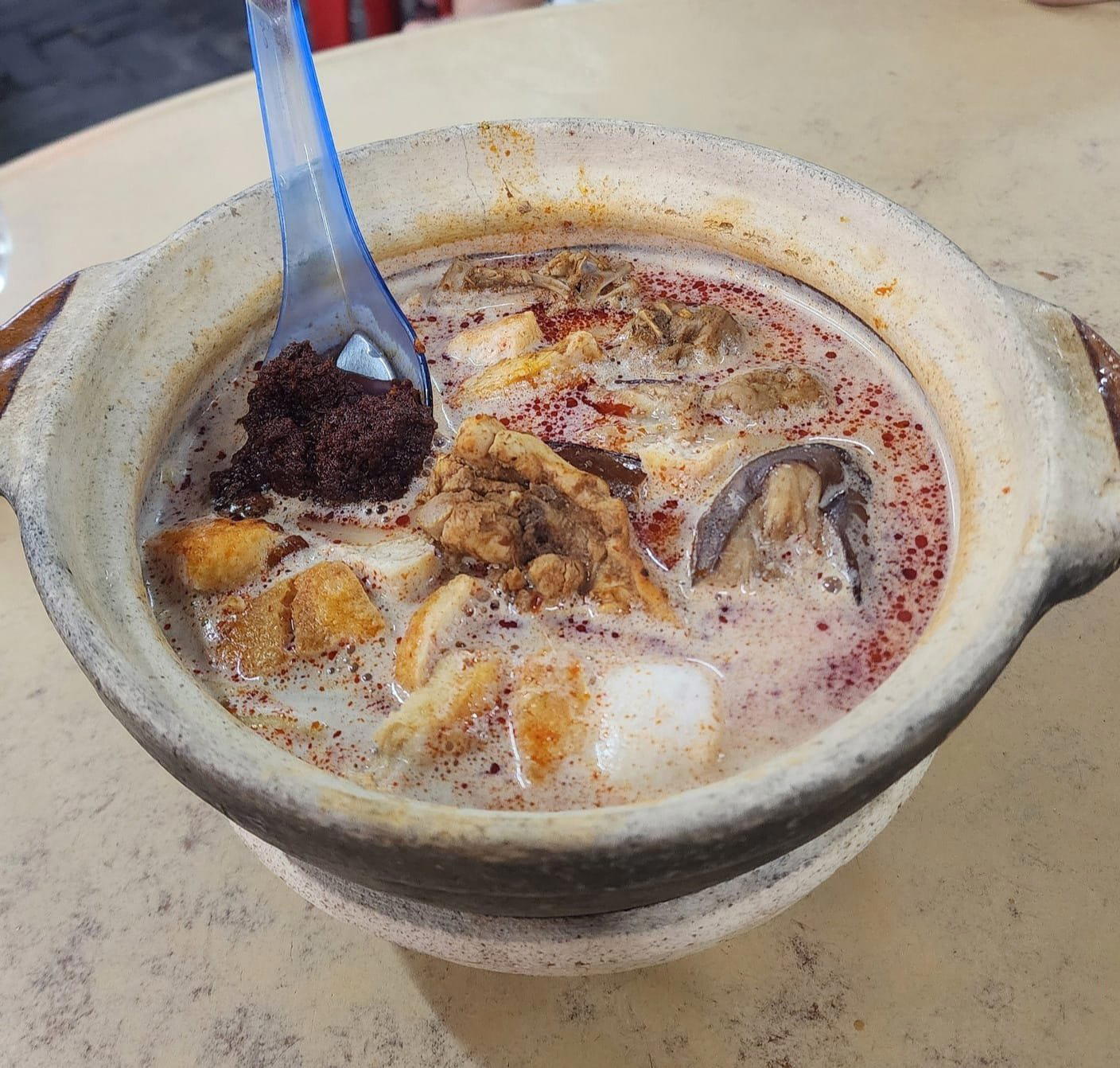
Where Clay Meets Curry: The Ayer Itam Hawker Tradition
The road into Ayer Itam from George Town narrows as the shophouses close in, and the air carries the kind of persistent spice fragrance that only accumulates over decades of open-flame cooking. It is a residential quarter on the western slope of Penang Hill where hawker stalls have served the same neighbourhoods for generations, and where the food reflects the actual preferences of people who eat here weekly rather than tourists sampling once and moving on. Padang Tembak Claypot Curry Mee is a casual claypot curry mee restaurant in Ayer Itam, Pulau Pinang, located at Flat Padang Tembak, Taman Ayer Itam, 11500 George Town, Penang. The name itself references a local place, Padang Tembak, a familiar Penang landmark, anchoring the stall firmly in its geography before a single bowl is served.
The Claypot Argument: Why the Vessel Still Matters
Malaysian curry mee exists across a wide spectrum. At its most diluted, it arrives in a standard metal pot, pre-assembled and held at a uniform temperature. At its most considered, the claypot format changes the thermal dynamics of the dish entirely. Clay conducts heat slowly and unevenly, which means the broth at the base of the pot continues to develop as it sits, concentrating the coconut milk and spice paste in a way that a metal vessel cannot replicate. The bottom layer thickens; the surface stays fluid. This is not a stylistic choice. It is a functional one, rooted in the same logic that drives the use of clay in Tamil and Malay cooking traditions across the peninsula for the same category of slow-cooked curries and broths.
Penang's hawker culture has long recognised this distinction, which is why claypot specialists occupy a narrower, more considered tier than general curry mee stalls. The sourcing of ingredients in this format carries corresponding weight: the quality of the dried shrimp, the freshness of the cockles, the fat content and coconut origin of the santan all become audible in the finished dish in a way that a faster, higher-volume format might mask. In a city where Air Itam Asam Laksa, Chong Char Koay Teow, and 888 Hokkien Mee have built reputations on exactly this kind of ingredient-level discipline, the claypot curry mee format represents a parallel but distinct tradition within the same hawker geography.
Ayer Itam in Penang's Broader Hawker Map
George Town's UNESCO-listed core draws the bulk of food-focused visitors to Penang, and rightly so given the concentration of long-running hawker operations along Lorong Baru, Gurney Drive, and the old clan jetty areas. But Ayer Itam functions as a counterweight: less documented, more self-contained, and serving a local population whose standards for hawker food are calibrated by daily repetition rather than occasional comparison. The stalls that survive here do so on repeat business from residents who know what consistency should look like across months and years, not just across a single visit.
This dynamic shapes how Padang Tembak Claypot Curry Mee fits into the Penang food circuit. It is not competing with the Peranakan preservation work being done at venues like Auntie Gaik Lean's Old School Eatery in George Town, nor with the fine-dining articulation of Malaysian ingredients that Dewakan in Kuala Lumpur represents at the top of the national scene. It operates in an entirely different register, one where the measure of quality is functional and local rather than critical or competitive. Across Malaysia, that register produces some of the country's most consistent cooking, from Da De Bah Kut Teh in Borneo to the kopitiam culture documented at Kopi Ping Cafe in Tuaran.
Sourcing and the Local Supply Chain
Ayer Itam sits adjacent to the wet market networks that supply much of Penang's western residential zones. The proximity to fresh produce markets is not incidental to the food quality at stalls in this area. Hawker operators in Ayer Itam typically source through the same wet market channels used by home cooks in the neighbourhood, which means ingredient turnover is high and the distance between supply and service is short. In a dish like claypot curry mee, where the santan is a primary carrier of flavour and the texture of the noodles depends on freshness, this supply chain structure matters. Aged coconut milk or noodles held too long produce a flatter, less aromatic result. The logistical advantage of operating in a residential market zone, rather than a tourist-heavy district where supply chains can stretch and commodify, is built into the dish's ceiling.
This connects to a broader pattern visible in Malaysian hawker cooking at its sharpest: the best-executed versions of dishes like curry mee, laksa, and char koay teow tend to cluster not in high-visibility tourist corridors but in the residential and market-adjacent zones where ingredient logistics favour the cook. Ayer Itam's geography places Padang Tembak Claypot Curry Mee inside that supply-chain advantage.
Planning Your Visit
Ayer Itam is accessible from George Town by car, grab, or the local bus network, with journey times typically under thirty minutes depending on traffic through the hill road junctions. The stall is located at the 11400 Ayer Itam address in Pulau Pinang; Those extending their Penang itinerary across the strait will find regional comparators at Haidilao Huo Guo at Queensbay Mall in Bayan Lepas and Haidilao Hot Pot in Perai, though these represent an entirely different format and price tier. Elsewhere in Malaysia, CRC Restaurant in Georgetown and Jia Yi Dao Vegetarian Restaurant in Taiping illustrate the range of the state's hawker and mid-range dining spectrum. Further afield, Haidilao in Malacca, India Gate Restaurant in Klang, Al-Sultan Restaurant in Shah Alam, Kuroma Buffet in Johor Bahru, Kay's Steak and Lobster in Subang Jaya, and DIN by Din Tai Fung in Sepang reflect the full breadth of Malaysian dining formats. For contrast at the international fine-dining end of the spectrum, Le Bernardin in New York City and Atomix in New York City occupy a different category entirely.
Comparable Venues
Comparable venues nearby, for context on price, style, and recognition.
| Venue | Cuisine | Price | Awards | Notes |
|---|---|---|---|---|
| Padang Tembak Claypot Curry MeeThis venue — the venue you are viewing | Claypot Curry Mee | $ | , | |
| Bismillah Cendol | Traditional Malaysian Cendol | $ | , | Taiping |
| Ah Weng Koh Hainan Tea | Hainanese Tea & Kaya Toast | $ | , | Pudu |
| Village Park Restaurant | Malaysian Nasi Lemak | $$ | , | Damansara Utama |
| Woong Kee Beancurd and Tong Sui Po | Traditional Chinese Beancurd Desserts | $ | , | Penang |
| Da De Bah Kut Teh 大德古早味肉骨茶 | Traditional Bak Kut Teh | $ | , | Gaya Street |
At a Glance
- Rustic
- Hidden Gem
- Casual Hangout
- Open Kitchen
Casual bustling hawker atmosphere amid local market streets with charcoal stove cooking.