Pablo

Michelin Plate
Our verdict
Pablo holds a Michelin Plate recognition for 2026, placing it within Salcedo Village's growing tier of destination restaurants that apply international technique to Philippine ingredients. Located on the ground floor of The Picasso Boutique Serviced Residences on L.P. Leviste Street, it occupies a specific position in Makati's fine-casual dining conversation, serious enough to earn Guide attention, grounded enough in local produce to remain distinctly Filipino in character.

Pearl is the En Primeur Club membership app, where members save venues, book tables and use the concierge.
The menu
What to order
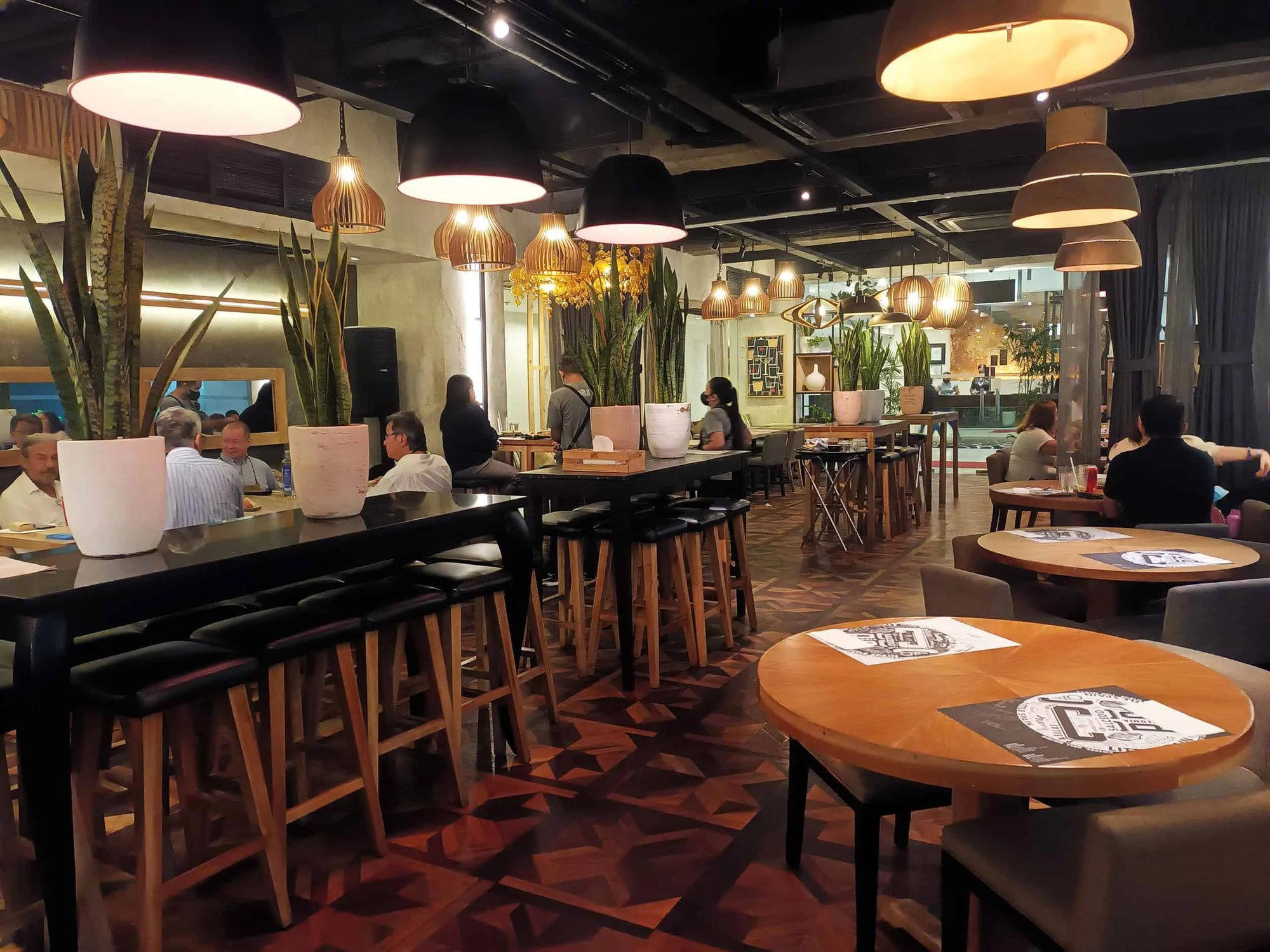
- Croquetas
- Thin House Paella
- Iberico Cold Platter
Where Salcedo Village Meets the Michelin Standard
Salcedo Village has spent the last decade repositioning itself. What was once primarily a residential and corporate enclave within Makati has become one of the more concentrated pockets of serious dining in Metro Manila, its low-rise streetscape now threaded with restaurants that draw both local regulars and visitors navigating the capital's increasingly competitive food scene. Pablo sits at the ground floor of The Picasso Boutique Serviced Residences on L.P. Leviste Street, a location that carries its own logic: the boutique serviced residence format attracts long-stay guests with appetite for repeat, quality-led dining, and the surrounding Salcedo streets deliver a lunchtime and weekend crowd from the professional and diplomatic community that has long anchored the neighbourhood.
The physical setting at that address places Pablo within walking distance of the Salcedo Saturday Market, one of the more curated weekend produce markets in the city, which gives some indication of the ingredient culture the restaurant operates within. This is a neighbourhood where sourcing matters, and where diners notice the difference between produce pulled from that kind of supply chain and produce that isn't.
A Michelin Plate in Context: What the Recognition Signals
The 2026 Michelin Plate designation positions Pablo within a specific tier of the Guide's Philippine listings. The Plate, awarded to restaurants offering good cooking without reaching starred status, functions as the Guide's baseline signal of quality: these are kitchens where technique is consistent and the cooking is worth a deliberate visit, rather than a casual stop. In the context of Makati, where the Michelin Guide's Philippine edition has sharpened its focus on restaurants that do something coherent with local ingredients rather than simply importing a foreign format wholesale, a Plate recognition carries weight as a quality floor.
For reference, the broader Philippine Michelin cohort at the starred level includes restaurants like Gallery By Chele in Manila, where European-trained technique meets Philippine produce in a tasting menu format. Pablo's Plate positioning places it in productive company: restaurants where the ambition is clear and the execution has earned external validation, without the theatrical apparatus that sometimes accompanies starred dining. That positioning also connects it to the conversation happening at places like Hapag and Helm within Makati itself, restaurants that have each found a distinct register for serious Filipino cooking.
The Editorial Angle: Imported Methods, Philippine Produce
The most interesting tension in contemporary Philippine fine dining is not whether local chefs can replicate foreign technique, that question was settled years ago, but what happens when those techniques serve ingredients that don't appear in any European or Japanese culinary canon. The archipelago's produce vocabulary is genuinely distinct: calamansi, tamarind, pili nuts, heirloom rices from the Cordillera, reef fish species with no direct Western equivalent, vinegars made from coconut and palm that behave differently from wine-based acids. Restaurants that apply classical method to that ingredient set tend to produce something that sits outside the usual categories.
Pablo, operating from its Salcedo address with a Michelin Plate credential, participates in that broader movement. The Makati fine-casual tier has been the primary site of this experiment in the Philippines: dense enough with trained cooks, informed diners, and import-capable supply chains to sustain the kind of ingredient-technique dialogue that drives the most interesting menus. Celera, Kása Palma, and Inatô each represent adjacent positions in that conversation, approaching the local-global intersection from different angles of cuisine and format.
Beyond Makati, this approach has regional parallels. Linamnam in Parañaque works similar territory with a focus on regional Philippine traditions, while Asador Alfonso in Cavite applies Spanish-inflected technique to local produce in a very different register. The Abaseria Deli & Cafe in Cebu approaches the same question from a more casual, deli-forward format. What connects these restaurants across geographies is a shared refusal to treat Philippine ingredients as secondary to the technique being applied to them.
Internationally, the conversation has equivalents in cities where classical European or Japanese training has been redirected toward indigenous produce: Atomix in New York City applies Korean fermentation and ingredient logic within a fine-dining framework that matches anything on the French side of the city's ledger, while Le Bernardin remains the reference point for what disciplined classical technique, applied consistently over decades, produces in terms of sustained recognition. Pablo occupies a different scale and a different cultural context, but the underlying question its kitchen is answering is part of the same global reckoning about what technique is for.
Placing Pablo in Makati's Dining Tier
Makati's restaurant scene has stratified in ways that make it easier to place a Michelin Plate restaurant accurately within the city's hierarchy. The top tier, anchored by starred and frequently awarded venues, operates at price points and booking lead times that signal destination dining. The Plate tier sits one step below in recognition terms, but the gap in actual cooking quality is often narrower than the award level implies. These are restaurants where a kitchen has demonstrated enough consistency to earn Guide attention without yet having the full portfolio of factors, tasting menu architecture, service formalism, reservation scarcity, that tend to accompany starred status.
Blackbird Makati and Bolero in Taguig represent adjacent dining formats in the broader Metro Manila premium tier, each occupying a distinct position relative to the Michelin framework. Pablo's Salcedo Village address gives it access to a neighbourhood clientele that expects quality as a baseline rather than an occasion, which tends to push kitchens toward consistency over spectacle.
Planning Your Visit
Pablo is located at the ground floor of The Picasso Boutique Serviced Residences, 117 L.P. Leviste Street, Salcedo Village, Makati City. The address is within the walkable Salcedo core, accessible by Grab from anywhere in Metro Manila, with the Ayala and Gil Puyat MRT stations providing public transit options within reasonable distance. Specific hours, current pricing, and booking arrangements are best confirmed directly with the restaurant before visiting, as operational details for this format can shift. Visiting on a Saturday positions you within reach of the Salcedo Market circuit, which makes for a logical pairing of market browsing and a proper sit-down meal in the same neighbourhood.
For a broader orientation to eating and drinking in the district, our full Makati restaurants guide maps the competitive set in detail. If you are extending your time in the city and need accommodation recommendations, our Makati hotels guide covers the neighbourhood's leading options. Those looking to extend the evening after dinner will find context in our Makati bars guide, and for those interested in the wider Metro Manila scene, our Makati wineries and experiences guides round out the picture.
Frequently asked questions
What awards or recognition does Pablo have?
Pablo has received recognition including: Michelin Plate (2026).
Where do I go for Pablo?
Pablo is located at G/F The Picasso Boutique Serviced Residences, 117, Salcedo Village, 119 L.P. Leviste Street, Makati City, 1227 Metro Manila, Philippines, Makati.
What should I eat at Pablo?
Pablo's 2026 Michelin Plate recognition was awarded on the basis of consistent kitchen quality, which in the current Philippine fine dining context typically centres on local produce handled through foreign-trained technique.
What's the best way to book Pablo?
Pablo is located at the ground floor of The Picasso Boutique Serviced Residences, 117 L.P. Leviste Street, Salcedo Village, Makati City.
Comparable Venues
Comparable venues nearby, for context on price, style, and recognition.
| Venue | Cuisine | Price | Awards | Notes |
|---|---|---|---|---|
| PabloThis venue (the venue you are viewing) | Spanish Bistro | $20–30 | Michelin Plate | Not listed |
| Aida's Chicken | Bacolod-style Chicken Inasal | $10–20 | Michelin Plate | Makati |
| Goxo | Modern Basque with Filipino Accents | Not listed | Michelin Plate | Salcedo Village |
| 12/10 | Modern Japanese Izakaya | Not listed | Michelin Plate | Makati |
| Tim Ho Wan | Hong Kong Dim Sum | $10–20 | Not listed | Glorietta |
| La Pita | Middle Eastern Small Plates | $10–20 | Michelin Bib Gourmand | Poblacion |
Recognition history
Dated appearances from independent guides and award organizations, with the underlying list record or original source where available.
Michelin Plate
Michelin
Full recognition history (2 entries)
Michelin Plate
Michelin