Ottolenghi Chelsea
Ottolenghi Chelsea on Pavilion Road sits within one of London's most concentrated stretches of food retail and neighbourhood dining, bringing the brand's signature approach to vegetables, spice, and bold colour to a quieter corner of SW1. The format here leans toward the deli counter and casual eat-in experience that made the original Islington outpost a reference point for a generation of London cooks and food writers.
Pearl is the En Primeur Club membership app — saves, bookings, and concierge access live there. Same editors, same standards.
- Address
- 261 Pavilion Rd, London SW1X 0BP, United Kingdom
- Phone
- +442038242818
- Website
- ottolenghi.co.uk
- Directions
- Get directions
 Saves & bookings on Pearl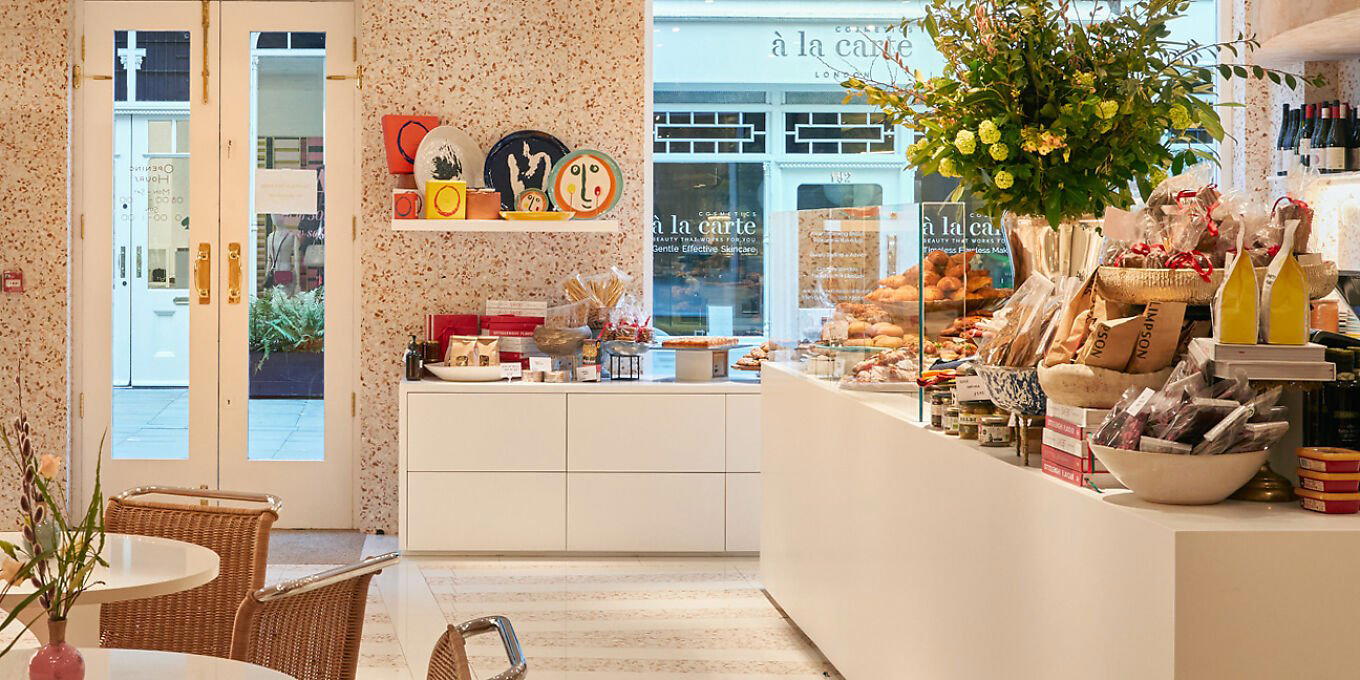
Pavilion Road and the Architecture of the Neighbourhood Deli
There is a particular kind of London food street that resists the pressure to become a destination and instead stays useful and local. Pavilion Road in Chelsea is one of them. A short pedestrianised stretch running behind Sloane Square, it has over the past decade assembled a row of independent food producers and retailers, a butcher, a fishmonger, a bakery, that functions more like a covered market lane than a conventional high street. Ottolenghi's presence at 261 Pavilion Road slots into that logic. The brand, which now spans multiple London locations as well as a substantial cookbook and media presence, has always operated across a spectrum from deli counter to full restaurant, and the Chelsea outpost sits toward the deli and casual eat-in end of that range.
For visitors arriving from the fine dining corridor of nearby Chelsea and Knightsbridge, where Restaurant Gordon Ramsay, Dinner by Heston Blumenthal, and CORE by Clare Smyth define a heavily formal and expensive tier of London eating, the Pavilion Road format is a deliberate change of register. The counter display of dressed salads, vegetable-forward dishes, and layered cakes has become among the more replicated visual formats in London food retail, imitated widely enough that the original now has to be assessed on execution rather than novelty.
The Booking Question: What Kind of Visit Does This Require?
The editorial angle here matters for anyone planning a London food itinerary around the EA-GN-10 framework, logistics and planning. The Ottolenghi model at this location does not function like the reservation-required, tasting-menu venues that dominate stronger examples from London's critical conversation. There is no three-month lead time, no pre-payment, no dress code decision to make. The format is walk-in or light advance planning at most, which places it in a completely different logistical tier from Sketch's Lecture Room and Library or The Ledbury, where booking windows and cancellation policies are part of the dining calculus.
That accessibility is not a consolation prize. London's most reservation-heavy tier, the Michelin multi-star corridor, serves a specific function, and so does the walk-in deli counter. Conflating the two produces bad planning. If your London visit is structured around one or two serious tasting-menu evenings and you want daytime eating that is flavourful, ingredient-led, and low-friction, Pavilion Road functions as a logical daytime anchor for a Chelsea or Belgravia morning. The practical comparison with peers across the UK's broader fine dining scene, Le Manoir aux Quat'Saisons, L'Enclume, or Moor Hall, is essentially a category error. Those are overnight or multi-hour formal experiences with lead times measured in weeks. Ottolenghi Chelsea is open the same day, with recommended reservations and a smart casual dress code.
Planning Your Visit: A Practical Format Comparison
| Venue | Format | Booking Lead Time | Price Tier |
|---|---|---|---|
| Ottolenghi Chelsea | Deli / casual eat-in | Walk-in / same day | £–££ |
| CORE by Clare Smyth | Tasting menu | Weeks to months | ££££ |
| The Ledbury | Tasting menu | Weeks to months | ££££ |
| Sketch Lecture Room | à la carte / tasting | Weeks ahead | ££££ |
| Hand and Flowers | À la carte / set lunch | Weeks ahead | £££ |
The Ottolenghi Counter Format in London Context
The Ottolenghi brand emerged from a specific moment in early 2000s London food culture, when vegetable-forward Middle Eastern and Mediterranean cooking had not yet achieved the critical mass it now holds. The original Islington deli established a house aesthetic: white spaces, long counter displays, dishes built on roasted roots, pulses, pomegranate seeds, tahini, and herb-heavy dressings. That aesthetic has been absorbed so thoroughly into mainstream London food retail that it can be easy to underestimate how much of what feels normal in a London deli counter in 2024 was shaped by this template.
The Chelsea location brings that format to a neighbourhood that had, for most of its history, been associated with conservative eating: traditional English restaurants, French brasseries, and the kind of old-school luxury that defined the King's Road in an earlier era. Pavilion Road's regeneration as a food lane shifted that slightly, and Ottolenghi's presence there signals a change in the SW1 food character that a decade ago would not have been obvious.
For anyone building a broader picture of London's eating, the full London restaurants guide maps the city's dining tiers in more detail, from walk-in daytime formats through to the multi-star reservation circuit that includes Restaurant Gordon Ramsay and destinations further afield like Waterside Inn in Bray, Gidleigh Park in Chagford, or Midsummer House in Cambridge. Within London itself, the comparison set for Ottolenghi Chelsea is not the fine dining room but the daytime food destination: the quality deli counter that rewards a neighbourhood walk rather than a reservation campaign.
Internationally, the closest conceptual parallel would be a high-quality daytime counter format in cities like New York, where venues such as Le Bernardin and Atomix anchor the serious tasting-menu tier while a separate infrastructure of quality daytime eating operates in parallel. In that framing, the restaurant is not competing with London's Michelin restaurants; it occupies a different register entirely, and should be assessed on its own terms.
Recognition, Side-by-Side
Comparable venues nearby, for context on price, style, and recognition.
| Venue | Cuisine | Price | Notes |
|---|---|---|---|
| Ottolenghi ChelseaThis venue — the venue you are viewing | Modern Middle Eastern Deli | $$$ | Not listed |
| Grosvenor Casino The Victoria | International with Middle Eastern Flair | $$$ | Marylebone |
| Al Hamra | Traditional Lebanese | $$$ | Mayfair |
| Fait Maison | Middle Eastern & Mediterranean Café | $$$ | South Kensington |
| Al Waha | Authentic Lebanese | $$ | Bayswater |
| Bergamot Cafe | Modern Persian Café | $$ | White City |
Continue exploring
More in London
Restaurants in London
Browse all →
Bars in London
Browse all →
Hotels in London
Browse all →
Wineries in London
Browse all →
At a Glance
- Modern
- Trendy
- Elegant
- Brunch
- Casual Hangout
- Terrace
- Open Kitchen
- Natural Wine
- Street Scene
Current opening hours
- Monday
- 8 AM–7 PM
- Tuesday
- 8 AM–7 PM
- Wednesday
- 8 AM–7 PM
- Thursday
- 8 AM–7 PM
- Friday
- 8 AM–7 PM
- Saturday
- 8 AM–7 PM
- Sunday
- 9 AM–5 PM
Hours can change for holidays and private events. Last verified .
Bright and modern interior with textured walls, terrazzo floors, and colorful displays of salads and pastries creating a lively yet refined atmosphere.