Al Hamra
Al Hamra occupies a townhouse on Shepherd Market, one of Mayfair's quieter village-like corners, and has served as a reference point for Lebanese dining in central London for decades. The room draws a mix of local regulars and visitors seeking the kind of mezze-anchored progression that defines the eastern Mediterranean table. Among Mayfair's dining options, it sits in a different register from the area's Michelin-chasing tasting menus.
Pearl is the En Primeur Club membership app — saves, bookings, and concierge access live there. Same editors, same standards.
- Address
- 31-33 Shepherd Market, London W1J 7PT, United Kingdom
- Phone
- +44 20 7493 1954
- Website
- alhamrarestaurant.co.uk
- Directions
- Get directions
 Saves & bookings on Pearl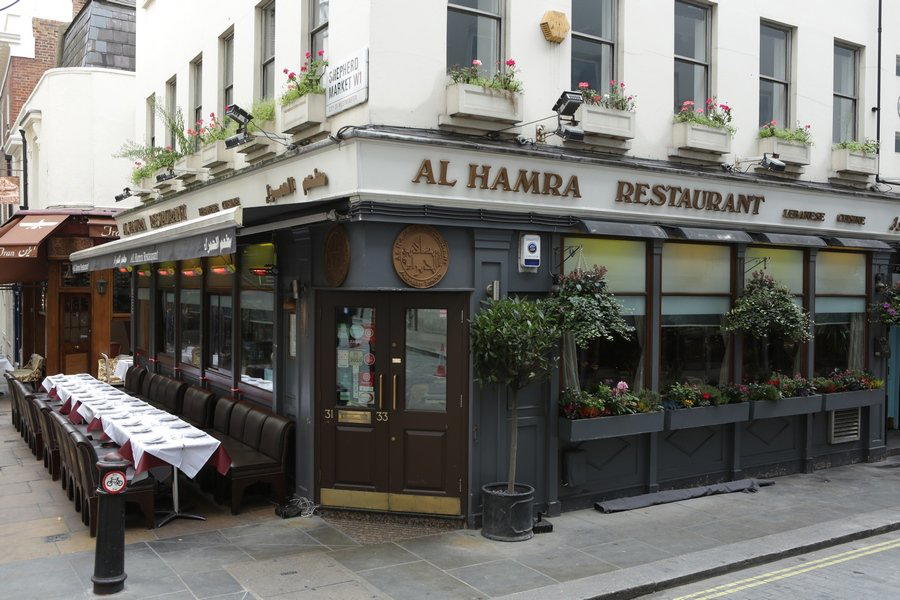
Shepherd Market and the Geography of Mayfair Dining
The area around Berkeley Square and Park Lane trends toward the kind of formal European dining found at Restaurant Gordon Ramsay or Sketch, The Lecture Room and Library, where tasting menus run to multiple courses and Michelin stars define the competitive set. Shepherd Market, a pedestrianised enclave tucked behind Curzon Street, operates on a different logic entirely. The narrow lanes and low-fronted buildings recall the market village that occupied this site before the Georgian terraces were built, and the restaurants here tend toward the personal and neighbourhood-scaled rather than the formal and occasion-driven.
Al Hamra at 31-33 Shepherd Market sits within that context. Lebanese restaurants in London cluster in two broad zones: the Edgware Road corridor, which developed its Arab dining identity through community settlement from the 1970s onward, and scattered outposts in the West End and Mayfair that serve a more international, hotel-adjacent clientele. Al Hamra belongs to the second category, drawing on the same Lebanese culinary tradition while operating in a room that reflects the quieter, residential character of its immediate surroundings rather than the busier strip-restaurant energy of Edgware Road.
The Logic of a Lebanese Meal
Lebanese cuisine is structured differently from the European tasting menu format that defines much of what surrounds Al Hamra geographically. Where a meal at The Ledbury or CORE by Clare Smyth moves through a prescribed sequence with the kitchen controlling the pace, a Lebanese table is assembled by the diners themselves through a succession of cold mezze, hot mezze, and grilled mains. The progression is real but it is participatory: you build the arc of the meal, deciding how deep to go into the cold dishes before signalling for the grill to begin.
Cold mezze establish the tone. Hummus, moutabal, tabbouleh, and fattoush are the structural foundation, the dishes that speak most directly to the quality of the raw ingredients and the kitchen's precision with seasoning and acid balance. A kitchen that gets these right earns trust for everything that follows. Hot mezze introduce heat and texture into the sequence: kibbeh, sambousek, and grilled halloumi shift the register without yet committing to the full weight of the main course. The grill section, typically built around lamb in various cuts and preparations alongside chicken, is where the meal reaches its centre of gravity.
This format rewards patience and a table large enough to spread across multiple dishes simultaneously. It also rewards repeat visits in a way that a fixed tasting menu does not, because the composition of the meal changes with the group and the appetite rather than being dictated by the kitchen's current programme. For London diners more accustomed to the linear progression of European fine dining, as at Dinner by Heston Blumenthal, the distributed, collaborative structure of a Lebanese mezze table is a genuinely different kind of eating experience.
Mayfair's Lebanese Position
Within the broader London restaurant scene, Lebanese dining occupies a specific and somewhat underleveraged position. The city has strong representation of Middle Eastern cuisines at both the casual and premium ends, but the middle tier of serious, sit-down Lebanese restaurants with full mezze programmes is smaller than the tradition would support. The restaurant has maintained a presence in Mayfair across a period when the neighbourhood has seen considerable turnover in its restaurant roster, with newer European and Asian openings cycling through while the Lebanese category has remained relatively stable.
That stability is part of what defines the restaurant's position relative to peers. The Mayfair dining scene skews heavily toward European formats, and the venues that have accumulated critical recognition in the area, including the three-Michelin-star houses and the design-led newcomers, operate almost entirely within French or Modern British traditions. Lebanese cuisine at this address functions as a counterpoint: a different compositional logic, a different relationship between kitchen and table, and a different price architecture than the tasting menu tier.
How the Meal Should Move
Approaching a meal at the restaurant with some structural intention makes a measurable difference to the outcome. Beginning with a spread of cold mezze allows the table to settle and to calibrate the kitchen's current form before committing to the fuller volume of hot dishes and grills. The cold section should not be rushed; these dishes are designed to accompany conversation and to be returned to across the early part of the meal rather than consumed and cleared before moving on.
The transition to hot mezze marks the meal's first shift in energy. Fried and grilled small dishes bring heat and a different textural register, and the araki or wine, if ordered at the start, will have reached a comfortable point by now. The grill section that follows represents the meal's weight and is where portions tend to be larger and the dishes more straightforwardly satisfying rather than complex. Finishing with Lebanese sweets and coffee follows the same participatory logic as the rest of the meal: the ending is yours to choose rather than announced by the kitchen.
Compared to the constructed narrative arc of meals at venues like The Fat Duck in Bray or L'Enclume in Cartmel, where the sequence is fixed and the pacing is entirely in the kitchen's hands, the Lebanese format places more creative and social responsibility on the diners. That is not a limitation; it is a different kind of pleasure.
Planning a Visit
The Short List
Comparable venues nearby, for context on price, style, and recognition.
| Venue | Cuisine | Price | Notes |
|---|---|---|---|
| Al HamraThis venue — the venue you are viewing | Mayfair, Traditional Lebanese | $$$ | Not listed |
| Fait Maison | Not listed | $$$ | South Kensington, Middle Eastern & Mediterranean Café |
| Bergamot Cafe | White City, Modern Persian Café | $$ | Not listed |
| Byblos Harbour | Millwall, Authentic Lebanese Brasserie | $$ | Not listed |
| Naroon Marylebone | Marylebone, Contemporary Persian | $$$ | Not listed |
| Porte des Indes | Marble Arch, French-Creole Indian Fusion | $$$ | Not listed |
Continue exploring
More in London
Restaurants in London
Browse all →
Bars in London
Browse all →
Hotels in London
Browse all →
Wineries in London
Browse all →
At a Glance
- Classic
- Romantic
- Intimate
- Date Night
- Special Occasion
- Extensive Wine List
Current opening hours
- Monday
- 11 AM–12 AM
- Tuesday
- 11 AM–12 AM
- Wednesday
- 11 AM–12 AM
- Thursday
- 11 AM–12 AM
- Friday
- 11 AM–12 AM
- Saturday
- 11 AM–12 AM
- Sunday
- 11 AM–12 AM
Hours can change for holidays and private events. Last verified .
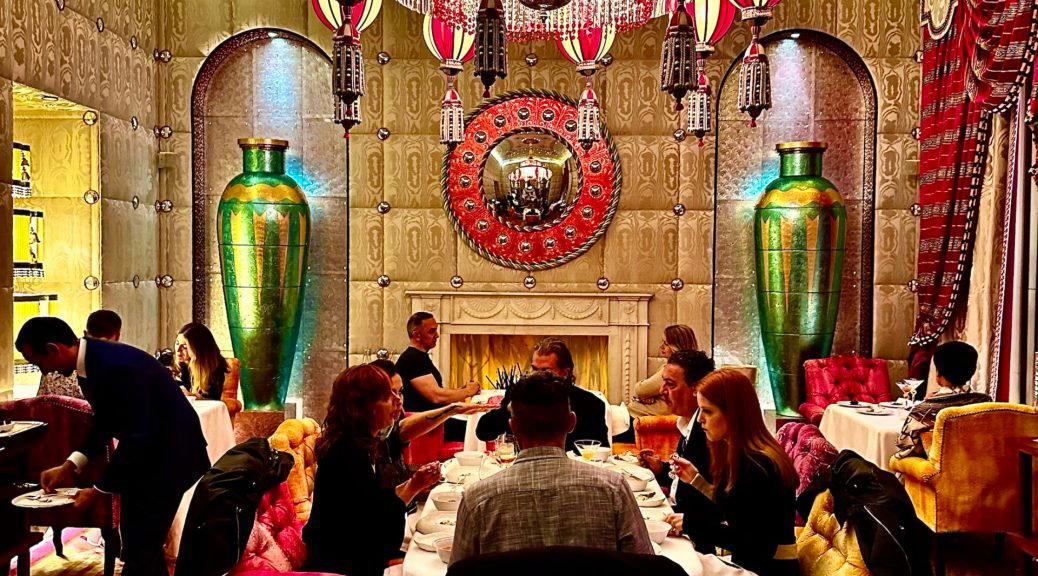
Old-fashioned, cramped with patterned felt decor, offering a lively yet anachronistic atmosphere.