Al Waha
On Westbourne Grove in Notting Hill, Al Waha has been serving Lebanese food to west London for decades, earning a loyal following among locals who treat it as a regular rather than an occasion. The kitchen works across the full register of the Lebanese table, from cold mezze to charcoal-grilled meats, in a room that functions more as neighbourhood dining room than destination restaurant.
Pearl is the En Primeur Club membership app — saves, bookings, and concierge access live there. Same editors, same standards.
- Address
- 75 Westbourne Grove, London W2 4UL, United Kingdom
- Phone
- +44 20 7229 0806
- Website
- alwahalondon.co.uk
- Directions
- Get directions
 Saves & bookings on Pearl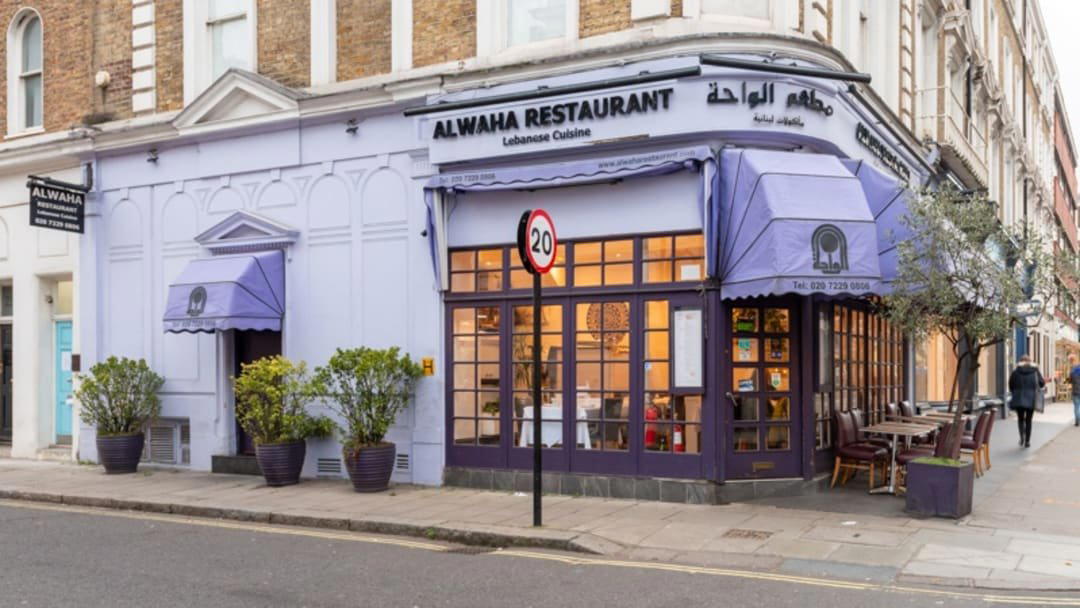
Westbourne Grove and the Lebanese Table in London
Al Waha is a Lebanese restaurant at 75 Westbourne Grove, London W2 4UL, known for its authentic Lebanese menu and casual, walk-in-friendly setting. The street and its immediate surroundings draw a mixed residential crowd, and the dining options reflect that: independent operators holding their ground alongside newer arrivals. Al Waha, at number 75, sits within a broader pattern of Lebanese and Middle Eastern restaurants that have been part of west London's fabric since the 1980s, when a significant Lebanese community established itself in the area around Edgware Road and spread outward. That geographic context matters. Lebanese cooking in this part of London is not a trend or a niche import; it is embedded in the neighbourhood, and the restaurants here are judged by regulars who know the food well.
London's Lebanese restaurant scene splits broadly between the more formal, elaborately appointed rooms around Mayfair and Knightsbridge and the looser, longer-standing neighbourhood operations in west London. Al Waha belongs firmly to the second category: a room where the point is the food and the company, not the staging. Compared with the ££££ end of London dining, where Michelin-starred addresses like CORE by Clare Smyth, Restaurant Gordon Ramsay, and Sketch, The Lecture Room and Library operate at a level of formality and price that makes them occasion restaurants, the restaurant functions in a different register entirely. The comparison is worth making not to position one above the other, but to clarify what kind of evening you are actually booking.
The Lebanese Mezze Tradition and How It Reads in a London Context
Lebanese cuisine is one of the more technically demanding of the eastern Mediterranean traditions, not because it relies on elaborate plating or complex reductions, but because its standards are set at the level of fundamentals. Hummus is judged against hummus made daily from dried chickpeas; tabbouleh is assessed on the ratio of parsley to bulgur; kibbeh nayyeh is evaluated for the quality and freshness of the lamb. These are not forgiving categories. A kitchen that shortcuts on any of them loses credibility with the part of its audience that grew up eating this food at home.
The cold mezze spread is where Lebanese kitchens are first and most honestly assessed. A competent spread includes hummus, moutabal (smoked aubergine with tahini), fattoush, tabbouleh, warak enab (stuffed vine leaves), and labneh, each arriving as a distinct dish with its own texture and temperature rather than a supporting act. The warm mezze tier adds kibbeh, falafel, and samboussek. What separates a serious kitchen from a perfunctory one is whether the falafel is fried to order and whether the kibbeh has the right balance of spiced minced lamb to cracked wheat shell. Charcoal grilling then handles the main courses: shish taouk, kafta, and mixed grills that are judged almost entirely on the quality of the meat and the discipline of the fire. The restaurant works across this full register, operating as a neighbourhood Lebanese restaurant with a menu that covers the classic categories rather than attempting to reframe or modernize them.
The editorial angle worth pressing on here is what Lebanese cooking in a London context actually involves technically. The kitchen is not importing a single technique from a single training tradition; it is working with a culinary grammar that developed across Lebanon's mountain villages, coastal cities, and Levantine trade routes, then adapting that grammar to a west London ingredient supply. Some of the key ingredients, sumac, pomegranate molasses, dried rosebuds, arrive imported; others, the lamb, the herbs, the seasonal vegetables, can come from British suppliers. The interaction between those imported flavor profiles and locally sourced produce is where London's better Lebanese kitchens find their particular character. This is a version of the local-ingredients, global-technique dynamic that operates in more widely discussed contexts at places like The Ledbury or Dinner by Heston Blumenthal, but in Lebanese cooking it operates with far less theoretical scaffolding and far more daily repetition.
Westbourne Grove as a Dining Address
W2 postcode offers a particular kind of dining evening. It is not the West End's concentrated restaurant belt, nor is it the outer-London destination format that drives bookings at places like The Fat Duck in Bray, L'Enclume in Cartmel, or Moor Hall in Aughton. Westbourne Grove functions instead as a local high street with genuine cooking depth, where the foot traffic is residential as much as destination-driven. Bayswater and Notting Hill Underground stations both serve the area, making it accessible from central London without requiring a significant detour. The surrounding streets have enough complementary options that an evening here rarely needs to be a single-restaurant affair.
For those whose London trip extends to day trips in the south of England, Gidleigh Park in Chagford, Hand and Flowers in Marlow, and hide and fox in Saltwood represent a different register of the British dining weekend. Internationally, readers drawn to similarly technique-grounded kitchens operating in a neighbourhood rather than trophy format might consider Le Bernardin in New York City or Atomix in New York City as reference points for how serious cooking can operate across a wide range of formats and price points.
Planning an Evening at Al Waha
The restaurant is located at 75 Westbourne Grove, London W2 4UL. The restaurant is walk-in friendly, and its regular hours are Monday through Friday from 5 to 10 PM, with Saturday and Sunday service from 12 to 10 PM. Expect a moderate price point, around $30 per person. The room suits groups and families as readily as couples, and the format of shared mezze makes it one of the more naturally sociable structures in the city's mid-range dining.
Where the Accolades Land
Comparable venues nearby, for context on price, style, and recognition.
| Venue | Cuisine | Price | Notes |
|---|---|---|---|
| Al WahaThis venue — the venue you are viewing | Authentic Lebanese | $$ | Not listed |
| Bergamot Cafe | Modern Persian Café | $$ | White City |
| Flowers Lebanese restaurant | Lebanese | $$ | Marylebone |
| Damascus Bite | Authentic Syrian | $$ | Bethnal Green |
| The Good Egg Middle Eastern Restaurant Soho | Middle Eastern-Inspired Deli | $$ | Soho |
| Bubala King's Cross | Vegetarian Middle Eastern | $$ | King's Cross |
Continue exploring
More in London
Restaurants in London
Browse all →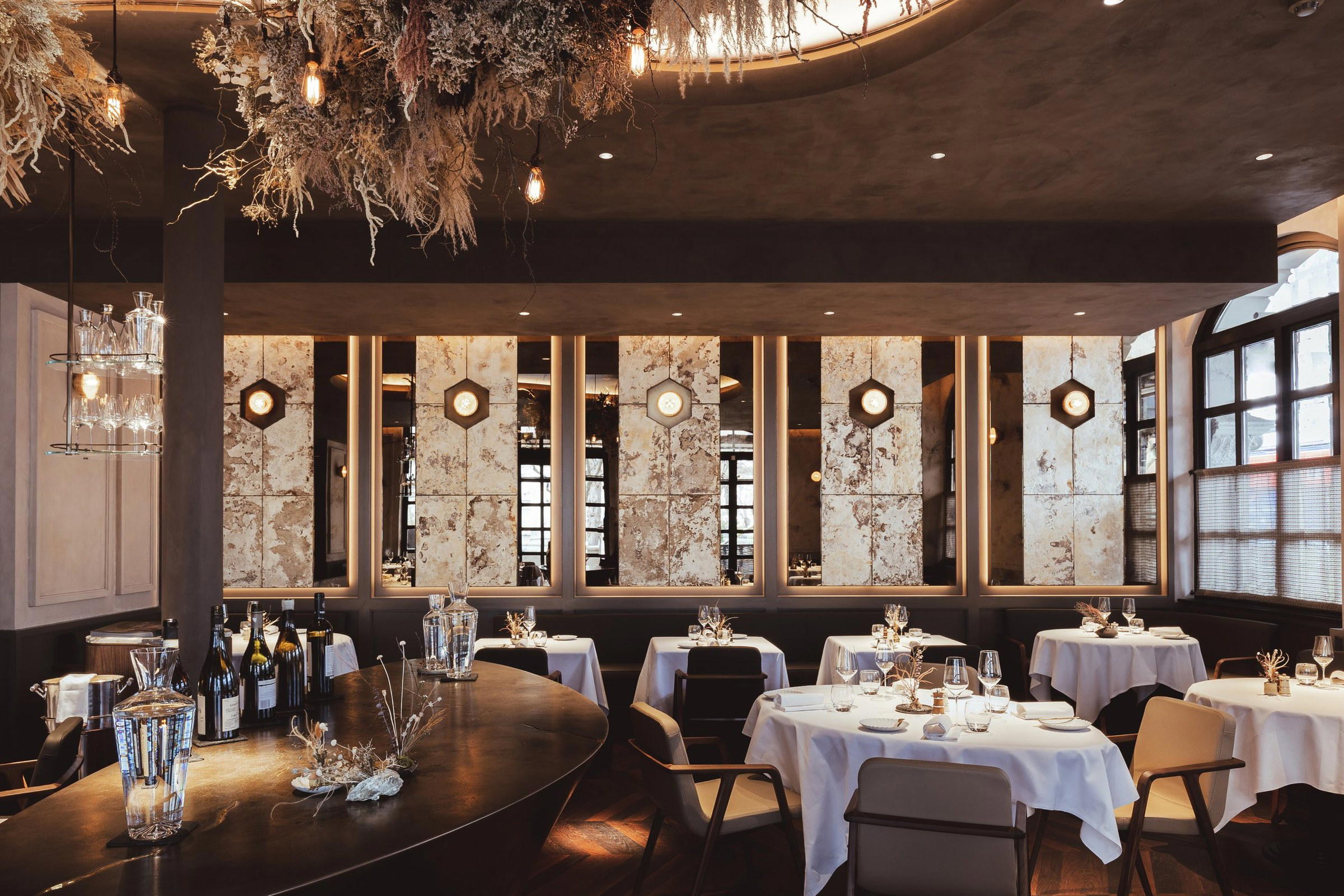
Bars in London
Browse all →
Hotels in London
Browse all →
Wineries in London
Browse all →
At a Glance
- Cozy
- Intimate
- Family
- Casual Hangout
- Group Dining
- Standalone
- Extensive Wine List
Current opening hours
- Monday
- 5–10 PM
- Tuesday
- 5–10 PM
- Wednesday
- 5–10 PM
- Thursday
- 5–10 PM
- Friday
- 5–10 PM
- Saturday
- 12–10 PM
- Sunday
- 12–10 PM
Hours can change for holidays and private events. Last verified .
Cozy and pleasant with warm family-like atmosphere, ochre walls, brickwork, foliage, and Arabic calligraphy; some note lighting could be dimmer in evenings.