
On a narrow alley off Oimatsu-dori in Osaka's Kita Ward, Oryori Amenimomakezu announces itself with a hand-lettered backlit sign, its characters drawn by owner-chef Kimura using chopsticks dipped in charcoal. The kitchen works fermented seasonings and malted rice marinades into Japanese fare that references Miyazawa Kenji's poetry of quiet resilience. Michelin Bib Gourmand recognition in both 2024 and 2025 places it among the more consistent value-driven Japanese tables in the city.
Pearl is the En Primeur Club membership app — saves, bookings, and concierge access live there. Same editors, same standards.
- Address
- 4 Chome-10-17 Nishitenma, Kita Ward, Osaka, 530-0047, Japan
- Phone
- +81 6-6809-7180
- Website
- facebook.com
- Directions
- Get directions
 Saves & bookings on Pearl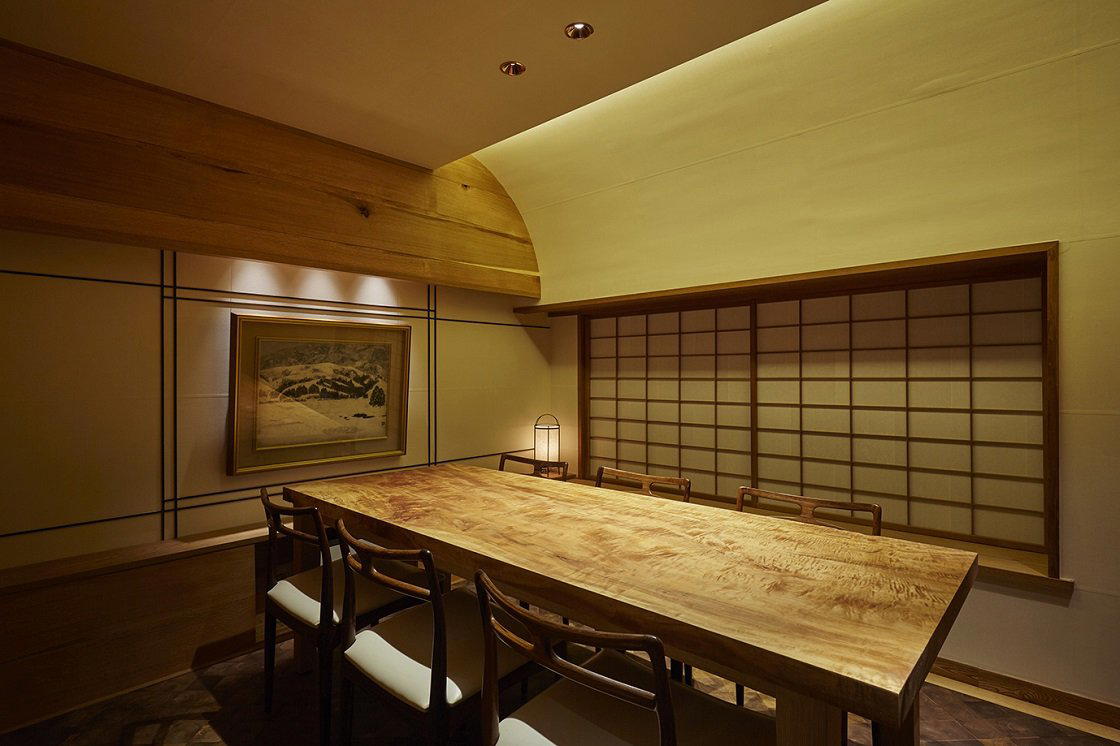
A Sign That Earns Its Place
On most of Osaka's streets, restaurant signage competes through scale: backlit menus, laminated photographs, sliding doors framed in neon. The alley off Oimatsu-dori that leads to Oryori Amenimomakezu operates by different rules. The backlit sign here carries text written by owner-chef Kimura himself, using chopsticks dipped in charcoal. The phrase Ame ni mo makezu, Be Not Defeated by the Rain, is lifted from the quoted poem by the Meiji-Taishō writer Miyazawa Kenji, and the calligraphic irregularity of those characters is deliberate. It signals, before you have touched a chopstick or tasted a dish, that the aesthetic of this room follows a logic rooted in craft and literary humility rather than contemporary polish.
That positioning matters in a city where Osaka's ¥¥¥¥ tier is crowded with technically immaculate addresses. Tables like Kashiwaya Osaka Senriyama and kaiseki rooms operating at the ¥¥¥ tier such as Taian set the premium benchmark. Oryori Amenimomakezu operates at ¥¥ and, crucially, holds Michelin Bib Gourmand status in both 2024 and 2025, meaning Michelin's inspectors have twice judged it to offer cooking of notable quality at a price that does not require the calculation most Osaka fine-dining visits demand.
Fermentation as a Culinary Stance
Within Osaka's Japanese dining scene, the dominant narrative for the last decade has been technical precision: immaculate dashi, hyper-seasonal sourcing, the architecture of kaiseki sequencing. What Oryori Amenimomakezu does instead is work fermentation and traditional preserved seasonings into the centre of its menu, positioning them not as supporting flavour but as the primary language of the cooking.
Grilled fish is marinated in malted rice, a technique tied to koji culture and the long tradition of using fermentation to transform protein texture before heat is applied. Chicken liver arrives garnished with rice-bran bread, another alignment with fermented grain traditions that Japanese home kitchens and rural craft producers have kept alive alongside the more celebrated washoku canon. These are not gestures toward heritage; they are the method.
This approach sits in an interesting position relative to peers. Miyamoto and Tenjimbashi Aoki operate within Osaka's Japanese dining range with their own formal frameworks. The kitchen at Amenimomakezu, by contrast, draws its coherence from a literary and agricultural reference point rather than a formal culinary school lineage, and that distinction shows in what ends up on the plate.
Chef Kimura and the Discipline Behind the Room
The editorial angle that matters here is less about biographical chronology and more about what the choices in this room imply about Kimura's formation. Writing your own restaurant sign with chopsticks and charcoal is not a marketing decision. It is the act of a person trained to treat every material as a medium, and for whom the boundary between craft and food has been deliberately dissolved.
The poem chosen for that sign, Miyazawa Kenji's Ame ni mo makezu, is a text that celebrates endurance, simplicity, and service to others above personal ambition. The recurring motif in Kenji's writing is that honest labour, farming, craft, care, carries more weight than ceremony or recognition. For a chef at the ¥¥ price point who has held Bib Gourmand status consecutively, that reference point is not decorative. It frames a deliberate refusal to position the restaurant as aspirational in the conventional sense, even as the cooking meets a standard that Michelin's inspectors have verified twice.
Among the broader network of Japanese addresses across the country, the combination of literary grounding and fermentation focus places Amenimomakezu in a small peer group. Gion Sasaki in Kyoto represents a different register of Japanese seasonal cooking, and Harutaka in Tokyo anchors sushi at an entirely different price point, but both share the quality of being shaped by a coherent individual sensibility rather than a formula. That quality, and its relative scarcity at accessible prices, is what the Bib Gourmand designation captures in Amenimomakezu's case.
Nishitenma and the Neighbourhood Context
The Kita Ward address on 4 Chome-10-17 Nishitenma places this restaurant in one of Osaka's most concentrated zones for serious eating. The streets around Oimatsu-dori carry a density of Japanese dining rooms that skew toward the intimate and the considered, a different register from the tourist-facing energy of Dotonbori or the izakaya corridors of Shinsekai. Oimatsu Hisano is a near neighbour and operates within the same general street culture of understated signage and cooking that rewards attention. Yugen extends the area's range further.
Nishitenma suits a particular kind of evening: one where the point is a single room and a specific philosophy rather than a larger itinerary of venue-hopping. Visitors arriving from elsewhere in the Kansai region will find the area accessible from central Osaka, and those combining a broader Japanese trip across multiple cities can cross-reference the approach here with akordu in Nara, Goh in Fukuoka, or the precise register of Myojaku in Tokyo and Azabu Kadowaki. For the Yokohama and Okinawa extensions of a Japan trip, 1000 in Yokohama and 6 in Okinawa offer reference points for how individual sensibility functions at different geographic and price registers.
Planning a Visit
The table below contextualises Amenimomakezu against comparable Osaka addresses by price tier and Michelin recognition.
| Venue | Cuisine | Price Tier | Michelin | Google Score |
|---|---|---|---|---|
| The restaurant | Japanese | ¥¥ | Bib Gourmand 2024, 2025 | 4.6 (37 reviews) |
| Kashiwaya Osaka Senriyama | Japanese | ¥¥¥ | Starred | , |
| Tenjimbashi Aoki | Japanese | ¥¥ | , | , |
| Yugen | Japanese | ¥¥¥ | , | , |
Recognition, Side-by-Side
Comparable venues nearby, for context on price, style, and recognition.
| Venue | Cuisine | Price | Awards | Notes |
|---|---|---|---|---|
| Oryori AmenimomakezuThis venue — the venue you are viewing | Japanese Izakaya with Sake Pairing | $$$ | Bib Gourmand | Not listed |
| Ayamuya | Michelin Yakitori | $$$ | Bib Gourmand | Fukushima |
| Sobakiri Gaku | Artisanal Soba | $$$ | Bib Gourmand | Chūō |
| Suigyo Murabayashi | Traditional Japanese Seafood Omakase | $$$ | Bib Gourmand | Kita |
| Sushitsune | Traditional Osaka Battera Sushi | $$$ | Bib Gourmand | Kita |
| Sobakiri Karani | Hand-cut Soba Izakaya | $$ | Bib Gourmand | Fukushima |
Recognition history
Dated appearances from independent guides and award organizations, with the underlying list record or original source where available.
Michelin Bib Gourmand
Michelin
Michelin Bib Gourmand
Michelin
Michelin Bib Gourmand
Michelin
Continue exploring
More in Osaka
Restaurants in Osaka
Browse all →




Bars in Osaka
Browse all →




Hotels in Osaka
Browse all →




Wineries in Osaka
Browse all →
At a Glance
- Intimate
- Cozy
- Date Night
- Special Occasion
- Standalone
- Sake Program
Current opening hours
- Monday
- 1–11 PM
- Tuesday
- 1–11 PM
- Wednesday
- 1–11 PM
- Thursday
- 1–11 PM
- Friday
- 1–11 PM
- Saturday
- 1–11 PM
- Sunday
- 1–11 PM
Hours can change for holidays and private events. Last verified .
Hideaway ambiance in a narrow alley with great atmosphere.