
Michelin Bib Gourmand
Our verdict
A Michelin Bib Gourmand izakaya in Osaka's Dojima district, Suigyo Murabayashi centres its menu on seasonal seafood sourced directly from regional fishermen across Japan. The format is unhurried: sashimi arrives in a communal bowl, sake flows alongside fish stew cooked in soy and water alone, and the remaining broth finishes the meal over fresh rice. Mid-range pricing makes it one of the more accessible serious seafood addresses in Kita Ward.

Pearl is the En Primeur Club membership app, where members save venues, book tables and use the concierge.
The menu
What to order
- Seasonal Course
- Omakase Course
- Clay pot rice
Down the Stairs in Dojima: What Osaka Izakaya Does That Tokyo Cannot
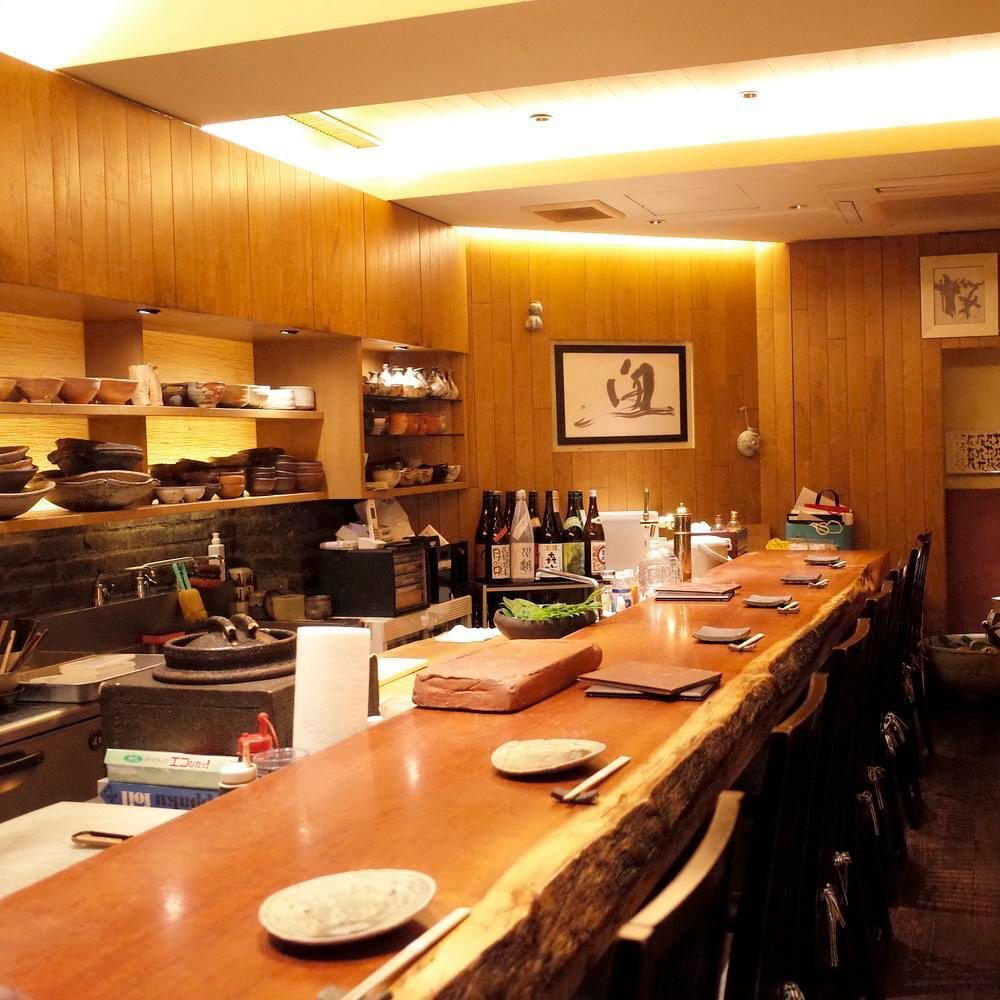
Basement dining in Japan carries a specific grammar. In Tokyo, it tends toward the theatrical, counter-led omakase rooms with controlled lighting and a studied formality borrowed from kaiseki. In Osaka, the basement izakaya operates by a different logic entirely: the room is incidental, the seafood is the argument, and the sake is the medium through which the argument is made. Suigyo Murabayashi, one floor below street level in a building on Dojima 1-chome in Kita Ward, is that second tradition carried out with enough consistency to earn Michelin's Bib Gourmand recognition in 2025.
Dojima sits between the business density of Umeda and the river, which makes it an address that Osaka regulars know and visiting diners often overlook. The neighbourhood is neither tourist-facing nor aggressively local in the way that Shinsekai or Tsuruhashi are, it occupies a mid-register that suits the izakaya format well, where the clientele is typically professional and the pace is deliberate without being ceremonial.
The Seafood Supply Chain as Editorial Statement
The sourcing model at work here reflects a broader pattern in serious Osaka seafood dining. Where Tokyo's premium fish restaurants tend to consolidate purchasing through Toyosu's top-tier wholesalers, a cohort of Osaka chefs has instead built direct relationships with regional fishermen over years of repeated visits. Chef Kaihara Yoshimichi began those trips during his apprenticeship and has continued them as a matter of discipline rather than marketing. The result is a supply chain that pulls from multiple Japanese coastal regions rather than a single wholesale source, which means the fish at the counter on any given evening reflects what individual fishing communities landed that week.
This matters for the diner because it shifts the menu's logic. There is no fixed sashimi list to choose from; the opening presentation is a large communal bowl of seasonal sashimi, assembled from whatever arrived in volume and at quality. Variety within a single service is part of the premise, not incidental. That structure is closer to the tradition of the Osaka shotengai fish-counter than to the omakase format it might superficially resemble.
For regional comparison: Gion Sasaki in Kyoto operates at a considerably higher price point and within a kaiseki framework where each course is composed and sequenced with architectural precision. The Suigyo Murabayashi model is looser and more communal, the fish arrives as it does at a good fisherman's table, and the diner's role is receptive rather than analytical. Harutaka in Tokyo represents yet another register: the sushi counter as curated performance. Suigyo Murabayashi sits apart from both, in the tradition of the working izakaya where quality is demonstrated through ingredient and technique rather than format and ceremony.
The Cooking: Restraint as Method
The fish stew prepared in soy sauce and water alone is the clearest technical statement the kitchen makes. No dashi amplification, no mirin sweetness, no supplementary aromatics to redirect attention. The cooking medium is kept minimal so that the natural sugars in the fish flesh read clearly in the finished broth. This is not asceticism for its own sake, it is a technique that only works when the fish is fresh enough to carry the broth on its own terms. Inferior product cooked the same way would produce a flat, watery result. The fact that it doesn't is the sourcing argument made audible.
The broth itself is not discarded after service. It comes back to the table alongside fresh-cooked rice, finishing the meal in a way that Osaka food culture would recognise immediately: nothing is wasted, and the remnants of a good thing are often the point at which a meal becomes memorable. That final rice course also paces the evening well, giving the table a clear close after what is otherwise an open-ended procession of fish and sake.
Other Osaka addresses working in similar territory include Benikurage, Jizakeya Iwatsuki, and Izakaya Tokitame, each approaching the izakaya format with varying emphases. Kannomiho and Daidokoro Kamiya represent adjacent positions in Osaka's mid-range dining tier. Suigyo Murabayashi's Bib Gourmand distinguishes it within that peer group as the Guide's formal acknowledgment of value relative to quality, a signal that carries weight in a city where the mid-range is genuinely competitive.
Osaka vs. the Metropolitan Standard
The Osaka-Tokyo axis in Japanese dining is sometimes framed as tradition versus innovation, but the more useful distinction is social: what a restaurant is for. Tokyo's fine dining increasingly positions itself as an event, a destination with an occasion attached to it. Osaka's serious mid-range, of which Suigyo Murabayashi is a representative example, positions itself as a place to spend an evening without a reason beyond good fish and good sake. The Bib Gourmand category suits Osaka better than almost any other Japanese city precisely because Osaka's food culture has always valued that second position.
The price tier here, mid-range by Osaka standards, places it significantly below the kaiseki-adjacent addresses such as Kashiwaya Osaka Senriyama or Taian, and well below the innovation-driven rooms like Hajime or Fujiya 1935. It competes laterally with Osaka's izakaya and casual Japanese tier rather than vertically against those rooms. Visitors who have allocated one formal dinner to a kaiseki address will find Suigyo Murabayashi a useful counterpoint on a second evening: the same city's fish, a different set of values about how it should be served.
For those exploring izakaya formats further afield, Berangkat in Kyoto offers an interesting comparison in terms of how the format adapts across the Kansai region, while Cube by Mika in Schwerin demonstrates how the izakaya model travels internationally.
Planning Your Visit
Suigyo Murabayashi is located in the basement level of Daiichi Building, 1-2-17 Dojima, Kita Ward, Osaka. The Bib Gourmand recognition means demand has increased since the 2025 guide publication; booking ahead is advisable.
| Venue | Cuisine | Price Tier | Awards | Format |
|---|---|---|---|---|
| Suigyo Murabayashi | Izakaya / Seafood | ¥¥ | Michelin Bib Gourmand 2025 | Communal, sake-led |
| Kashiwaya Osaka Senriyama | Japanese | ¥¥¥ | Michelin-rated | Formal Japanese |
| Taian | Kaiseki | ¥¥¥ | Michelin-rated | Kaiseki counter |
| Hajime | French / Innovative | ¥¥¥¥ | Michelin-rated | Tasting menu |
For broader Osaka planning, see our full Osaka restaurants guide, our full Osaka hotels guide, our full Osaka bars guide, our full Osaka wineries guide, and our full Osaka experiences guide. For regional context, akordu in Nara, Goh in Fukuoka, 1000 in Yokohama, and 6 in Okinawa each offer reference points for how Japan's regional cities approach premium dining at different price tiers.
What Regulars Order at Suigyo Murabayashi
The structure of the meal is sequential rather than à la carte, which means the question of what to order is largely answered by the kitchen. The opening sashimi bowl is fixed by season and supply; the fish stew follows. Where regular customers exercise choice is in the sake selection and in the pace at which they move through the evening. The broth-and-rice close is not optional, it is the intended finale, and regulars treat it as such rather than leaving before it arrives.
Category Peers
| Venue | Cuisine | Price | Awards | Notes |
|---|---|---|---|---|
| Suigyo MurabayashiThis venue (the venue you are viewing) | Traditional Japanese Seafood Omakase | $50–100 | Michelin Bib Gourmand | Not listed |
| HAJIME | Avant-Garde Japanese Fine Dining | $300–500 | 3 Michelin Stars · World's 50 Best #83 | French, Innovative |
| La Cime | Modern French with Japanese Ingredients | $150–200 | 2 Michelin Stars · World's 50 Best #13 | French |
| Kashiwaya Osaka Senriyama | Seasonal Kaiseki Omakase | $200–300 | 3 Michelin Stars · La Liste Top Restaurants | Japanese |
| Taian | Traditional Japanese Kaiseki Omakase | $150–200 | 3 Michelin Stars · La Liste Top Restaurants | Kaiseki, Japanese |
| Fujiya 1935 | Modern Japanese with European influences | $100–150 | 2 Michelin Stars · La Liste Top Restaurants | Innovative |
Recognition history
Dated appearances from independent guides and award organizations, with the underlying list record or original source where available.
Michelin Bib Gourmand
Michelin
Full recognition history (3 entries)
Michelin Bib Gourmand
Michelin
Michelin Bib Gourmand
Michelin
Continue exploring
More in Osaka
Restaurants in Osaka
All restaurants in Osaka →

Bars in Osaka
All bars in Osaka →
Hotels in Osaka
All hotels in Osaka →


Wineries in Osaka
Browse all →
Details
- Cozy
- Intimate
- Special Occasion
- Chefs Counter
- Open Kitchen
- Sake Program
- Local Sourcing
- Omakase
- Counter Dining
- Sake
Current opening hours
- Monday
- 12–1:30 PM, 5:30–10:30 PM
- Tuesday
- 5:30–10:30 PM
- Wednesday
- 12–1:30 PM, 5:30–10:30 PM
- Thursday
- 5:30–10:30 PM
- Friday
- 12–1:30 PM, 5:30–10:30 PM
- Saturday
- 5:30–10 PM
- Sunday
- Closed
Hours can change for holidays and private events. Hours as of .
Warm wooden interior unchanged since opening in 2009, creating a cozy, relaxing hideaway atmosphere with counter seating for watching the chef.