
Gifu’s wagashi culture rewards small-format specialists, and Original Daifuku Okashi Dokoro Yoro Ken Honten sits firmly in that tradition: a takeaway-focused daifuku shop in Kamo-gun selected for Tabelog’s Japanese sweets and sweets cafe 100 list for East Japan in 2023. Its value lies less in ceremony than in ingredient-led regional sweets, handled with the discipline that makes rural confectionery worth planning around.
Pearl is the En Primeur Club membership app — saves, bookings, and concierge access live there. Same editors, same standards.
- Address
- 273-1 Shimokawabe, Kawabe, Kamo District, Gifu 509-0306, Japan
- Phone
- +81 574-53-6291
- Website
- yoroken.com
 Saves & bookings on Pearl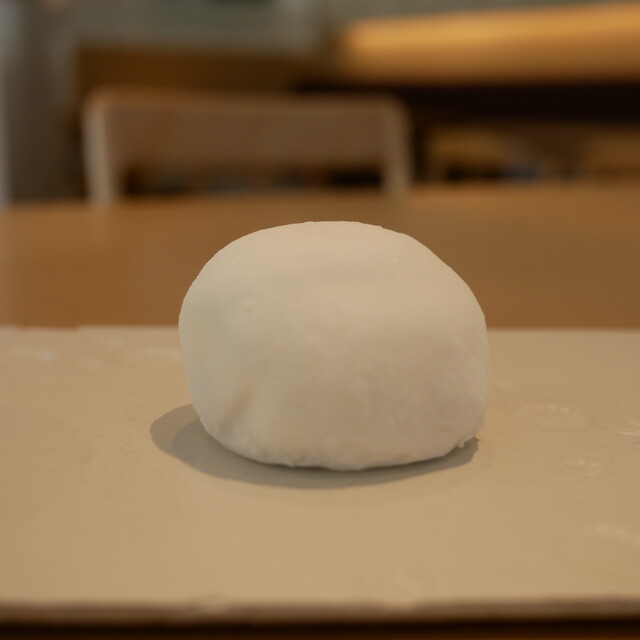
Approaching a rural wagashi shop in Gifu is a different proposition from arriving at a city dessert counter. The pace is quieter, the format is more direct, and the expectation is built around the case rather than a dining room. Original Daifuku Okashi Dokoro Yoro Ken Honten belongs to that Japanese confectionery rhythm: buy carefully, carry away, and judge the craft by how rice, bean, fruit, cream, and seasonality are handled inside a compact sweet.
That matters because daifuku is a deceptively narrow category. At its simplest, it is mochi wrapped around filling, often red bean paste. In practice, the difference between a casual snack and a serious wagashi purchase comes down to sourcing, texture control, freshness, and restraint. Gifu’s inland food culture has long leaned on agricultural proximity rather than restaurant theatre, and this style of shop fits that logic. The point is not a long meal; it is a short exchange with a highly perishable craft.
Daifuku as a regional purchase, not a plated dessert
Japan’s sweets culture splits cleanly between formal tea-room wagashi, department-store gifting, cafe-style parfait culture, and local confectioners that function as everyday specialists. Daifuku sits across those worlds. It can be ceremonial, casual, seasonal, or bought as a family errand. In Kamo-gun, the appeal is the last two: a local shop format where the product has to justify itself without table service, plating, or a beverage program doing the work.
The category’s ingredient sourcing is the real editorial lens here. Mochi texture depends on rice handling and timing; bean paste depends on cooking and sweetness balance; fruit-filled or cream-based versions depend on cold-chain discipline and freshness. None of those details need spectacle. They need turnover and repetition. A takeaway-only structure can help rather than hinder, because the operation is built around production, display, and quick purchase rather than lingering hospitality.
Original Daifuku Okashi Dokoro Yoro Ken Honten’s selection for the 2023 Tabelog 100 Japanese traditional sweets and Japanese sweets cafe list for East Japan is the useful trust signal. Tabelog’s Hyakumeiten lists tend to reward category depth rather than luxury price alone, which is why a low-cost sweets shop can sit in a conversation that is more serious than its spend suggests. The listed score of 3.57 also places it in the zone where repeat local attention and category recognition matter more than destination-restaurant trappings.
Where it sits in Kamo-gun's sweets and casual dining map
Kamo-gun is not a market built around international tasting-menu tourism. Its more interesting food addresses often reward travelers who understand that rural Japan’s dining value is dispersed across confectioners, noodle shops, set-meal rooms, and family-run specialists. Within that frame, this shop occupies the wagashi lane rather than the restaurant lane. The comparison is not with sushi counters or beef restaurants; it is with other local sweets addresses and casual places where price, specificity, and repeat utility carry the experience.
In the same Kamo-gun orbit, Midoriya Roho sits at a higher listed spend bracket, which makes the contrast useful: not every worthwhile regional stop asks for the same budget or format commitment. The broader Kamo-gun restaurants guide is better read as a map of small specialisms than a hierarchy of formal dining rooms. For trip structure beyond meals, the Kamo-gun hotels guide, Kamo-gun bars guide, Kamo-gun wineries guide, and Kamo-gun experiences guide help place a sweets stop inside a wider rural itinerary.
Across Japan, EP Club’s restaurant coverage ranges from specialist local addresses to city formats with different expectations: -Grilled beef Sukiyaki- KAMAKURA TANUKIAN 鎌倉 たぬき庵 in Kamakura, . 鮪と炭火焼き うお炭 秋葉原店 in Tokyo, .cafe in Osaka.know in Kumamoto, (Shoku) Vietnam in Kawasaki, [Curry Senmon Ten] Maruyama Kyoju. in Sapporo, [ki:] in Kyoto, #肉といえば松田 奈良本店 in Kashihara, 1/3 HAMBURGER FACTORY in Kanazawa, and 1000 in Yokohama. Overseas Japanese-adjacent references such as Jōdo Saké Bar in Los Angeles and Onigiri Time in Pasadena underline the same point from another angle: formats travel, but the rural Japanese confectioner remains tied to freshness, locality, and daily production.
The case for seeking out a low-spend specialist
The strongest reason to make room for this stop is category precision. A traveler moving through Gifu can eat well without turning every meal into a reservation-led event, and wagashi is one of the clearest ways to understand that. A daifuku specialist asks the diner to pay attention to softness, filling ratio, sweetness, temperature, and how quickly a sweet is meant to be eaten. Those are not luxury signals, but they are quality signals.
Original Daifuku Okashi Dokoro Yoro Ken Honten also sits in a useful value bracket. The spend is modest by Japanese dining standards, yet the 2023 Tabelog 100 selection gives it more editorial weight than a casual roadside purchase would normally receive. That combination is the draw: a short-format stop with recognized category credentials, suited to travelers who care about Japanese sweets as craft rather than souvenir padding.
Expect a functional, family-friendly sweets-shop experience rather than a slow cafe session. The format is takeaway-led, private rooms are not part of the proposition, and the address works better as a planned detour or itinerary pause than as the anchor meal of the day. For Kamo-gun, that is not a limitation. It is exactly how many of the region’s more rewarding food experiences operate: small scale, specific product, and little interest in overexplaining itself.
Quick Comparison
Comparable venues by cuisine and price in the same metro.
| Venue | Cuisine | Price | Notes |
|---|---|---|---|
| Original Daifuku Okashi Dokoro Yoro Ken HontenThis venue — the venue you are viewing | Modern Japanese wagashi & fruit daifuku shop | $ | Not listed |
| Midoriya Roho | Japanese Wagashi | $ | Kamo-gun |
| Kitchen Nankai (キッチン南海) | Classic Yoshoku Katsu Curry | $ | Jimbocho |
| ひろめで安兵衛 | High Kochi Yatai Gyoza | $ | 帯屋町 |
| ラーメン亭「十五夜」 | Japanese Ramen | $ | Kushiro |
| 屋宜家 | Traditional Okinawan Soba | $ | 八重瀬町大頓 |
Recognition history
Dated appearances from independent guides and award organizations, with the underlying list record or original source where available.
Tabelog 100 #53 · No. 53
Tabelog · Tabelog 100 - Japanese traditional sweets / Japanese sweets cafe - EAST - 2023
Continue exploring
More in Kamo-gun
Restaurants in Kamo-gun
Browse all →


At a Glance
- Classic
- Cozy
- Solo
- Family
- Casual Hangout
- Celebration
- Standalone
- Local Sourcing
Current opening hours
- Monday
- 9 AM–7 PM
- Tuesday
- 9 AM–7 PM
- Wednesday
- Closed
- Thursday
- 9 AM–7 PM
- Friday
- 9 AM–7 PM
- Saturday
- 9 AM–7 PM
- Sunday
- 9 AM–6 PM
Hours can change for holidays and private events. Last verified .
A small, traditional Japanese sweets shop atmosphere with a calm, neighborhood feel focused on takeaway rather than sit-down dining.