Oraan Thai
On Geary Boulevard in San Francisco's Richmond District, Oraan Thai occupies a stretch of the city where Thai cooking has quietly built one of its more serious American footholds. The restaurant draws from the neighbourhood's long relationship with Southeast Asian cuisine and positions itself within a growing tier of Bay Area Thai kitchens that take sourcing and technique as seriously as the city's celebrated fine-dining rooms.
Pearl is the En Primeur Club membership app — saves, bookings, and concierge access live there. Same editors, same standards.
- Address
- 3750 Geary Blvd, San Francisco, CA 94118
- Phone
- +16282197598
- Website
- oraansf.com
- Directions
- Get directions
 Saves & bookings on Pearl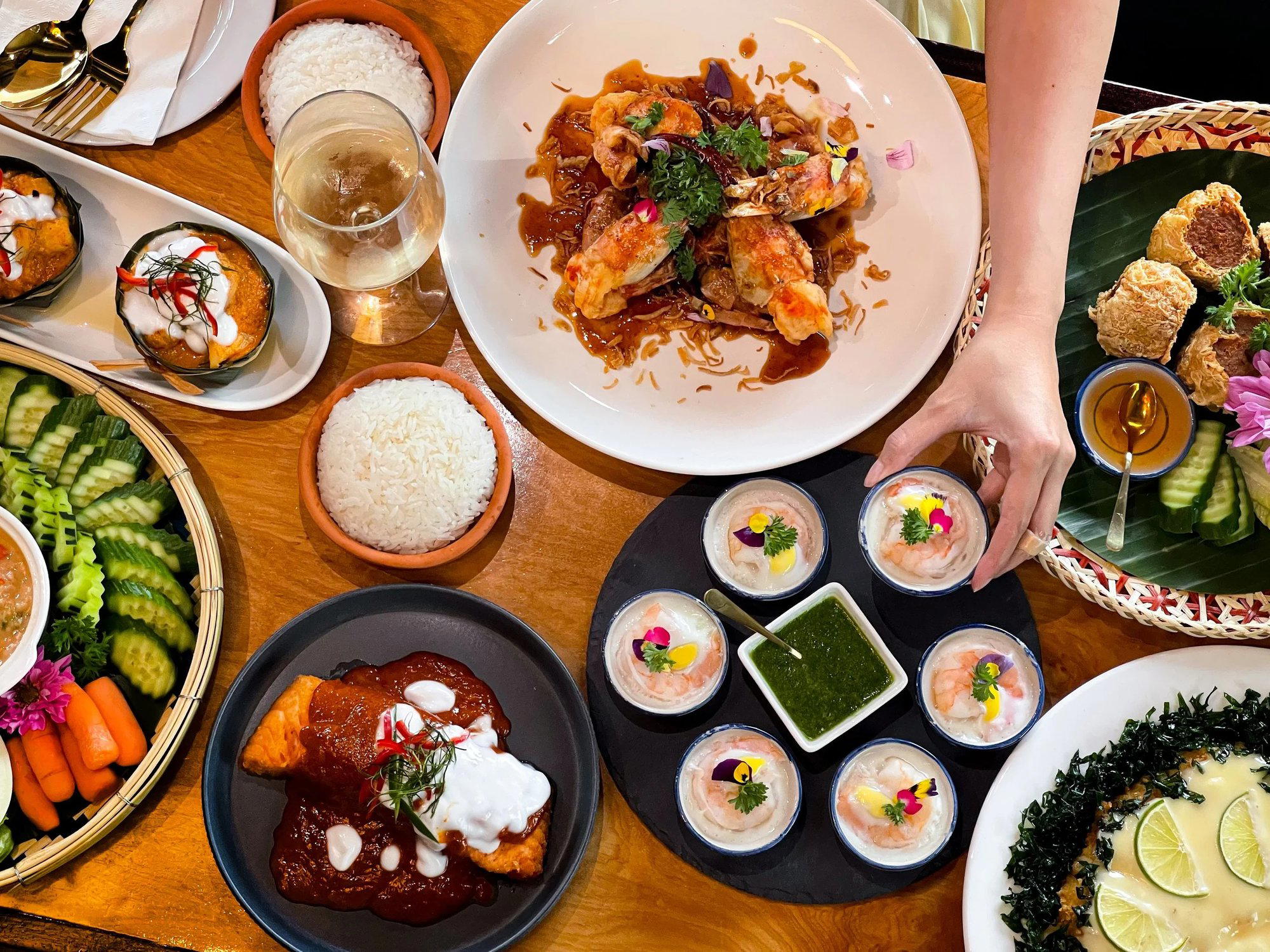
The Richmond District and Its Thai Cooking Tradition
Geary Boulevard has functioned as one of San Francisco's more reliable corridors for Southeast Asian cooking for several decades. The Richmond District, which the boulevard bisects from Arguello to the avenues, holds a concentration of Thai, Vietnamese, and Burmese kitchens that rarely appear in the same breath as the city's Michelin-decorated rooms further east. That omission says more about critical attention than it does about quality. The neighbourhood's Thai restaurants, in particular, have been quietly building a body of work that reflects both the diversity of Thailand's regional traditions and a growing awareness of where ingredients come from and how they are handled before they reach the table.
Oraan Thai is a Modern Thai restaurant at 3750 Geary Blvd in San Francisco's Richmond District. Oraan Thai, at 3750 Geary Blvd, sits inside this tradition rather than apart from it. Understanding what the restaurant offers means understanding the context first: a neighbourhood that has long sustained serious Thai cooking without the marketing infrastructure that attaches to downtown dining, and a Bay Area food culture that has increasingly pressed every category of restaurant toward questions of ethical sourcing and environmental accountability.
Sustainability as a Working Principle, Not a Selling Point
Across the Bay Area's higher-profile dining rooms, sustainability has moved from a marketing footnote to a structural commitment. Single Thread Farm in Healdsburg built its entire model around an integrated farm operation. Blue Hill at Stone Barns in Tarrytown has spent years demonstrating what it means to let seasonal availability drive a menu rather than supplement it. The conversation has filtered down from prestige kitchens to neighbourhood restaurants, and Thai cooking, with its reliance on fresh aromatics, fermented condiments, and herb-forward preparations, is particularly well positioned to participate.
Thai cuisine's dependence on lemongrass, galangal, kaffir lime leaves, Thai basil, and fresh chillies makes sourcing decisions consequential in a way that goes beyond ethics. These ingredients are not interchangeable. Dried or poorly stored kaffir lime leaves produce a muted, slightly bitter result that bears little resemblance to the clean citrus lift of a fresh leaf. A kitchen that commits to sourcing fresh aromatics locally, or growing them on-site, is making a flavour decision as much as an environmental one. The two are rarely separable in Thai cooking at its most direct.
The Richmond's proximity to the Bay Area's agricultural network, including farms in Marin and Sonoma counties that have steadily expanded their herb and specialty vegetable programmes, gives neighbourhood restaurants practical access to ingredients that a decade ago would have required import. That access, when a kitchen chooses to use it, produces a different baseline quality than a supply chain built around shelf-stable or freight-shipped aromatics.
Where Oraan Thai Sits in San Francisco's Dining Picture
San Francisco's premium dining tier is dense with kitchens that draw on French technique, Californian produce philosophy, or high-concept tasting formats. Lazy Bear, Atelier Crenn, Benu, Quince, and Saison collectively represent what the city's dining culture looks like at its most decorated. They are not the context for the restaurant, but they are useful for understanding what the city values: technique with a strong sense of place, ingredients treated with care, and menus that reflect something specific about where and when they are served.
Those same values, when applied to Thai cooking, produce something that sits outside the prestige circuit but not outside its principles. Neighbourhood Thai kitchens that buy from local farms, use house-made curry pastes, and resist the drift toward sweetened or simplified preparations for non-Thai audiences are working from a similar set of commitments at a different price point and with a different relationship to tradition. The comparison is not about parity of ambition; it is about shared orientation toward quality and sourcing as foundational rather than incidental.
On a national level, the conversation around Thai cooking in America has been shaped by kitchens in Los Angeles, New York, and Chicago that have pushed the cuisine toward greater regional specificity and less adaptation for perceived mainstream taste. Alinea in Chicago and Atomix in New York City have demonstrated, in their respective cuisines, how a commitment to technique and sourcing can reframe a dining category's critical standing. The same logic applies, if less visibly, to Thai restaurants that choose to operate from primary ingredients rather than pre-made pastes and imported sauces.
The Geary Corridor: Practical Notes
Geary Boulevard in the Inner and Outer Richmond runs through a neighbourhood that is notably less expensive to operate in than Hayes Valley, the Mission, or the waterfront, which has historically allowed restaurants here to put more of their margin into ingredients rather than rent. That cost structure partly explains why the corridor has been able to sustain a range of Asian restaurants at price points that the city's more centralised dining zones could not accommodate.
For visitors, the Richmond is accessible from downtown by the 38-Geary bus line, one of the city's highest-frequency routes, and by rideshare. Parking on Geary and its side streets is generally available, though weekend evenings see heavier demand. The neighbourhood rewards exploration beyond a single restaurant: several blocks in either direction from the restaurant hold bakeries, tea shops, and grocery stores that reflect the district's long-standing role as one of the city's more functional and less tourist-facing cultural corridors.
Planning Your Visit
Comparable Venues
Comparable venues nearby, for context on price, style, and recognition.
| Venue | Cuisine | Price | Notes |
|---|---|---|---|
| Oraan ThaiThis venue — the venue you are viewing | Modern Thai | $$ | Not listed |
| Lers Ros Thai | Authentic Home-Style Thai | $$ | Tenderloin |
| Sai Jai Thai | Authentic Thai Comfort Food | $ | Tenderloin |
| KRUA Thai | Authentic Thai | $$ | Mission |
| Ping Yang Thai Grill & Dessert | Thai & Lao Street Food | $$ | Tenderloin |
| Farmhouse Kitchen Thai Cuisine | Northern Thai Street Food | $$$ | Mission |
Continue exploring
More in San Francisco
Restaurants in San Francisco
Browse all →
Bars in San Francisco
Browse all →
Hotels in San Francisco
Browse all →
At a Glance
- Modern
- Cozy
- Relaxed
- Casual Hangout
- Date Night
Current opening hours
- Monday
- 5–9 PM
- Tuesday
- 5–9 PM
- Wednesday
- 5–9 PM
- Thursday
- 5–9 PM
- Friday
- 11:30 AM–3 PM, 5–10 PM
- Saturday
- 11:30 AM–3 PM, 5–10 PM
- Sunday
- 11:30 AM–3 PM, 5–9 PM
Hours can change for holidays and private events. Last verified .
Clean and relaxing atmosphere with moderate noise levels.