One Bryant Park French-Japanese restaurant
A French-Japanese fine dining restaurant occupying space inside Midtown Manhattan's Bank of America Tower at One Bryant Park, this kitchen sits at the intersection of two of particularly technically demanding culinary traditions. The address places it within a block of Bryant Park, in a corridor that has attracted serious dining in recent years. Expect a multi-course format built around the convergence of French classical structure and Japanese precision.
Pearl is the En Primeur Club membership app — saves, bookings, and concierge access live there. Same editors, same standards.
- Address
- New York City, United States
- Directions
- Get directions
 Saves & bookings on Pearl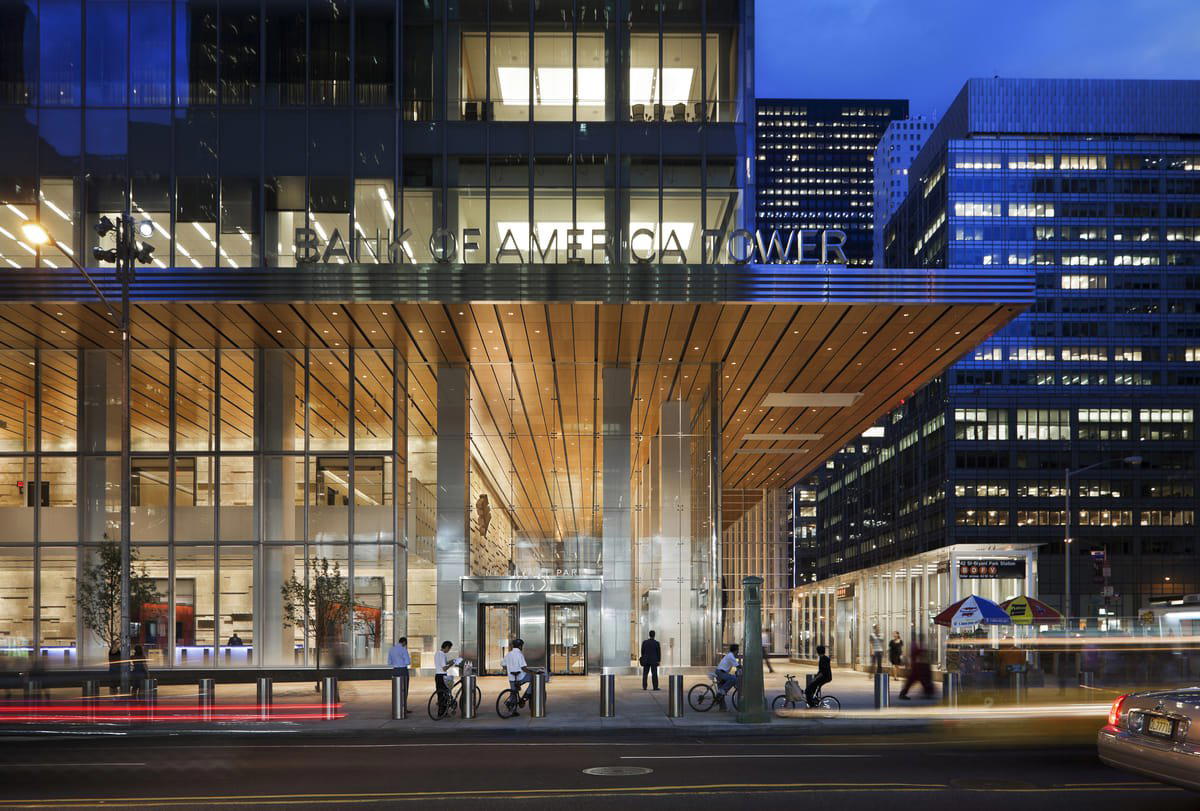
Midtown's Vertical Dining Tier and Where This Kitchen Fits
Manhattan's fine dining geography has never been purely horizontal. The borough stacks ambition vertically as readily as it spreads it across neighborhoods, and the Bank of America Tower at One Bryant Park is a case study in that tendency. The building's address on Sixth Avenue at 42nd Street places it in a corridor that most out-of-towners associate with office towers and transit hubs rather than restaurants. That tension between setting and culinary register is, in a way, the point. French-Japanese fine dining at this address operates in a specific niche: it serves a Midtown lunch and dinner crowd that expects technical precision alongside the efficiency that a financial district location demands, while also drawing destination diners willing to cross town for a hybrid cuisine that Manhattan has historically housed well.
The French-Japanese format itself carries significant weight in this city. New York has been a consistent proving ground for the synthesis of these two traditions, from the kaiseki-inflected tasting menus that began appearing in the 1990s to the current generation of chefs who trained in both Paris and Tokyo. The kitchen at One Bryant Park participates in a lineage that includes particularly technically scrutinized cooking in the country. For context on where French fine dining alone sits in this city, Le Bernardin and Per Se have long defined stronger examples from that bracket; adding Japanese precision to the French structural framework creates a narrower, more demanding comparable set.
The Architecture of the Meal: How French-Japanese Sequencing Works
Understanding a French-Japanese tasting menu requires some knowledge of what each tradition contributes to the progression. French classical structure provides the scaffolding: an opening of lighter, acidic compositions gives way to richer, more concentrated courses, with the kitchen's technical command revealed incrementally. Japanese influence reshapes this arc in several ways. Ingredient purity takes precedence over sauce complexity. Umami becomes a structural tool rather than an accent. The visual economy of Japanese plating, negative space, ceramic weight, minimal garnish, tends to discipline the French tendency toward abundance.
In practice, a French-Japanese progression in this format might open with something that signals the synthesis immediately: a dashi-based preparation finished with cream, or a raw fish treatment inside a French sauce framework. The middle courses are where the tension between the two traditions becomes most productive. Protein treatments often draw on both Japanese aging or curing techniques and French sauce work, and the result is neither purely one nor the other. The closing courses, including any cheese selection and the dessert sequence, tend to be where French training reasserts itself most clearly, though Japanese confectionery influence is increasingly common in the mignardises that close a meal at this level.
For comparison, the French-Japanese synthesis at this caliber is pursued by few kitchens nationally. Alinea in Chicago and The French Laundry in Napa represent tasting-menu ambition at the highest American tier, though neither centers the French-Japanese hybrid specifically. Single Thread Farm in Healdsburg comes closest in its kaiseki-influenced multi-course format. Internationally, 8½ Otto e Mezzo Bombana in Hong Kong and Alain Ducasse's Louis XV in Monte Carlo illustrate how European classical kitchens engage with Asian culinary frameworks in their respective markets.
Bryant Park's Dining Context
The blocks immediately surrounding Bryant Park have shifted considerably over the past decade. What was once an area defined by quick-serve chains serving the Midtown office population now includes a more varied dining register. Saga, the American tasting-menu restaurant on the 63rd floor of 70 Pine Street in the Financial District, demonstrated that New Yorkers will seek out serious cooking in unexpected office-tower settings. The pattern of ambitious kitchens inside corporate towers is not new to Manhattan, but it has accelerated as developers have recognized that food anchors can differentiate large commercial properties.
The proximity to Bryant Park matters for logistics. The park functions as a genuine gathering point year-round, with the summer film program and winter market drawing foot traffic that sustains the surrounding restaurant ecosystem. For a fine dining kitchen, this means a catchment area that extends beyond the immediate office population. Diners coming from the theater district to the north, the West Village to the south, or passing through Penn Station or Grand Central have reasonable access. César, another contemporary address in the city's competitive dining tier, reflects how the broader Manhattan fine dining market continues to spread beyond its traditional Upper East Side and Tribeca anchors.
How It Compares to Manhattan's Japanese and French Tiers
Manhattan's Japanese fine dining market is anchored at the leading by omakase counters, with Masa functioning as the price ceiling and the reference point for what the format costs at its most committed level. French-Japanese hybrid kitchens occupy a distinct tier from pure Japanese omakase: the culinary vocabulary is wider, the service format is closer to European fine dining, and the menu structure allows for more varied course design. This distinction matters when comparing value and format. A French-Japanese tasting menu offers something different from either a purely French progression or a purely Japanese one, and diners who know both traditions well often find the hybrid especially intellectually engaging among the three.
For those building a broader fine dining itinerary across the city or region, the New York City restaurants guide covers the range of formats and price tiers currently operating.
Beyond New York, the French-Japanese format has practitioners worth knowing at the national level. Lazy Bear in San Francisco and Providence in Los Angeles each represent how West Coast kitchens have absorbed Japanese influence into their multi-course formats, and Emeril's in New Orleans illustrates how French classical training has found different regional expressions across American fine dining.
Planning Your Visit
Given the Midtown office-tower location, timing matters more here than at many fine dining addresses. Lunch service in this corridor tends to be compressed and business-oriented; dinner allows for the longer progression that a French-Japanese format rewards. Advance booking is essential, particularly for dinner on Thursday through Saturday. For diners coordinating around a theater performance, the proximity to the Broadway district to the northwest makes pre-theater timing viable, though a full tasting menu progression requires building in sufficient time before curtain.
Peers Worth Knowing
Comparable venues nearby, for context on price, style, and recognition.
| Venue | Cuisine | Price | Notes |
|---|---|---|---|
| One Bryant Park French-Japanese restaurantThis venue — the venue you are viewing | French-Japanese Fine Dining | $$$$ | Not listed |
| SEA | Modern Southeast Asian Fusion | $$$$ | Midtown South-Flatiron-Union Square |
| The Newsroom | Caribbean-Latin-Asian Fusion | $$$ | Long Island City-Hunters Point |
| Frida Midtown | Mexican-Peruvian Fusion | $$$ | East Midtown-Turtle Bay |
| M. Wells | Quebecois Steakhouse | $$$ | Long Island City-Hunters Point |
| Hasung Lee | Seasonal Fine Dining Tasting Menu | $$$$ | Manhattan |
Continue exploring
More in New York City
Restaurants in New York City
Browse all →
Bars in New York City
Browse all →
Hotels in New York City
Browse all →





At a Glance
- Elegant
- Sophisticated
- Modern
- Special Occasion
- Date Night
- Business Dinner
- Chefs Counter
- Historic Building
- Design Destination
- Private Dining
- Sake Program