Oliver's Fish & Chips
On Haverstock Hill in Belsize Park, Oliver's Fish & Chips represents the kind of neighbourhood chippy that London's informal dining culture still depends on. Set a short walk from Chalk Farm and Hampstead, it serves the British tradition of battered fish and fried potatoes in a format that rewards regulars as much as visitors. No reservations, no ceremony, just the ritual that generations of Londoners recognise as a meal in its own right.
Pearl is the En Primeur Club membership app — saves, bookings, and concierge access live there. Same editors, same standards.
- Address
- 95 Haverstock Hill, London NW3 4RL, United Kingdom
- Phone
- +44 20 7586 9945
- Website
- oliversfishandchips.com
- Directions
- Get directions
 Saves & bookings on Pearl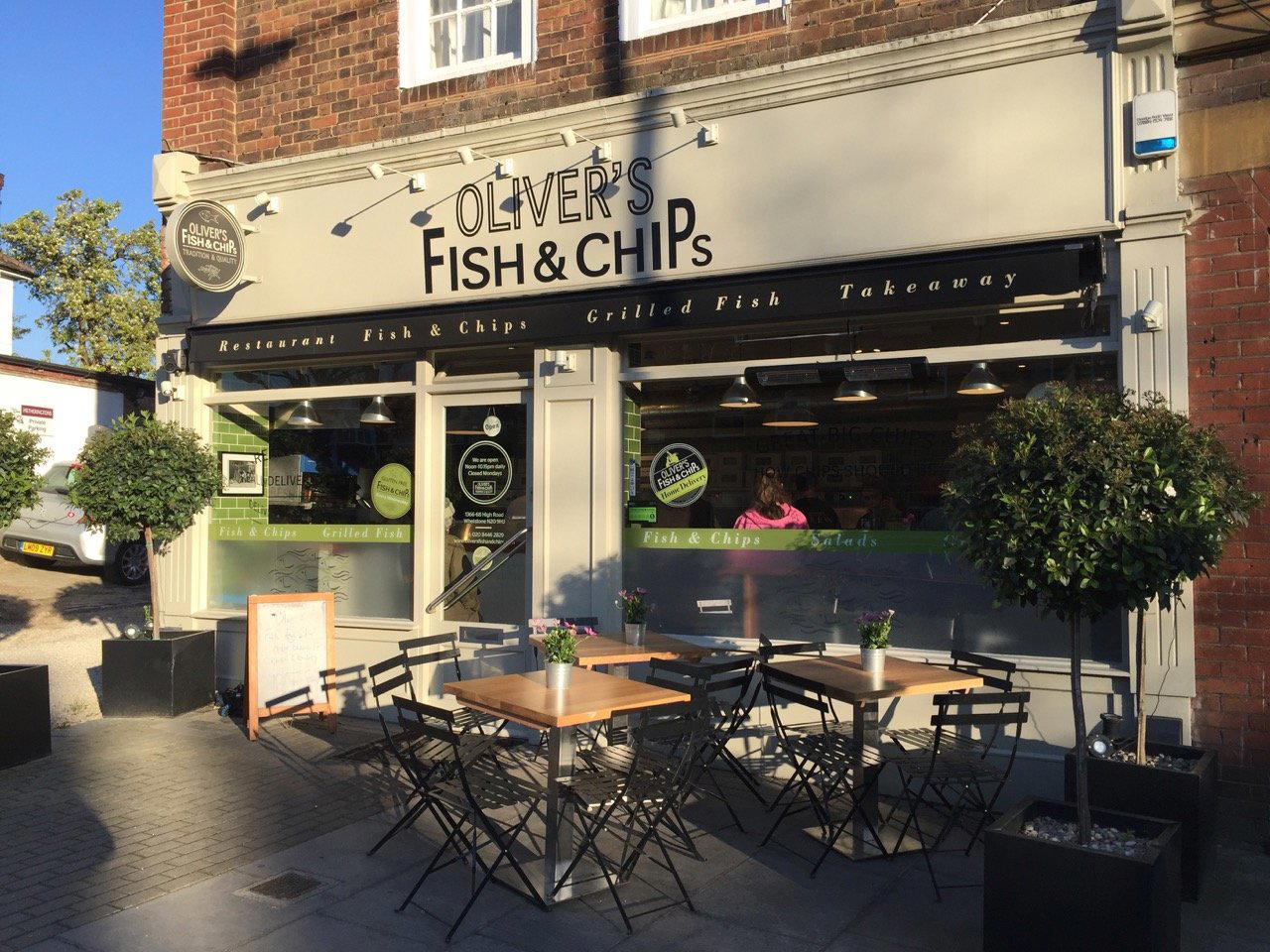
The Ritual on Haverstock Hill
There is a particular choreography to eating fish and chips in Britain that no amount of fine-dining theatre has managed to displace. You queue, you order at a counter, you wait while oil works at temperature, and you carry your meal to a table or a bench or, on the right evening, straight out onto the pavement. Oliver's Fish & Chips is a casual Traditional British Fish & Chips restaurant at 95 Haverstock Hill, London NW3 4RL, United Kingdom. The smell of frying batter reaches you before the shopfront does. The interior is practical rather than designed. The transaction is direct: you say what you want, someone wraps it, and you eat.
Belsize Park occupies the stretch of northwest London between Chalk Farm and Hampstead proper, a neighbourhood with enough affluence to sustain both white-tablecloth restaurants and the kind of chippy that has been feeding the same streets for decades. Oliver's belongs to the latter category. Its address on Haverstock Hill places it on a well-used road corridor, accessible from Belsize Park and Chalk Farm tube stations.
How the Meal Works
The dining ritual at a British fish and chip shop is one of the more compressed and honest formats in the country's food culture. There are no courses, no amuse-bouche, and no wine list. The sequence is fixed: you choose your fish (cod and haddock are the standard anchors of any serious chippy), decide on portion size, add chips, and consider whether salt, vinegar, and mushy peas complete the picture. The meal arrives hot, usually wrapped or boxed, and the expectation is that you eat it while it retains that heat. Delay is the enemy of a good chip.
That compression is part of what makes the format hold. In a city where London's fine dining options, from CORE by Clare Smyth and Restaurant Gordon Ramsay to Sketch, The Lecture Room and Library and The Ledbury, can extend to three hours and multiple signals of ceremony, the chippy operates on a ten-minute decision cycle. The ritual here is speed and informality, and it is taken seriously on those terms. A soggy batter or an underseasoned chip is as much a failure of craft as a poorly timed sauce at a tasting counter.
The Tradition Behind the Format
Fish and chips as a combined dish emerged in Britain during the mid-nineteenth century, with the industrial north and the East End of London both claiming early precedent. By the mid-twentieth century, the fish and chip shop had become among the more widely distributed food formats in the country, a function of cheap protein, accessible frying technique, and a population that had organised much of its weekly eating around the format. At the tradition's height, there were over 35,000 chippies operating in the United Kingdom.
That number has contracted sharply over the past four decades, under pressure from rising ingredient costs, changing eating habits, and competition from other quick-service formats. What remains tends to split between high-volume tourist-facing operations and neighbourhood shops that survive on repeat local custom. The latter category is the more interesting one. It operates without marketing budgets or social media strategies, sustained instead by consistency: the same batter formula, the same oil management, the same opening hours that the neighbourhood has come to rely on.
London's broader dining conversation tends to focus on the city's Michelin-recognised rooms and its newer wave of small-plates restaurants. The chippy sits outside that conversation almost entirely. The same city that supports Dinner by Heston Blumenthal and draws visitors who travel internationally to eat at its leading tables also sustains a parallel infrastructure of informal, counter-service, cash-friendly operations that feed far more people on any given evening. Oliver's is part of that infrastructure.
Placing Oliver's in the Wider British Fish Scene
The standard of British fish cookery across formats has risen considerably over the past two decades. At the high end, restaurants such as Waterside Inn in Bray and L'Enclume in Cartmel treat British seafood as a primary ingredient worthy of sustained technical attention. Further along the country, Moor Hall in Aughton, Gidleigh Park in Chagford, Hand and Flowers in Marlow, hide and fox in Saltwood, Midsummer House in Cambridge, Opheem in Birmingham, Ynyshir Hall in Machynlleth, and Restaurant Andrew Fairlie in Auchterarder each operate within their own regional contexts but share a common commitment to sourcing and preparation that has pushed British restaurant cooking's relationship with fish into more considered territory.
The chippy operates on different logic entirely. Its relationship with fish is defined by volume, accessibility, and a batter technique that is specific to the format. Internationally, the closest analogues in terms of cultural weight, the fried fish counter as civic institution, might be found in coastal cities like those that shaped Le Bernardin in New York City and even the community-first ethos visible at places like Lazy Bear in San Francisco, though the register is entirely different. The chip shop is its own category, and Oliver's on Haverstock Hill operates within it as a neighbourhood constant rather than a destination proposition.
When to Go and What to Expect
Seasonal timing matters more to fish and chips than the format's casual register might suggest. Cod and haddock availability shifts across the year, and the leading neighbourhood chippies adjust their sourcing accordingly rather than substituting frozen stock indiscriminately. Visiting during autumn and winter, when North Sea white fish is typically at its most consistent, gives you a stronger chance of the kind of firm, flaking fillet that the format depends on. Summer trading tends to be higher volume and faster turnover, which carries its own trade-offs in terms of frying temperature management.
Go early in the evening service rather than at peak time. The first hour of a chippy's evening trade produces better results than the rush period, when oil temperature can drop under sustained demand and batter quality suffers for it. There is no reservation system, and the format does not accommodate one. You arrive, you queue if necessary, and you order.
Know Before You Go
- Address: 95 Haverstock Hill, London NW3 4RL
- Nearest Tube: Belsize Park (Northern line) or Chalk Farm (Northern line)
- Reservations: Not taken, walk-in only
- Format: Counter service, casual eat-in or takeaway
- Leading timing: Early evening, particularly autumn through winter for peak fish quality
- What to order: Cod or haddock with chips; salt, vinegar, and mushy peas on request
Similar Picks
Comparable venues nearby, for context on price, style, and recognition.
| Venue | Cuisine | Price | Notes |
|---|---|---|---|
| Oliver's Fish & ChipsThis venue — the venue you are viewing | Traditional British Fish & Chips | $$ | Not listed |
| The Folly | British & European All-Day Dining | $$ | Monument |
| Sands End | British Gastropub | $$ | Sands End |
| Butchers Hook | British Gastropub | $$ | Hammersmith Broadway |
| The Sun Tavern | Modern Gastropub | $$ | Bethnal Green |
| Botanist Broadgate Circle | Modern British with Asian Influence | $$ | Shoreditch |
Continue exploring
More in London
Restaurants in London
Browse all →
Bars in London
Browse all →
Hotels in London
Browse all →


At a Glance
- Cozy
- Classic
- Rustic
- Casual Hangout
- Family
- Standalone
- Beer Program
Current opening hours
- Monday
- Closed
- Tuesday
- 12–10 PM
- Wednesday
- 12–10 PM
- Thursday
- 12–10 PM
- Friday
- 12–10 PM
- Saturday
- 12–10 PM
- Sunday
- 12–9 PM
Hours can change for holidays and private events. Last verified .
Cozy and traditional chip shop atmosphere with green, white, and grey decor blending fashionable and classic elements.