
Tabelog 100 #26
Our verdict
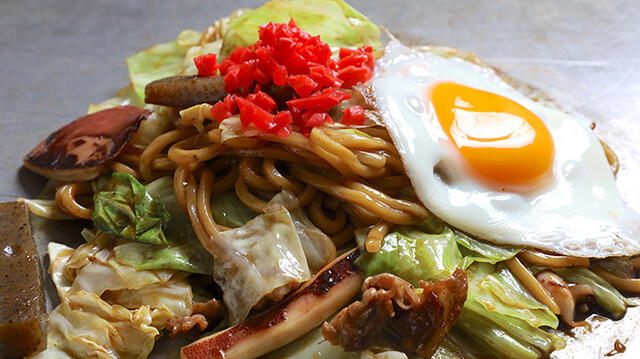
Osaka’s okonomiyaki culture is built on griddles, group dining, and a menu grammar that moves between savory pancakes, yakisoba, and drinks rather than formal courses. Okonomiyaki Ajikuraya sits in that everyday-specialist lane, with Tabelog Okonomiyaki 100 selection in 2025 and a format suited to diners who want the city’s flour-and-sauce tradition without turning dinner into a ceremony.

Pearl is the En Primeur Club membership app, where members save venues, book tables and use the concierge.
The menu
What to order
- Osaka Yaki Mix okonomiyaki
- Special yakisoba with fresh noodles
- Suji-tama (beef tendon okonomiyaki)
The room belongs to the griddle before it belongs to the diner: tables arranged for heat, conversation, and the slow rhythm of a shared meal. Osaka okonomiyaki has never needed fine-dining choreography to make its case. Its authority comes from repetition, from rooms where okonomiyaki, stir-fried noodles, and a relaxed table can form a complete night out. In that context, Okonomiyaki Ajikuraya is better read as a specialist in Osaka’s democratic food language than as a destination built around spectacle.
The useful frame is menu architecture. Osaka’s okonomiyaki houses tend to organize appetite by category rather than by sequence: savory pancakes as the anchor, stir-fried noodles as the parallel track, flexible griddle cooking as part of the table’s rhythm, and the pace of the room as part of the occasion. This is not a tasting-menu city when it comes to this style of cooking. It is a city of repeatable cravings, and the stronger rooms understand that structure matters as much as any single order.
Okonomiyaki as Osaka grammar, not tourist shorthand
Outside Japan, okonomiyaki is often reduced to “Japanese savory pancake,” a useful translation that misses how the category behaves in Osaka. It sits between snack and dinner, between street-food memory and sit-down meal, between family table and after-work gathering. The dish’s flexibility explains why a serious okonomiyaki address can feel relaxed without being unserious. Recognition on the Tabelog Okonomiyaki 100 list in 2025 places Okonomiyaki Ajikuraya inside a curated conversation about the category, not merely inside the broad field of casual Osaka restaurants.
That distinction matters for travelers. Osaka has many routes into comfort eating, from quick counter snacks to long, informal meals built around a shared table. Okonomiyaki occupies its own register: longer at the table, less portable, and built around shared heat. Compared with udon specialists such as Udon Ubara, or grill-focused rooms such as Yakiyaki Okamoto, the okonomiyaki format gives visitors a clearer look at Osaka’s appetite for informal abundance.
The menu’s range across okonomiyaki and stir-fried noodles also signals an important local habit. Diners do not necessarily choose between batter and noodles; the table can run both tracks. That breadth can turn the meal from a quick stop into a casual evening, which is why this type of room can suit mixed groups better than a narrow counter format. It is also why the category fits naturally into ordinary Osaka life rather than being reserved for culinary pilgrimage.
An Osaka address for a broader Osaka itinerary
Osaka gives this style of restaurant a practical advantage. The city’s eating map is broad enough to support both famous central-nightlife dining and more grounded meals built around a single beloved format. For visitors building a food-led trip, an okonomiyaki stop works as a useful counterweight to more polished reservations. It is easy to fold into an evening, yet the spirit of the meal suits the relaxed, appetite-first side of Osaka dining.
That city context also helps explain the room format. The experience leans toward group utility rather than chef-counter intimacy, with the griddle and the table setting the pace. This is where the restaurant’s value becomes clear: it offers a recognized okonomiyaki address without forcing the diner into a formal, high-friction meal. Osaka has room for polished dining, wine-focused stops such as Ueroku wine, and specialist Japanese meals; the okonomiyaki table answers a different question, which is how the city eats when ease and appetite carry equal weight.
For planning a wider stay, this restaurant belongs in the same mental file as other category-specific Japanese meals rather than in a generic “casual dinner” slot. A traveler comparing formats might look across Osaka dining rooms, noodle specialists, wine bars, and grill-focused restaurants to understand how a single idea can define a meal. For drinking-led comparisons, other beverage-focused rooms show a different rhythm, while quicker casual formats reflect another logic entirely.
How to place it in an Osaka food day
The strongest use case is not a lone trophy dinner. It is a grounded Osaka meal after a day split between transport, shopping, sightseeing, or wandering through the city. The restaurant’s selection for Tabelog Okonomiyaki 100 in 2025 gives it a trust signal in a category where many storefronts can look similar to first-time visitors. That recognition is useful because okonomiyaki quality is often judged by small differences in pacing, texture, griddle management, and how well the menu supports the table’s appetite across multiple orders.
The dining format rewards a little planning for groups. Osaka’s better casual specialists can tighten quickly during peak meal periods, and okonomiyaki is usually more satisfying when the table has time to order across categories rather than rush through a single plate. The safer editorial call is to treat this as a planned meal rather than a walk-by backup, especially if timing matters. For broader planning across the city, use Our full Osaka restaurants guide alongside Our full Osaka hotels guide, Our full Osaka bars guide, Our full Osaka wineries guide, and Our full Osaka experiences guide.
Japan’s casual-dining map is broad enough that comparison sharpens the decision. Other cities and other formats may point toward fish, charcoal, regional cooking, or international flavors within Japanese urban dining. Okonomiyaki Ajikuraya belongs to Osaka’s own argument: okonomiyaki, stir-fried noodles, heat, and a table built for sharing can carry as much cultural information as a longer, costlier meal.
Frequently asked questions
What price level is Okonomiyaki Ajikuraya?
Pricing at Okonomiyaki Ajikuraya is listed as dinner JPY 3,000 - JPY 3,999 and lunch JPY 1,000 - JPY 1,999.
What part of town is Okonomiyaki Ajikuraya in?
Okonomiyaki Ajikuraya is located in Osaka.
Should I book Okonomiyaki Ajikuraya in advance?
For a recognized Osaka okonomiyaki specialist, planning ahead makes sense, especially for evenings or group meals.
What makes Okonomiyaki Ajikuraya worth seeking out?
Its 2025 selection in Tabelog's Okonomiyaki "Tabelog 100" gives it clear editorial weight. The draw is a focused menu of okonomiyaki and stir-fried noodles in Osaka, with lunch pricing from JPY 1,000 to JPY 1,999.
Can Okonomiyaki Ajikuraya adjust for dietary needs?
The provided listing does not specify dietary adaptation. For any restriction, the safest approach is to confirm by phone before heading to the Osaka restaurant on the booking day.
Is Okonomiyaki Ajikuraya child-friendly?
The provided listing does not specify a child policy. If visiting with children, confirm directly with the restaurant before heading to Osaka.
City Peers
Comparable venues at a similar level for quick context.
| Venue | Cuisine | Price | Awards | Notes |
|---|---|---|---|---|
| Okonomiyaki AjikurayaThis venue (the venue you are viewing) | Osaka okonomiyaki & teppanyaki | $30–50 | Tabelog 100 #26 | Not listed |
| タヴェルネッタ ダ キタヤマ | Authentic Italian Trattoria | $100–150 | Not listed | Not listed |
| Udon Ubara | Japanese Udon | $10–20 | Tabelog 100 #20 | JPY 1,000 - JPY 1,999 |
| Hozan | Traditional Japanese Kaiseki | $150–200 | Michelin Plate | Japanese |
| Ueroku wine | Spanish with Japanese Seafood | $100–150 | Michelin Bib Gourmand · Tabelog 100 #38 | Spanish |
| Yakiyaki Okamoto | Teppanyaki & Okonomiyaki | $50–100 | Tabelog 100 #93 | JPY 5,000 - JPY 5,999 |
Recognition history
Dated appearances from independent guides and award organizations, with the underlying list record or original source where available.
Tabelog 100 #26 · No. 26
Tabelog · Tabelog 100 - Okonomiyaki - 2025
Continue exploring
More in Osaka
Restaurants in Osaka
All restaurants in Osaka →




Bars in Osaka
All bars in Osaka →


Hotels in Osaka
All hotels in Osaka →



Wineries in Osaka
Browse all →
Details
- Cozy
- Lively
- Classic
- Family
- Group Dining
- Casual Hangout
- After Work
- Late Night
- Solo
- Open Kitchen
- Private Dining
- Standalone
- Sake Program
- A La Carte
- Family Style
- Sake
- Shochu
- Wine
- Cocktails
A spacious, non-smoking teppanyaki restaurant with large windows, tatami and sunken kotatsu seating that creates a cozy, homely feel; walls display signed memorabilia from famous guests and the atmosphere is lively but relaxed, suited to everyday family and group meals.