Nopalito To-Go Window
On 18th Street in the Mission, Nopalito's to-go window distills San Francisco's Mexican food tradition into something immediate and neighbourhood-specific. Regulars return not for novelty but for consistency and the particular pleasure of eating well without ceremony. It occupies a different register than the city's tasting-menu circuit, and that contrast is precisely the point.
- Address
- 3690 18th St, San Francisco, CA 94110
- Phone
- +1 415 640 7038
- Website
- nopalitosf.com
- Directions
- Get directions
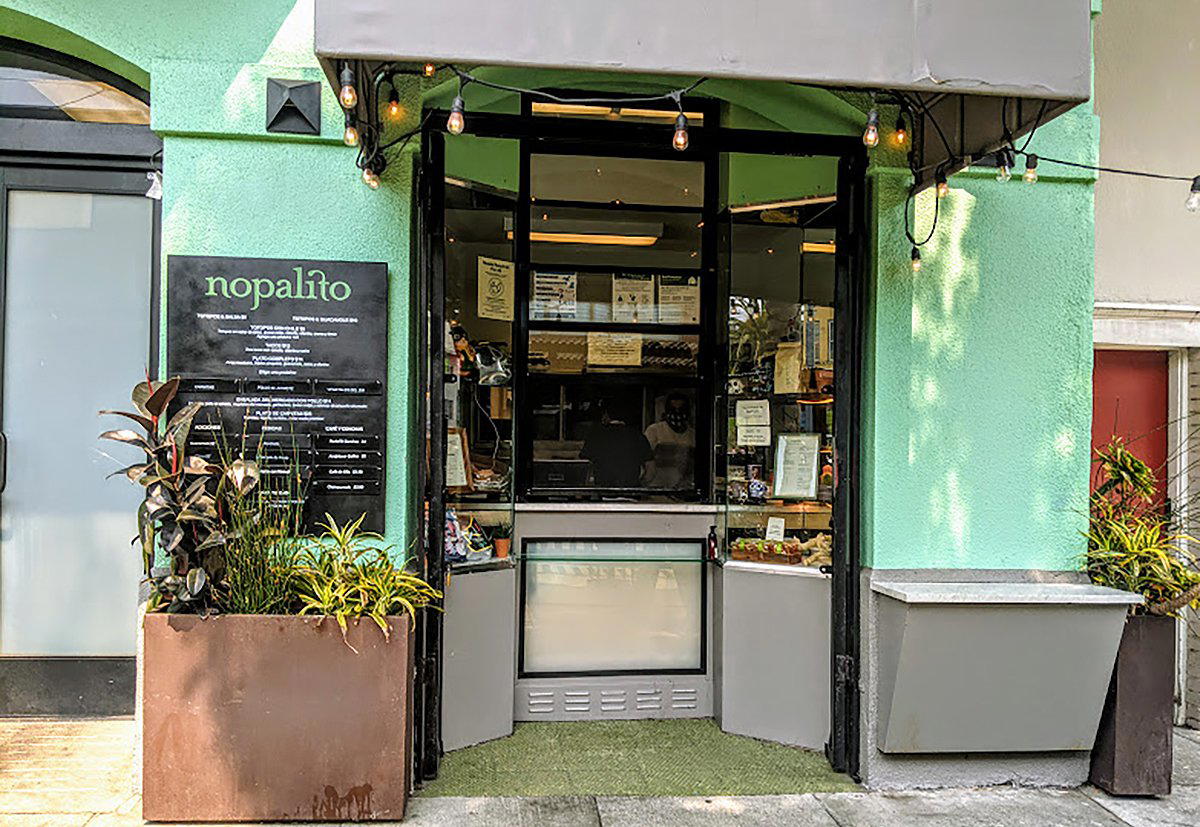
The Window on 18th Street
Nopalito To-Go Window is an Authentic Mexican To-Go restaurant at 3690 18th St, San Francisco, CA 94110. The Mission District has always operated on its own terms within San Francisco's dining hierarchy. While the city's tasting-menu tier, places like Lazy Bear, Atelier Crenn, and Benu, occupies one end of the spectrum, the neighbourhood has long sustained a parallel culture of purposeful, no-ceremony eating rooted in Mexican and Central American traditions. Nopalito's to-go window at 3690 18th Street sits squarely in that tradition. There is no host stand, no curated playlist leaking through a door, no threshold ritual. There is a window, a menu, and a line that tends to form early on weekend mornings.
That physical simplicity is not a design choice so much as a statement about priority. The Mission's most durable eating spots have always allocated their energy to what goes into the food rather than what surrounds it. Walk-up formats, taco counters, to-go windows, market stalls, have been the connective tissue of this neighbourhood's food culture for decades, long before the phrase "casual dining" became something consultants advised chefs to aim for. Nopalito's window format places it in that lineage without any need to announce it.
What Keeps the Regulars Returning
The regulars at a to-go window tell you more about a place than any other signal. They are there because the food solved a specific problem, hunger for something particular, and it did so reliably enough to become habit. In the Mission, that kind of loyalty is earned against real competition. The neighbourhood's density of Mexican cooking options means that indifferent execution gets filtered out quickly. What survives does so on repetition and trust.
The Nopalito name carries context from its full-service sibling, which built a reputation around Mexican cooking grounded in regional Mexican traditions. The to-go window extends that approach into a format designed for immediacy. For the regulars, the calculus is direct: the food reflects a kitchen that applies genuine attention to ingredients, and the format means you can eat without planning two weeks in advance. That combination is not as common as it should be.
In a city where the premium dining conversation is dominated by tasting-menu formats at restaurants like Quince and Saison, or by destination properties further afield like The French Laundry in Napa and Single Thread Farm in Healdsburg, the to-go window occupies a deliberate counter-position. It does not compete with those places. It answers a different question entirely: what do you eat on a Tuesday when you want something made with care and no fuss?
San Francisco's Layered Mexican Food Culture
Understanding where a to-go window fits requires understanding the Mission's food culture as a layered system rather than a single scene. At the base are the long-established taquerias that have operated for thirty or forty years, serving the neighbourhood's Latino community with formats and prices calibrated to daily life rather than destination dining. Above that sits a stratum of chef-driven Mexican restaurants that engage more explicitly with technique and sourcing, often drawing from specific regional traditions in Oaxaca, Yucatán, or Jalisco rather than a composite Mexican-American idiom. Nopalito's full-service location belongs to that second stratum. The to-go window compresses those values into a faster format without abandoning them.
This kind of compression is common in cities with serious food cultures. The same phenomenon appears in New York, where technically rigorous kitchens have long operated lunch counters and grab-and-go formats alongside their formal dining rooms. Across the country, places like Smyth in Chicago and Providence in Los Angeles operate within fine dining frameworks, but the broader food cultures of those cities have always made room for the counter-service format as a legitimate register of serious cooking. San Francisco's Mission District is one of the clearest American examples of that dual-track model functioning at neighbourhood scale.
The Unwritten Menu Logic
To-go windows develop their own culture of received wisdom among regulars, what to order, when to arrive, what combinations work. That knowledge rarely appears in print because it accumulates through use rather than research. For a window rooted in a kitchen with Nopalito's sourcing approach, that unwritten logic tends to centre on the items where the quality of the base ingredients is most legible: corn-based preparations where the masa itself carries flavour, proteins where sourcing decisions show up in texture and taste, and salsas where the difference between fresh and compromised ingredients is immediate.
The seasonality of Mexican cooking, often overlooked in American interpretations of the cuisine, also shapes what the regulars know to look for. Preparations tied to seasonal produce, or to traditional calendars of celebration and observance, appear and disappear in ways that reward those who pay attention. That temporal dimension connects Nopalito's window to a much longer tradition of Mexican food culture, one that stretches well beyond San Francisco and connects to cooking practices that predate the modern restaurant format entirely.
Where It Sits in a Broader American Food Conversation
The to-go window format is having a wider cultural moment in American food cities. As tasting-menu fatigue has accumulated among frequent diners, the planning overhead, the fixed-format commitment, the price at places like Le Bernardin in New York City, Blue Hill at Stone Barns in Tarrytown, or The Inn at Little Washington, there has been a corresponding revaluation of the kind of cooking that demands nothing from the diner except showing up. That shift is visible in cities like New Orleans, where Emeril's represents one pole of the dining spectrum, and in San Diego, where Addison anchors the formal end. In each city, what endures alongside the formal tier is often a walk-up or counter format rooted in a specific culinary tradition.
Nopalito's window is not a response to that trend. It predates it. But it benefits from a reader's growing willingness to take seriously a format that does not perform seriousness in the conventional ways. The food is the argument. The window is just where the argument gets made.
For a fuller account of where this fits within San Francisco's dining geography, Frasca Food & Wine in Boulder, Atomix in New York City, and Atelier Moessmer Norbert Niederkofler in Brunico each illustrate, in their own way, how culinary tradition and format interact to produce something that regular visitors find worth returning to.
Comparable Options
Comparable venues nearby, for context on price, style, and recognition.
| Venue | Cuisine | Price | Notes |
|---|---|---|---|
| Nopalito To-Go WindowThis venue — the venue you are viewing | Authentic Mexican To-Go | $$ | Not listed |
| Suavecito Birria and Tacos | Modern Birria Taqueria | $$ | Lower Nob Hill |
| Colibrí Mexican Bistro | Authentic Central Mexican Bistro | $$ | Presidio |
| Gordo Taqueria | Authentic Mexican Tacos & Burritos | $ | Golden Gate Park |
| La Vaca Birria | Authentic Mexican Birria Taqueria | $$ | Mission |
| La Cumbre Taqueria SF | Mission-Style Taqueria | $ | Mission |
Continue exploring
More in San Francisco
Restaurants in San Francisco
Browse all →
Bars in San Francisco
Browse all →
Hotels in San Francisco
Browse all →






At a Glance
- Rustic
- Cozy
- Casual Hangout
- Organic
- Local Sourcing
Casual takeout spot with focus on fresh, lively Mexican flavors in a quick-service format.