
Osaka’s tachinomi culture rewards speed, proximity, and low-friction drinking rather than ceremony. Nomiba Umeda Umeda sits in that lane: a counter-led stand-up bar near Juso Station, selected for Tabelog’s Tachinomi 100 in 2025, with sake and shochu at a dinner budget that keeps the evening casual rather than performative.
Pearl is the En Primeur Club membership app — saves, bookings, and concierge access live there. Same editors, same standards.
- Address
- 2 Chome-3-20 Jusohonmachi, Yodogawa Ward, Osaka, 532-0024, Japan
- Phone
- +81 50-8881-0140
- Website
- tabelog.com
 Saves & bookings on Pearl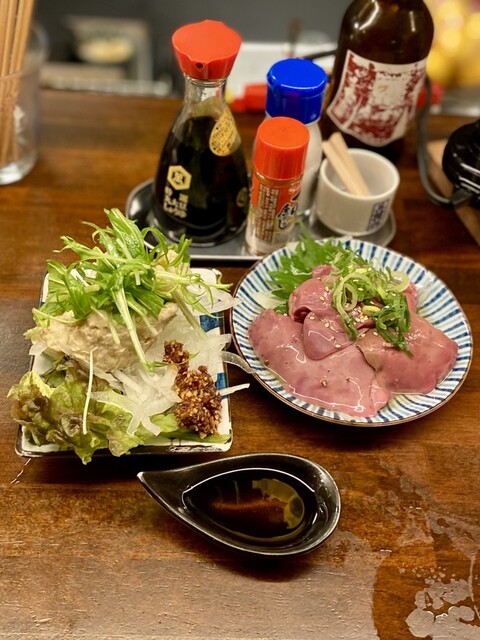
Approaching a tachinomi counter in Osaka is less about anticipation than adjustment: bags pulled close, conversation kept compact, eyes scanning the counter for the rhythm of ordering and drinking. In Juso, that rhythm has its own local charge. The area sits outside the polished hotel-and-department-store version of Umeda, with a station-front drinking culture built for quick decisions, solo stops, and groups that do not need a long table to call an evening complete.
Nomiba Umeda Umeda belongs to that compact Osaka category where the room matters because it controls the tempo. Counter seating and a stand-up format reduce the distance between drink, staff, and neighbour; the point is not lingering over a coursed meal but reading the flow of the bar and ordering accordingly. The drink identity is equally direct: sake and shochu place it within the Japanese after-work drinking tradition rather than the cocktail-led bar circuit. Selection for Tabelog’s Tachinomi 100 in 2025 gives the address a concrete signal in a field where many places are judged locally, informally, and by repeat use rather than international awards.
Juso's stand-up bars make a different argument for Osaka dining
Osaka’s food reputation often travels through takoyaki, okonomiyaki, kushikatsu, and market eating, but the city’s drinking culture is just as instructive. Tachinomi compresses the evening into a narrower frame: less choreography, lower spend, more attention to what the counter can deliver quickly. That format has become a useful corrective to the tasting-menu map of Japanese travel, especially for visitors who want Osaka at street level rather than through a reservation-only dining room.
The Juso setting sharpens that point. Compared with central Umeda, Juso feels more practical and less display-driven, a neighbourhood where proximity to the station matters and solo dining is a feature rather than an accommodation. In that context, a stand-up bar does not read as a compromise. It reads as the correct format for the district: mobile, social, economical, and resistant to overplanning.
Within the provided Osaka comparison set, the price position tells a useful story. Meganeya sits higher at JPY 4,000 to JPY 4,999, while Chuka Soba Kirimen Souhonten occupies a lower ramen bracket at JPY 1,000 to JPY 1,999. Negiyaki Yamamoto Honten shares the JPY 2,000 to JPY 2,999 band, but the decision is different: griddle-led meal versus drink-first counter. Nomiba Umeda Umeda is therefore not competing with Osaka dining rooms on comfort or duration. Its value sits in pace, drink focus, and the small social theatre of standing at the counter.
Sake, shochu, and the discipline of a short evening
The defining idea here is tachinomi discipline. A stand-up bar asks diners to edit the evening: choose a drink, add food as needed, avoid turning the counter into a private dining room. That makes the sensory experience sharper. The room is read through movement and sound rather than elaborate plating: glasses set down, orders passed across a narrow counter, customers entering and leaving with little ceremony. In Osaka, that brevity is not a lack of hospitality; it is part of the grammar.
Sake and shochu also place the venue closer to the everyday izakaya lineage than to a contemporary craft-bar model. For travellers, that distinction matters. A cocktail bar often asks guests to study a menu and submit to a house style. A tachinomi counter asks for quicker fluency: understand the drink category, watch the service rhythm, and keep the spend proportionate to the format. The Tabelog Tachinomi 100 selection is useful because it recognizes the bar within its own category, not by forcing it into a restaurant hierarchy that would miss the point.
There is also an Osaka-specific pleasure in how these lower-cost formats sit beside more formal eating. A serious trip through the city can move from bakery counters such as 52CHO-ME BAKERY to casual institutions like 551 Horai (551蓬莱), then into Italian rooms such as a canto (Italian) or 99 Pizza Napoletana Gourmet. Tachinomi fills the gap between meal and bar, especially when the evening should remain flexible.
How to place it within a wider Osaka itinerary
Nomiba Umeda Umeda works as a focused Juso stop rather than a destination built around ceremony. The stronger use case is before or after a more structured meal, or as a solo drink when the traveller wants Osaka without a long booking chain. The no-reservations format reinforces that reading: this is a counter culture built around arrival, turnover, and timing, not weeks of planning.
The address also helps explain why Osaka rewards neighbourhood thinking. A visitor using only central dining lists risks flattening the city into Namba, Umeda, and marquee counters. Juso adds another register: railway-adjacent drinking, tighter budgets, and bars where the experience is measured in pace rather than polish. For broader planning, Our full Osaka restaurants guide gives the dining frame, while Our full Osaka bars guide, Our full Osaka hotels guide, Our full Osaka experiences guide, and Our full Osaka wineries guide map the wider city around it.
Use the wider EP Club index to compare formats rather than chase a single list. Osaka’s casual range can sit beside.cafe, while Japan-wide references such as -Grilled beef Sukiyaki- KAMAKURA TANUKIAN 鎌倉 たぬき庵 in Kamakura. 鮪と炭火焼き うお炭 秋葉原店 in Tokyo.know in Kumamoto, (Shoku) Vietnam in Kawasaki, [Curry Senmon Ten] Maruyama Kyoju. in Sapporo, and [ki:] in Kyoto show how differently casual dining reads across regions. For sake-adjacent thinking outside Japan, Jōdo Saké Bar in Los Angeles and Onigiri Time in Pasadena are useful contrasts, though the Osaka counter remains a separate social language.
Quick Comparison
Comparable venues for cuisine and category context.
| Venue | Cuisine | Price | Notes |
|---|---|---|---|
| Nomiba Umeda UmedaThis venue — the venue you are viewing | Modern Japanese Lamb & Soba | $$ | Not listed |
| Jukusei Udon Nakaya | Japanese Udon / Izakaya | $$ | Yodogawa |
| Naminino Curry | Japanese Curry | $$ | Kita |
| Stand Ruten | Modern Japanese Standing Izakaya | $$ | Kita |
| Seoul | Yakiniku (Japanese BBQ) with black wagyu beef | $$ | Naniwa |
| Naniwa Menjiro Zen | Japanese Ramen | $$ | Kita |
Recognition history
Dated appearances from independent guides and award organizations, with the underlying list record or original source where available.
Tabelog 100 #39 · No. 39
Tabelog · Tabelog 100 - Tachinomi - 2025
Continue exploring
More in Osaka
Restaurants in Osaka
Browse all →



Bars in Osaka
Browse all →




Hotels in Osaka
Browse all →



Wineries in Osaka
Browse all →
At a Glance
- Cozy
- Modern
- Rustic
- Casual Hangout
- Group Dining
- After Work
- Historic Building
- Standalone
- Design Destination
- Sake Program
- Beer Program
- Local Sourcing
Current opening hours
- Monday
- Closed
- Tuesday
- 5–11:30 PM
- Wednesday
- 5–11:30 PM
- Thursday
- 5–11:30 PM
- Friday
- 5–11:30 PM
- Saturday
- 5–11:30 PM
- Sunday
- 4–11 PM
Hours can change for holidays and private events. Last verified .
A renovated 80+ year-old Japanese house creates a tucked-away, non-routine atmosphere with a blend of traditional and modern elements.