
Stand Ruten puts Osaka’s tachinomi culture into a compact Naniwacho setting, with counter seating, a stand-up bar format, shochu and cocktails, and recognition in Tabelog 100 - Tachinomi - 2025. The appeal is less about ceremony than proximity: Temma’s after-work drinking rhythm, small-room cooking, and a format built for short, focused evenings rather than drawn-out dining.
Pearl is the En Primeur Club membership app — saves, bookings, and concierge access live there. Same editors, same standards.
- Address
- 3-6 Naniwacho, Kita Ward, Osaka, 530-0022, Japan
- Phone
- +81 6-6131-5650
- Website
- instagram.com
 Saves & bookings on Pearl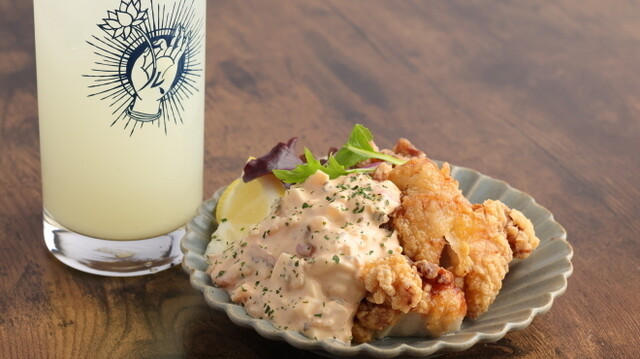
Approaching the Naniwacho side of Kita Ward, central Osaka gives way to Temma’s tighter grain: short blocks, small counters, drink-led rooms, and a dinner culture that rewards decisiveness. Stand Ruten fits the Osaka genre where the room need not announce itself. The format does the work: stand-up bar energy, counter seating, a compact 16-seat footprint, and a second-floor tatami option that shifts the experience from quick-drink informality to small-group territory.
Tachinomi in Osaka has never meant only drinking while standing. At its sharpest, it tests compression: how much food, drink, pacing, and local personality can fit into a narrow room without becoming full restaurant production. Stand Ruten sits in the everyday Osaka drinking-room price bracket rather than tasting-menu territory, but its inclusion in Tabelog 100 - Tachinomi - 2025 puts it in a more selective category conversation.
Temma's standing-bar culture, tightened into a small Naniwacho room
Temma is one of Osaka’s clearest cases for eating and drinking without overplanning. Its strength is density: ramen counters, izakaya, standing bars, late-evening snack routes, and rooms where a first drink can become dinner. Stand Ruten works within that grammar. It is not competing with higher-ticket Japanese dining such as Yama Hashiru, or the sub-¥1,000 quick-feed logic of Raku Nijin or Chuka Soba Ibuki. Its nearer comparison is Tachinomi Dokoro Uo Sho Tenma, another Osaka entry in the same budget lane, where the question is how well a small drinking room handles food, alcohol, and crowd flow, not luxury.
The category matters because Osaka visitors often misread tachinomi as a pre-dinner stop. Stronger standing bars can be the evening itself, especially when drinks are not an afterthought. The restaurant’s listed drinks focus on shochu and cocktails, signalling a broader program than the beer-and-highball shorthand many visitors associate with casual Osaka nights. The food is described in genre-free terms rather than tied to one cuisine, apt for Temma, where rigid labels matter less than whether a room can sustain repetition: another plate, another glass, another half-hour.
Space changes the read. A 16-seat room creates intimacy by constraint, not design language. Counter seating keeps exchange direct; the stand-up element keeps tempo alert; the upstairs tatami room gives groups another register without turning the place into private dining. For travellers building a night around Kita Ward rather than Dotonbori spectacle, that balance is the point.
Why the recognition matters in a category built on informality
Award signals can seem mismatched with tachinomi, a form rooted in speed, thrift, and post-work convenience. That tension is why the 2025 Tabelog 100 - Tachinomi selection carries weight. The list narrows a broad field of stand-up bars, giving the restaurant an external credential without changing the format’s social contract. This is still casual Osaka dining; casual does not mean careless.
The opening date adds context. A 2024 debut followed by 2025 category recognition suggests a room that entered the conversation quickly. That does not make it an institution, and it should not be read as one. It does make it relevant for travellers seeking Osaka’s current drinking culture rather than a museum version. In a city where established names and everyday counters sit side by side, newer rooms prove themselves through rhythm as much as concept: keeping service moving, making drinks feel intentional, and giving food enough identity beyond the first round.
Payment and reservation details shape the experience, though more for planning than romance. The first floor does not take reservations; the second-floor tatami-room course is the reservation context. Cash matters because card and electronic payments are not accepted. These facts place the room closer to Osaka’s practical drinking culture than the frictionless international restaurant model. Expect a compact local-format night with some structure, not a concierge-managed fine-dining appointment.
How to place it in an Osaka itinerary
The restaurant suits travellers who want the Kita side of Osaka at street level. Pair it with a broader Temma evening rather than treating it as an isolated destination. The area rewards short moves: a bakery stop earlier at 52CHO-ME BAKERY, casual Osaka reference points such as 551 Horai (551蓬莱), or a contrasting Italian reservation at a canto (Italian) on another night. For a more eclectic Osaka map, .cafe and 99 Pizza Napoletana Gourmet show how varied the city’s casual dining register has become.
Use the broader EP Club Osaka edit as a planning spine: Our full Osaka restaurants guide for dining routes, Our full Osaka bars guide for after-dinner drinking, Our full Osaka hotels guide for where to base the night, plus Our full Osaka experiences guide and Our full Osaka wineries guide for wider trip structure. Readers comparing Japan beyond Osaka can also place this style against -Grilled beef Sukiyaki- KAMAKURA TANUKIAN 鎌倉 たぬき庵 in Kamakura, 鮪と炭火焼き うお炭 秋葉原店 in Tokyo.know in Kumamoto, (Shoku) Vietnam in Kawasaki, [Curry Senmon Ten] Maruyama Kyoju. in Sapporo, [ki:] in Kyoto, Jōdo Saké Bar in Los Angeles, and Onigiri Time in Pasadena.
The editorial case for the restaurant is specific: a compact Osaka standing-bar address with current category recognition, a shochu-and-cocktail emphasis, and enough spatial variation for both counter-led drinking and a small tatami-room course. In Temma, that is meaningful: local in scale, selective in signal, and best understood as part of a neighbourhood drinking route rather than a stand-alone trophy reservation.
Reputation Context
Comparable venues at the same tier for side-by-side context.
| Venue | Cuisine | Price | Notes |
|---|---|---|---|
| Stand RutenThis venue — the venue you are viewing | Modern Japanese Standing Izakaya | $$ | Not listed |
| Magic Spice Naniwa ten | Sapporo-style soup curry | $$ | Naniwa |
| Okonomiyaki Omoni Honten | Osaka okonomiyaki house-restaurant | $$ | Ikuno |
| RAMU-NO-LOVESONG | Lamb-focused Modern Japanese Stand Bar | $$ | Kita |
| Odashi to Spice Ganso Electroni Curry | Dashi-based Japanese Spice Curry | $$ | Miyakojima |
| Negiyaki Yamamoto Honten | Japanese Negiyaki | $$ | Yodogawa |
Recognition history
Dated appearances from independent guides and award organizations, with the underlying list record or original source where available.
Tabelog 100 #2 · No. 2
Tabelog · Tabelog 100 - Tachinomi - 2025
Continue exploring
More in Osaka
Restaurants in Osaka
Browse all →




Bars in Osaka
Browse all →




Hotels in Osaka
Browse all →



Wineries in Osaka
Browse all →
At a Glance
- Cozy
- Lively
- After Work
- Casual Hangout
- Group Dining
- Late Night
- Solo
- Standalone
- Design Destination
- Sake Program
- Beer Program
- Craft Cocktails
Current opening hours
- Monday
- 5–10:30 PM
- Tuesday
- Closed
- Wednesday
- 5–11:30 PM
- Thursday
- 5–11:30 PM
- Friday
- 5–11:30 PM
- Saturday
- 5–11:30 PM
- Sunday
- 5–11:30 PM
Hours can change for holidays and private events. Last verified .
Casual and lively standing-bar atmosphere with a cozy, hideaway feel where guests gather shoulder-to-shoulder over drinks and a rotating selection of small plates.