
Tabelog 100 #45
Our verdict
Nogata Gyoza Honten places Tokyo’s dumpling-and-drinks tradition in a small Nakano room rather than a hotel dining room or luxury counter. Its Tabelog Dumplings 100 selection in 2024 and 2021, 16-seat scale, and izakaya-adjacent format make it a useful address for readers who plan meals around category strength rather than ceremony.

Pearl is the En Primeur Club membership app, where members save venues, book tables and use the concierge.
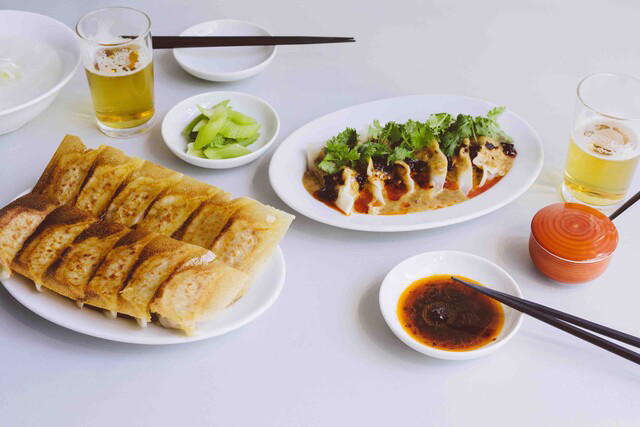
The menu
What to order
- Garlic-free gyoza
- Frozen raw gyoza for home cooking
Approaching Tokyo through its more local dining rhythms means encountering everyday errands, quick stops, and compact rooms built for regulars rather than spectacle. This is the right setting for gyoza. The dumpling in Tokyo rarely behaves like a grand-course dish; it belongs to the beer glass, the quick lunch, the second stop after work, and the small counter where the difference between ordinary and serious is measured in repetition.
Nogata Gyoza Honten belongs to that practical end of the city’s dining culture. Its recognition on Tabelog’s Dumplings 100 list in 2024 matters because gyoza is a crowded category in Japan. The field includes Chinese-leaning kitchens, izakaya hybrids, and specialist shops where a narrow menu is the point. Selection in that group signals more than popularity; it places the restaurant inside a broader conversation about a dish often treated casually by visitors.
Tokyo gyoza works because the format is small, fast, and exacting
Gyoza rewards focus. The wrapper, filling, pan technique, and pacing all have to land inside a short window, which is why specialist shops can compete with restaurants carrying larger menus and higher checks. In Tokyo, this category often runs parallel to casual dining culture: low ceremony, high turnover, and a crowd that judges consistency over novelty.
That context is useful when reading Nogata Gyoza Honten against other Tokyo formats. Other Tokyo dining rooms sit in different urban dining lanes, while category-led casual restaurants show how the city also rewards narrow, specialist cooking outside the luxury tier. The comparison is not about cuisine similarity; it is about how Tokyo treats specialist restaurants as destinations when the craft is legible and the price of entry remains accessible.
The useful signal here is the combination of dumpling, izakaya, and Chinese categories. Tokyo diners do not separate these borders as rigidly as guidebook taxonomy suggests. A gyoza specialist can function as lunch, early dinner, or drinks-led meal, and that flexibility explains why the format travels well across the city without becoming generic.
Tokyo keeps the meal grounded rather than ceremonial
Tokyo’s everyday food culture supports small rooms, repeat custom, and practical spending patterns, which works in gyoza’s favour. A restaurant in this category does not need a dramatic narrative to feel worthwhile; focus itself becomes part of the editorial evidence. Compact specialist formats sharpen the experience and can also limit spontaneity when demand clusters around meal times.
The restaurant’s dumpling, izakaya, and Chinese positioning also matters. Many acclaimed Tokyo restaurants become narrower as recognition grows, but dumpling culture often stays social and practical. That makes Nogata Gyoza Honten better understood as a specialist everyday restaurant with serious category credentials, not as a formal destination meal. Readers building a broader itinerary should treat it differently from larger or more structured dining plans, including stops such as Tori Cho or Naniwa, where the occasion may call for a different planning logic.
For Tokyo dining context beyond dumplings, EP Club’s city rails are useful starting points: Our full Tokyo restaurants guide, Our full Tokyo bars guide, Our full Tokyo hotels guide, Our full Tokyo wineries guide, and Our full Tokyo experiences guide. The point is not to stack reservations blindly. Tokyo works better when one small, category-specific meal is placed between larger commitments.
Plan it as a tight specialist stop, not a long tasting-menu evening
The booking experience should be approached with the discipline used for small Tokyo restaurants. The award signal is meaningful inside its category, and the format is compact enough that peak meal periods can compress quickly. This is not the address for a loose group plan that keeps changing size. It is better suited to a small party that wants a clear dumpling-focused meal and understands that the pleasure of the format is in its economy.
Compared with Ramen Go On or Gen-soba Nonaka, Nogata Gyoza Honten sits in a similarly accessible specialist register, though the occasion differs through its dumpling, izakaya, and Chinese category signals. Compared with Yotaro, it offers a particularly clear category marker through Tabelog’s Dumplings 100 recognition. That makes it easier to justify on a short Tokyo itinerary if the goal is to understand how the city treats humble dishes with serious attention.
Use the meal as a counterweight to Tokyo’s more formal reservations. A day could move from a tightly defined lunch to drinks later, with other casual Tokyo dining rooms occupying different moods. For readers tracking Japanese casual dining beyond Tokyo, the same category-first lens can be applied generically: look for places where a narrow format, everyday pricing, and repeatable craft matter more than spectacle. Tokyo’s advantage remains density: a serious dumpling meal can sit quietly inside an ordinary city routine and still carry national category recognition.
Frequently asked questions
What's the price range at Nogata Gyoza Honten?
Pricing at Nogata Gyoza Honten is listed as dinner JPY 3,000 - JPY 3,999 and lunch JPY 1,000 - JPY 1,999.
Is Nogata Gyoza Honten open every day?
Published hours should be checked directly before visiting Nogata Gyoza Honten.
What's Nogata Gyoza Honten's location?
Tokyo.
What is Nogata Gyoza Honten known for?
Nogata Gyoza Honten is known for dumplings and its 2024 selection in Tabelog 100 Dumplings. It is also categorized as an izakaya and Chinese restaurant, with listed budgets of dinner JPY 3,000 - JPY 3,999 and lunch JPY 1,000 - JPY 1,999.
Is Nogata Gyoza Honten good for vegetarians?
The venue is categorized around dumplings, izakaya-style dining, and Chinese cooking in Tokyo, so vegetarian diners should check the menu carefully before ordering.
Style and Standing
Comparable venues to calibrate price, style, and recognition.
| Venue | Cuisine | Price | Awards | Notes |
|---|---|---|---|---|
| Nogata Gyoza HontenThis venue (the venue you are viewing) | Gyoza & casual Japanese-Chinese izakaya | $20–30 | Tabelog 100 #45 | Not listed |
| Mendokoro Honda | Modern Tokyo Ramen & Tsukemen | $10–20 | Tabelog 100 #12 | Akihabara |
| Chuka Soba Benten | Traditional Japanese Ramen & Tsukemen | Not listed | Tabelog 100 #61 | Nerima |
| Katsu Pulipo | Tonkatsu & Pork Cutlet Bowls | $10–20 | Tabelog 100 #88 | Shinjuku |
| TAIZEN | Hinai Jidori chicken and oyakodon–focused Japanese restaurant | $30–50 | Tabelog 100 #54 | Shinjuku |
| Yoshoku Bar Ultra | Yoshoku bar (Japanese-style Western comfort food) | Not listed | Tabelog 100 #21 | Setagaya |
Recognition history
Dated appearances from independent guides and award organizations, with the underlying list record or original source where available.
Tabelog 100 #45 · No. 45
Tabelog · Tabelog 100 - Dumplings - 2024
Continue exploring
More in Tokyo
Restaurants in Tokyo
All restaurants in Tokyo →




Bars in Tokyo
All bars in Tokyo →







Details
- Cozy
- Lively
- Casual Hangout
- After Work
- Group Dining
- Solo
- Family
- Late Night
- Standalone
- A La Carte
- Small Plates
- Beer
- Sake
- Shochu
Current opening hours
- Monday
- 11:30 AM–2:30 PM, 5–11 PM
- Tuesday
- 11:30 AM–2:30 PM, 5–11 PM
- Wednesday
- 11:30 AM–2:30 PM, 5–11 PM
- Thursday
- 11:30 AM–2:30 PM, 5–11 PM
- Friday
- 11:30 AM–2:30 PM, 5–11 PM
- Saturday
- 11:30 AM–3 PM, 5–11 PM
- Sunday
- 11:30 AM–3 PM, 5–11 PM
Hours can change for holidays and private events. Hours as of .