Nobu Downtown
Our verdict
Nobu Downtown occupies a David Rockwell-designed subterranean space at 195 Broadway, bringing Chef Nobu Matsuhisa's Japanese-Peruvian cooking to Lower Manhattan's Financial District. The flagship New York location is built around signature dishes like Black Cod with Miso and Yellowtail Jalapeño, a style that has shaped how global diners understand the intersection of Japanese technique and South American ingredient logic.

Pearl is the En Primeur Club membership app, where members save venues, book tables and use the concierge.
The menu
What to order
- Black Cod Miso
- Yellowtail Jalapeno
- Rock Shrimp Tempura
A Subterranean Room in a Neighbourhood That Earns Its Address
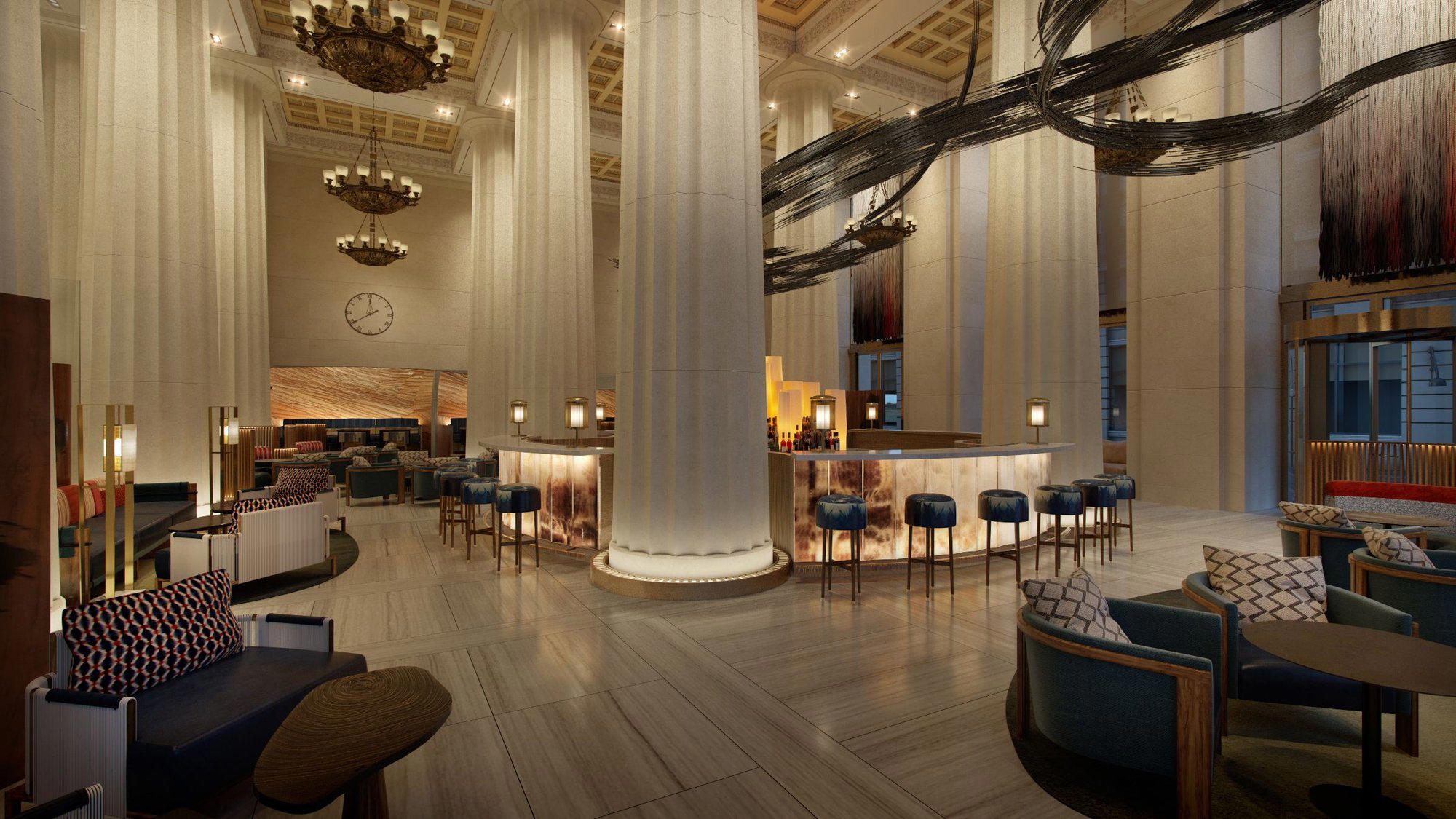
Lower Manhattan's Financial District is not where most diners instinctively look for a destination restaurant. That calculus has shifted considerably over the past decade, as the neighbourhood has absorbed residential density, hotel openings, and a dining infrastructure that once stopped at Midtown. Nobu Downtown, positioned at 195 Broadway beneath one of the district's most recognisable historic facades, sits at the centre of that transition. The building's AT&T Long Lines predecessor gives way, underground, to a David Rockwell-designed dining room whose scale and material language are calibrated for theatre, not the theatre of spectacle, but the quieter kind that comes from proportion, lighting, and a room that knows what it is.
That the flagship New York location sits in Lower Manhattan rather than Midtown or the West Village says something about how the Nobu brand has read the city's shifting centre of gravity. Downtown dining has attracted increasing serious investment since the mid-2010s, and the address at Broadway places the restaurant within reach of a Financial District clientele that rarely needs a reason to spend, alongside visitors using the neighbourhood's hotel stock as a base for broader New York exploration. For context on how Lower Manhattan now positions itself within the city's wider dining offer, see our full New York City restaurants guide.
The Style That Built the Reputation
Japanese-Peruvian fusion has become a recognised culinary category in its own right, and Nobu Matsuhisa's cooking is the primary reason that category exists in the consciousness of mainstream fine dining. The logic is structural: Japanese technique applied to Peruvian ingredients and acid profiles produces a mode of cooking that privileges lightness, clarity, and a different kind of heat than the European tradition. The two signature dishes that anchored the original Nobu Tribeca menu in the 1990s, Black Cod with Miso and Yellowtail Jalapeño, remain central to the Downtown kitchen because they are, in the clearest sense, the proof of concept. Black Cod with Miso is the dish most often cited when observers track how Japanese flavour logic migrated into Western fine dining; the miso-sake marinade and the textural result of the preparation defined a new reference point. Yellowtail Jalapeño places that same acid-heat-fat balance in a crudo format that the industry has since replicated across price points from $14 izakayas to expense-account omakase counters.
Within New York's Japanese dining tier, Nobu Downtown occupies a different competitive position than the omakase counters that define the city's highest price bracket. Masa, for instance, operates as a near-singular counter experience with a per-head spend that places it outside comparison with most other restaurants in the country. Nobu's model is broader: a larger room, a menu format that accommodates groups and corporate tables alongside destination diners, and a price register that sits firmly in the fine dining tier without requiring the advance commitment of a ticketed omakase. That breadth is a feature, not a compromise. It reflects a different ambition, the creation of a dining format that travels, replicates, and holds consistent quality across a global footprint.
For comparison within New York's wider fine dining conversation, Le Bernardin and Per Se represent the French tradition at the city's upper tier, while Atomix and Eleven Madison Park anchor the contemporary tasting menu format. Nobu Downtown occupies a distinct lane: accessible in format, high in execution standard, and drawing from a culinary vocabulary that none of those restaurants shares.
The Rockwell Room and What It Communicates
David Rockwell's design portfolio spans Broadway productions and hotel lobbies, and his work on the Downtown space reflects a studied understanding of how a room shapes expectation before the first dish arrives. The subterranean location is used as a dramatic advantage: the transition from Broadway's street-level noise into a contained, low-ceilinged environment creates a shift in register that dining rooms on upper floors rarely achieve. The material palette is warm without being heavy, and the room's spatial logic groups tables in a way that accommodates the full range of use cases the location demands, from two-person dinners to large party bookings generated by the neighbourhood's corporate base.
Rockwell's involvement is a trust signal worth reading properly. His studio does not take every project, and its presence here reflects a commission calibrated to a specific brief: create a room that carries a global brand's visual identity while belonging, architecturally, to its particular Manhattan address. The result is a space that would not work in Miami or Tokyo without adjustment, which is, arguably, what a flagship location should be.
Positioning Within a Broader Category
The Nobu model has been exported to over forty locations worldwide, which creates an interesting question for the New York flagship: what does it offer that the network cannot? The answer lies partly in the address and partly in the room, but mostly in the fact that the original creative context still shapes what happens in the kitchen. New York is where the culinary vocabulary was formalised in the American market, and the Downtown kitchen operates with an awareness of that history that a newer location in a secondary market cannot replicate without effort.
Internationally, the standard for high-end Japanese cooking with Western crossover influence is set by a small number of reference points. In Hong Kong, 8½ Otto e Mezzo Bombana anchors a different fusion tradition, while restaurants like The French Laundry in Napa and Alinea in Chicago represent the American fine dining tradition from entirely different angles. Nobu Downtown's specific contribution to that conversation remains the Japanese-Peruvian register, which has had more downstream influence on how American restaurants cook fish and work with acid than almost any other single culinary development of the past thirty years.
Readers building a broader New York itinerary around the dining programme should also consult our full New York City hotels guide, our full New York City bars guide, and our full New York City experiences guide. For those extending the trip beyond the city, Single Thread Farm in Healdsburg, Lazy Bear in San Francisco, and Providence in Los Angeles each represent the West Coast fine dining conversation at a high level. Emeril's in New Orleans and Alain Ducasse at Louis XV in Monte Carlo offer useful reference points for how chef-branded restaurants have translated culinary identity into large-footprint operations internationally. Our full New York City wineries guide covers the city's wine programming for those building a full itinerary.
Planning Your Visit
Nobu Downtown is located at 195 Broadway in the Financial District, accessible from multiple subway lines serving Fulton Street and Cortlandt Street. The neighbourhood is substantially quieter on weekends than during the working week, which affects both street atmosphere and the room's energy, weeknight dinners carry the momentum of the corporate district, while Saturday evenings tend toward a calmer, more destination-led crowd. Given the brand's recognition and the room's position as a flagship, reservations are advisable, particularly for prime weekend slots and larger group bookings. Walk-in availability tends to depend heavily on the day and time; the bar area has historically offered a lower-commitment entry point at peak periods, though diners should verify current policy directly with the restaurant. Dietary requirements, including pescatarian and gluten-aware accommodations, are standard territory for a kitchen operating at this scale and with this menu architecture, but specific needs are best confirmed at the time of booking.
Frequently asked questions
What's the address for Nobu Downtown?
Nobu Downtown is located at 195 Broadway, New York, NY 10007, New York City.
Is Nobu Downtown Michelin-listed?
Nobu Downtown has received recognition including: Nobu Downtown is the flagship New York location for Chef Nobu Matsuhisa's globally renowned "new style" Japanese cuisine, which features Peruvian influences. The restaurant is famous for signature dishes like Black Cod with Miso and Yellowt….
What dish is Nobu Downtown famous for?
Two dishes define the Nobu reputation globally and anchor the Downtown menu: Black Cod with Miso and Yellowtail Jalapeño. Both originate with Chef Nobu Matsuhisa's Japanese-Peruvian approach, which fuses classical Japanese technique with South American citrus and heat. The Black Cod in particular has been widely credited with introducing miso-glazed fish to mainstream fine dining in the United States.
Do they take walk-ins at Nobu Downtown?
Walk-in availability at 195 Broadway depends heavily on day of week and season. The Financial District location draws a mix of pre-theatre diners, finance-sector regulars, and out-of-town visitors, which means prime Friday and Saturday evening slots tend to fill well in advance. The bar area typically offers a better chance for same-day seating than the main dining room.
What has Nobu Downtown built its reputation on?
The foundation is Chef Nobu Matsuhisa's codified 'new style' Japanese cuisine, which introduced Peruvian ingredients and techniques into a Japanese framework decades before Japanese-Peruvian cooking became a recognised category. The Downtown location adds a David Rockwell-designed subterranean dining room to that culinary identity, and the address at 195 Broadway positions the restaurant as a destination in a neighbourhood that historically lacked them.
Can Nobu Downtown accommodate dietary restrictions?
The Japanese-Peruvian framework at Nobu Downtown is naturally pescatarian-friendly, given the kitchen's emphasis on fish and seafood. Guests with specific allergies or dietary requirements should communicate them at the time of booking or directly with the floor team on arrival, as kitchen teams at Nobu properties routinely work around common restrictions. Confirming specifics in advance is the most reliable approach for complex dietary needs.
Just the Basics
Comparable venues nearby, for context on price, style, and recognition.
| Venue | Cuisine | Price | Notes |
|---|---|---|---|
| Nobu DowntownThis venue (the venue you are viewing) | New Style Japanese | $150–200 | Not listed |
| Unnamed flagship Japanese fine-dining at One Bryant Park | Japanese Fine-Dining Tasting Menu | Not listed | midtown manhattan, Japanese Fine-Dining Tasting Menu |
| Sushi Yoshitake | Edomae Omakase | $500+ | Midtown, Modern Japanese Omakase |
| Azabu New York | Traditional Edo-Mae Omakase | Not listed | Tribeca-Civic Center, Traditional Edo-Mae Omakase |
| Yamada | Seasonal Kaiseki | $300–500 | SoHo-Little Italy-Hudson Square, Seasonal Kaiseki |
| Koi | Upscale Japanese Fusion | Not listed | Midtown-Times Square, Upscale Japanese Fusion |
Recognition history
Dated appearances from independent guides and award organizations, with the underlying list record or original source where available.
Robb Report 100 Greatest American Restaurants of the 21st Century #82
Robb Report
Continue exploring
More in New York City
Restaurants in New York City
All restaurants in New York City →
Bars in New York City
All bars in New York City →







Details
- Elegant
- Modern
- Sophisticated
- Well Known
- Date Night
- Business Dinner
- Special Occasion
- Private Dining
- Sake Program
- Craft Cocktails
- A La Carte
- Prix Fixe
- Small Plates
- Sake Program
- Vegetarian Friendly
Current opening hours
- Monday
- 11:45 AM–2:15 PM, 5:30–9:45 PM
- Tuesday
- 11:45 AM–2:15 PM, 5:30–9:45 PM
- Wednesday
- 11:45 AM–2:15 PM, 5:30–9:45 PM
- Thursday
- 11:45 AM–2:15 PM, 5:30–9:45 PM
- Friday
- 11:45 AM–2:15 PM, 5:30–10:45 PM
- Saturday
- 5:30–10:45 PM
- Sunday
- 5:30–9:45 PM
Hours can change for holidays and private events. Hours as of .
Striking subterranean space with natural textures, birch trees, wood floors, and river stone walls creating an elegant, sophisticated atmosphere.