
A 20-seat Musashi-Koyama bakery-cafe with take-out service, wine, and Tabelog Bread TOKYO “Tabelog 100” selections in 2020 and 2022. nemo Musashikoyama honten belongs to Tokyo’s serious neighborhood bread culture rather than the city’s luxury dining circuit, with prices in the everyday bakery range and reputation doing the heavy lifting.
Pearl is the En Primeur Club membership app — saves, bookings, and concierge access live there. Same editors, same standards.
- Address
- 東京都品川区小山4-3-12 TK武蔵小山ビル 1F
- Phone
- +81337862617
- Website
- nemo-bakery.jp
 Saves & bookings on Pearl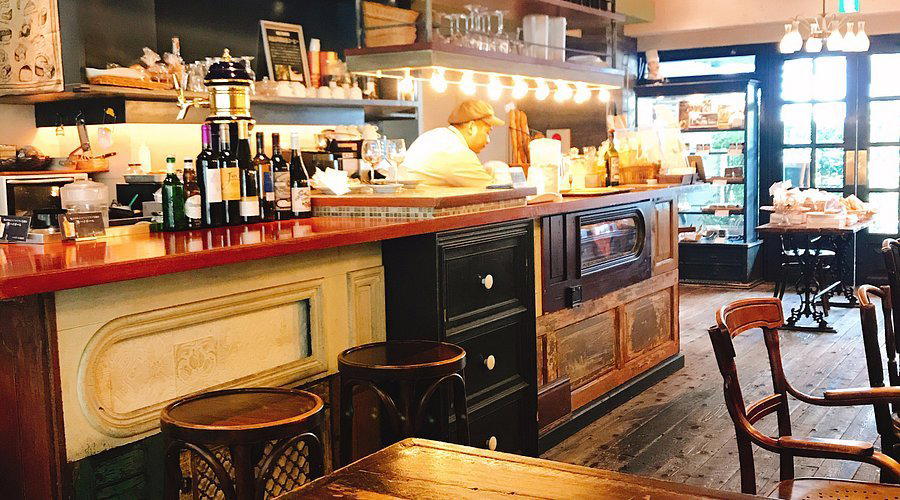
Musashi-Koyama’s covered shopping streets put bread in the same daily rhythm as coffee, groceries, school runs, and late-afternoon errands. In that setting, a bakery-cafe does not need ceremony to signal seriousness: the useful details are the counter, the 20 seats, the take-out format, the presence of wine, and the fact that the room operates as both bakery and neighborhood cafe rather than as a destination tasting counter.
Tokyo’s bread culture has long outgrown the simple split between French-style boulangerie and Japanese shokupan specialist. The city’s stronger bakeries tend to work in narrow, competitive lanes: station-adjacent shops built for repeat local traffic, cafe-bakery hybrids where seating changes the tempo, and patisserie-adjacent rooms where sweets pull the average spend upward. nemo Musashikoyama honten sits in the first two lanes, with Bread, Cafe, and Dining bar categories placing it closer to an all-day neighborhood format than a pure pastry counter.
Recognition matters in Tokyo's bread tier because the category is crowded
The useful credential here is not a luxury award but a category-specific one. Selection for Tabelog Bread TOKYO “Tabelog 100” in 2020 and 2022 places the shop inside a public Tokyo bread shortlist, where consistency and repeat local approval carry more weight than spectacle. The Tabelog score listed at 3.73 reinforces that position: in Tokyo bakery terms, that is a sign of sustained approval in a category where small differences in convenience, range, and execution matter.
This is also why Musashi-Koyama is part of the story. Central Tokyo has the obvious hotel bakeries, department-store counters, and polished patisserie rooms; outer residential districts test a shop more severely because repeat customers decide whether a bakery becomes part of weekly life. A place such as AMAMERIA ESPRESSO, also in Tokyo and operating in a coffee-and-cafe price band, belongs to a related everyday-specialist economy, while patisserie de bon coeur Musashikoyama honten points to the area’s sweeter, higher-spend side. The value of nemo Musashikoyama honten is that it reads as a bread-led anchor within that local mix rather than as a dessert stop with bread attached.
Compared with Tokyo formats such as Toriki, where the draw is yakitori specialization, or La TRIPLETTA, where the pricing and meal structure belong to a different restaurant cadence, a bakery-cafe asks for a different kind of judgement. The question is not whether it can stage a long dinner; it is whether the format has enough range and reliability to justify repeat use. Selection in the Bread TOKYO list answers that question more directly than a general dining accolade would.
A bakery-cafe format, not a chef's-table performance
The room’s 20 seats and take-out service define the experience more clearly than any grand dining vocabulary. Counter seating and sofa seating are listed among the facilities, which suggests a flexible neighborhood room rather than a fixed-course restaurant. Children are welcome, solo dining is a natural fit, and the non-smoking policy keeps it aligned with the cleaner, cafe-led side of Tokyo casual dining.
Chef Takayuki Nemoto is the named kitchen figure, but the sharper editorial point is format discipline. Tokyo has many personality-driven restaurants where the chef’s biography becomes the meal’s frame. Bread shops work differently. Reputation accumulates through repeat purchases, short visits, and the quiet pressure of customers comparing one loaf, sandwich, or cafe plate against the place they used last week. The chef’s name gives the bakery a human anchor; the Tabelog Bread selections explain why it enters a wider Tokyo conversation.
Pricing keeps it accessible by Tokyo standards. Dinner is listed below JPY 999, while lunch sits at JPY 1,000 to JPY 1,999. That puts it far from the expense structure of Ginza omakase, hotel dining, or full-course French, and closer to the category where small margins in quality and convenience decide loyalty. For travelers, that makes the stop useful in a way a high-ticket restaurant is not: it can fit between neighborhoods, before a train, or as a low-commitment pause in a day otherwise built around reservations.
How to place it in a Tokyo food itinerary
The stronger way to use this address is as part of a neighborhood-led Tokyo plan, not as a replacement for a formal dinner. Musashi-Koyama rewards a slower half-day built around station-area walking, cafes, bakeries, and local shopping rather than the rapid checklist style that works in Shinjuku or Ginza. The shop is listed as three minutes on foot from Musashi-Koyama Station on the Tokyu Meguro Line, which makes it logistically simple if the day already points toward Meguro, Shinagawa, or the southwest side of the city.
Reservations are unavailable, so the planning logic is closer to a bakery run than a restaurant booking. Opening is listed from 9:00 AM to 7:00 PM on operating days, with Wednesday closure and public-holiday exceptions. Payment also matters: credit cards and electronic money are not accepted, while PayPay is listed. Parking is unavailable, which is normal for this sort of Tokyo station-area food stop and another reason to treat the train as the default approach.
For broader Tokyo planning, use Our full Tokyo restaurants guide alongside Our full Tokyo hotels guide, Our full Tokyo bars guide, Our full Tokyo wineries guide, and Our full Tokyo experiences guide. Nearby or category-adjacent Tokyo reading can extend through 2D Cafe, 3 Chome no Curry Ya San, 12/10 Shinjuku ten, 124. KAGURAZAKA (Yakitori), and. 鮪と炭火焼き うお炭 秋葉原店. For a wider Japan casual-dining comparison, see -Grilled beef Sukiyaki- KAMAKURA TANUKIAN 鎌倉 たぬき庵 in Kamakura.cafe in Osaka.know in Kumamoto, (Shoku) Vietnam in Kawasaki, [Curry Senmon Ten] Maruyama Kyoju. in Sapporo, and [ki:] in Kyoto. Outside Japan, Jōdo Saké Bar in Los Angeles and Onigiri Time in Pasadena show how Japanese formats translate abroad.
Reputation First
Comparable venues by category and price.
| Venue | Cuisine | Price | Notes |
|---|---|---|---|
| nemo Musashikoyama hontenThis venue — the venue you are viewing | Bakery & Cafe | $ | Not listed |
| Himmel | German-style bakery & cafe | $ | Ōta |
| THE LIVING | Cafe / Dessert Cafe | $ | Ōta |
| Boulangerie Sudo | Artisan Japanese-French Bakery | $ | Setagaya |
| L'atelier de Plaisir | Artisanal Bakery & Café | $ | Setagaya |
| Topca Kanda honten | Japanese & Indian-style Curry House | $ | Chiyoda |
Recognition history
Dated appearances from independent guides and award organizations, with the underlying list record or original source where available.
Tabelog 100 #82 · No. 82
Tabelog · Tabelog 100 - Bread - TOKYO - 2022










At a Glance
- Cozy
- Modern
- Lively
- Casual Hangout
- Solo
- Family
- After Work
- Brunch
- Standalone
- Design Destination
- Local Sourcing
- Street Scene
A small, warm bakery-cafe with an antique-inspired interior, shelves lined with dozens of breads, and a relaxed local feel suited to everyday visits rather than formal occasions.