
Michelin Bib Gourmand
Our verdict
Nanxiang Steamed Bun is a household-name specialist in Shanghai's City God Temple area, known for its xiaolongbao tradition. The venue draws crowds for a narrowly focused menu that centres on the city's signature soup dumplings, made using techniques refined over decades. Expect long queues and a high-turnover format.

Pearl is the En Primeur Club membership app, where members save venues, book tables and use the concierge.
The menu
What to order
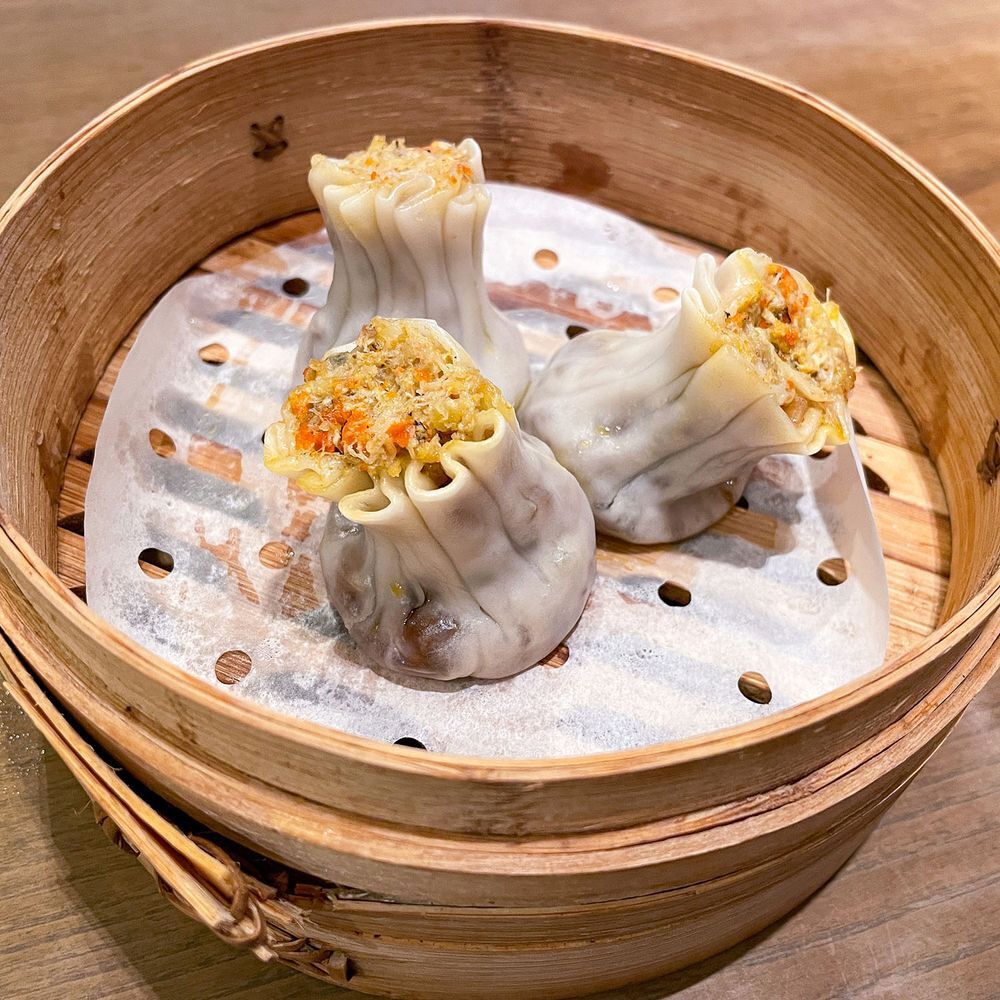
- Handmade pork xiao long bao
- Crab roe and fresh pork xiao long bao
- Oversized ‘super’ soup bun with straw
- Shanghai-style smoked fish
The storefront on Yuyuan Road sits at the edge of the City God Temple bazaar, where vendor stalls and souvenir shops compress around a steady flow of domestic and international visitors. Nanxiang Steamed Bun occupies a narrow two-storey building, its ground-floor counter visible through windows hung with red lanterns. The queue outside is a permanent fixture, particularly on weekends and public holidays, with wait times stretching past an hour during peak lunch service. Inside, the layout is utilitarian: shared tables, rapid turnover, and a kitchen visible from the ordering counter where bamboo steamers stack in tiers. The scene is noisy, fluorescent-lit, and efficient, a canteen format built around one dish executed at volume.
Xiaolongbao forms the central menu item, and the version here follows a Shanghai formula that prioritises a high soup-to-filling ratio, thin wrapper walls, and a fine-mince pork interior. The dumplings arrive in bamboo steamers with eighteen folds per bun. The wrappers steam quickly and are designed to hold their shape while the pork fat melts into broth; the ideal window for eating is narrow, around two minutes after the steamer lands. Beyond the signature pork xiaolongbao, the menu includes crab-roe variants and a smaller selection of other steamed items: shumai, vegetable buns, and sweet buns filled with red bean paste. The crab-roe xiaolongbao adds a seasonal ingredient sourced from the Yangcheng Lake region during autumn, though availability fluctuates and the surcharge is significant. Portions are priced per steamer, and a typical order for one person runs between ¥30 and ¥50, placing it in the low-cost tier relative to Shanghai's broader dining scene.
A Xiaolong lineage and the Huangpu context
The name Nanxiang refers to a town in Shanghai's Jiading District, historically credited as the birthplace of xiaolongbao in the late Qing Dynasty. The dish migrated into the city proper during the early twentieth century, and several venues claim direct lineage to the original Nanxiang workshop. This location is one of them, and its long tenure as a household name rests on that association rather than recent culinary innovation. The format has remained consistent: high-volume production, minimal menu variation, and a focus on dough-to-filling ratio control. The surrounding Huangpu neighbourhood amplifies the venue's visibility, City God Temple is one of Shanghai's most visited tourist precincts, and Nanxiang Steamed Bun benefits from proximity to the Yuyuan Garden entrance and the Huxinting Teahouse. That context brings foot traffic but also means the crowd skews heavily towards first-time visitors rather than regulars. For comparison, 102 House Shanghai and 100 Century Avenue Cantonese operate at higher price points and offer xiaolongbao within larger dim-sum programmes; Nanxiang Steamed Bun's single-dish emphasis and turnover model sit in a different competitive tier.
Ingredient sourcing and format discipline
The pork is sourced from suppliers in Jiangsu Province, with fat content calibrated to yield sufficient broth as the steamer heats. The gelatinised broth component, rendered from pork skin and trotter stock, is mixed cold into the filling, where it liquefies during steaming. Flour for the wrappers is milled from wheat grown in the Yangtze River delta, chosen for gluten strength and elasticity. The crab-roe xiaolongbao, available only during late autumn, uses female hairy crabs from Yangcheng Lake, though sourcing claims are difficult to verify and the ingredient is often substituted with lake-farmed roe from secondary suppliers when demand exceeds availability. The venue does not publish seasonal menus or supplier lists, and ingredient traceability ends at the kitchen door. That lack of transparency is typical for high-volume street-food formats in Shanghai, where speed and consistency matter more than provenance storytelling. The kitchen operates on a continuous production cycle, with dough rolled and filled in batches that move from prep table to steamer in under ten minutes. Quality control centres on wrapper thickness, measured by the number of folds and the translucency of the dough when held to light, and the seal integrity that prevents broth leakage. The format discipline is tighter than at casual dumpling vendors elsewhere in Shanghai, though it does not approach the precision or plating standards of fine-dining xiaolongbao programmes at venues like 102 House Shanghai.
Service is transactional. Orders are placed at the counter, payment is upfront, and steamers arrive within five to ten minutes during off-peak hours or up to thirty minutes during lunch rushes. Staff turnover is high, and English-language support is limited; pointing at menu photos or using a translation app is standard practice for non-Mandarin speakers. The ground floor fills quickly, and seating is communal; solo diners and small groups share tables with strangers. The second floor offers slightly more space but the same canteen atmosphere. Noise levels are high, and the pace discourages lingering. The venue functions as a pit-stop rather than a destination meal, and most visits last under twenty minutes from ordering to departure. For those seeking a more comfortable xiaolongbao experience, 100 Century Avenue Steakhouse and similar mid-tier restaurants offer table service, air conditioning, and broader menus at a modest price increase. Nanxiang Steamed Bun appeals primarily to visitors prioritising historical name recognition and low cost over ambience or variety.
Reservations are not accepted, and walk-in queueing is the only access method. The queue moves faster during weekday lunches and late afternoons; avoid Saturdays, Sundays, and Chinese public holidays unless prepared for waits exceeding ninety minutes. The location is a five-minute walk from Yuyuan Garden metro station (Line 10) and sits within the pedestrianised bazaar zone, making it accessible by foot from most Huangpu district hotels. For those exploring Shanghai's dumpling tradition more broadly, consider pairing this stop with visits to 102 House (Cantonese) or 1515 West Chophouse (Steakhouse) for contrast in format and price tier. Shanghai hotels in Huangpu are walkable, and the surrounding area also provides access to bars and cultural experiences within the Old City precinct.
Frequently asked questions
Is Nanxiang Steamed Bun okay with children?
The format works well for families: steamer baskets arrive quickly, the menu centres on dumplings and noodles, and the City God Temple location sees regular foot traffic from local households. Tables accommodate groups of varying sizes, and the casual service pace fits younger diners.
How would you describe the vibe at Nanxiang Steamed Bun?
High-volume canteen efficiency defines the room. Servers circulate with steamer trays, tables turn rapidly, and the open kitchen faces Yuyuan Road foot traffic. The Huangpu site carries the working reputation of a household-name dumpling hall rather than a destination dining room.
Has Nanxiang Steamed Bun won any awards?
Nanxiang Steamed Bun has received recognition including: A household name, founded in....
Where is Nanxiang Steamed Bun located?
Nanxiang Steamed Bun is located at 85 Yuyuan Road, City God Temple, Huangpu, Shanghai, Shanghai Municipality, CHN, Shanghai.
Should I book Nanxiang Steamed Bun in advance?
Walk-in service is standard at the City God Temple location. Peak lunch and dinner windows see queues form outside, particularly on weekends and public holidays. Arriving before noon or after 1:30 p.m. typically shortens wait times to under fifteen minutes.
Comparable Spots, Quickly
Comparable venues by cuisine and price in the same metro.
| Venue | Cuisine | Price | Awards | Notes |
|---|---|---|---|---|
| Nanxiang Steamed BunThis venue (the venue you are viewing) | Traditional Shanghai Xiao Long Bao & Dumplings | $10–20 | Michelin Bib Gourmand | Not listed |
| Lu Bo Lang | Traditional Shanghainese Dim Sum | $20–30 | Michelin Bib Gourmand | Shanghainese |
| Yangzhou Fan Dian (Huangpu) | Traditional Huaiyang Chinese | Not listed | Michelin Bib Gourmand | Huaiyang |
| Lao Di Fang Mian Guan | Shanghainese Noodles | $1–10 | Michelin Bib Gourmand | Noodles |
| Numata Sou | Tempura Omakase | Not listed | 1 Michelin Star · Tabelog 100 #11 | Not listed |
| 鼎泰丰 | Taiwanese Dim Sum | $20–30 | Not listed | Not listed |
Recognition history
Dated appearances from independent guides and award organizations, with the underlying list record or original source where available.
Michelin Bib Gourmand
Michelin
Continue exploring
More in Shanghai
Restaurants in Shanghai
All restaurants in Shanghai →
Bars in Shanghai
All bars in Shanghai →
Details
- Well Known
- Lively
- Classic
- Family
- Group Dining
- Casual Hangout
- Solo
- After Work
- Historic Building
- Standalone
- Street Scene
- A La Carte
- Family Style
- Tea
- Soft Drinks