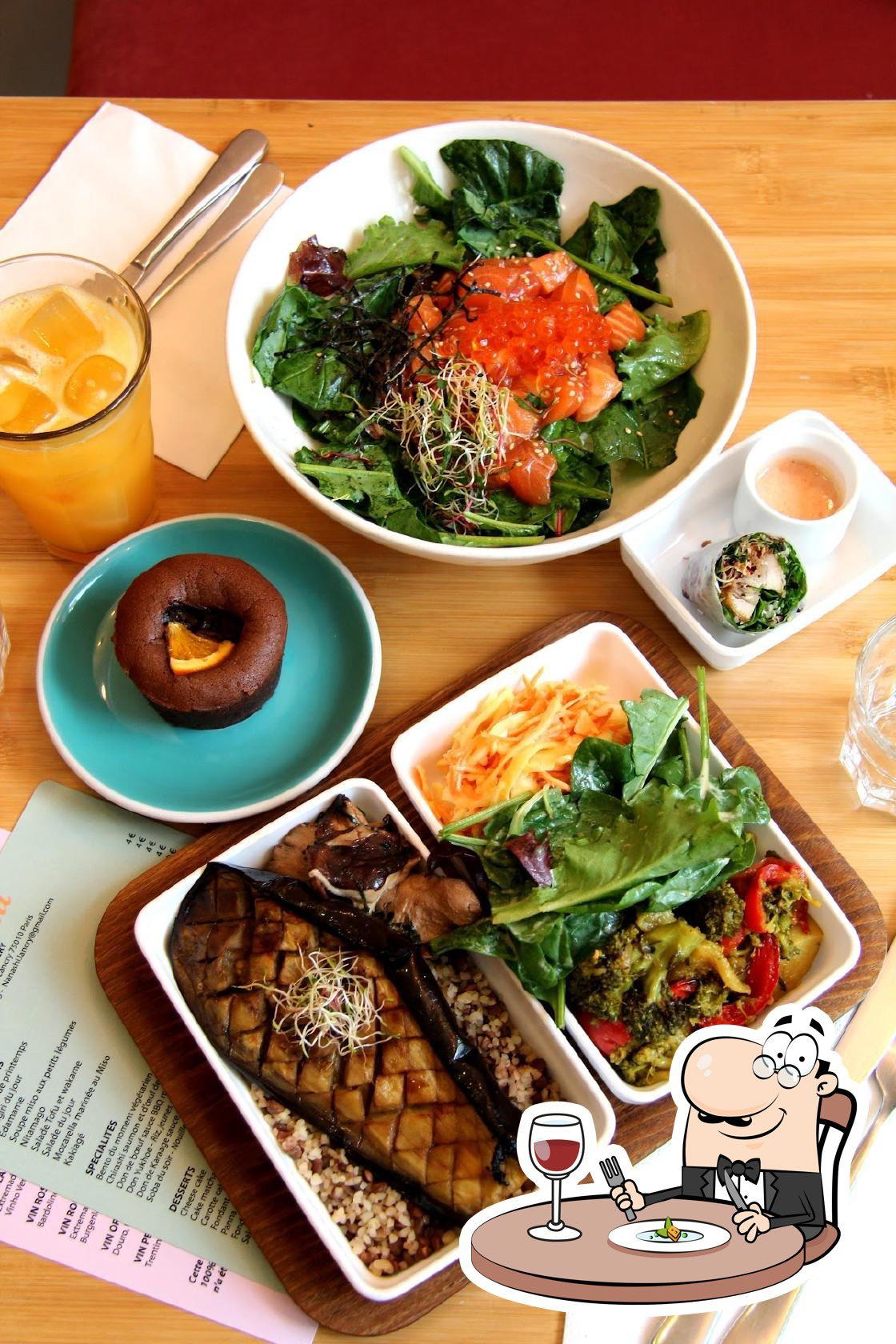
"The Japanese bento box has emerged as Paris' favorite food fad over the last few years and Nanashi is one of the places responsible. This healthy, organic, Japanese eatery with two locations in Paris has a line out the door every lunch hour."
- Address
- 60 Rue de Lancry, 75010 Paris, France
- Phone
- +33 1 40 22 05 55
- Directions
- Get directions
Canal Saint-Martin's Japanese Counter Culture
The 10th arrondissement has spent the better part of two decades assembling one of Paris's more coherent alternative dining scenes. Along the Canal Saint-Martin and the streets fanning out from it, a particular kind of address has taken hold: not the grand brasserie, not the wine-bar-with-small-plates clone, but something more specific. Japanese-inflected kitchens operating at a casual register, serving food that takes its references seriously without demanding a tasting-menu commitment. Nanashi Canal Saint Martin, at 60 Rue de Lancry, sits squarely in that tradition.
The Nanashi addresses in Paris have long occupied a practical but considered niche. They draw the lunchtime crowd from the neighbourhood's design studios and the evening crowd from across the city who want bento-format precision at café-format prices. The Canal Saint-Martin location benefits from one of the more atmospheric stretches of the 10th: iron footbridges, plane trees that close a canopy over the water in summer, and a street-level energy that is unhurried in a way the Marais rarely manages anymore.
Japanese-French Synthesis in the 10th
Paris has been working through its relationship with Japanese cooking for decades, and the results now span several distinct tiers. At the formal end, three-Michelin-star kitchens like Kei demonstrate what happens when Japanese technique is applied to the grammar of French haute cuisine. At the opposite register, addresses like Nanashi operate in what might be called the bento-bistronomie space: structured, ingredient-attentive cooking delivered without ceremony. Neither tier is a compromise. They are simply different conversations about the same cultural exchange.
That exchange has deep roots in France. The movement of Japanese chefs through the kitchens of restaurants like Arpège and the broader French fine-dining circuit produced a generation of cooks fluent in both traditions. What filtered down into the casual register is a respect for produce quality and restraint in preparation that distinguishes the better Japanese-leaning addresses from generic pan-Asian spots. Nanashi fits that lineage by keeping its menus legible and its sourcing deliberate, even at an accessible price point.
What the Room Tells You
Rue de Lancry is a working street, not a destination strip, which is part of the point. The room at 60 Rue de Lancry reads as honest to the neighbourhood: materials that don't try too hard, sightlines that work for solo diners at the counter as well as pairs at small tables. Canal Saint-Martin's dining rooms tend to have this quality. The neighbourhood attracts a crowd that is self-conscious about not being self-conscious, and the leading kitchens here have learned to match that energy without irony.
The format matters as much as the food. Bento-style service structures the meal rather than leaving it open-ended, which suits a lunchtime pace but also gives the kitchen clear parameters for quality control. In a city where even casual dining can drift into excess or sloppiness, that structure is a discipline.
Placing Nanashi in the Paris Drinking Scene
Japanese restaurants operating at the casual end of the Paris market have generally not prioritised their wine lists, defaulting to short, low-margin selections that treat the bottle as an afterthought. Where Nanashi stands apart from that pattern is in the coherence of its approach to what sits alongside the food. The Canal Saint-Martin neighbourhood has developed a drinker's sensibility over the same period that its food scene matured. Natural wine bars, carefully chosen sake lists, and spaces that treat the glass as seriously as the plate have all taken root within walking distance of Rue de Lancry.
The answer, at the better Canal Saint-Martin addresses, tends to be yes. That standard is the relevant comparison, not the sommelier-driven programs at L'Ambroisie on the Place des Vosges or the celebrated wine architecture at Le Cinq in the 8th.
Across France more broadly, the relationship between Japanese culinary sensibility and local terroir in the glass has produced some of the more interesting pairings of the past decade. Kitchens like Mirazur in Menton and Flocons de Sel in Megève have demonstrated how Mediterranean and Alpine producers can anchor tasting menus that pull from multiple traditions. At the casual end of the market, the same logic applies with less formality: a well-chosen Jura white or a light Loire red works as intelligently alongside a precisely constructed bento as it does alongside a bistronomie plate.
The Neighbourhood as Context
Canal Saint-Martin functions as a reliable indicator of where Paris is going before the rest of the city catches up. The 10th's dining scene has moved in cycles: early natural wine bars, then serious pizza, then Korean-inflected kitchens, and throughout it all, a persistent Japanese thread. Nanashi has been part of that thread long enough to be considered a neighbourhood fixture rather than a trend participant. That durability is its own form of credential in a city that cycles through openings quickly.
The area connects naturally to the 11th, where the bistronomie scene remains dense, and to the Marais, where the price-to-quality ratio has shifted considerably upward.
For those tracking the French fine-dining tradition that sits above the casual register, the country's benchmark addresses include Troisgros in Ouches, Bras in Laguiole, Auberge de l'Ill in Illhaeusern, Les Prés d'Eugénie in Eugénie-les-Bains, Georges Blanc in Vonnas, Auberge du Vieux Puits in Fontjoncouse, La Table du Castellet, Paul Bocuse's Auberge du Pont de Collonges, and Alléno Paris au Pavillon Ledoyen. For reference points outside France, Le Bernardin in New York and Lazy Bear in San Francisco offer comparable conversations about technique-led casual-to-formal transitions.
Know Before You Go
- Address: 60 Rue de Lancry, 75010 Paris, France
- Neighbourhood: Canal Saint-Martin, 10th arrondissement
- Format: Casual all-day dining, bento and Japanese-French menu
- Booking: Walk-ins accepted; lunch service fills quickly on weekdays
- Getting there: Jacques Bonsergent (Métro Line 5) is the closest station; République (Lines 3, 5, 8, 9, 11) is a short walk
The Short List
Comparable venues nearby, for context on price, style, and recognition.
| Venue | Cuisine | Price | Notes |
|---|---|---|---|
| Nanashi Canal Saint MartinThis venue — the venue you are viewing | Not listed | $$ | Not listed |
| AO Izakaya | Not listed | $$$ | 9th Arr., Franco-Japanese Izakaya |
| Kinugawa | Not listed | $$$ | 7th arrondissement, Contemporary Japanese |
| Onii-San - Izakaya | Marais, Modern Japanese Izakaya | $$$ | Not listed |
| Nanashi Charlot | Le Marais, Japanese-Inspired Bento | $$ | Not listed |
| Ito Izakaya | Saint-Georges, Seasonal Japanese Izakaya | $$ | Not listed |
Continue exploring
More in Paris
Restaurants in Paris
Browse all →
Bars in Paris
Browse all →
Hotels in Paris
Browse all →
Wineries in Paris
Browse all →
At a Glance
- Trendy
- Modern
- Minimalist
- Casual Hangout
- Waterfront
- Organic
- Waterfront
- Street Scene
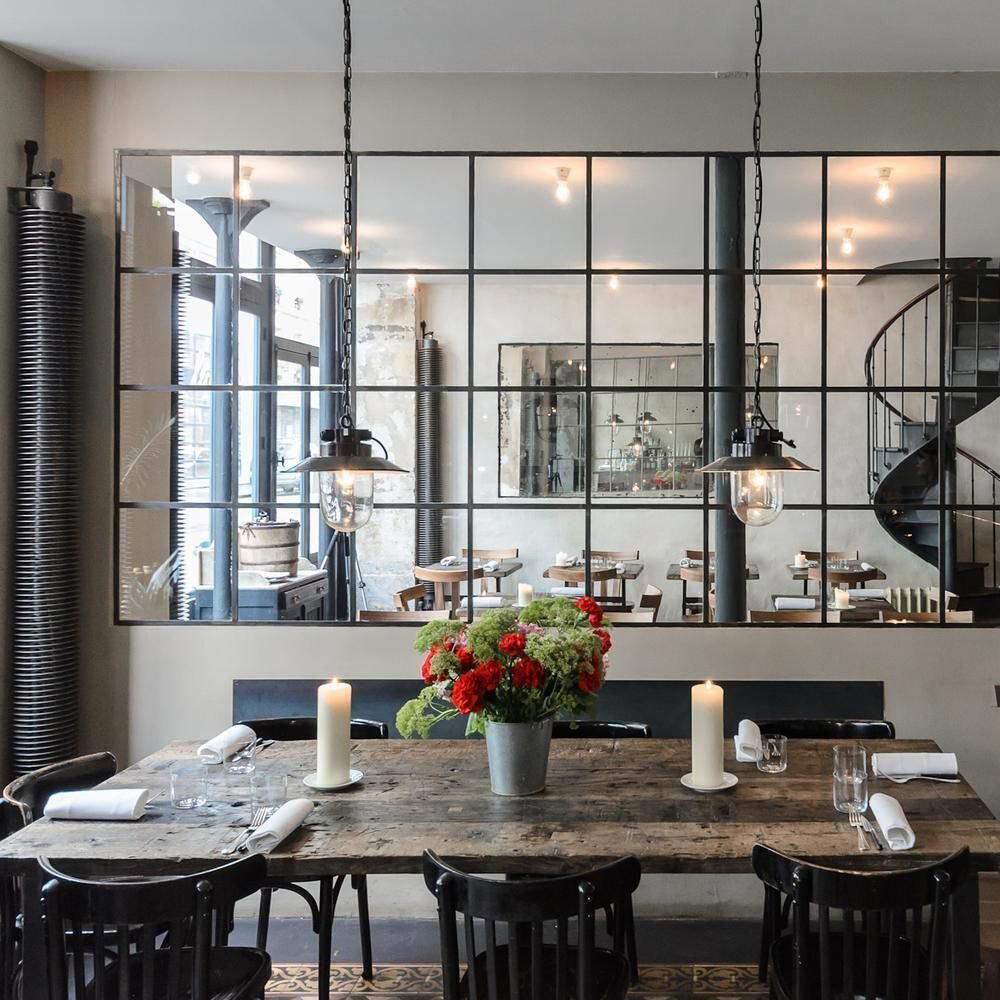
Simple and nice decoration with school chairs, vegetable crates, and blackboards, creating a casual, understated atmosphere.