Tabelog 100 #6
Our verdict
Asakusa’s soba culture rewards restraint: buckwheat noodles, dipping broth, sake, and a room that moves at lunch-counter pace rather than tasting-menu tempo. Namiki Yabu Soba belongs to that older Tokyo category, with Tabelog 100 Soba EAST 2025 recognition and a format that suits travelers who want classic Tokyo noodle craft without ceremony.

Pearl is the En Primeur Club membership app, where members save venues, book tables and use the concierge.
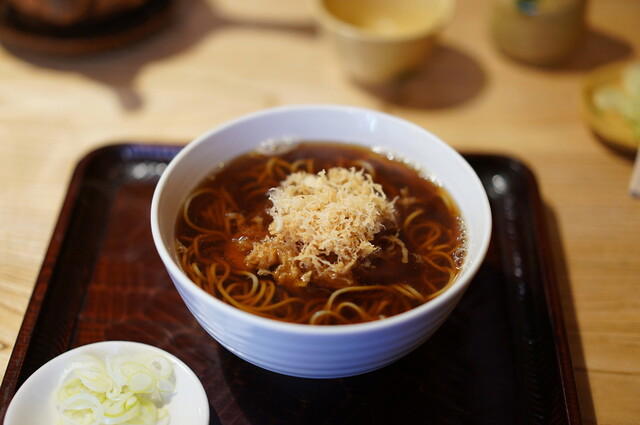
Approaching Namiki Yabu Soba in Tokyo, the city changes texture before speed: visitor traffic gathers around familiar routes, small dining rooms keep working at their own rhythm, and the best meals often depend on attention rather than ceremony. Soba fits because it asks for focus without spectacle: buckwheat noodles, broth, heat, cold, and timing. Namiki Yabu Soba sits inside that grammar rather than above it.
Tokyo’s high-end dining conversation often favours sushi counters, refined Japanese rooms, and tasting-menu formats, but soba has its own hierarchy. Serious shops are judged less by spectacle than proportion: noodle texture against dipping sauce, room rhythm, and whether the meal feels complete without a long menu. Selection in Tabelog’s 2025 Hyakumeiten recognition for soba places this address in a recognised group for buckwheat noodles; the stronger point is category discipline. This is not a luxury restaurant disguised as a noodle shop, but a focused soba stop in a city where modest formats can carry serious culinary weight.
Tokyo soba culture, with restraint in the supporting role
The beverage angle is not a Western fine-dining wine list. In a soba house, drinking, when part of the meal, is best understood as a supporting element rather than a separate performance. The structure is compact: a restrained opening, then noodles to close. That separates this style from sprawling casual meals and formal tasting counters, keeping the meal focused and adult.
For travelers used to pairing menus and cellar pages, the lesson is useful: Japanese noodle rooms often treat alcohol as punctuation, not performance. The drink need not announce range to work. It slows the opening and keeps focus on buckwheat and broth: curation by fit rather than depth.
Within Tokyo, this restraint reads against neighbouring formats. 浅草むぎとろ本店, Bona Festa, Hatsuogawa, Kameju, and FEBRUARY CAFE all sit elsewhere on the city’s dining map, while Namiki Yabu Soba keeps the focus on soba. Soba offers a clear bridge between local routine and destination eating: quick enough for a full Tokyo day, specific enough to plan around.
What the room tells you about the meal
The format is compact and traditional rather than staged. Expect the pace of a focused soba meal rather than a long, choreographed dining-room experience. This is neither counter-theatre nor a private-room occasion. It belongs to a Tokyo genre where efficiency is part of the appeal: orders move, turnover can matter, and pleasure comes from precision inside a short meal.
That matters when reading the recognition. A Tabelog Hyakumeiten selection in soba does not promise the same experience as a starred tasting counter or hotel dining room. It signals seriousness within a specialised noodle category, where small differences in broth concentration, noodle handling, and service rhythm carry weight. For Namiki Yabu Soba, the 2025 listing is best read as category recognition rather than a claim of luxury.
The price tier reinforces the point. Tokyo can make soba humble or rarefied, but this address remains accessible for both lunch and dinner, with listed budget ranges of JPY 1,000–JPY 1,999. Recognised category status without fine-dining pricing explains why the experience is best understood as everyday category dining rather than a splurge. Treat it as a focused soba meal, not a long lunch stretched with expectations borrowed from more formal formats.
How to place it in a Tokyo itinerary
Tokyo rewards precision. The city is easy to overfill with sightseeing, street snacks, cafés, and detours, so soba works as a clean anchor rather than an add-on. Because Namiki Yabu Soba is a recognised soba house in Tokyo, timing matters more than elaborate planning. Keep the meal flexible enough to suit a day built around compact stops and other Tokyo dining.
Do not treat the visit like a fixed tasting-menu appointment. Build flexibility into the day, check practical details before going, and expect the experience to be more about a clear bowl-and-noodle sequence than a long hospitality arc. That is part of the appeal: the restaurant’s value sits in its concentration, not in extra signals of occasion.
For a broader Tokyo eating map, pair this meal with a split itinerary rather than a single-theme crawl. Other dining in Tokyo can show casual seafood, late-day drinking, grilled-skewer craft, café culture, curry shops, and the range of the city’s low-to-mid price dining. Namiki Yabu Soba works best as the soba anchor inside that wider field, not as a substitute for every other style the city does well.
Travelers on a wider Japan route can use soba as a reference for regional contrast. Compare Tokyo’s noodle restraint with other meals, café culture, contemporary dining, curry specialisation, and quieter dining registers elsewhere in Japan. For Japanese food culture abroad, international examples show how specific formats travel and change, but the point here remains local: buckwheat noodles in Tokyo, handled with confidence.
Use Our full Tokyo restaurants guide for the dining route around this stop, then widen the trip through Our full Tokyo hotels guide, Our full Tokyo bars guide, Our full Tokyo wineries guide, and Our full Tokyo experiences guide. Namiki Yabu Soba’s value is not that it summarizes Tokyo dining. It shows one durable part of it: a recognised soba house where the meal is short, specific, and confident enough to leave luxury signals outside the door.
Frequently asked questions
Is Namiki Yabu Soba formal or casual?
It reads as casual to relaxed rather than formal. The listed lunch and dinner budget of JPY 1,000–JPY 1,999 keeps it in everyday territory, even with 2025 Tabelog Hyakumeiten recognition for soba.
What does dinner at Namiki Yabu Soba typically cost?
Pricing at Namiki Yabu Soba is listed as JPY 1,000 - JPY 1,999 JPY 1,000 - JPY 1,999.
When is Namiki Yabu Soba open?
Check current opening details before going, as the provided recognition data does not specify operating hours.
Where do I go for Namiki Yabu Soba?
Tokyo.
What's the signature at Namiki Yabu Soba?
The venue is centered on soba, and the award listing places it in Tabelog’s 2025 recognition for Soba (Buckwheat noodles). Rather than relying on a named signature dish, the appeal is the focused soba format.
The Short List
Comparable venues by cuisine and category.
| Venue | Cuisine | Price | Awards | Notes |
|---|---|---|---|---|
| Namiki Yabu SobaThis venue (the venue you are viewing) | Traditional Japanese Soba | $10–20 | Tabelog 100 #6 | Not listed |
| 浅草むぎとろ本店 | Traditional Japanese Tororo Kaiseki | $20–30 | Not listed | Not listed |
| Bona Festa | Russian | $30–50 | Not listed | Not listed |
| Hatsuogawa | Traditional Japanese Unagi | $30–50 | Michelin Bib Gourmand · Tabelog 100 #12 | Unagi / Freshwater Eel |
| Kameju | Traditional Japanese wagashi & dorayaki shop | $10–20 | Tabelog 100 #97 | JPY 999 |
| FEBRUARY CAFE | Not listed | $10–20 | Tabelog 100 #13 | JPY 1,000 - JPY 1,999 JPY 1,000 - JPY 1,999 |
Recognition history
Dated appearances from independent guides and award organizations, with the underlying list record or original source where available.
Tabelog 100 #6 · No. 6
Tabelog · Tabelog 100 - Soba - EAST - 2025