Tabelog 100 #55
Our verdict
Namake places Tokyo’s tachinomi culture in a sharper contemporary frame: stand-up drinking, seafood and tripe, with sake and shochu rather than cocktail theatre. Its 2025 Tabelog 100 Tachinomi selection gives it a clear trust signal in a category where atmosphere, turnover and snack discipline matter as much as formal cooking.

Pearl is the En Primeur Club membership app, where members save venues, book tables and use the concierge.
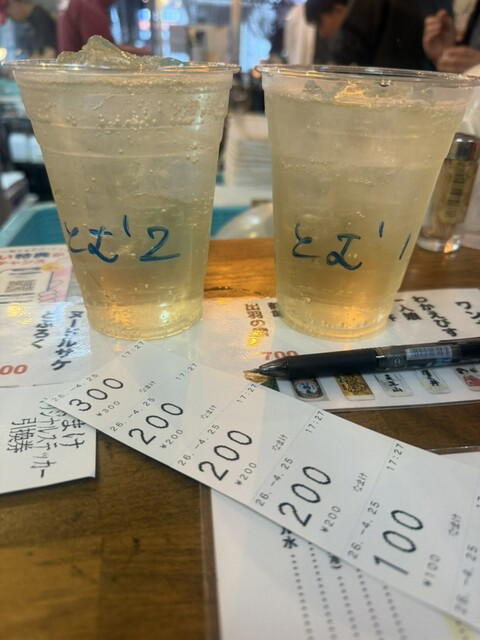
Tokyo’s drinking streets work at a different tempo from Ginza counters and hotel bars. The appeal is not ceremony; it is proximity, clatter, quick pours, small plates, and the social compression that happens when a room is built for standing rather than settling in. Namake belongs to that Tokyo lineage, a tachinomi address where seafood and tripe carry the evening rather than a long tasting-menu arc.
The city matters. Namake sits within a Tokyo dining culture that visitors often reduce to sushi counters, yakitori rooms and French-influenced tasting menus. Its listed format has a more workday grammar: stand-up drinking, modest budgets, and a place designed for people who understand that a short session can be more satisfying than a long reservation. In that context, a Tabelog 100 Tachinomi 2025 selection is not decoration; it signals that the room has been judged within the specific discipline of stand-up drinking, not against unrelated fine-dining benchmarks.
Tokyo tachinomi, sharpened by seafood and offal
Tachinomi is often misread by visitors as a casual substitute for izakaya dining. It is better understood as its own form. Standing changes the meal: orders tighten, drinking pace quickens, and the kitchen has to deliver food that works in small, immediate measures. Namake’s listed categories, stand-up bar, seafood and tripe, put it in a particularly Tokyo register, where local drinking culture absorbs ingredients without turning them into a formal performance.
The seafood-and-tripe pairing is the point. Tokyo’s drinking food has long made room for both clean marine flavors and more muscular offal cookery, and the combination suits a compact stand-up format better than a long, formal menu would. This is where the idea of urban efficiency becomes practical rather than theoretical: the room’s logic is built around snack-sized dishes that can suit a crowded, quick-moving setting.
Comparison helps define the lane. Niboshi Tsukemen Miyamoto and Grill Suzukou point to other informal Tokyo appetites, while Hatsunezushi represents the opposite pole, the sushi counter as appointment dining. Namake occupies neither end. Its value is in the middle category that Tokyo does unusually well: a focused specialty room with enough structure to earn recognition, but without the financial or temporal commitment of prestige dining. That makes it more relevant to certain evenings than another formal reservation.
Recognition in a category built on pace, not luxury
Tabelog’s 100 Tachinomi list is useful because it separates stand-up bars from the broader restaurant field. A score of 3.50 in this genre reads differently from the same number attached to a grander dining room; the category rewards repeatability, drink compatibility, crowd handling and a kitchen that can keep rhythm. Namake’s 2025 selection places it inside a compact group of venues where the room’s mechanics matter as much as what lands on the plate.
Tokyo’s premium dining conversation often overweights scarcity: chef counters, fixed menus, overseas acclaim. Tachinomi asks a more democratic question: can a place hold attention when guests are not cushioned by ritual? That is why stand-up bars can be such strong measures of a city’s food culture. They expose habits. They show how much food is enough, and how a city uses dining as social infrastructure rather than spectacle.
Namake’s standing format underlines that distinction. The appeal is not a plush room or a drawn-out sequence, but a quicker kind of focus: guests remain close to the counter, the kitchen has to keep pace, and the seafood-and-tripe profile gives the visit a clear point of view. In tachinomi culture, these details shape the evening; the room can move quickly without pretending to be a formal dining room.
Where it fits in a Tokyo itinerary
For travelers building a Tokyo food itinerary, this is not a replacement for sushi, tempura or kaiseki. It is a corrective. After several days of appointment dining, a recognized tachinomi bar in Tokyo offers a better read on how the city eats when the occasion is smaller, faster and more local. The decision is less about chasing a famous dish than choosing a format that compresses Tokyo’s after-hours habits into one room.
Namake also pairs well with a wider view of Tokyo beyond the usual premium-dining shorthand. Readers comparing casual dining styles can look across EP Club’s Tokyo coverage, from other Tokyo dining rooms, counters and cafes to broader planning resources. For broader planning, use Our full Tokyo restaurants guide, alongside Our full Tokyo hotels guide, Our full Tokyo bars guide, Our full Tokyo wineries guide and Our full Tokyo experiences guide.
The same question extends beyond Tokyo: how does a compact, drink-led Japanese format compare with regional and overseas interpretations of casual eating? EP Club’s wider Japan and sake-adjacent coverage includes casual Japanese restaurants, cafes, curry shops, bars and other small-format dining rooms in cities across Japan and abroad.
The editorial read is clear: Namake is for the traveler who wants Tokyo’s drinking culture without reducing it to lantern nostalgia. The evidence is specific, a 2025 Tabelog tachinomi selection, a standing-bar format, and a seafood-and-tripe kitchen. That combination makes it a serious entry in a modest-looking category, which is often where Tokyo is at its sharpest.
Frequently asked questions
What should I budget for a meal at Namake?
Pricing at Namake is listed as JPY 3,000 - JPY 3,999.
When can I go to Namake?
Specific opening hours are not provided in the venue data. Call +81-3-6424-4970 before going to confirm current hours.
What part of town is Namake in?
Tokyo.
What's the signature at Namake?
Namake does not list a named signature item in its venue data. Its clearest markers are the stand-up bar format, the seafood and tripe categories, and the Tabelog 100 Tachinomi 2025 selection in Tokyo.
What if I have allergies at Namake?
With seafood and tripe on the menu profile, allergy checks matter here. Call +81-3-6424-4970 before going, and confirm what can be accommodated.
Cuisine and Recognition
Comparable venues at a similar level for quick context.
| Venue | Cuisine | Price | Awards | Notes |
|---|---|---|---|---|
| NamakeThis venue (the venue you are viewing) | Casual Japanese izakaya standing bar | $10–20 | Tabelog 100 #55 | Not listed |
| Tonjiru to Genmai no Mise Aoki Shokudo | Japanese diner specializing in tonjiru and brown rice | $10–20 | Tabelog 100 #16 | Ōta |
| 福田家 | Traditional Kaiseki | $300–500 | 2 Michelin Stars | Chiyoda |
| Kitchen Taka | Japanese yoshoku (Western-style comfort food) counter | $10–20 | Tabelog 100 #19 | Shinjuku |
| 北島亭 | Classic French Bistro | $150–200 | Tabelog Silver #59 | Shinjuku |
| Nishieifuku no Niboshi Bako | Niboshi-focused Ramen | $10–20 | Tabelog 100 #39 | Suginami |
Recognition history
Dated appearances from independent guides and award organizations, with the underlying list record or original source where available.
Tabelog 100 #55 · No. 55
Tabelog · Tabelog 100 - Tachinomi - 2025