
Namak holds consecutive Michelin Plate recognitions for 2024 and 2025, placing it among Abu Dhabi's more credentialed mid-price Indian restaurants. Located on Sultan Bin Zayed The First Street in Al Nahyan, the kitchen draws on India's regional cooking traditions rather than a single-state playbook.
Pearl is the En Primeur Club membership app — saves, bookings, and concierge access live there. Same editors, same standards.
- Address
- 925 Sultan Bin Zayed The First St - Al Nahyan - E25 - Abu Dhabi - United Arab Emirates
- Phone
- +971 2 698 8137
- Website
- dusit.com
- Directions
- Get directions
 Saves & bookings on Pearl
Where Abu Dhabi's Indian Dining Scene Has Landed
Abu Dhabi's Indian restaurant market divides more sharply than it once did. At the leading sits a tier of hotel-backed, white-tablecloth rooms with internationally trained kitchens and price tags to match. Below that, a dense mid-market of subcontinental canteens competes primarily on familiarity and portion size. The space in between, where regional Indian cooking is treated with the same seriousness as French or Japanese cuisine but without the ceremony tax, has been slower to fill. Namak occupies that gap on Sultan Bin Zayed The First Street in Al Nahyan, serving Modern Indian by Kunal Kapur at about $65 per person.
Martabaan by Hemant Oberoi and Moksh represent the upper end of the city's Indian dining spectrum, while Punjab Grill anchors the northern-Indian, tandoor-led middle ground. Namak sits at the $$ price range, which makes the Michelin recognition more pointed: the Guide is not simply validating luxury spend, it is identifying cooking quality at an accessible price tier.
The Regional Logic Behind the Menu
Indian cooking is not one cuisine. It is a collection of distinct regional traditions, Punjabi, Keralan, Bengali, Goan, Rajasthani, each with its own spice grammar, cooking fats, and structural logic. Particularly interesting Indian restaurants outside India tend to declare a position on that spectrum rather than offering an all-India greatest-hits menu. Abu Dhabi's mid-market Indian restaurants frequently default to the latter, which produces menus that are recognizable but rarely specific.
What makes Namak worth attention in that context is the consistency signaled by its back-to-back Michelin Plate recognitions. The $$ price positioning and Al Nahyan location suggest a room built for regular use by a local and expatriate audience rather than for occasion dining.
Reading the Room: Al Nahyan and the $$ Tier
Al Nahyan is a residential and commercial district that functions as a daily-life address for much of Abu Dhabi's working population, including a significant South Asian community. A restaurant holding a Michelin Plate on a street like Sultan Bin Zayed The First is a different proposition from the Michelin-recognised rooms inside the city's large hotel towers. The audience is not primarily there for the credential. They are there because the food is worth returning to.
At the $$ price point, Namak also occupies a different competitive bracket from the city's high-end dining rooms. Hakkasan Abu Dhabi, rated at $$$$, represents the kind of large-format, brand-led luxury that anchors stronger examples from the market. Erth, which focuses on modern Emirati cuisine, offers a point of comparison in terms of how Abu Dhabi's dining scene treats culinary heritage at mid-to-upper price tiers. Namak's position in the $$ bracket, combined with its Michelin recognition, is its most defining characteristic: it is the kind of restaurant that earns credentials without charging for them.
Google's aggregate score of 4.3 across 278 reviews reinforces the picture. That sample size is not enormous, but it is sufficient to carry statistical weight, and a 4.3 in a competitive urban Indian market typically reflects consistency rather than spike performance from a single strong experience.
The Broader Context: Indian Dining Outside India
The story of Indian cuisine in Gulf cities tracks closely with the region's demographic composition. A large South Asian diaspora has long supported a deep tier of affordable, regional-specific restaurants, particularly for Keralan, Tamil, and Hyderabadi cooking. Above that tier, the hotel-backed Indian room dominated the premium end for decades, often defaulting to a pan-Indian menu with strong Mughlai representation. The gap between those two poles is where the more interesting contemporary Indian restaurants have begun to operate.
Globally, this shift is visible in how Michelin has engaged with Indian cuisine in cities like London, New York, and Hong Kong. Restaurants like Opheem in Birmingham, Musaafer in Houston, and Rania in Washington, D.C. have each positioned themselves around a specific regional or philosophical premise rather than breadth. Avatara in Dubai takes that further with a fully vegetarian tasting menu. Namak's Michelin recognition places it within this broader movement, even if its format, sitting at the $$ tier in a residential district, is more pragmatic than editorial.
Planning Your Visit
Namak is located at 925 Sultan Bin Zayed The First Street, Al Nahyan, Abu Dhabi. The $$ pricing makes it accessible for a regular dinner without advance financial planning. Arriving with a reservation is advisable rather than assuming walk-in availability at peak times.
Frequently Asked Questions
What dish is Namak famous for?
No single signature dish has been confirmed in publicly available records for Namak. What the kitchen's consecutive Michelin Plate recognitions (2024 and 2025) do confirm is consistent quality across the menu rather than a single standout item carrying the room. Visitors inclined toward a specific regional tradition, whether North Indian, Keralan, or otherwise, should confirm the current menu focus directly with the restaurant.
How hard is it to get a table at Namak?
Namak's $$ price tier and Al Nahyan location position it as a neighbourhood-frequency restaurant rather than an event-dining destination. Michelin Plate status in Abu Dhabi does generate demand, particularly from visitors tracking the Guide's recommendations across the city, but Namak has not reached the booking scarcity levels typical of starred rooms. Google's 265 reviews suggest a well-patronised but not over-subscribed house. Peak weekend evenings are the likely pressure point; a reservation made a few days in advance should be sufficient for most visits. Booking method and contact details are not confirmed in publicly available records, so checking directly with the restaurant is one reliable approach.
Budget Reality Check
Comparable venues nearby, for context on price, style, and recognition.
| Venue | Cuisine | Price | Awards | Notes |
|---|---|---|---|---|
| NamakThis venue — the venue you are viewing | Al Nahyan, Modern Indian by Kunal Kapur | $$$ | Michelin Plate | Not listed |
| Pincode by Kunal Kapur | Al Reem Island, Modern Regional Indian | $$$ | Michelin Plate | Not listed |
| Moksh | Al Bateen, Modern Indian Fine Dining | $$$ | Michelin Plate | Not listed |
| terra | Al Maqtaa, Traditional Italian Trattoria | $$$ | Michelin Plate | Not listed |
| Art of Dum Abu Dhabi | Not listed | $$ | Not listed | Reem Island, Traditional Dum Pukht Indian |
| Ray's Grill | Not listed | $$$$ | Michelin Plate | Al Wahdah, American Steakhouse with South American Influences |
Recognition history
Dated appearances from independent guides and award organizations, with the underlying list record or original source where available.
Michelin Plate
Michelin
Michelin Plate
Michelin
Continue exploring
More in Abu Dhabi
Restaurants in Abu Dhabi
Browse all →
Bars in Abu Dhabi
Browse all →

At a Glance
- Elegant
- Lively
- Sophisticated
- Date Night
- Celebration
- Special Occasion
- Hotel Restaurant
- Open Kitchen
- Craft Cocktails
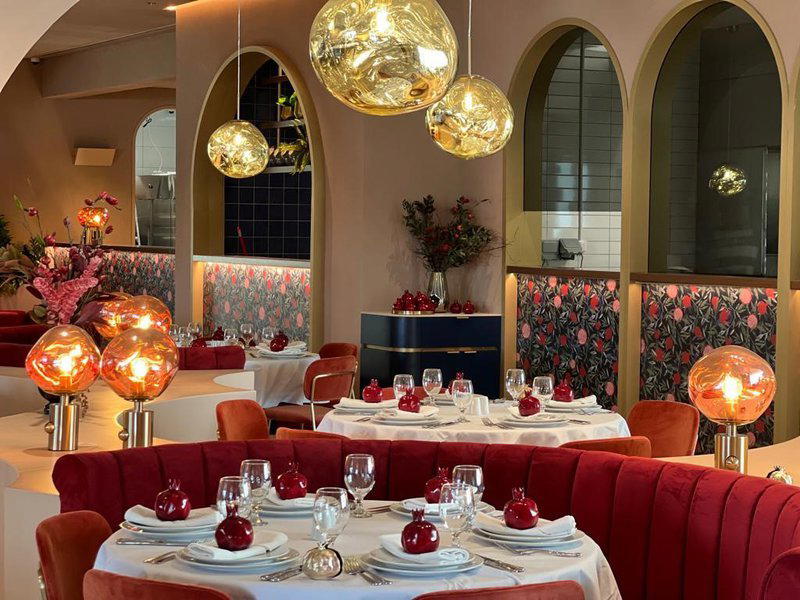
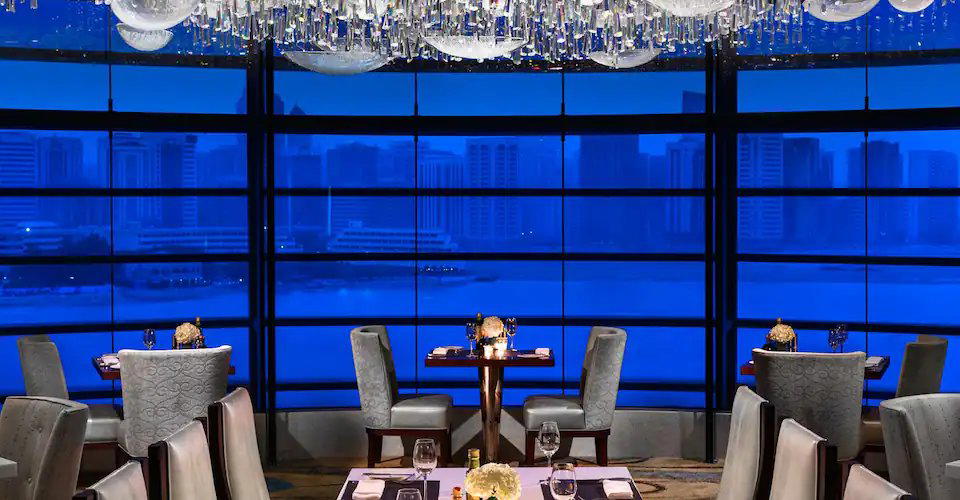
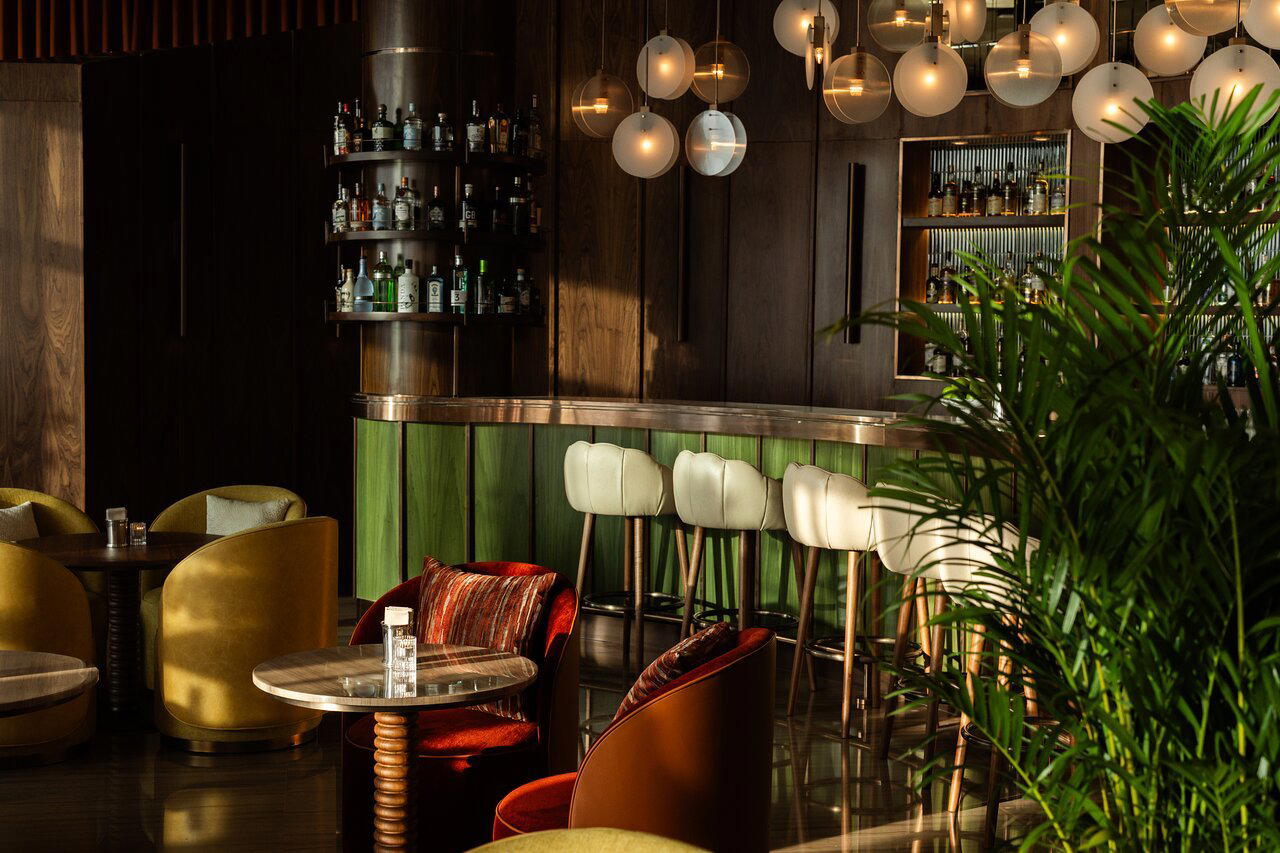
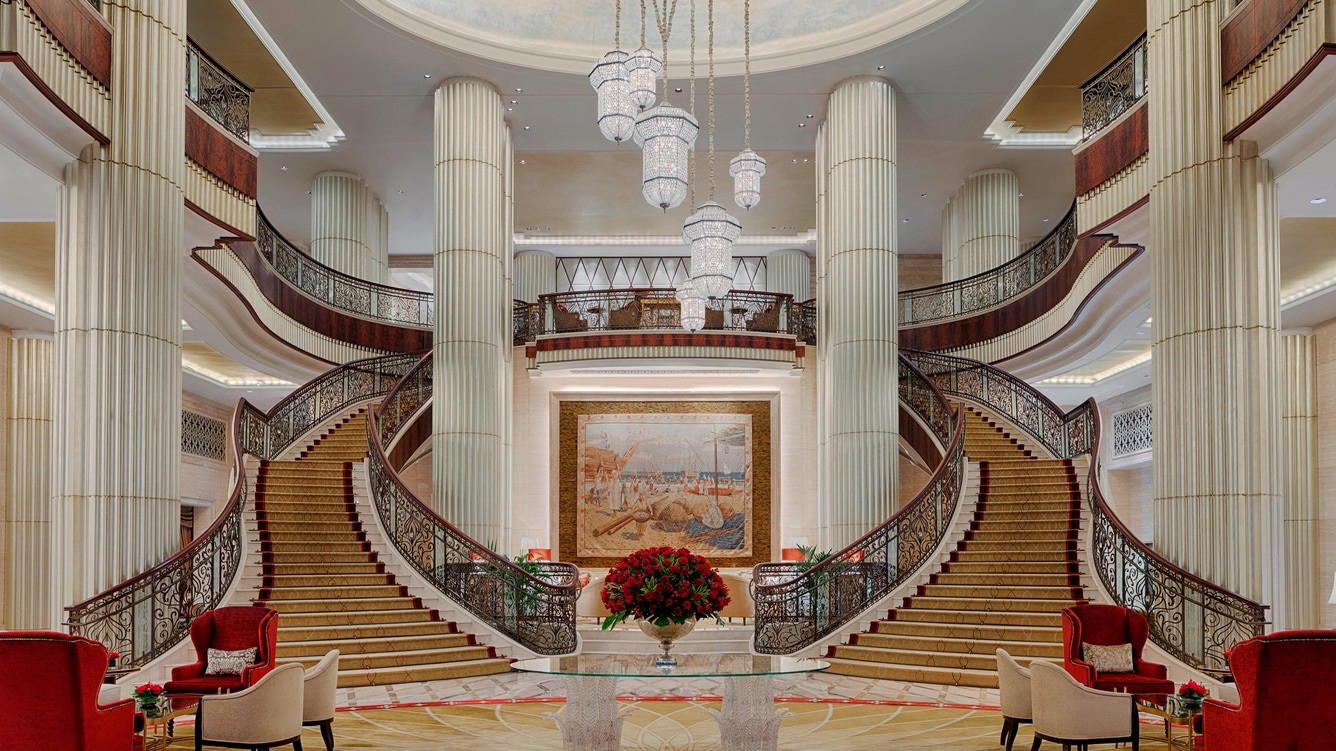
Lively interiors with beautiful color hues, intricate carvings, and a warm welcoming atmosphere.