
Tabelog 100 #1
Our verdict
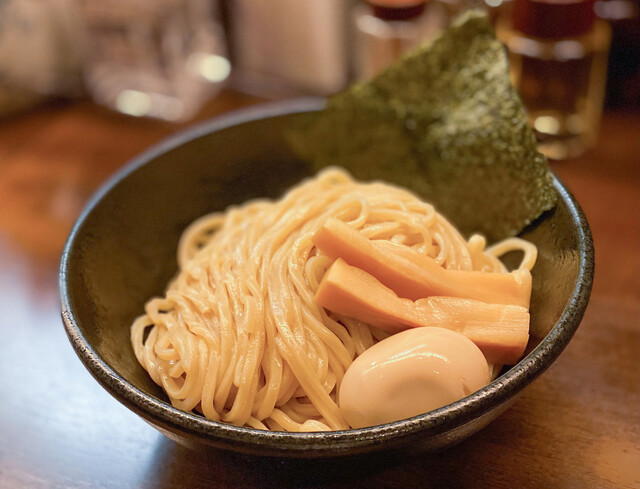
Nakamura So belongs to Nagoya’s serious, low-cost ramen culture rather than its luxury dining circuit: counter seating, tsukemen and ramen, and a place on Tabelog’s Ramen AICHI 100 for 2025. The appeal is in the compact progression of the meal, from choosing the noodle format to managing broth intensity and pace at the counter.

Pearl is the En Primeur Club membership app, where members save venues, book tables and use the concierge.
The menu
What to order
- Takayama chuka soba with soy sauce double soup
- House-made hand-rolled curly noodles
- Hida pork belly chashu
Nagoya’s ramen rooms tend to announce themselves through function before ceremony: compact meals, quick decisions, and the steam-and-noodle choreography of diners who know the format. Nakamura So sits in that practical Nagoya register, closer to a city noodle specialist than a destination restaurant dressed for occasion. That distinction matters. In a city with a strong miso-katsu, kishimen, hitsumabushi, and café-morning identity, ramen works as a parallel language of precision and speed: the meal is short, the decisions are few, and the sequence has to carry the weight.
The restaurant’s signal is not luxury. It is category credibility. Selection through Tabelog’s 2025 ramen recognition for Aichi places it inside a prefectural ramen conversation rather than a general dining one, and the listed categories, tsukemen and ramen, make the choice narrower than an all-purpose noodle shop. That narrowing is the point. Ramen in Japan rewards specialization, and Aichi’s stronger addresses often compete through broth concentration, noodle texture, and how cleanly the format holds together at peak traffic.
Tsukemen gives the meal its arc, not just its portion size
Tsukemen changes the tempo of a noodle meal. Instead of broth and noodles arriving as a single integrated bowl, dipping noodles create a sequence: assess the noodles first, calibrate each dip, then decide how much broth intensity belongs in each bite. That format suits efficient city eating because it gives structure without stretching the meal into ceremony. The diner controls dilution, heat loss, and pace more actively than with a conventional ramen bowl.
At Nakamura So, the editorial interest is that the restaurant belongs to both categories rather than treating ramen as a side note to dipping noodles. That dual identity is useful for visitors because it frames the decision before sitting down: tsukemen for a more staged progression, ramen for a more immediate bowl. The broader lesson is that Nagoya’s ramen scene is not defined by a single local style in the way Sapporo is tied to miso ramen or Hakata to tonkotsu. Its serious shops often read as individual specialists operating within the national ramen vocabulary, which makes award-list inclusion a stronger sorting device than local reputation alone.
There is also a price-tier implication. Ramen and tsukemen at this level sit far below the city’s splurge categories, including yakiniku rooms such as Yakiniku Mitsuboshi, while competing more directly with focused noodle addresses such as Mendokoro Suwa. That does not make the decision casual. The low spend increases the penalty for mediocrity because the format is so stripped back: there is nowhere to hide weak noodles, muddled broth, or poor pacing.
A noodle meal built for concentration rather than lingering
The ramen-and-tsukemen format keeps the experience direct. Specialist noodle dining is one of Japan’s clearest dining contracts: arrive ready to order, eat with attention, and move on when finished. For solo diners, that can be a strength rather than a compromise. The format removes much of the social choreography of a full restaurant meal and puts focus on timing, temperature, and noodle texture. For friends, it works when the point is the bowl rather than a long conversation.
That compactness separates the meal from broader Nagoya dining options. THE RISCO and Binyan occupy different casual price conversations in the city, while Nishimura signals another strand of local dining altogether. Nakamura So belongs to the specialist end of the spectrum: a narrow noodle brief, built around ramen and tsukemen rather than a broad menu. In a category where attention can move quickly from new openings to the next queue, continued recognition matters more than decorative backstory.
The Nagoya setting also shapes how to read it. City ramen in Japan often rewards precision over theatre, and Nakamura So fits that compact urban logic. This is the sort of meal that can sit before or after movement across the city, not because it is an afterthought, but because ramen’s efficient design makes it one of Japan’s great urban eating formats. For a wider read on where it sits, Our full Nagoya restaurants guide is the more useful frame than a list of luxury tables alone.
How it fits into a Nagoya food itinerary
A serious Nagoya itinerary should not treat ramen as filler between regional set pieces. The city’s better-known foods often lean hearty, sweet-savoury, or sauce-driven; a focused noodle stop offers a different register, one built around concentration and speed. Nakamura So is worth seeking out for that reason: not as a grand statement, but as a disciplined counterpoint to the city’s heavier signatures.
Travellers comparing formats can use it as the low-friction meal in a day otherwise built around reservations, hotel dining, or bar-led evenings. For broader planning around the city, see Our full Nagoya hotels guide, Our full Nagoya bars guide, Our full Nagoya wineries guide, and Our full Nagoya experiences guide. The comparison is not between ramen and fine dining; it is between meals that ask for time and meals that ask for focus.
Readers mapping Japanese casual dining beyond Nagoya can compare the country’s range through other focused everyday dining rooms, compact formats, and specialist noodle shops. The national spread gets wider still through unnamed casual restaurants across major cities and regional destinations, where narrow formats often work best when they stay disciplined. For readers tracking Japanese food culture abroad, the same lesson applies generically: smaller Japanese formats travel most convincingly when the concept is kept tight.
The critical case for Nakamura So is therefore simple: it represents the serious everyday end of Nagoya dining, backed by a 2025 Tabelog ramen recognition for Aichi and a format that rewards attention over ceremony. Choose it when the meal needs to be compact, specific, and rooted in Japan’s noodle discipline.
Frequently asked questions
What's the address for Nakamura So?
Nakamura So is located in Nagoya.
What's the pricing like at Nakamura So?
Pricing at Nakamura So is listed as - JPY 999 - JPY 999.
When is Nakamura So open?
Published hours can change, so check the latest opening information directly before visiting Nakamura So.
What makes Nakamura So worth seeking out?
The clearest draw is the Tabelog ramen recognition for Aichi in 2025, which puts Nakamura So in a tightly screened field. Add the ramen and tsukemen format in Nagoya, and it reads as a focused stop rather than a casual detour.
Quick Comparison
Comparable venues by category and price.
| Venue | Cuisine | Price | Awards | Notes |
|---|---|---|---|---|
| Nakamura SoThis venue (the venue you are viewing) | Traditional Takayama ramen (chuka soba) | Not listed | Tabelog 100 #1 | Not listed |
| O Dashi to Ginshari Chuka Soba Nito | Ramen & chuka soba near Nagoya Station | $1–10 | Tabelog 100 #47 | Nakamura |
| Tsutsui Shogetsu | Japanese Traditional Sweets | Not listed | Tabelog 100 #55 | Higashi |
| Ichiyoken | Nagoya tonkotsu ramen shop | $10–20 | Tabelog 100 #80 | Tenpaku |
| Tsukemen Maruwa Haruta honten | Tsukemen and ramen shop | $10–20 | Tabelog 100 #69 | Nakagawa |
| Ramen mellow | Ramen shop | Not listed | Tabelog 100 #3 | Midori |
Recognition history
Dated appearances from independent guides and award organizations, with the underlying list record or original source where available.
Tabelog 100 #1 · No. 1
Tabelog · Tabelog 100 - Ramen - AICHI - 2025
Continue exploring
More in Nagoya
Restaurants in Nagoya
All restaurants in Nagoya →



Details
- Cozy
- Classic
- Rustic
- Intimate
- Solo
- Casual Hangout
- After Work
- Historic Building
- Standalone
- Local Sourcing
- A La Carte
- Counter Dining
Current opening hours
- Monday
- 11 AM–2:30 PM, 5–9:30 PM
- Tuesday
- Closed
- Wednesday
- 11 AM–2:30 PM, 5–9:30 PM
- Thursday
- 11 AM–2:30 PM, 5–9:30 PM
- Friday
- 11 AM–2:30 PM, 5–9:30 PM
- Saturday
- 11 AM–2:30 PM, 5–9:30 PM
- Sunday
- 11 AM–2:30 PM, 5–9:30 PM
Hours can change for holidays and private events. Hours as of .
A small, renovated 100+ year-old private house with preserved old-town Takayama character, giving a cozy, nostalgic, and quietly intimate ramen shop atmosphere set slightly away from the tourist bustle in a back alley.