
Tabelog 100 #55
Our verdict
Nagoya’s formal dining conversation often skews toward kappo counters, French rooms, and high-budget occasion restaurants; Tsutsui Shogetsu offers a quieter kind of ceremony through Japanese traditional sweets. Its Tabelog 100 selection for Japanese traditional sweets and Japanese sweets cafes in EAST 2023 places it in a serious confectionery tier, while the low listed spend keeps the experience closer to an everyday ritual than a grand meal.

Pearl is the En Primeur Club membership app — saves, bookings, and concierge access live there. Same editors, same standards.
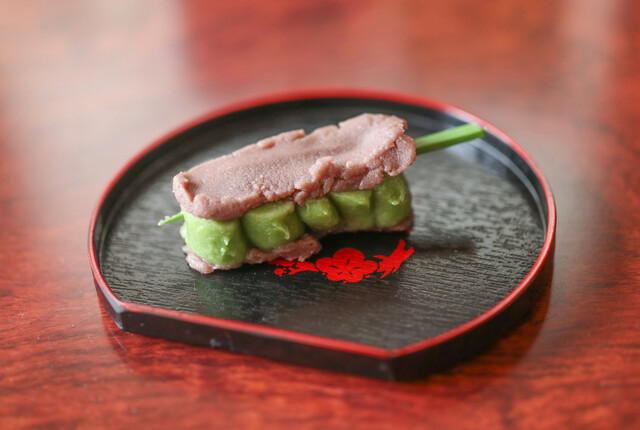
Approaching a serious wagashi shop in Nagoya changes the tempo of celebration. The cues are quieter than in a dining room with linen, wine service, and a long counter: a compact storefront, an intentional purchase, and sweets usually carried away rather than performed course by course. That restraint is the point. In Japan, confectionery has long done the emotional work of occasions: seasonal greetings, family visits, tea gatherings, apology gifts, and small congratulations that do not require a restaurant reservation.
Tsutsui Shogetsu belongs to that older register of Nagoya hospitality. Its recognition in the Tabelog 100 selection for Japanese traditional sweets in 2023 gives it a credential that matters in a category judged through repetition, seasonality, and local memory rather than spectacle. The listed spend is - JPY 999, making it an outlier beside Nagoya occasion restaurants such as SOLAMENT'UNO, Bon Kichi, Innover, and Hikobae, where meals often belong to a different planning category. The comparison is not luxury versus simplicity. It is how Japan separates ceremony from price.
Wagashi as occasion dining, without the dining room theatre
Nagoya has a strong appetite for polished rooms, from European-leaning restaurants to meat-focused counters, but wagashi occupies another lane. It works through timing and context: what suits the season, travels well, feels correct when arriving at someone’s home, and can sit beside tea without a menu explanation. For travellers used to judging a city by tasting menus, this is a useful correction. A confectionery stop can reveal as much about local dining culture as a long dinner, because it shows how food functions outside the restaurant frame.
The Tabelog 100 selection matters because wagashi shops rarely communicate status through international awards, chef biographies, or high design. Recognition in a specialist Japanese traditional sweets category signals evaluation within its own tradition, not fine-dining language. Tsutsui Shogetsu is not competing with Nagoya’s restaurant rooms on service choreography. It competes on whether a small purchase can carry enough craft and social meaning for a birthday visit, a host gift, or the final stop before a train.
That distinction sharpens against the city’s broader restaurant spread. SOLAMENT'UNO and Innover sit in a European dining conversation; Bon Kichi and Hikobae occupy a special-occasion bracket; Hamburger Steak Shokudo Enomoto Yoshihiro Shoten is closer to casual everyday eating. A wagashi shop at this price point cuts across those categories. It folds into a larger Nagoya itinerary without becoming another full meal, and gives travellers a culturally specific way to mark an occasion without defaulting to dinner.
The Nagoya sweet shop as a gift economy
Japanese traditional sweets are inseparable from the gift economy. The purchase is often for someone else, which changes how a traveller should read the experience. The point is precision, not abundance: a small box, a seasonal reference, a format suited to the recipient, and an awareness that sweets in Japan often speak more formally than a casual dessert order. Tsutsui Shogetsu is therefore better understood as Nagoya social infrastructure than as a snack stop.
This is where the occasion-dining angle is strongest. A milestone meal announces itself through duration and cost; wagashi can mark the same moment with restraint. For a couple staying in the city, it can follow lunch rather than replace it. For a business traveller, it solves the problem of a thoughtful local gift. For a family visit, it provides a formality supermarket confectionery cannot. The format reinforces that role: the sweets can move into another setting, where the occasion happens.
For a wider read on the city, pair this stop with Our full Nagoya restaurants guide, then map the rest of the trip through Our full Nagoya hotels guide, Our full Nagoya bars guide, Our full Nagoya wineries guide, and Our full Nagoya experiences guide. The contrast helps: dining culture is not built only from reservations and tasting menus, but from small purchases locals use to carry respect, gratitude, and seasonality across town.
How to place it in a Nagoya itinerary
The practical appeal is that this category does not demand the commitment of a long lunch. Tsutsui Shogetsu is listed for Japanese traditional sweets, so the decision is less about staging a full meal than understanding the format. It suits travellers who want a specific Nagoya food memory without another heavy restaurant booking. It also suits celebrations built around several small gestures: tea, sweets, a hotel-room pause, then dinner elsewhere.
For readers comparing categories, the internal logic differs from restaurant hunting. Conventional restaurant listings sit closer to schedule-led planning, where the meal anchors the day. A wagashi stop is more flexible and often more culturally pointed. It asks the traveller to think less about courses and more about timing, recipient, and the purchase’s social purpose.
That wider lens also makes Japan’s casual and specialist food culture easier to parse beyond Nagoya. Across Japanese cities, focused formats show how narrow categories can carry local expectations without needing a broad menu. Even outside Japan, specialist concepts often trade on that same clarity of purpose. Tsutsui Shogetsu belongs in this conversation because it proves a narrow category can reveal more than a broad menu.
The editorial call is simple: use it for moments that need tact rather than drama. Nagoya has plenty of rooms for expensive celebration meals. This address offers another kind of occasion, measured by appropriateness, craft, and the ability of a small sweet to carry meaning beyond the shop door.
Frequently asked questions
What's the address for Tsutsui Shogetsu?
Nagoya.
What's the price range at Tsutsui Shogetsu?
Pricing at Tsutsui Shogetsu is listed as - JPY 999.
How hard is it to get a table at Tsutsui Shogetsu?
Tsutsui Shogetsu is listed in a Japanese traditional sweets category, so it should be approached differently from a conventional restaurant table booking. Plan it as a focused Nagoya wagashi stop rather than a full dining-room reservation.
What's the standout thing about Tsutsui Shogetsu?
The clearest credential is its inclusion in the Tabelog 100 selection in 2023 for Japanese traditional sweets. That sits alongside a price range listed as - JPY 999, a practical fit for a Nagoya wagashi stop.
At a Glance
Comparable venues at similar price and category levels.
| Venue | Cuisine | Price | Awards | Notes |
|---|---|---|---|---|
| Tsutsui ShogetsuThis venue — the venue you are viewing | Japanese Traditional Sweets | Not listed | Tabelog 100 #55 | Not listed |
| SOLAMENT'UNO | Modern Italian Course Dining | $50–100 | Tabelog 100 #2 | JPY 10,000 - JPY 14,999 JPY 4,000 - JPY 4,999 |
| Bon Kichi | Seasonal French course restaurant | $50–100 | Tabelog 100 #34 | JPY 15,000 - JPY 19,999 JPY 5,000 - JPY 5,999 |
| Innover | Creative French Bistro | $50–100 | Tabelog 100 #77 | JPY 8,000 - JPY 9,999 |
| Hamburger Steak Shokudo Enomoto Yoshihiro Shoten | Japanese Hamburger Steak / Yoshoku | Not listed | Tabelog 100 #15 | JPY 1,000 - JPY 1,999 |
| Hikobae | Modern Spanish | $100–150 | Tabelog 100 #35 | JPY 15,000 - JPY 19,999 JPY 6,000 - JPY 7,999 |
Recognition history
Dated appearances from independent guides and award organizations, with the underlying list record or original source where available.
Tabelog 100 #55 · No. 55
Tabelog · Tabelog 100 - Japanese traditional sweets / Japanese sweets cafe - EAST - 2023
Continue exploring
More in Nagoya
Restaurants in Nagoya
All restaurants in Nagoya →

Bars in Nagoya
Browse all →



Details
- Classic
- Cozy
- Solo
- Casual Hangout
- Standalone
- A La Carte
A modest, traditional Japanese sweets shop with a simple, nostalgic atmosphere that feels quiet and unpretentious.