
Nagai Shokudo represents Gunma’s plain-spoken diner culture: counter seating, pork dishes, ramen, take-out, and a sub-¥1,000 budget tier that sits far from Tokyo tasting-menu economics. Its Tabelog 100 Diner selection in 2026 gives a useful signal for travelers reading Shibukawa through everyday food rather than luxury dining codes.
Pearl is the En Primeur Club membership app — saves, bookings, and concierge access live there. Same editors, same standards.
- Address
- 4477-1 Kamishiroi, Shibukawa, Gunma 377-0201, Japan
- Phone
- +81 279-26-3988
- Website
- cm-tokyo.com
- Directions
- Get directions
 Saves & bookings on Pearl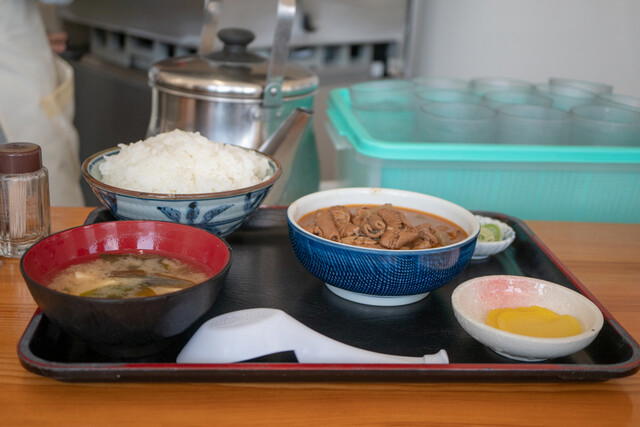
Approaching a roadside shokudo in inland Gunma is a different proposition from entering a city restaurant district. The rhythm is utilitarian: counter seats, quick turnover, family groups, friends, and a menu language built around filling plates rather than ceremony. Nagai Shokudo belongs to that culture of practical eating, where the room, price point, and take-out trade explain as much as any formal review.
Shibukawa sits in a part of Japan where dining can feel closer to transport routes, hot-spring travel, and local workday habits than to the reservation choreography of Tokyo or Kyoto. That matters here. The appeal is not rarity for rarity’s sake; it is the confidence of a Japanese cafeteria format that has kept pork dishes, ramen, and set-meal logic at the center of the table. For travelers used to ranking restaurants by tasting-menu length, this is a useful recalibration.
Gunma diner culture, read through pork, ramen, and the counter
The Japanese shokudo is often misunderstood by visitors as merely casual. In practice, it is one of the country’s clearest expressions of regional appetite: short menus, low prices, counter service, and cooking aimed at repeat local use. Nagai Shokudo sits inside that tradition, with categories listed as cafeteria, pork dishes, and ramen. The presence of sake alongside the food places it in a familiar diner register rather than a specialist ramen-shop lane.
The defining idea is offal-centered pork cookery within a set-meal and take-out culture. The souvenir product “Motsukko” is publicly highlighted strongly enough that lines form for it even outside normal dining hours. That detail is more instructive than a florid dish description: in regional Japan, a take-home product can carry the reputation of a place as much as the meal eaten at the counter. Here, the take-out channel is not an accessory. It is part of the identity of the food.
Recognition gives the format another layer. Selection for Tabelog 100 Diner in 2026 places the restaurant among a national group of shokudo-style addresses rather than among luxury restaurants. Earlier selections in 2024 and in the set-meal category in 2021 suggest continuity in the same everyday-food register. The Tabelog score of 3.71 is useful context in Japan, where scores above the mid-threes often indicate strong public traction, especially outside major metropolitan dining zones.
Compared with Shogetsu Do in Shibukawa, which also sits in the sub-¥1,000 bracket, Nagai Shokudo reads less as a generic low-cost stop and more as a specific expression of Gunma’s pork-and-diner appetite. Against out-of-metro peers at ¥2,000 and above, or Italian formats climbing toward ¥15,000, the contrast is sharper: this is food culture where value, speed, and repeatability carry the critical weight.
A 23-seat counter changes the meal's social contract
The room format matters. Twenty-three seats, all at the counter, creates a narrow kind of hospitality: not private, not leisurely, and not built for lingering across multiple courses. Counter-only shokudo dining tends to make the meal legible. The cooking, service rhythm, and customer flow all happen in front of the guest, which suits a place grounded in workday portions and direct flavors rather than theatrical pacing.
This also explains why the restaurant’s family-friendly and friends-use signals are relevant. A low price band, children welcome, non-smoking policy, and counter seating define the experience more accurately than dress-code language ever could. The value proposition is clear: spend under ¥1,000, eat in a format recognized nationally within the diner category, and understand a piece of local food culture that does not need luxury cues to matter.
There is a practical caveat to the romance of the roadside stop. Reservations are unavailable, parking in front is not allowed because that space is part of the national highway, and payment is cash-oriented: credit cards, electronic money, and QR payments are not accepted. Travelers building a Shibukawa food day around this address should treat it as a fixed-format local meal rather than a flexible urban booking. Those constraints are not inconveniences around the experience; they are part of the experience.
How to place it in a Shibukawa itinerary
The restaurant is strongest as a cultural anchor for travelers who want one meal that explains why regional Japanese dining cannot be judged only through sushi counters, kaiseki rooms, or chef-led omakase. The restaurant’s second-generation ownership note, take-out service, mail-order availability, and repeated Tabelog 100 recognition all point toward an address with local durability. The critical reading is simple: come for the shokudo form, not for a luxury restaurant translation of it.
That makes it a useful counterpoint within a wider Shibukawa plan. Use our full Shibukawa restaurants guide for nearby dining context, then build the rest of the trip through our full Shibukawa hotels guide, our full Shibukawa bars guide, our full Shibukawa wineries guide, and our full Shibukawa experiences guide. Readers comparing casual Japanese formats across the country can also scan -Grilled beef Sukiyaki- KAMAKURA TANUKIAN 鎌倉 たぬき庵 in Kamakura, . 鮪と炭火焼き うお炭 秋葉原店 in Tokyo, .cafe in Osaka.know in Kumamoto, (Shoku) Vietnam in Kawasaki, [Curry Senmon Ten] Maruyama Kyoju. in Sapporo, [ki:] in Kyoto, #肉といえば松田 奈良本店 in Kashihara, 1/3 HAMBURGER FACTORY in Kanazawa, 1000 in Yokohama, Jōdo Saké Bar in Los Angeles, and Onigiri Time in Pasadena.
The editorial verdict is not that this is a polished destination restaurant in the international sense. Its importance is narrower and more interesting: a low-cost, counter-only Gunma shokudo with pork at its center, national diner-category recognition, and enough take-out pull to make the souvenir trade part of the story. For a traveler reading Shibukawa through food, that is precisely the point.
Cost Snapshot
Nearby venues at a similar price tier for orientation.
| Venue | Cuisine | Price | Notes |
|---|---|---|---|
| Nagai Shokudo | Not listed | $ | / Kamishiroi, Shibukawa, Gunma roadside shokudo specializing in miso motsuni teishoku |
| Shogetsu Do | Not listed | $ | Ikaho Onsen, Traditional Japanese Wagashi & Onsen Manju |
| Chiikawa Bakery | Not listed | $ | Umeda, Chiikawa-themed Japanese bakery café |
| Yoshinoya (吉野家 178号線豊岡店) | Not listed | $ | 下陰, Japanese Beef Bowl (Gyudon) |
| ぎょうざ 湖月 | Not listed | $ | 北浜, Traditional Japanese Gyoza Specialist |
| Okonomiyaki Chotto Yonnai | Tomo, Hiroshima-Style Okonomiyaki | $ | Not listed |
Recognition history
Dated appearances from independent guides and award organizations, with the underlying list record or original source where available.
Tabelog 100 #99 · No. 99
Tabelog · Tabelog 100 - Diner - 2026
Continue exploring
More in Shibukawa
Restaurants in Shibukawa
Browse all →
At a Glance
- Lively
- Classic
- Cozy
- Solo
- Casual Hangout
- Family
- Group Dining
- After Work
- Standalone
- Historic Building
- Sake Program
- Local Sourcing
- Street Scene
Current opening hours
- Monday
- 9 AM–5:30 PM
- Tuesday
- 9 AM–5:30 PM
- Wednesday
- 9 AM–5:30 PM
- Thursday
- 9 AM–5:30 PM
- Friday
- 9 AM–5:30 PM
- Saturday
- 9 AM–3 PM
- Sunday
- Closed
Hours can change for holidays and private events. Last verified .
A bustling classic roadside shokudo with counter-only seating, bright functional lighting, and an efficient, no-frills atmosphere focused on quick hearty meals rather than lingering.