
Tabelog 100 #83
Our verdict
Bommi Sobakiri puts Takasaki’s soba culture in a disciplined setting: buckwheat noodles, tempura, and a house-restaurant format rather than metropolitan tasting-menu theatre. Its repeated selection for Tabelog’s Soba 100, including the EAST 2025 list, gives it a clear signal among serious regional soba addresses in Gunma.

Pearl is the En Primeur Club membership app — saves, bookings, and concierge access live there. Same editors, same standards.
- Address
- Japan, 〒370-0007 Gunma, Takasaki, 問屋町西1 Chome−8−6
- Phone
- +81 27-361-4928
- Hours
- Mon 11:30 AM–2 PMTue ClosedWed–Sun 11:30 AM–2 PM
- Website
- japoncompany.business
- Directions
- Get directions
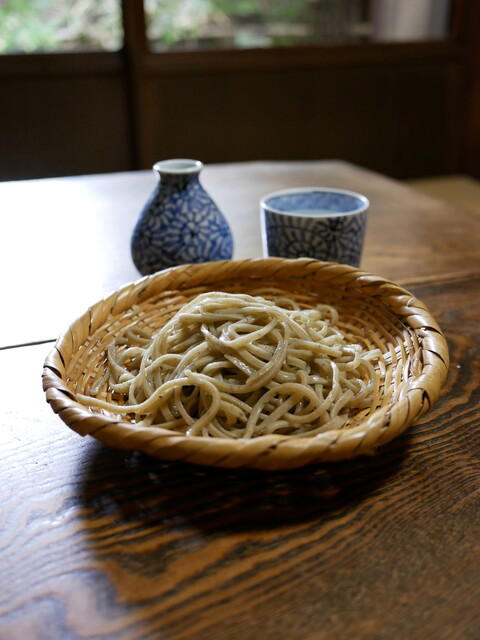
Approaching a soba house in Takasaki is different from approaching a Tokyo counter. The rhythm is quieter, the stakes less performative, and the meal is built around a narrow craft that rewards attention rather than spectacle. At Bommi Sobakiri, the format belongs to that older Japanese register: a house-style restaurant, tatami room setting, buckwheat noodles, and tempura, with the meal centered on precision rather than escalation.
Soba occupies a particular place in Japanese dining because it can be both daily food and connoisseur object. The difference lies in milling, water, cutting, boiling, and the way the noodles are handled between pot and tray. Regional restaurants outside the large urban hotel-and-counter circuit often preserve that seriousness without importing the full grammar of luxury dining. That is the useful lens here. The point is not breadth; it is a compact repertoire executed inside a tradition where small technical differences carry weight.
Gunma soba culture, without Tokyo's performance layer
Takasaki’s restaurant scene is broad enough to support different versions of value. Nearby stops on the same city map include Beef Laboratory, Jikaseimen Kuromatsu, Mikumano, BRAZIL GRILL, and Chuka Soba Narugami Shokudo. Bommi Sobakiri’s own argument is the house-restaurant soba cadence: texture, temperature, and dipping rhythm.
Bommi Sobakiri’s recognition matters because soba evaluation is unforgiving. The restaurant has been selected for Tabelog’s Soba 100 in multiple cycles, including the EAST 2025 list, with earlier selections noted in 2024, 2022, 2019, 2018, and 2017. That continuity places it among soba specialists with sustained public validation rather than a single seasonal spike. Tempura belongs in the same compact format, which is significant: in this genre, fried accompaniments are not an afterthought but a test of pacing, oil control, and restraint around the noodle course.
A narrow repertoire is the point
Japanese soba restaurants often work with a shorter set of decisions than contemporary tasting-menu rooms. That narrowness is not a limitation when the category is taken seriously. Buckwheat noodles expose technique quickly: overworked dough, slack cutting, or careless timing cannot hide behind garnish. Tempura in the same context extends the meal without turning it into a multi-course production.
The house-restaurant setting also matters culturally. Soba has long lived comfortably outside the grand dining room, and some of its strongest expressions come from modest rooms where regulars understand the cadence. Tatami rooms and private rooms for six people, including a detached building reached from outside, suit a small group as much as a focused noodle meal. All seats have been non-smoking since April 2010. Reservations are unavailable. Credit cards, electronic money, and QR code payments are not accepted.
For travelers using Takasaki as more than a train interchange, this kind of restaurant helps explain the city better than a single expensive dinner. Closed Monday and Tuesday; Wednesday–Sunday, 11:30 AM–2:30 PM and 5:30 PM–7:30 PM. Prices sit in the JPY 2,000–JPY 2,999 band.
How to read the meal in a wider Japanese context
Soba’s cultural force comes from its modesty. It is eaten casually, ritually, seasonally, and celebratorily, yet the core form remains plain enough to expose skill. That differs from the logic of many urban restaurants where novelty is the selling point. A serious soba meal rewards a diner who is willing to slow down and measure small differences: noodle firmness, dipping intensity, tempura timing, and how much the room allows the food to stay in focus.
Choose Bommi Sobakiri for soba as a craft tradition, not for a maximalist night out. In a category built on grain, water, cutting, and timing, the quiet room is part of the argument.
Frequently asked questions
What price level is Bommi Sobakiri?
Prices are JPY 2,000–2,999.
What are the operating hours at Bommi Sobakiri?
Closed Monday and Tuesday. Wednesday–Sunday, 11:30 AM–2:30 PM and 5:30 PM–7:30 PM.
Where is Bommi Sobakiri?
Bommi Sobakiri is at 群馬県高崎市問屋町西1-8-6 in Takasaki, Gunma.
Price Lens
Side-by-side context: comparable cuisine and price.
| Venue | Cuisine | Price | Awards | Notes |
|---|---|---|---|---|
| Bommi SobakiriThis venue — the venue you are viewing | Traditional Japanese soba noodle shop | Not listed | Tabelog 100 #83 | Not listed |
| Yakitori Ko no Ji | Traditional Yakitori | Not listed | Tabelog 100 #29 | . Takasaki, Traditional Yakitori |
| Teuchi Soba Maizuru | Handmade soba & izakaya | $30–50 | Tabelog 100 #56 | Takasaki, Handmade soba & izakaya |
| Yakiniku Sumikou | Aged Sendai Wagyu Yakiniku | $50–100 | Tabelog 100 #51 | Shimo-Wada-machi, Aged Sendai Wagyu Yakiniku |
| Takasaki Geijutsu Yasai to Italian Pizza Maro | Neapolitan-style Italian Pizzeria | $20–30 | Tabelog 100 #42 | Not listed |
| Mishoan | Traditional Japanese Wagashi (Sweets) Shop | $1–10 | Tabelog 100 #17 | Kenzakimachi, Traditional Japanese Wagashi (Sweets) Shop |
Recognition history
Dated appearances from independent guides and award organizations, with the underlying list record or original source where available.
Tabelog 100 #83 · No. 83
Tabelog · Tabelog 100 - Soba - EAST - 2025
Continue exploring
More in Takasaki
Restaurants in Takasaki
Browse all →
Hotels in Takasaki
Browse all →
Wineries in Takasaki
Browse all →
Details
- Classic
- Cozy
- Solo
- Casual Hangout
- Garden
- Standalone
- Garden
- A La Carte
Current opening hours
- Monday
- 11:30 AM–2 PM
- Tuesday
- Closed
- Wednesday
- 11:30 AM–2 PM
- Thursday
- 11:30 AM–2 PM
- Friday
- 11:30 AM–2 PM
- Saturday
- 11:30 AM–2 PM
- Sunday
- 11:30 AM–2 PM
Hours can change for holidays and private events. Last verified .
Traditional Japanese atmosphere in a historic house, with a calm, classic feel and views of a small garden that create a cozy, understated setting.