
Tabelog 100 #84
Our verdict
Shogetsu Do places Ikaho’s wagashi tradition in a compact, take-out-focused format rather than a long dining-room experience. Its Tabelog 100 selection for Japanese traditional sweets and sweets cafes in EAST 2023 gives the shop a clear credential within a category where regional ingredients, thermal-town gifting culture, and everyday price discipline matter more than ceremony.

Pearl is the En Primeur Club membership app, where members save venues, book tables and use the concierge.
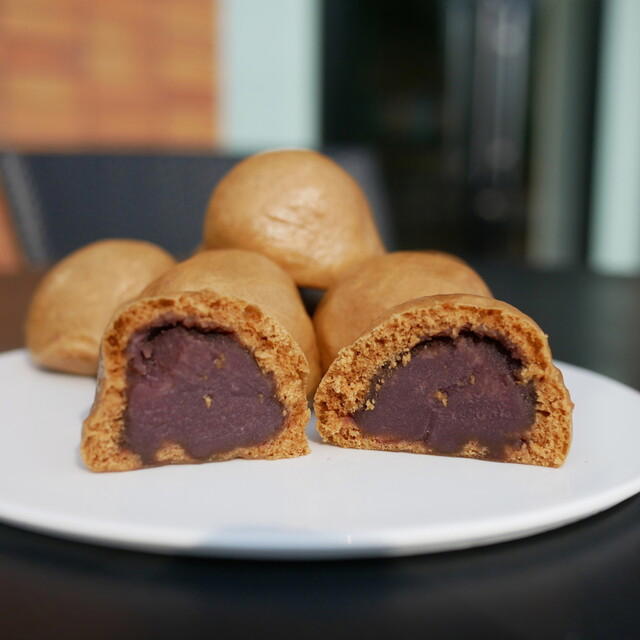
Shibukawa announces itself through slope, steam, and the cadence of visitors moving between baths, inns, and small food shops. In that setting, wagashi is not an afterthought to lunch; it is part of the city’s travel grammar, bought to eat now, carry along, or take home as proof of place. Shogetsu Do belongs to that practical tradition: a Japanese traditional sweets specialist where the format is more focused than a restaurant meal, and where the value lies in how a regional sweet can compress local memory into something small enough to fit in a paper bag.
That matters in Shibukawa because travel areas often depend on portable food culture. Lodging meals may carry the ceremony, but the street-level sweet shop carries the everyday exchange between visitors and the town. Shibukawa’s food identity is not built only around seated meals; it also comes through short stops, family purchases, and sweets that travel well. The shop’s selection in Tabelog’s 2023 recognition for Japanese traditional sweets places it within a wider craft category rather than only a local souvenir circuit, a useful signal in a field where many strong addresses remain regional rather than national in reputation.
Shibukawa wagashi, judged by sourcing rather than spectacle
Japanese sweets reward restraint. The category depends on simple materials, seasonal cues, and the discipline of texture, but it rarely benefits from the kind of theatrical plating that drives modern tasting menus. In travel towns, the test is even narrower: can a sweet hold its shape, read clearly as local, and remain accessible to a mixed crowd of day-trippers, families, and overnight guests? Shogetsu Do sits in that lane, with Japanese traditional sweets as its stated category.
The ingredient-sourcing angle is not about luxury supply chains; it is about proximity and fit. Wagashi in a place like Shibukawa needs to feel tied to the town’s pace: bought simply, carried easily, eaten without ceremony. That separates it from dessert counters in larger cities, where extended formats can turn sweets into a sit-down event. Here, the stronger reading is regional utility. The sweet is part of the route through town, not a pause that demands the afternoon.
Within Shibukawa, that puts the shop alongside a broader low-price, high-specificity dining culture. Nagai Shokudo, also in the city, works from a similarly accessible spend bracket but in a completely different register: meal-driven, savory, and rooted in local appetite rather than wagashi gifting. The comparison is useful because it shows how Shibukawa’s food scene does not need luxury pricing to produce addresses with a clear point of view. The city’s more interesting stops often succeed by narrowing the brief.
A sweet shop in a town built for walking
The format shapes the experience. A specialty sweets shop has no need to perform as a full dining room, and that is a strength rather than a limitation. In Shibukawa, travelers often move in fragments: before check-in, between errands, after a ride, or on the way back through town. A compact sweets purchase fits those gaps better than a reservation-bound lunch. The proposition is not a hosted meal or a slow formal tasting; it is a focused stop with a clear role in the day.
The Tabelog score of 3.60 gives another useful calibration point. In Japan’s user-review ecosystem, wagashi shops rarely generate the same kind of international noise as sushi counters or kaiseki rooms, so a sweets specialist appearing on a category list can be more telling than a simple number. It marks consistency inside a craft category where small deviations in texture and freshness matter, while the approachable format keeps the experience accessible rather than rarefied.
For travelers mapping Shibukawa, this is the kind of stop that works better as part of an area plan than as a single-destination meal. The broader city guide is the natural starting point for sequencing food around Shibukawa: Our full Shibukawa restaurants guide covers meal stops, while Our full Shibukawa hotels guide helps anchor the overnight decision. Visitors building a fuller itinerary can also use Our full Shibukawa bars guide, Our full Shibukawa wineries guide, and Our full Shibukawa experiences guide to connect the sweets stop with the rest of the area rather than treating it as an isolated errand.
How it fits into Japan's everyday specialist tier
Japan’s strongest casual food culture often comes from tight formats: a single specialty, a narrow service model, and a price point that keeps repeat visits plausible. That pattern runs across categories, from everyday counters and quick-service shops to cafes and sweets. The relevant comparison is not with luxury dining but with the discipline of small-format specialists, including other Shibukawa dining rooms that succeed by making a narrow brief easy to understand. The lesson is consistent: compact concepts work when the craft, sourcing logic, and customer expectation are aligned.
The editorial case for Shogetsu Do is therefore not extravagance. It is precision of fit: a recognized wagashi counter in Shibukawa, built for portability, family use, and a low-friction stop between larger parts of the day. In a country where serious eating is often mistaken for expensive eating, Shibukawa offers the quieter correction. A sweet shop can say as much about place as a dining room, provided it knows exactly what role it plays.
Frequently asked questions
Is Shogetsu Do a family-friendly restaurant?
Shogetsu Do is a Japanese traditional sweets specialist in Shibukawa, so it is best understood as a focused sweets stop rather than a full restaurant meal. It also appears in Tabelog’s 2023 recognition for Japanese traditional sweets. Check the venue's official channels for the latest details.
What should I expect atmosphere-wise at Shogetsu Do?
Expect a focused sweets shop rather than a formal dining room, with service built around Japanese traditional sweets in Shibukawa. The format is practical and suited to a stop on the way through town.
What's the price range at Shogetsu Do?
Pricing at Shogetsu Do is listed as - JPY 999 - JPY 999 View spending breakdown.
When is Shogetsu Do open?
Published hours can change, so check Shogetsu Do’s official channels or current listing information before visiting.
Comparison Snapshot
Comparable venues by cuisine and price in the same metro.
| Venue | Cuisine | Price | Awards | Notes |
|---|---|---|---|---|
| Shogetsu DoThis venue (the venue you are viewing) | Traditional Japanese Wagashi & Onsen Manju | $1–10 | Tabelog 100 #84 | Not listed |
| Nagai Shokudo | Gunma roadside shokudo specializing in miso motsuni teishoku | $1–10 | Tabelog 100 #99 | / Kamishiroi, Shibukawa |
| Okonomiyaki Chotto Yonnai | Hiroshima-Style Okonomiyaki | $10–20 | Not listed | Tomo |
| Uogashi Nihon-ichi (魚がし日本一) | Standing Sushi Bar | $10–20 | Not listed | Shibuya |
| Yoshinoya (吉野家 178号線豊岡店) | Japanese Beef Bowl (Gyudon) | Not listed | Not listed | 下陰 |
| Umemura | Japanese Soul Food | Not listed | Tabelog 100 #44 | Koto |
Recognition history
Dated appearances from independent guides and award organizations, with the underlying list record or original source where available.
Tabelog 100 #84 · No. 84
Tabelog · Tabelog 100 - Japanese traditional sweets / Japanese sweets cafe - EAST - 2023
Continue exploring
More in Shibukawa
Restaurants in Shibukawa
All restaurants in Shibukawa →
Details
- Classic
- Well Known
- Cozy
- Solo
- Family
- Casual Hangout
- Historic Building
- Standalone
- Local Sourcing
- Street Scene
- A La Carte
Current opening hours
- Monday
- 9 AM–6 PM
- Tuesday
- 9 AM–6 PM
- Wednesday
- 9 AM–6 PM
- Thursday
- 9 AM–6 PM
- Friday
- 9 AM–6 PM
- Saturday
- 9 AM–6 PM
- Sunday
- 9 AM–6 PM
Hours can change for holidays and private events. Hours as of .
A small, traditional Japanese sweets shop near Ikaho’s stone steps, with a nostalgic onsen-town feel; simple and cozy rather than design-driven, focused on takeaway but welcoming for tourists and families.