On a quiet stretch of Rue Beautreillis in the 4th arrondissement, NA RUGA occupies a corner of the Marais that has long attracted restaurants operating at the edge of French culinary convention. The address places it close to Place des Vosges and within the orbit of some of Paris's most considered neighbourhood dining, making it a reference point for visitors mapping the area's contemporary restaurant scene.
Pearl is the En Primeur Club membership app — saves, bookings, and concierge access live there. Same editors, same standards.
- Address
- 13 Rue Beautreillis, 75004 Paris, France
- Phone
- +33142723834
- Website
- mymenuweb.com
- Directions
- Get directions
 Saves & bookings on Pearl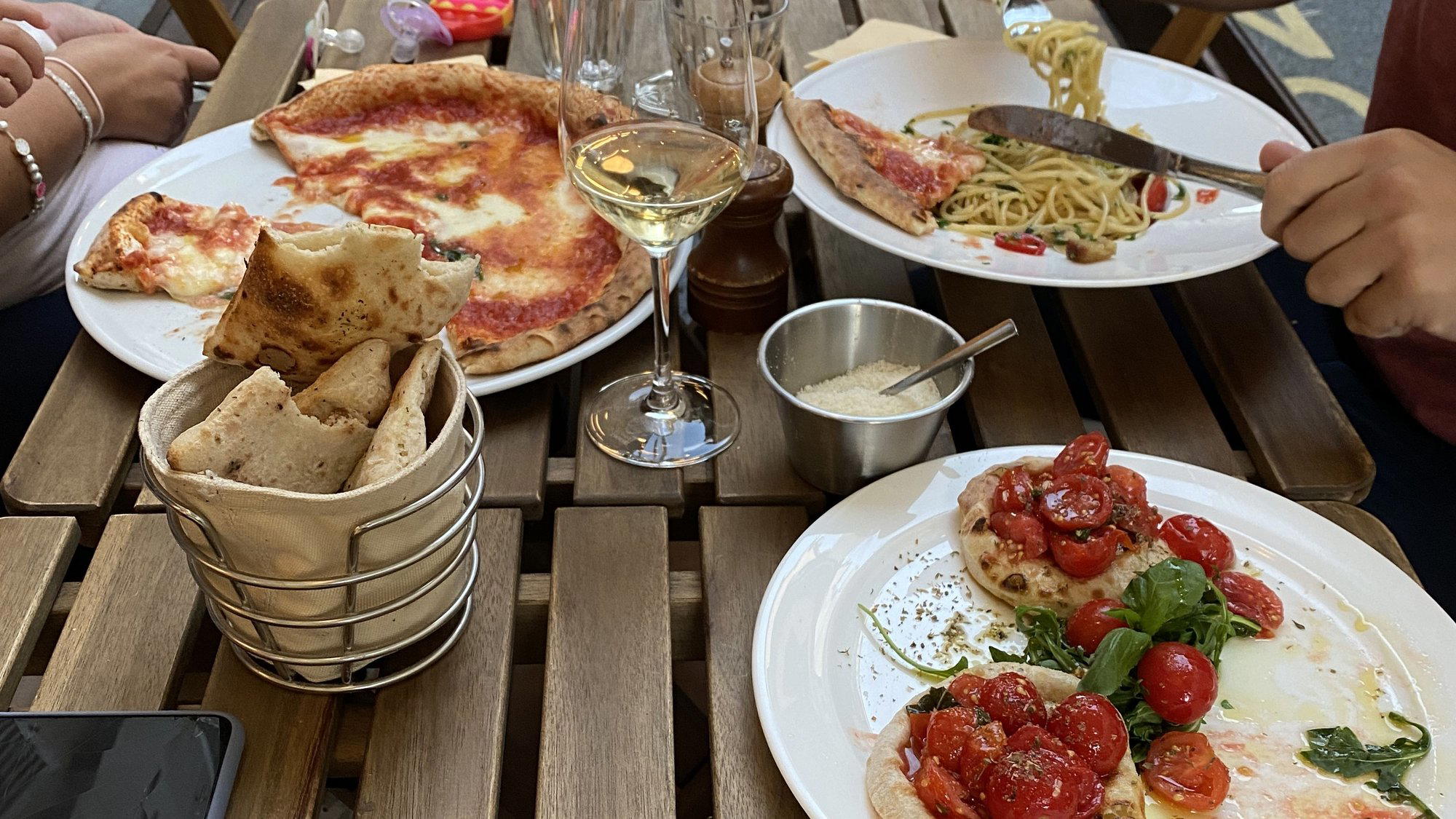
A Marais Address With Something to Say
Rue Beautreillis sits in the southern reach of the Marais, a few blocks east of the Seine and just short of the Place des Vosges. It is the kind of street where the stone facades do most of the talking before you ever push open a door. The 4th arrondissement has long functioned as a testing ground for Paris restaurants willing to operate outside the formal dining rooms of the 8th or the institution-heavy corridors near the Palais Royal. NA RUGA, at number 13, holds its position in that tradition.
The broader Marais dining scene has shifted considerably over the past decade. Where the neighbourhood once leaned heavily on casual bistro formats and Middle Eastern counter spots around Rue des Rosiers, a quieter cohort of more considered restaurants has taken root in its side streets. These are not the prestige flagships you find at Alléno Paris au Pavillon Ledoyen or the grand room of Le Cinq at the Four Seasons George V, nor the deeply rooted classicism of L'Ambroisie, which has anchored the Place des Vosges itself for decades. NA RUGA occupies a different register: neighbourhood-scaled, address-specific, and operating in a part of the city where dining decisions feel more personal than ceremonial.
How the Menu Speaks
Menu architecture is where a restaurant's actual convictions become legible. The choice of how many courses to offer, how tightly to constrain ingredient sourcing, how explicitly to signal influences, whether to publish a fixed menu or hold it back until you're seated — all of these are editorial decisions, and they communicate the kitchen's priorities more reliably than any front-of-house pitch.
In the context of Paris's mid-range to serious dining tier, menu structures have diverged sharply. At one end sit the tasting-menu-only counters, where the kitchen controls the entire sequence and the diner surrenders choice. At the other end, brasserie-style à la carte formats preserve maximum flexibility at the cost of kitchen coherence. Particularly interesting territory lies between those poles: restaurants where a compact, seasonally driven menu forces the kitchen to be selective rather than comprehensive. This is the approach that tends to define the better Marais addresses, and it is the lens through which NA RUGA reads most clearly.
What a compact menu signals is discipline. When a kitchen commits to a short list of dishes, each component on the plate carries proportionally more weight. There is no room to hide a weak preparation behind range. Restaurants operating at this register in the Marais tend to draw comparison not to the grand French houses but to a newer wave of Paris dining that has absorbed influences from further afield, processing them through a French technical frame without losing the source. For a sense of how that cross-cultural precision works at the highest level in France, Kei remains one documented example, blending Japanese rigour with classic French structure to consistent critical recognition.
Further from Paris, the question of menu architecture becomes even more pointed. The grands maisons of the French regions — Troisgros in Ouches, Bras in Laguiole, Auberge de l'Ill in Illhaeusern, have each built distinct menu philosophies rooted in their terroir and their lineage. Urban Marais dining operates with different constraints: smaller rooms, more transient clientele, and a competitive density that demands both clarity and personality on the menu. NA RUGA's position on Rue Beautreillis puts it squarely within those urban pressures.
The 4th Arrondissement as Context
Placing a restaurant in its neighbourhood is not just geography, it is competitive positioning. The 4th arrondissement draws a heterogeneous crowd: tourists working outward from the Notre-Dame site and the Centre Pompidou, local residents in one of the city's most sought-after residential pockets, and a professional class that treats the Marais as a lunchtime and early-evening dining circuit. A restaurant on Rue Beautreillis addresses all three, but particularly repeat business comes from the latter two, and they are an audience with calibrated expectations.
That dynamic shapes what a restaurant can ask of its menu. Extreme formality reads poorly in this part of the Marais; so does aggressive casualness. The sweet spot is the kind of confident informality that lets the food do the work without requiring the diner to perform appreciation. It is a tone that distinguishes the neighbourhood from the more ceremonial dining rooms further west, and it is one that the better addresses here have learned to hold consistently.
Internationally, the closest parallels to this format, small-room, neighbourhood-anchored, menu-driven rather than spectacle-driven, appear in cities where serious dining has dispersed away from a single prestige district. Atomix in New York operates with similar menu conviction at a higher price tier, while AM par Alexandre Mazzia in Marseille demonstrates how a tightly authored menu can define a restaurant's identity at the national level. Neither is a direct peer of a Marais address, but both illustrate the broader principle: menu architecture as the primary statement of intent.
Where NA RUGA Sits in the Paris Picture
Paris's full dining spectrum runs from the three-Michelin-star formality of Arpège down through the neighbourhood dining rooms that sustain the city's daily eating life. The restaurants that often prove most interesting to the experienced Paris visitor sit in the latter category but execute with the precision of the former. The restaurant's address on Rue Beautreillis positions it in that zone. It is not competing against the institutional grand tables, nor is it playing to the tourist circuit. It is making a more specific argument to a more specific audience.
For those mapping a Paris trip around serious restaurant choices, the Marais repays close attention. The area lacks the density of starred addresses found in the 8th, but it offers something different: a dining environment where the room, the street, and the meal can align without the weight of expectation that a formal prestige address inevitably brings. Restaurants like Paul Bocuse's Auberge du Pont de Collonges or Assiette Champenoise in Reims carry institutional gravity that shapes the entire visit. A Marais address operates lighter, which is not the same as operating lesser.
See our full Paris restaurants guide for a wider map of where to eat across the city's arrondissements, including how the Marais fits into the broader dining circuit alongside destination addresses further afield like Flocons de Sel in Megève, Mirazur in Menton, Au Crocodile in Strasbourg, Auberge du Vieux Puits in Fontjoncouse, and Le Bernardin in New York for transatlantic reference points.
Planning Your Visit
The restaurant is located at 13 Rue Beautreillis, 75004 Paris, in the southern Marais, a short walk from the Bastille and Sully-Morland metro stations. Given the limited data available publicly, visitors should verify current hours, pricing, and reservation requirements directly with the restaurant before making plans. For a neighbourhood of this character, arriving without a reservation on weekend evenings carries real risk; a confirmed booking for a first visit is the more considered approach.
Quick reference: 13 Rue Beautreillis, 75004 Paris. Confirm hours and reservations directly with the venue.
How NA RUGA Paris compares with similar nearby venues.
| Venue | Cuisine | Price |
|---|---|---|
| Soé | Creative | €€ |
| L'Ambroisie | French, Classic Cuisine | €€€€ |
Continue exploring
More in Paris
Restaurants in Paris
Browse all →
Bars in Paris
Browse all →
Hotels in Paris
Browse all →





At a Glance
- Cozy
- Intimate
- Rustic
- Romantic
- Date Night
- Family
- Casual Hangout
- Group Dining
- Standalone
- Open Kitchen
- Extensive Wine List
- Local Sourcing
Current opening hours
- Monday
- 12–3 PM, 7–11 PM
- Tuesday
- 12–3 PM, 7–11 PM
- Wednesday
- 12–3 PM, 7–11 PM
- Thursday
- 12–3 PM, 7–11 PM
- Friday
- 12–3 PM, 7–11 PM
- Saturday
- 12–3 PM, 7–11 PM
- Sunday
- 12–3 PM, 7–11 PM
Hours can change for holidays and private events. Last verified .
Warm, cozy wood-paneled interior with rustic charm; intimate setting with Italian music creating a homey, welcoming atmosphere reminiscent of a family-run trattoria.