Our verdict
Without the marquee chef name or institutional weight of the city's grand tables, it operates in a tier defined by curation discipline and room character rather than tasting-menu ceremony. For those tracking Paris's mid-register wine program scene, it merits attention.

Pearl is the En Primeur Club membership app, where members save venues, book tables and use the concierge.

The menu
What to order
- Cacio e pepe
- Sugo sauce
- Pesto rosso
- Polpette
The 2nd Arrondissement and the Wine-Driven Dining Shift
Paris's 2nd arrondissement has spent the better part of the last fifteen years repositioning itself. The district built its post-Haussmann identity around finance and the press, and its restaurant stock reflected that: brasseries, quick-lunch counters, and a few grand café survivors from an earlier era. What changed was the slow migration of operators who wanted central Paris rents without the 6th or 1st arrondissement price floor, and who were building wine-forward rooms rather than cuisine-first destinations.
It is worth placing this against the macro of Paris dining. At the formal end, three-Michelin-star rooms like L'Ambroisie in the Marais or Le Cinq at the Four Seasons Hôtel George V set a ceiling defined by classical French technique, significant cellar investment, and dining rooms built for ceremony. Slightly below that, the creative tier, represented by places like Alléno Paris au Pavillon Ledoyen or Kei, layers modern technique and international influence over a French foundation. Below both sits a more fluid category: wine-anchored rooms where the list is the primary editorial statement and food arrives as an honest, often ingredient-led accompaniment rather than a multi-act production.
Reading a Wine Program Without a Marquee Cellar
The wine list question in Paris is structural. The city's grand addresses, and several notable French restaurants outside the capital, including Auberge de l'Ill in Illhaeusern, Troisgros in Ouches, or Bras in Laguiole, carry cellars built over generations, with depth in Burgundy and Bordeaux that smaller rooms cannot replicate at price. What the 2nd arrondissement wine-bar cohort has developed instead is a curation argument: narrower lists assembled with a clear point of view, often weighted toward natural and low-intervention producers, with by-the-glass programs broad enough to anchor a full meal.
That curation discipline is where Paris's mid-register wine scene has distinguished itself from the grand-table model. The sommelier's role shifts from guardian of inventory to active editorial voice. A list of sixty producers chosen with conviction communicates more than a list of six hundred assembled by prestige and coverage.
Internationally, the wine-first dining format has produced some of the most critically noted rooms of the past decade. At Le Bernardin in New York, wine service operates at a level where the list itself shapes critical reception. At Atomix, also in New York, the beverage program functions as a parallel creative argument to the kitchen. In both cases, the wine or beverage list is not supporting material, it is co-authorship. Paris's more intimate wine rooms work toward a similar principle at a different scale and price register. The financial district's lunch culture still pulses through the area on weekdays, but the evening character has shifted considerably since the mid-2010s. The 2nd's restaurant openings in that period skewed toward smaller formats, rooms under forty covers, menus that change with market supply, and wine lists updated more frequently than kitchens retooled.
This contrasts with the institutional weight carried by addresses in other arrondissements. The grand tables of the 8th, where Alléno Paris anchors an avenue built for ceremony, or the classicism of the 7th, where Arpège has operated for decades, represent a different kind of permanence. The 2nd's current dining identity is more provisional, more willing to adapt format to the room and the wine program to the producer relationships available right now. That quality makes it harder to profile from a distance, but more interesting to read as a scene signal.
For context on the spread of serious French restaurant ambition outside Paris, Mirazur in Menton, Flocons de Sel in Megève, AM par Alexandre Mazzia in Marseille, Assiette Champenoise in Reims, Au Crocodile in Strasbourg, Auberge du Vieux Puits in Fontjoncouse, and the historically significant Paul Bocuse in Collonges-au-Mont-d'Or each represent how regional identity shapes wine and food programming in ways Paris cannot always replicate. The capital's advantage is density and access to producers; the regions carry terroir legibility that no city address can manufacture. The nearest Métro stations are Quatre-Septembre (line 3) and Opéra (lines 3, 7, 8). Reservations: Dress: The 2nd arrondissement's wine-bar category runs toward smart casual; formal attire is not expected. Budget: Confirm current pricing directly with the venue before visiting. See our full Paris restaurants guide for the broader context of where Sugo sits within the city's dining tiers.
Frequently asked questions
What's Sugo's location?
Sugo is located at 16 Rue Saint-Augustin, 75002 Paris, France, Paris.
Is Sugo in Paris a good option for a wine-focused dinner near the Opéra Garnier?
Sugo at 16 Rue Saint-Augustin sits within walking distance of the Opéra Garnier in Paris's 2nd arrondissement, an area that has built a coherent identity around wine-driven, producer-focused dining over the past decade and a half. For a dinner where the wine list is the anchor and the food is chosen to match it, the address fits that brief in a neighbourhood that now has a credible density of similar intent. It is one of the more considered options in the Bourse-to-Opéra corridor for guests whose priority is the glass rather than the plate.
What do people recommend at Sugo?
The wine program is consistently cited as the reason to visit Sugo, with the list shaped around the kind of producer-driven selections that have defined the 2nd arrondissement's dining shift over the last fifteen years. Food recommendations from regulars tend to follow the wine rather than the other way around, dishes are chosen to extend what's in the glass. Specific menu items rotate, so the best approach is to ask the floor team what's current on arrival at 16 Rue Saint-Augustin.
How hard is it to get a table at Sugo?
Sugo occupies a block between the Bourse and the Opéra Garnier where foot traffic is high and the neighbourhood's reputation for serious wine-led restaurants has grown steadily. Demand at places like this in the 2nd arrondissement tends to outpace availability, particularly for evening sittings. Booking ahead is advisable; walk-in availability depends on the day and time.
What's the defining dish or idea at Sugo?
The organising idea at Sugo is the wine list as the primary text, with the kitchen working in service of it rather than the reverse. This positions Sugo within a broader Paris dining movement that has pulled the 2nd arrondissement away from its post-Haussmann formality toward a more producer-focused, lower-intervention approach to what ends up on the table. The address at 16 Rue Saint-Augustin places it squarely in that conversation.
Can Sugo accommodate dietary restrictions?
Sugo's kitchen operates in the 2nd arrondissement's current mode of market-responsive, wine-aligned cooking, which typically means menus shift with availability rather than running fixed long-term dishes. That flexibility generally makes it easier to accommodate dietary needs than a rigid tasting-menu format would. check the venue's official channels at 16 Rue Saint-Augustin, 75002 Paris, to confirm specific requirements before your visit.
Comparison Snapshot
Comparable venues nearby, for context on price, style, and recognition.
| Venue | Cuisine | Price | Notes |
|---|---|---|---|
| SugoThis venue (the venue you are viewing) | Fresh Pasta Trattoria | $20–30 | Not listed |
| La Place Italienne - Paris 15 | Authentic Italian Trattoria | $30–50 | Montparnasse |
| Coinstot Vino | Italian Bistro with Natural Wines | $20–30 | Passage des Panoramas |
| Pratolina | Authentic Italian Trattoria | $20–30 | Grands Boulevards |
| Ober Mamma | Authentic Neapolitan Trattoria | $20–30 | Oberkampf |
| Doppio - Paris 18 | Italian Trattoria with Mediterranean Influences | Not listed | Montmartre (18th Arrondissement) |
Continue exploring
More in Paris
Restaurants in Paris
All restaurants in Paris →
Bars in Paris
All bars in Paris →
Hotels in Paris
All hotels in Paris →
Details
- Cozy
- Trendy
- Casual Hangout
- Date Night
- Open Kitchen
- A La Carte
- Vegetarian Friendly
Current opening hours
- Monday
- 12–2:30 PM, 7–10:30 PM
- Tuesday
- 12–2:30 PM, 7–10:30 PM
- Wednesday
- 12–2:30 PM, 7–10:30 PM
- Thursday
- 12–2:30 PM, 7–10:30 PM
- Friday
- 12–2:30 PM, 7–10:30 PM
- Saturday
- 12–3 PM, 7–10:30 PM
- Sunday
- 12–3 PM, 7–10:30 PM
Hours can change for holidays and private events. Hours as of .
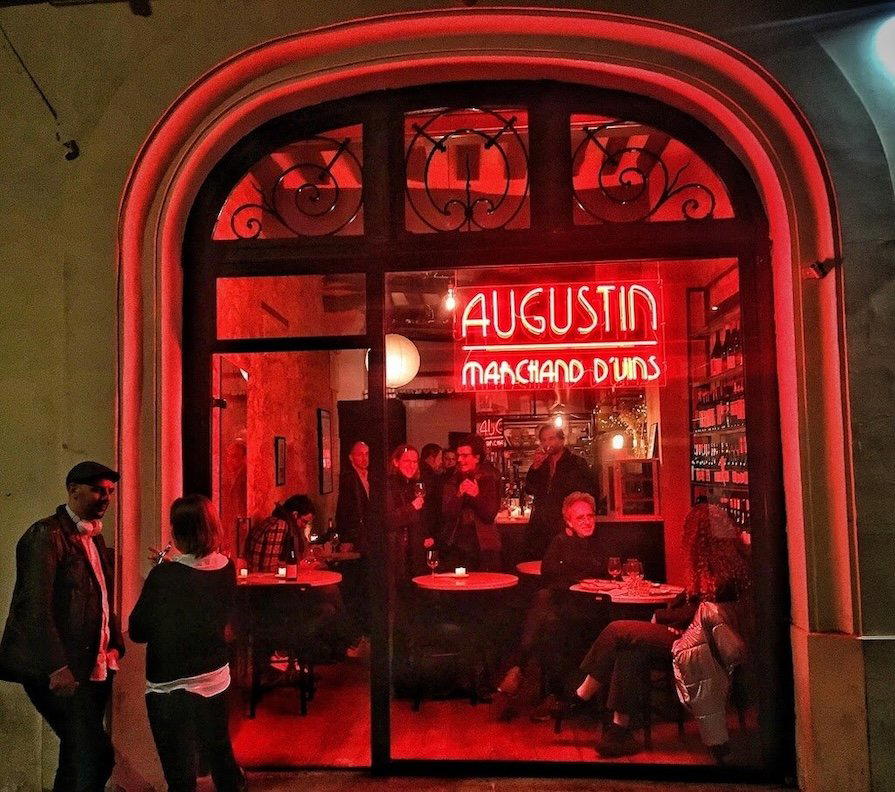
Cozy and unpretentious trattoria atmosphere with shared and individual seating.