Our verdict
Must Restaurant & Bar sits at the intersection of Amazonian pantry and modern technique in Belém, a city whose food culture is among the most distinct in Brazil. Regional ingredients, tucupi, jambu, açaí in its savory form, are handled with the kind of precision more commonly associated with São Paulo's top tables. For visitors mapping the northern Brazilian dining scene, Must is a reference point worth planning around.

Pearl is the En Primeur Club membership app, where members save venues, book tables and use the concierge.
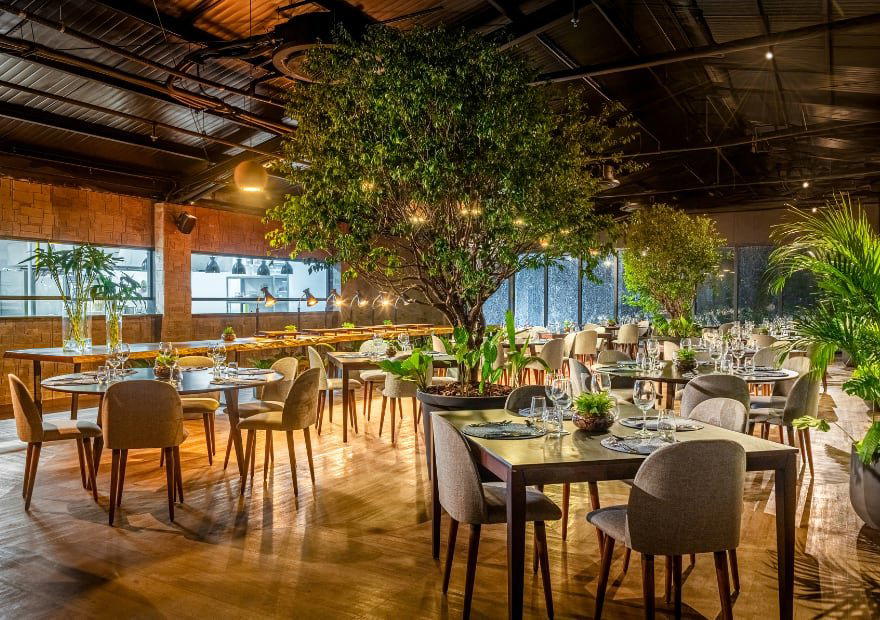
Where the Amazon Arrives at the Table
Belém occupies a position in Brazilian food culture that no other city quite replicates. Sitting at the mouth of the Amazon, it draws from a pantry that the rest of the country has spent decades trying to understand, let alone reproduce. Ingredients like tucupi, the fermented yellow broth extracted from wild manioc, or jambu, the leaf that produces a mild, buzzing numbness on the tongue, are not imports here. They are the foundation. In this context, the dining ritual at a restaurant like Must Restaurant & Bar carries a different weight than it would in Rio or São Paulo: the meal is also an orientation into a botanical world that extends thousands of kilometres north and west.
Modern Amazonian cooking, as practiced in Belém's more ambitious kitchens, functions less as fusion and more as translation. The approach involves taking ingredients with deep indigenous and regional histories and applying contemporary technique to surface what is already there, acidity, bitterness, umami, rather than masking it. Must Restaurant & Bar operates within this tradition, working with regional ingredients and reimagining them through a modern lens. That framing matters because it places the restaurant inside one of the most discussed currents in contemporary Brazilian gastronomy, a movement that has drawn international attention through reference points like D.O.M. in São Paulo and Lasai in Rio de Janeiro.
The Pacing and Structure of a Belém Meal
Understanding how to eat in Belém is part of eating well there. The city's dining culture does not rush. Meals at the better restaurants tend to unfold across multiple courses, with each dish given room to register before the next arrives. This is partly cultural and partly practical: Amazonian ingredients often reveal themselves slowly. Jambu's anesthetic effect, for instance, builds across bites rather than arriving all at once. Dishes built around tucupi develop a fermented depth that rewards attention rather than speed.
At restaurants in this category, the dining ritual is structured around that revelation. A tasting-format meal, or even a well-ordered à la carte progression, functions as a sequence of introductions to the region's ingredient vocabulary. Dishes that would seem exotic elsewhere, açaí used in a savory context, Pará nuts incorporated into a sauce, river fish handled with technique borrowed from European kitchens, land differently when you understand you are eating within the latitude that produced them. Must Restaurant & Bar, with its dual identity as restaurant and bar, also acknowledges that the evening does not need to end with the last plate. The bar dimension allows for a more open-ended finish, which is consistent with how Belém's social dining culture actually operates.
For those coming from further afield to explore the city's food scene, it helps to read Must alongside other regional expressions of modern technique applied to place-specific ingredients. Manga in Salvador pursues a comparable project with Bahian pantry staples, while Manu in Curitiba applies a similar discipline to southern Brazilian produce. The thread connecting them is a conviction that regional ingredients, handled precisely, do not need international flavors added to make them interesting.
Belém's Broader Dining Architecture
Belém's restaurant scene is smaller than São Paulo's but more coherent in its identity. The city does not have the same volume of international and high-concept venues, but it has something that São Paulo's dining world sometimes lacks: a clear sense of where the food comes from and why that matters. The Ver-o-Peso market, one of the largest open-air markets in Latin America, sets the reference point for what Belém cooking looks like at its most immediate. The restaurants that take that market seriously, that source from it, respond to its seasonal availability, and treat its vendors as collaborators, tend to produce the most credible cooking in the city.
Must Restaurant & Bar sits in this environment as part of a small tier of restaurants applying modern sensibility to deeply local materials. That tier is worth tracking, not just because the food is interesting, but because Belém is increasingly understood as a necessary stop for anyone mapping serious Brazilian gastronomy. The city appears more frequently now in the conversation around Latin America's evolving restaurant culture, alongside names from São Paulo and Rio that have carried that conversation internationally for years. Orixás | North Restaurant in Itacaré represents a similar northward pull in that broader regional story.
For context on what modern Brazilian cooking looks like across different price tiers and regional traditions, Mina in Campos do Jordão, Primrose in Gramado, and Castelo Saint Andrews in Vale do Bosque each demonstrate how differently the country's culinary geography plays out region to region. Internationally, the approach to ingredient-led fine dining that animates much of this work has counterparts at places like Le Bernardin in New York City, where technique is in service of the primary ingredient rather than performing alongside it.
Planning Your Visit
Belém rewards advance planning more than most Brazilian cities, simply because the dining options at this level are fewer and the city draws a growing number of visitors specifically for its food culture. For those building a trip around the restaurant scene, our full Belém restaurants guide maps the city's dining options across formats and price points. The wider trip is worth structuring with reference to our full Belém hotels guide, our full Belém bars guide, and our full Belém experiences guide. For those who want a lighter meal or a different format on the same trip, Lobby Café and Lobby Café at Tivoli Maiorana Belém offer lower-commitment options within the city. A wineries detour is also possible for those interested: our full Belém wineries guide covers what the region offers in that category.
Must's dual restaurant-and-bar format means the visit can be shaped around preference: a full dinner progression through the regional menu, or an entry through the bar side with smaller plates as the frame. Given Belém's climate and the rhythms of the city, evening visits tend to work leading, with dinner settling into the later hours that characterize dining culture across northern Brazil. The restaurant's profile within the city's modern dining scene makes it a sensible anchor for any serious visit to Belém.
Frequently asked questions
How does Must Restaurant & Bar reflect Belém's regional food identity?
Must positions itself squarely within Belém's role as the gateway city to Amazon ingredients, applying a modern culinary approach to produce that is largely unavailable outside northern Brazil. Belém has developed one of the most coherent regional food identities in the country precisely because its pantry, including native fruits, river fish, and forest-derived ingredients, cannot be easily replicated elsewhere. A meal at Must is, in practical terms, an argument for why Belém's cuisine deserves attention on its own terms rather than as a footnote to São Paulo or Rio.
What's the signature dish at Must Restaurant & Bar?
Must's menu is built around regional Amazonian ingredients reimagined through a modern cooking framework, which means the kitchen's identity is defined by what the surrounding ecosystem produces rather than a single fixed dish. Specific menu items rotate with availability and season. To get a clear picture of what's currently on offer, contacting the restaurant directly before your visit is the most reliable approach.
Should I book Must Restaurant & Bar in advance?
Belém's serious dining options at this level are limited in number, and the city draws a growing stream of food-focused visitors drawn specifically to its Amazonian pantry. Must operates within that narrow field, which means seats fill faster than the city's overall tourism volume might suggest. Booking ahead is the practical move, particularly if your travel dates are fixed.
Cuisine Context
Comparable venues nearby, for context on price, style, and recognition.
| Venue | Cuisine | Price | Notes |
|---|---|---|---|
| Must Restaurant & BarThis venue (the venue you are viewing) | Modern Brazilian with Indigenous Flavors | Not listed | Not listed |
| Lobby Café | Brazilian Café | $10–20 | Not listed |
| Boi Novo Churrascaria | Brazilian Churrascaria | $20–30 | Sta Felicidade |
| Remanso Do Bosque | Traditional Amazonian Regional Cuisine | Not listed | Marco |
| Lobby Café | Hotel Lobby Café | Not listed | Campina |

Continue exploring
More in Belem
Restaurants in Belem
All restaurants in Belem →
Bars in Belem
All bars in Belem →
Details
- Elegant
- Modern
- Special Occasion
- Date Night
- Hotel Restaurant
- A La Carte
Elegant atmosphere with poolside dining options.