
Tabelog 100 #83
Our verdict
Musashino Enza brings Tokyo’s udon culture into a quieter Nerima setting, inside the Shakujii Park Furusato Museum precinct rather than a central station corridor. Its Tabelog Udon EAST 100 selection in 2024 places it among serious regional noodle addresses, with a modest lunch-range spend, a no-reservations format, and a ritual built around timing rather than ceremony.

Pearl is the En Primeur Club membership app, where members save venues, book tables and use the concierge.
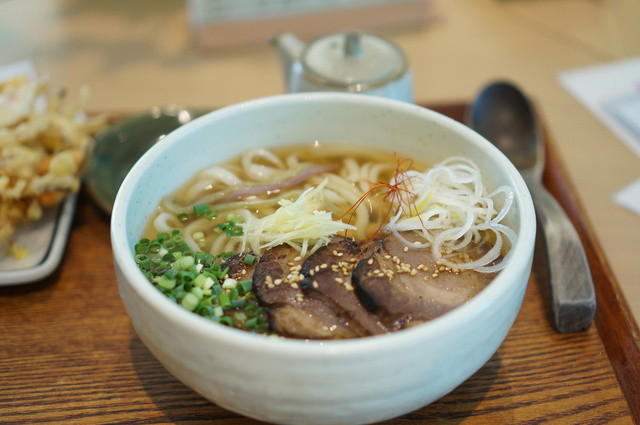
Approaching Musashino Enza changes the tempo of a Tokyo meal. The city’s central food districts often compress dining into station basements, office towers, and late-night alleys; this stop shifts the frame toward everyday movement, neighborhood routines, and a slower lunch rhythm. Udon suits that setting. It is a cuisine of short decisions and exact timing: order, wait, eat while texture holds, then leave before the bowl turns from pleasure into starch. The ritual is not theatrical, but it is disciplined.
Musashino Enza belongs to the side of Tokyo dining that rewards people who travel beyond the obvious restaurant map. Its 2024 recognition through Tabelog’s udon-focused Hyakumeiten gives it a clear credential in a category where prestige is less international than local: noodle shops are judged by repeat visits, texture, broth, value, and consistency rather than tasting-menu choreography. In that sense, this is a Tokyo address for diners who understand that serious eating in Japan is not limited to sushi counters and kaiseki rooms.
Tokyo udon, judged by pace rather than ceremony
Udon in the capital sits between two impulses. One is convenience: a fast bowl near a train line, eaten standing or at a narrow counter. The other is craft: a meal that remains casual but asks for attention to chew, temperature, dipping sauce, broth balance, and the point at which noodles begin to soften. The distinction matters because price alone does not explain the category. A low-cost udon shop can be deeply technical; a more polished room can lose the point if timing and texture drift.
This is where the Tabelog 100 signal carries weight. The list is not a Michelin-style luxury marker; it identifies category specialists that regular diners take seriously. Musashino Enza’s inclusion in the 2024 udon selection places it in a broader conversation rather than a shop-only one. The comparison is not with Tokyo’s formal dining rooms, but with other noodle specialists where the meal’s success depends on speed, freshness, and a kitchen’s tolerance for repetition.
The dining ritual is also democratic. Udon does not require a script of chef interaction or wine-pairing vocabulary. It asks for basic respect: arrive with the expectation of a meal built around a single staple, accept that popular noodle shops often move according to supply and seating, and eat at the pace the food demands. This is a useful corrective in a city where visitors can over-plan luxury meals while underestimating how much craft sits in everyday formats.
Tokyo makes the meal feel less transactional
Location changes the reading of a bowl. In Tokyo’s busiest dining zones, even casual food can feel folded into a larger performance of access, queues, and itineraries. Musashino Enza’s appeal is quieter: a city meal that does not need to announce itself with luxury cues, and a dining culture that has less need to explain itself to travelers. The experience reads closer to a local lunch address than a destination restaurant staging exclusivity.
That does not make it casual in the sense of careless. The shop’s public profile is simple and category-led, pointing to a broad everyday use pattern rather than a narrow connoisseur format. Tokyo’s everyday restaurants often operate with this dual identity: technically serious enough to appear on specialist lists, practical enough for repeat local use. The result is not a contradiction. It is one of the city’s defining dining strengths.
Within its immediate competitive set, the positioning is clear. Shotaro Udon and Teuchi Udon Hasegawa occupy related udon territory, while PIZZERIA GTALIA DA FILIPPO, Blondir, and BUTCHER'S TABLE Ooizumi gakuen ten show how Tokyo supports specialist restaurants beyond the most obvious central circuits. Musashino Enza is compelling because it keeps the focus narrow: wheat noodles, lunch discipline, and the kind of format where regularity matters more than novelty.
How to read the table before you sit down
The smart approach is to treat the meal as a time-sensitive noodle stop rather than a leisurely multi-course booking. The format rewards flexibility. In Tokyo, popular noodle shops are often easier for solo diners and pairs than for large groups, not because hospitality is limited, but because turnover and the physical rhythm of the room define the experience. Here, small parties should think in terms of pace, appetite, and timing rather than ceremony.
Payment habits also belong to the experience. Tokyo’s independent restaurants can be selective about accepted methods, and diners should not assume that every serious address works like a hotel dining room. Planning with a practical backup avoids turning a simple bowl of udon into a logistics problem. The public nature of the meal also reinforces its character: this is shared everyday dining, not a secluded business-lunch performance.
For a broader Tokyo itinerary, pair this kind of specialist stop with other category-led addresses rather than only luxury reservations. EP Club’s city coverage can sit alongside wider planning rails: Our full Tokyo restaurants guide, Our full Tokyo hotels guide, Our full Tokyo bars guide, Our full Tokyo wineries guide, and Our full Tokyo experiences guide. For related Japan and Japanese-food references beyond Tokyo, look to other dining rooms generically rather than reading Musashino Enza as part of a single luxury circuit; its value is in the discipline of one focused bowl.
Frequently asked questions
Where is Musashino Enza located?
Tokyo.
What price level is Musashino Enza?
Pricing at Musashino Enza is listed as JPY 1,000 - JPY 1,999.
How hard is it to get a table at Musashino Enza?
Access is best approached with flexibility, as popular udon shops in Tokyo can depend on timing, turnover, and the pace of the day.
What's the signature at Musashino Enza?
The focus is udon, which matches its 2024 Tabelog udon recognition. Expect a straightforward noodle house in Tokyo, with lunch pricing listed at JPY 1,000 to JPY 1,999.
Local
Comparable venues by cuisine and price in the same metro.
| Venue | Cuisine | Price | Awards | Notes |
|---|---|---|---|---|
| Musashino EnzaThis venue (the venue you are viewing) | Traditional Musashino Udon | $10–20 | Tabelog 100 #83 | Not listed |
| Shotaro Udon | Traditional Musashino Udon | $1–10 | Tabelog 100 #89 | JPY 999 - JPY 999 View spending breakdown |
| PIZZERIA GTALIA DA FILIPPO | Producer-focused Neapolitan Pizzeria | $30–50 | Tabelog 100 #33 | JPY 6,000 - JPY 7,999 JPY 2,000 - JPY 2,999 |
| Blondir | French pastries | Not listed | Tabelog 100 #68 | JPY 2,000 - JPY 2,999 JPY 2,000 - JPY 2,999 |
| BUTCHER'S TABLE Ooizumi gakuen ten | American-style burger & sandwich bar | $20–30 | Tabelog 100 #33 | JPY 2,000 - JPY 2,999 JPY 1,000 - JPY 1,999 |
| Teuchi Udon Hasegawa | Musashino-style handmade udon & sake bar | $10–20 | Tabelog 100 #24 | JPY 1,000 - JPY 1,999 - JPY 999 |
Recognition history
Dated appearances from independent guides and award organizations, with the underlying list record or original source where available.
Tabelog 100 #83 · No. 83
Tabelog · Tabelog 100 - Udon - EAST - 2024
Continue exploring
More in Tokyo
Restaurants in Tokyo
All restaurants in Tokyo →



Bars in Tokyo
All bars in Tokyo →






Details
- Cozy
- Classic
- Solo
- Family
- Casual Hangout
- After Work
- Group Dining
- Standalone
- Local Sourcing
- A La Carte
- Counter Dining
A modest, classic neighborhood udon shop with a warm, lived‑in feel; simple decor, bright but not harsh lighting, and a relaxed, family‑friendly atmosphere that stays comfortably busy without feeling hectic.