Where Darling Quarter's Corporate Grid Meets Chinese Culinary Precision Darling Quarter sits at an odd juncture in Sydney's dining geography: close enough to the CBD that suits flood in at noon, yet oriented toward the waterfront in a way that...
Pearl is the En Primeur Club membership app — saves, bookings, and concierge access live there. Same editors, same standards.
- Address
- Darling Quarter, Commbank Place ( north Wing, 1 Harbour St, Sydney NSW 2000, Australia
- Phone
- +61405660999
- Website
- mumian.au
- Directions
- Get directions
 Saves & bookings on Pearl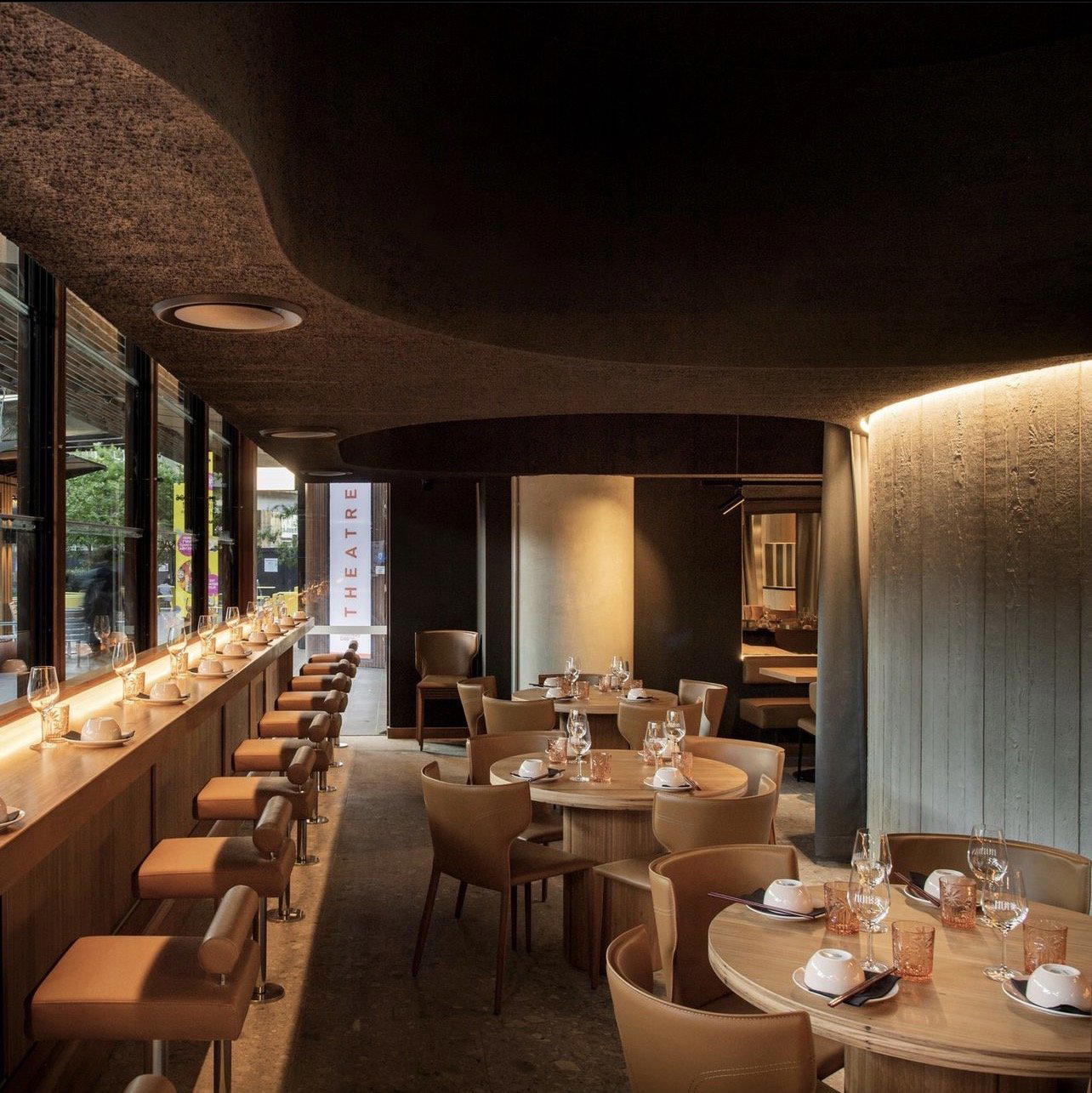
Where Darling Quarter's Corporate Grid Meets Chinese Culinary Precision
Darling Quarter sits at an odd juncture in Sydney's dining geography: close enough to the CBD that suits flood in at noon, yet oriented toward the waterfront in a way that softens the hard edges of the financial district. CommBank Place, which anchors the north wing of the precinct at 1 Harbour Street, is the kind of address that would normally signal a generic all-day brasserie or a chain with laminated menus. MuMian Dining occupies that address and pushes against the expectation. The physical approach through Darling Quarter's covered walkways and open plazas sets a different frame: this is not a restaurant you stumble into from a residential street, it arrives at the end of a deliberate walk through Sydney's rearranged waterfront.
The Local-Technique Intersection That Defines the Format
Across Australian fine dining, the productive tension of the last decade has been between imported culinary grammar and local ingredient sourcing. Restaurants like Rockpool built their identities around applying classical European rigour to Australian produce, while Saint Peter took the argument further by forcing the local ingredient itself to set the agenda. MuMian Dining enters that conversation from a different angle: the culinary inheritance is Chinese, and the question the kitchen poses is what happens when those techniques, which carry their own deep disciplines of heat management, fermentation, and textural precision, are applied to produce that is emphatically of this continent and its surrounding waters.
It is a question Australian Chinese dining has been circling for some years. The older model kept Chinese technique and Australian produce in separate silos, the restaurant being Chinese-flavoured in presentation while sourcing was incidental. The newer cohort takes the intersection seriously. At its finest, this produces cooking that reads as neither fusion nor novelty, but as a coherent position: Chinese culinary logic applied to ingredients that exist within a completely different ecological and seasonal context than the one that originally shaped those methods. MuMian's location in a premium CBD-adjacent development suggests a dining room that expects its audience to engage with that position rather than simply arrive for a set menu and leave.
For broader context on how this approach plays out across premium Australian restaurants, our full Sydney restaurants guide maps the city's current culinary directions by neighbourhood and price tier.
Situating MuMian in Sydney's Chinese Fine Dining Tier
Sydney has the largest and most complex Chinese restaurant ecosystem outside of Greater China and certain North American cities. The spectrum runs from the dumpling canteens of Haymarket to formal banquet rooms in Chatswood that price by the table rather than by the dish. A smaller subset has moved into fine-dining territory, where the room is considered as carefully as the plate, bookings are essential, and the wine list doesn't default to house white. MuMian operates in that upper register, at an address that positions it for corporate dining and special-occasion visits rather than the weeknight rotation.
The comparison to other Sydney options matters here. 10 William St represents a model of ingredient-obsessed informality; 1021 Mediterranean shows how a different imported culinary tradition anchors itself to the same Sydney dining economy. MuMian's Chinese framework makes it a different proposition from either, though the underlying logic of treating a non-Australian culinary heritage as a serious technical infrastructure rather than a decorative theme connects them across their differences.
Nationally, the comparison set broadens further. Attica in Melbourne and Brae in Birregurra have defined one version of Australian fine dining's ceiling: hyperlocal, produce-driven, with international technique used selectively. MuMian's version of the argument is different in emphasis, leading with a culinary tradition that predates European settlement of the continent and asking what that tradition finds when it works with Australian ingredients on their own terms. Internationally, the sophistication of technique-led Asian fine dining is well-documented: Atomix in New York City demonstrates how Korean culinary frameworks can hold their own in a top-tier fine-dining context, while Le Bernardin in New York City remains the benchmark for how classical French discipline handles seafood at the highest level. Both are useful reference points for the ambition MuMian is oriented toward.
The Darling Quarter Context and What It Implies for Timing
CommBank Place is a weekday-heavy environment. The precinct operates on the rhythm of corporate Sydney: lunch service carries the bulk of the foot traffic from Monday through Friday, and evening dining tends toward the deliberate booking rather than the walk-in. Visitors who are not tied to business schedules will find weekend evenings a different experience of the space, with the surrounding quarter quieter and the dining room less oriented around the midday rush. Seasonally, Sydney's warmer months from October through March extend the usable outdoor and transitional zones across Darling Quarter, which changes the approach and atmosphere around the room itself.
For those exploring Sydney's broader dining spread beyond the CBD, Bayly's Bistro in Kirribilli, bills in Bondi Beach, and Johnny Bird in Crows Nest illustrate how Sydney's restaurant energy distributes across its many precincts. Further afield, 10 Pounds provides a different register entirely. Regional comparisons extend to Hungry Wolfs Italian Restaurant in Newcastle, Kulcha Restaurant Wollongong in Wollongong, and Jaani Street Food in Ballarat, each of which maps how global culinary influences settle into different Australian urban contexts. In Melbourne, Bar Carolina in South Yarra and Barry Cafe in Northcote round out the picture of how restaurant culture shifts between Australia's two largest cities.
Planning Your Visit
| Detail | MuMian Dining | Rockpool | Saint Peter |
|---|---|---|---|
| Location | Darling Quarter, 1 Harbour St CBD | CBD | Paddington |
| Cuisine Frame | Chinese technique, Australian produce | Modern Australian | Australian Seafood |
| Setting | Commercial precinct, formal | Heritage building, formal | Neighbourhood, intimate |
| Booking | Essential, weeks ahead | Essential, books quickly | |
| Leading For | CBD dining, special occasions | Landmark dining | Seafood-focused meals |
Continue exploring
More in Sydney
Restaurants in Sydney
Browse all →
Bars in Sydney
Browse all →
Hotels in Sydney
Browse all →

At a Glance
- Modern
- Elegant
- Trendy
- Group Dining
- Business Dinner
- Family
- Special Occasion
- Private Dining
- Open Kitchen
- Local Sourcing
Current opening hours
- Monday
- 11:30 AM–3 PM, 5–9:30 PM
- Tuesday
- 11:30 AM–3 PM, 5–9:30 PM
- Wednesday
- 11:30 AM–3 PM, 5–9:30 PM
- Thursday
- 11:30 AM–3 PM, 5–9:30 PM
- Friday
- 11:30 AM–3 PM, 5–10 PM
- Saturday
- 11:30 AM–3 PM, 5–10 PM
- Sunday
- 11:30 AM–3 PM, 5–9:30 PM
Hours can change for holidays and private events. Last verified .
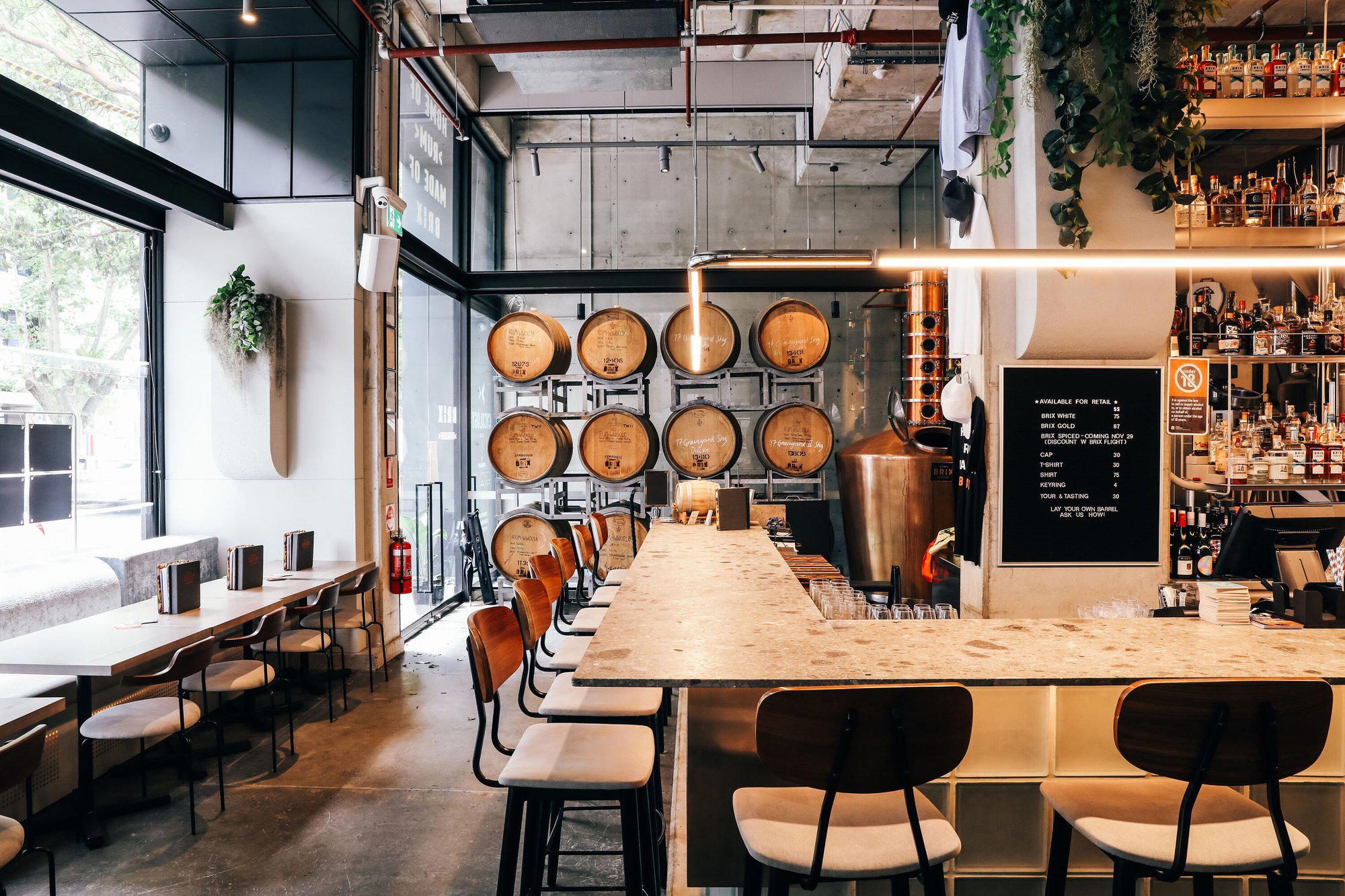
Ultra-cool dining room with glowing golden bar, terrazzo floors, and luxurious table settings.
Know Before You Go
- Getting there
- Darling Quarter, Commbank Place ( north Wing, 1 Harbour St, Sydney NSW 2000, Australia