A fish restaurant on Atatürk Bulvarı in Alt Nordu, Müstesna Balık sits within a neighbourhood tradition of seafood dining that stretches along Turkey's Black Sea coast. The kitchen's orientation toward fresh, locally sourced catch places it inside a distinct tier of regional fish restaurants that prioritise supply-chain proximity over urban polish. For visitors tracing Turkey's coastal dining circuits beyond Istanbul, it merits attention.
Pearl is the En Primeur Club membership app — saves, bookings, and concierge access live there. Same editors, same standards.
- Address
- Şirinevler, Atatürk Blv. No
- Phone
- +904528880022
- Website
- mustesnabalik.com
- Directions
- Get directions
 Saves & bookings on Pearl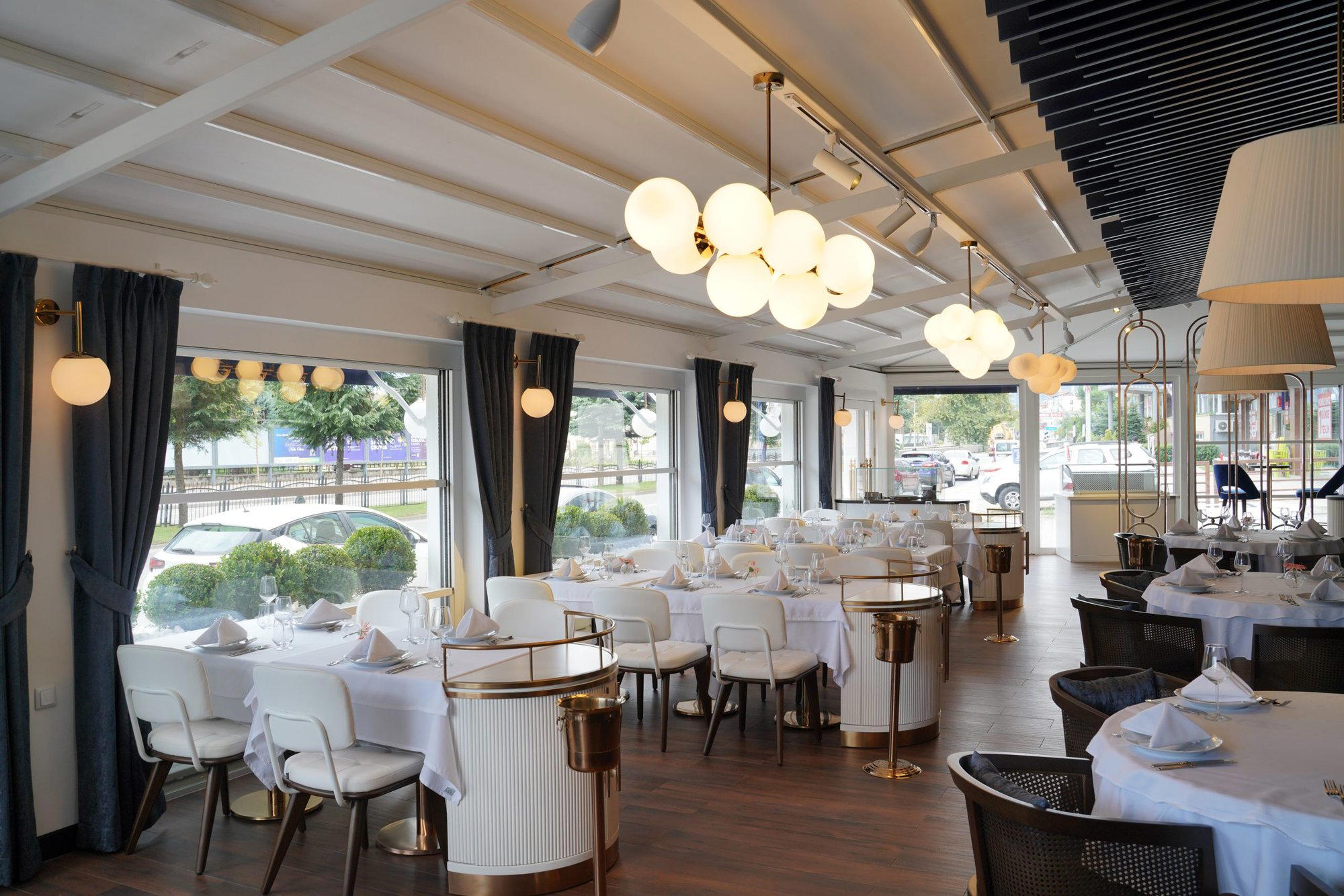
Black Sea Seafood and the Case for Eating Far from the Tourist Trail
Turkey's seafood tradition is far more geographically distributed than the Istanbul restaurant press would suggest. The Aegean coast has its meyhanes and its Maçakızı in Bodrum, the Urla peninsula has producers-to-table operations like Hiç Lokanta in Urla, and the Izmir strip runs a parallel circuit through places like Narımor in Izmir. The Black Sea coast, by contrast, rarely enters the editorial conversation — which is precisely why Müstesna Balık, sitting on Atatürk Bulvarı in the Şirinevler quarter of Alt Nordu, deserves a considered look. Regional fish restaurants in Turkey's north operate under a different set of conditions: proximity to the catch, a cooler water column, and a local clientele that measures quality by freshness rather than by presentation.
Where the Fish Actually Comes From
The Black Sea is among the most ecologically distinct fishing grounds in the country. Its low salinity relative to the Mediterranean, combined with a pronounced thermocline, produces a narrower but highly concentrated range of commercial species: hamsi (anchovy), palamut (Atlantic bonito), lüfer (bluefish), and istavrit (horse mackerel) dominate the seasonal haul. What matters for the kitchen is that the transit distance from net to plate along this coast is measurably shorter than for Istanbul restaurants sourcing from the same waters — a logistical advantage that regional fish tables in Ordu, Trabzon, and Giresun have always held over the Bosphorus dining scene. Müstesna Balık's Atatürk Bulvarı address places it in a catchment area that benefits directly from Ordu port's daily activity, which anchors whatever is on the menu in a supply chain defined by hours, not days.
That proximity to source is the primary argument for eating at regional fish restaurants of this type rather than at Istanbul's top-tier fish tables, where the modern Turkish fine-dining tier has moved steadily toward ingredient theatrics and tasting-menu architecture. A direct Black Sea hamsi or a palamut served in season at a neighbourhood table in Alt Nordu is closer to the original logic of Turkish coastal eating than almost anything available in Nişantaşı or Karaköy.
The Neighbourhood and What It Signals
Alt Nordu is the lower district of Ordu province's central city, a compact urban grid that runs between the waterfront and the older residential quarters behind Atatürk Bulvarı. The boulevard itself functions as the civic spine: government buildings, commercial frontage, and restaurants share the strip in the way that provincial Turkish cities tend to organise their public life around a single main artery. For a fish restaurant to hold an address on Atatürk Bulvarı rather than in a converted back-street space signals a certain relationship with the local community: this is not a destination restaurant positioned for visitors, but a working address for residents who have opinions about their anchovy.
That context matters when assessing the kitchen's orientation. Regional fish restaurants operating on a local clientele basis in coastal Turkey tend to run tighter, more seasonal menus than their Istanbul counterparts, because the customer base will notice when the hamsi is past its peak or when the palamut has been sourced from cold storage rather than the morning's catch. The accountability is built into the neighbourhood dynamic rather than enforced by a Michelin inspector. Contrast this with the pressure facing fish-forward restaurants in the capital's dining scene, where an address and a price point often carry more weight than sourcing provenance, or with the meyhane tradition documented through places like Kritikos Meyhane in Mudanya, where the seafood-and-raki format imposes its own structural logic.
Regional Fish Dining in the Broader Turkish Context
Turkey's restaurant culture has bifurcated sharply over the past decade. On one side, a cluster of modernist kitchens in Istanbul and Bodrum have built tasting-menu formats around rediscovered Anatolian ingredients, Ottoman culinary archaeology (the work Asitane in Fatih has pursued since the 1990s is the benchmark here), and produce-sourcing narratives borrowed partly from New Nordic playbooks. On the other side, Turkey's provincial restaurant culture has remained largely outside that conversation, not because of a lack of quality, but because the editorial infrastructure that generates international attention is concentrated in Istanbul.
Internationally, the gap between a kitchen like Le Bernardin in New York City, where seafood sourcing is a formal, documented, award-credentialed practice, and a Black Sea neighbourhood fish table is a matter of category rather than of intent. Both are organised around the principle that the fish should be as close to its source as possible when it reaches the plate; the difference is in the resources available to codify and communicate that commitment. Regional Turkish fish restaurants operate the commitment without the codification, which makes them harder to assess from a distance but no less purposeful in practice.
The broader question for a visitor planning a route through northern Turkey is whether Alt Nordu merits a stop as part of a Black Sea coastal itinerary. The honest answer is that Ordu province's food culture, hamsi in every preparation from frying to pilav, corn-based accompaniments, and a raki-to-fish ratio that Istanbul meyhanes can only approximate, is reason enough to spend time in the region. Müstesna Balık's position on the main boulevard makes it one of the more accessible points of entry into that local food system for travellers arriving without local contacts or existing knowledge of the dining scene. For a broader map of Turkish regional eating across very different formats, the EP Club's full Alt Nordu restaurants guide covers the city's range more completely. Comparison with inland Anatolian traditions is also instructive: places like Konya Kebap Evi in Selcuklu or Kısmet Etliekmek ve Lahmacun Salonu in Karaman show how sharply differentiated Turkey's regional food cultures remain from one province to the next.
Planning a Visit
As is standard practice with addresses of this type in provincial Turkish cities, walk-in visits during lunch and early evening service are typically how local restaurants of this scale operate, and phone or reservation systems, where they exist, are best confirmed through local contacts or on arrival in Alt Nordu. The Şirinevler quarter of Atatürk Bulvarı is a navigable address for anyone arriving into Ordu's centre. Seasonal timing matters: Black Sea fish restaurants run their leading service when the anchovy and palamut seasons coincide, broadly autumn through early winter, when the cold water temperatures push the fish south toward the Turkish coast in volume.
At a Glance
- Lively
- Family
- Casual Hangout
- Sustainable Seafood
Current opening hours
- Monday
- 12 PM–12 AM
- Tuesday
- 12 PM–12 AM
- Wednesday
- 12 PM–12 AM
- Thursday
- 12 PM–12 AM
- Friday
- 12 PM–12 AM
- Saturday
- 12 PM–12 AM
- Sunday
- 1–11:30 PM
Hours can change for holidays and private events. Last verified .
Friendly service with focus on fresh fish preparation.
Know Before You Go
- Getting there
- Şirinevler, Atatürk Blv. No