Damla Dondurma is an Istanbul ice cream institution where Turkish dondurma tradition, stretchy, mastic-and-salep-based, served with theatrical flair, meets the city's appetite for street-level ritual. In a dining scene increasingly defined by tasting menus and fine dining ambition, this is where the city pauses, cone in hand, for something older and more direct.
Pearl is the En Primeur Club membership app — saves, bookings, and concierge access live there. Same editors, same standards.
- Address
- Istanbul, Turkey
- Directions
- Get directions
 Saves & bookings on Pearl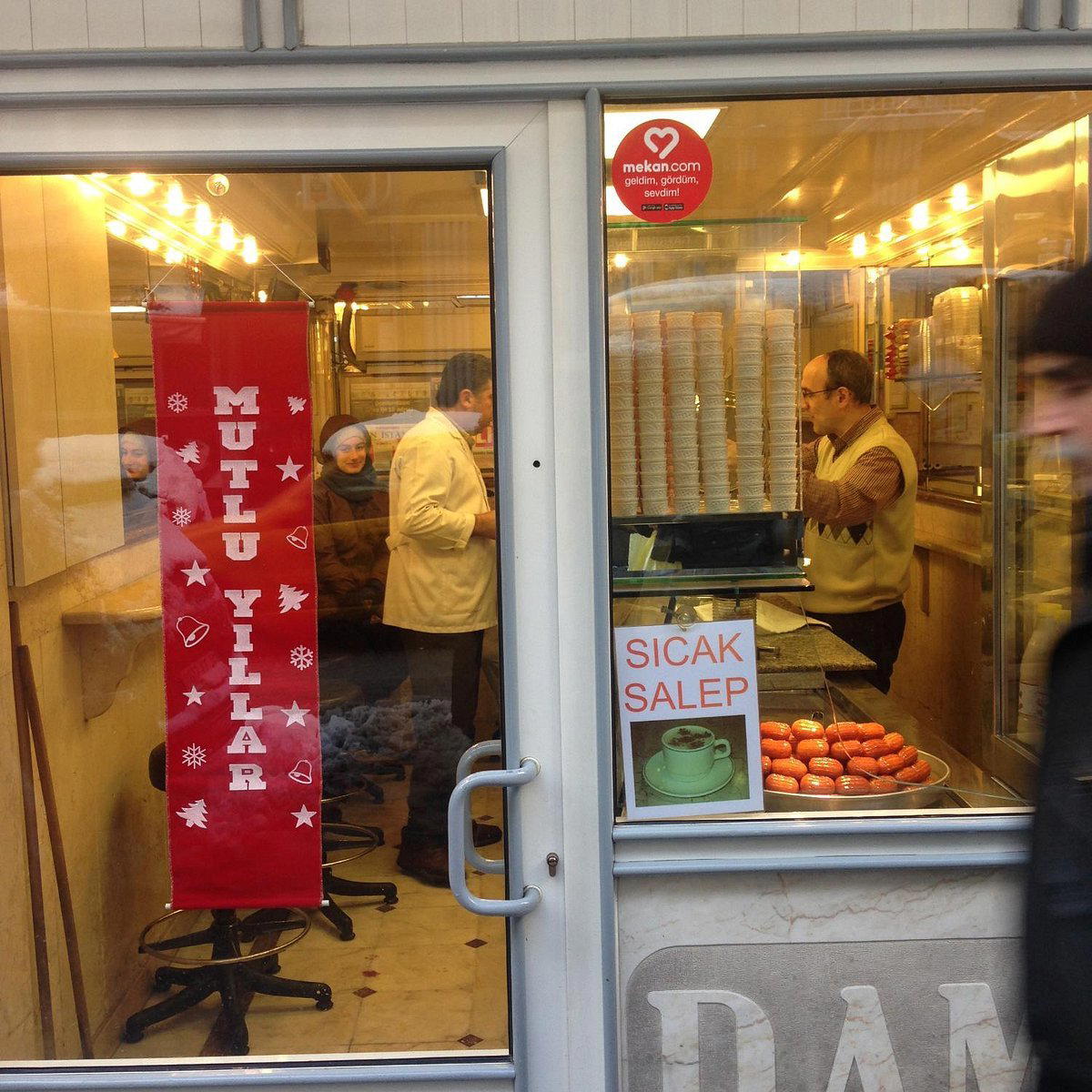
Istanbul's Ice Cream Counter and the Street Ritual It Represents
Long before Istanbul's fine dining scene produced the tasting menus at Turk Fatih Tutak or the rooftop ambition of Mikla, the city had dondurma vendors working the crowds with wooden paddles and a practiced sense of theater. The vendor extends a cone, pulls it back, extends it again, the customer reaches, the cone disappears. This is not a gimmick invented for tourists. It is a centuries-old interaction built into the commercial identity of Turkish ice cream, and Damla Dondurma sits within that tradition in Istanbul.
Turkish dondurma is categorically different from the soft-serve or gelato formats that dominate most European street food. Made with salep, a flour ground from wild orchid tubers, and mastic resin sourced from the island of Chios, it is dense, elastic, and slow to melt. The salep content gives it a chew that European dairy ice creams do not have. These are not production quirks. They are the product of Ottoman-era ingredient trade routes and highland Anatolian dairy customs that predate modern refrigeration by centuries. At venues like Damla Dondurma, those ingredients remain the structural argument for the product.
Where This Fits in Istanbul's Food Culture
Istanbul's dining spectrum runs from the Anatolian revival cooking at Neolokal, where chefs work with heritage grains and Ottoman archival recipes, down through neighbourhood meyhanes, köfte counters, and street-food operators. Damla Dondurma operates in the lower end of that price register but in a culturally specific tier that the ₺₺₺₺ restaurants at the leading, Arkestra, Neolokal, Turk Fatih Tutak, do not occupy and do not try to. The street-food and market-stall category in Istanbul is not a stepping stone to fine dining; it is its own track with its own standards.
That distinction matters when assessing what the restaurant is doing. The comparison set is not tasting-menu restaurants. It is other dondurma operators across Istanbul and Turkey, where the questions are: Is the salep content genuine? Is the mastic proportion balanced? Is the paddle technique consistent? Authentic salep is expensive and has faced supply pressures because wild orchid harvesting in Turkey is regulated. Venues that use genuine salep occupy a different tier from those using synthetic substitutes, and that gap in ingredient sourcing is the primary quality signal in this category.
Across Turkey's broader food geography, the dondurma tradition concentrates most heavily in Kahramanmaraş, where the highland climate and specific orchid populations historically produced the valued salep. That regional origin functions for dondurma the way Neapolitan designation functions for pizza: it marks a provenance claim. Istanbul operators either source from Maraş producers or compete with that reference point. The leading street-level comparisons in the Turkish food scene, including Kocak Baklava in Gaziantep, another city with deep confectionery heritage, show how seriously regional tradition shapes product quality at this level of the market.
The Counter and What Happens There
At a dondurma counter, the interaction between the person serving and the person buying is choreographed. The vendor uses a long metal rod to stretch and manipulate the ice cream before serving it, demonstrating its elasticity and slowing the transaction just enough to turn a purchase into an event. This is not incidental. The stickiness and stretch of good dondurma is its primary proof of quality, a fast, collapsing scoop signals diluted salep or synthetic thickener. The performance and the quality test are the same gesture.
That dynamic places a different kind of pressure on the front-of-house team than a seated restaurant faces. There is no sommelier pairing, no amuse-bouche to reset expectations between courses. The team dynamic at a street-format venue is compressed: speed, consistency, and the ability to manage the theatrical element without losing it to routine. Regulars return partly because the routine becomes reliable, the same paddle work, the same hold, the same eventual delivery. Visiting Istanbul's broader street food circuit, from Dürümzade in Beyoglu to Bayramoğlu Döner in Beykoz, shows how this kind of counter discipline defines the better operators in every format.
Istanbul in Context: How the City Eats Across Formats
Istanbul is not a city where fine dining has absorbed or displaced street food. The two tracks run in parallel, and educated visitors move between them deliberately. The same traveller who books Casa Lavanda for a long lunch will queue at a dondurma counter the same afternoon without a sense of contradiction. That flexibility is one of the city's structural strengths as a food destination.
Beyond Istanbul, the pattern holds across Turkish cities. Narımor in Izmir, Hiç Lokanta in Urla, and Kritikos Meyhane in Mudanya all demonstrate how interesting Turkish food scenes sustain high-quality production at every price point, not just at the premium end. Asitane in Fatih goes further, reconstructing Ottoman palace recipes from archival sources, a different approach to the same underlying question of what Turkish food actually is when stripped of its casual associations. And for visitors moving beyond the city, Maçakızı in Bodrum represents how that same regional seriousness about ingredients translates into a luxury coastal format.
The restaurant occupies none of those registers. It occupies the one that precedes all of them historically: the street, the vendor, the ice cream that does not melt before you reach the corner. For a full picture of where it fits in Istanbul's food culture, the city maps by neighbourhood and format, including where to find traditional operators alongside its high-end tasting menus.
Price Lens
Comparable venues nearby, for context on price, style, and recognition.
| Venue | Cuisine | Price | Awards | Notes |
|---|---|---|---|---|
| Damla DondurmaThis venue — the venue you are viewing | Not listed | $ | Not listed | Not listed |
| Tarihi Karaköy Balık Lokantası Grifin | Arap Cami, Traditional Turkish Seafood | $$ | Not listed | Not listed |
| Petra Roasting Co Bebek | Not listed | $$ | Not listed | Bebek, Turkish Cafe with Specialty Coffee |
| Karakoy Gulluoglu | Karakoy, Traditional Turkish Baklava | $$ | Not listed | Not listed |
| mutfakkoz | Kozyatagi, Contemporary Turkish | $ | Bib Gourmand | Not listed |
| Three Partners Cafe & Restaurant | Binbirdirek, Turkish BBQ & Seafood | $$ | Not listed | Not listed |
At a Glance
- Cozy
- Casual Hangout
- Family
- Standalone
- Local Sourcing
Casual neighborhood parlor with a welcoming, sweet atmosphere focused on quality ice cream treats.