Mr. Liu Noodle House
Our verdict
On 11th Street in downtown Oakland, Mr. Liu Noodle House occupies a corner of the city's Chinese dining scene where hand-pulled tradition and Bay Area sourcing sensibility converge. The noodle format here connects to a longer lineage of northern Chinese wheat-based cooking, adapted to a neighborhood that has long balanced immigrant food culture with contemporary dining expectations. It is the kind of address that rewards regulars who arrive knowing what they want.

Pearl is the En Primeur Club membership app, where members save venues, book tables and use the concierge.

The menu
What to order
- Chongqing Style Spicy Noodles
- House Special Beef Noodle
- Wontons in Red Chili Oil
Where 11th Street Meets a Noodle Tradition
Downtown Oakland's 11th Street corridor runs through one of the Bay Area's more compressed dining districts, where Vietnamese sandwich shops, Cantonese tea houses, and new-wave California kitchens occupy the same short blocks. Mr. Liu Noodle House at 358 11th St sits inside this layered context, operating in a category of Chinese-American dining that has historically been defined by regional specificity rather than fusion gestures. The wheat noodle traditions of northern China, hand-pulled lamian, knife-cut dao xiao mian, the dense chew of fresh belt noodles, have found a quieter but durable audience in Oakland compared to the higher-profile Chinese dining scenes of San Francisco's Richmond or the South Bay. That relative underrepresentation makes addresses like this one matter more to the neighborhood's food map.
The physical approach along 11th Street is unhurried. Oakland's downtown shifts character block by block: a jazz venue, a Korean barbecue, a stretch of older commercial frontage. The noodle house format occupies its own register here, neither trying to compete with the white-tablecloth end of Uptown Oakland's dining corridor, as represented by addresses like Agave Uptown, nor anchoring itself to the quick-service end of the market. It is a daytime-and-early-evening address built around a bowl, which is its own editorial statement about what a meal can be.
The Sourcing Logic Behind a Bowl of Noodles
The ingredient question in noodle cooking is often underestimated. A bowl's quality is not primarily about technique performed at the table, it is determined earlier, at the level of flour selection, broth reduction time, and protein sourcing. Northern Chinese noodle traditions rely on high-gluten wheat flour to achieve the elasticity that distinguishes hand-pulled from machine-cut, and the broth that anchors a red-braised beef noodle or a clear bone stock is built over hours from sourced bones and aromatics. In California, that sourcing sits inside a broader regional food network where access to quality proteins and aromatics is genuinely different from what a comparable kitchen might find in, say, a landlocked Midwestern city.
Bay Area's proximity to Northern California's agricultural output, the Central Valley's produce, and a dense network of Asian specialty suppliers creates a sourcing environment that underpins Chinese-American kitchens at multiple price points. This is the same geographic advantage that has shaped higher-profile farm-to-table operations, from Single Thread Farm in Healdsburg to Blue Hill at Stone Barns in Tarrytown at the far end of the fine dining register, though the translation at a neighborhood noodle house is expressed through consistency of broth and the pull of the noodle rather than through a tasting menu format. A bowl that arrives with properly rendered fat, tight noodle texture, and a broth that hasn't been diluted for volume is evidence of that sourcing discipline at work, even if it never appears on a menu card.
Oakland's Chinese dining scene has a particular character distinct from San Francisco's. The city's Chinatown, a few blocks north, anchors a Cantonese tradition of dim sum and roasted meats. Noodle-specific formats that draw on northern Chinese practice occupy a smaller, less institutionalized space within that geography. Venues like 8th St Cafe 文記茶餐廳 represent the Hong Kong-style cha chaan teng tradition, which is a different lineage entirely, milk tea, toast, and congee-forward rather than wheat-noodle-forward. Understanding which tradition a kitchen is drawing on matters when you're choosing where to eat.
Oakland's Broader Food Context
The Oakland dining scene in recent years has moved toward a model where immigrant-rooted kitchens and newer concept-driven restaurants coexist without one category cannibalizing the other. Addresses like alaMar Dominican Kitchen and 3 Bottled Fish demonstrate how specific regional cooking traditions, Dominican seafood, Cantonese preserved fish preparations, can hold their ground alongside the broader California cooking conversation. That diversity is Oakland's actual competitive advantage as a food city, not a talking point.
Mr. Liu Noodle House operates inside that same logic. The noodle format is one of the most globally distributed and locally inflected food categories in existence: every region with a wheat or rice tradition has a version, and the differences between them are substantive. A kitchen that commits to northern Chinese wheat noodles in an Oakland context is making a specific argument about what it does well, rather than covering the whole map of Chinese regional cooking. That kind of focus is a signal worth reading.
For comparison, the level of sourcing discipline and format specificity that defines fine dining addresses elsewhere, Le Bernardin in New York City, Alinea in Chicago, Providence in Los Angeles, is not a model that translates to a noodle house, nor should it. The editorial interest at Mr. Liu lies in a different kind of precision: the commitment to a specific noodle tradition executed consistently at a neighborhood price point, in a city where that tradition is not overrepresented. Nearby, Alem's Coffee operates with a similar single-focus logic on the beverage side, and there's a through-line between that kind of specialist clarity and what a committed noodle kitchen does.
Planning Your Visit
Mr. Liu Noodle House is located at 358 11th St, Oakland, CA 94607, within walking distance of the 12th Street Oakland City Center BART station, which makes it accessible from San Francisco in under thirty minutes on a weekday. Oakland's 11th Street sees lunch foot traffic from the surrounding office and civic district, so arriving early in a service period is generally the better move for avoiding waits at counter-format spots. For a fuller picture of where Mr. Liu fits within the city's dining options, see our full Oakland restaurants guide, which maps the city's dining across neighborhoods and cuisine types.
Frequently asked questions
What should I eat at Mr. Liu Noodle House?
What is the ideal way to book Mr. Liu Noodle House?
What do critics highlight about Mr. Liu Noodle House?
Do they accommodate allergies at Mr. Liu Noodle House?
Is a meal at Mr. Liu Noodle House worth the investment?
How does Mr. Liu Noodle House fit into Oakland's Chinese dining geography?
Awards and Standing
Comparable venues nearby, for context on price, style, and recognition.
| Venue | Cuisine | Price | Notes |
|---|---|---|---|
| Mr. Liu Noodle HouseThis venue (the venue you are viewing) | Chongqing Style Noodles | $10–20 | Not listed |
| Shan Dong | Shandong-Style Chinese Noodles & Dumplings | $10–20 | Chinatown |
| Peony Seafood Restaurant | Traditional Cantonese Dim Sum & Seafood | $20–30 | Chinatown |
| Shooting Star Cafe | Hong Kong Style Cantonese | $10–20 | Chinatown |
| Yung Kee Restaurant | Cantonese Chinese | Not listed | Chinatown |
| Huangcheng Noodle House | Shanxi Knife-Shaved Noodles | $10–20 | Old Oakland |
Continue exploring
More in Oakland
Restaurants in Oakland
All restaurants in Oakland →
Bars in Oakland
All bars in Oakland →



Details
- Lively
- Cozy
- Casual Hangout
- A La Carte
Current opening hours
- Monday
- 10:30 AM–8 PM
- Tuesday
- 10:30 AM–8 PM
- Wednesday
- 10:30 AM–8 PM
- Thursday
- Closed
- Friday
- 10:30 AM–8 PM
- Saturday
- 10:30 AM–8 PM
- Sunday
- 10:30 AM–8 PM
Hours can change for holidays and private events. Hours as of .
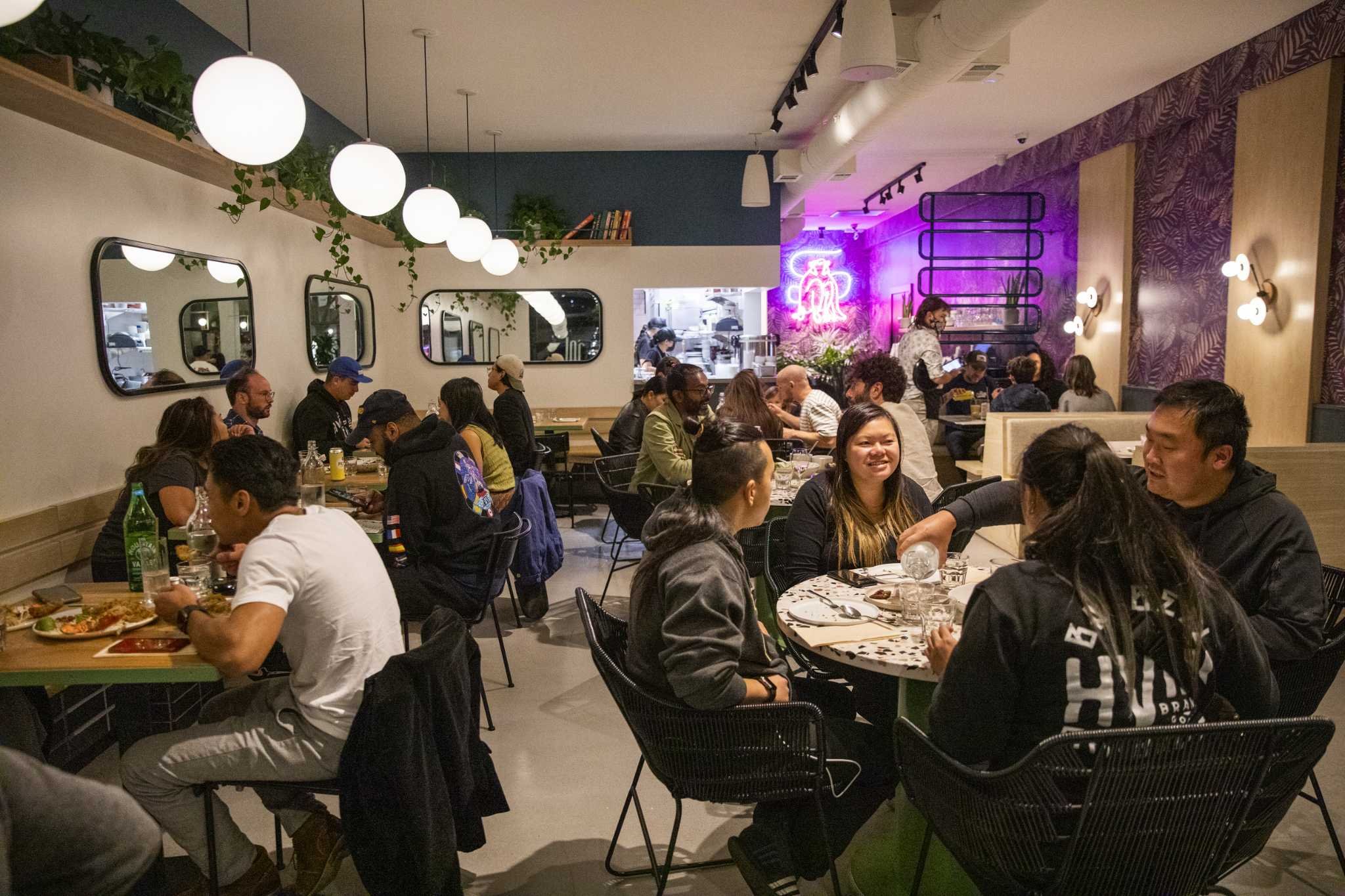
Casual lively noodle shop atmosphere focused on flavorful spicy dishes.