
Tabelog 100 #39
Our verdict
Motsuni Taro puts Kashiwa’s everyday cafeteria culture in sharp focus: offal stew, counter seating, low prices, and the practical rhythm of a roadside shokudo rather than a polished destination dining room. Its selection for Tabelog 100 - Diner - 2026 gives this modest format a clear recognition signal within Japan’s casual-dining canon.

Pearl is the En Primeur Club membership app, where members save venues, book tables and use the concierge.
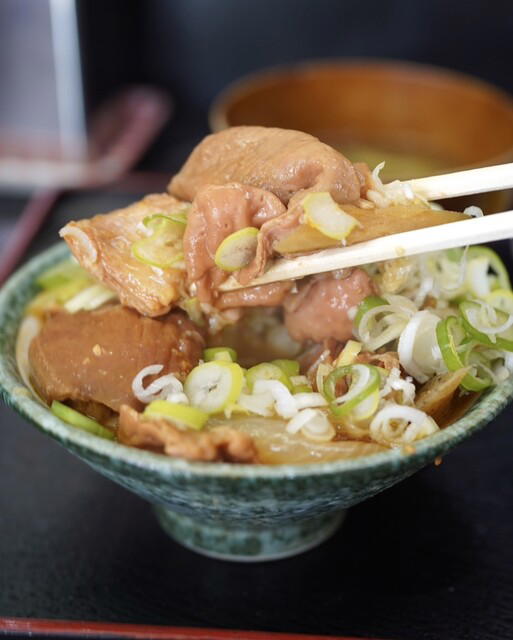
In Kashiwa, where everyday dining can feel more revealing than a formal dining room, the cafeteria can show how a city actually eats. The format is built for repetition: a short appetite, a familiar counter, a meal rewarding regulars rather than spectators. Motsuni Taro belongs to that tradition, and its appeal sits in the cultural weight of everyday cafeteria cooking, rooted in canteens, casual stops, and home-style set-meal counters.
Japan’s shokudo culture is often misread by visitors as merely cheap dining. Price matters, but the category is equally about utility, speed, locality, and trust: a place earns its audience by doing a small repertoire consistently enough that people return without ceremony. In Kashiwa, where commuter life, local development, and suburban routines overlap, that kind of eating means something different from Tokyo’s reservation-led dining economy. It is less theatre than habit.
Cafeteria cooking as everyday craft, not luxury performance
Motsuni Taro occupies a corner of Japanese food culture that rarely translates cleanly into luxury travel language. It is not a high-ceremony restaurant, but a cafeteria-format address shaped by patience, repetition, and texture. In a country where culinary prestige often attaches to seasonality, knife work, and rare ingredients, this kind of restaurant points to another measure of quality: whether a kitchen can turn a familiar base into a meal people seek out for years.
The recognition signal is clear. Selection for Tabelog Hyakumeiten 2026 places the restaurant inside a wider conversation about cafeteria and everyday cooking rather than fine dining. That distinction helps travellers. A Tabelog Hyakumeiten listing does not promise linen, ceremony, or a long tasting format; it points toward depth within casual Japanese food, where small rooms, focused menus, and repeat local custom matter more than polish.
That tier is also where pricing tells a story. Kashiwa’s casual dining range can run from low-cost counters to more composed meals such as Anbai, where listed spending sits higher at dinner. Motsuni Taro remains aligned with the low-cost cafeteria end, closer in spirit to the everyday economy supporting places such as Tonkotsu Shoyu Ramen Oudouya Kashiwa ten than to a special-occasion restaurant. The point is not that low price equals simplicity; it is that this cooking was never meant to separate itself from ordinary life.
For readers mapping Kashiwa through food, this is the useful contrast. Other Kashiwa dining rooms show the breadth of the city’s casual register, from bakery culture to international cooking and local Japanese rooms. Motsuni Taro sits in the older grammar: a cafeteria category where the central question is not novelty, but whether the food has enough authority to anchor the room.
Kashiwa's roadside dining tells a different Chiba story
Kashiwa is often treated as a pass-through city between Tokyo’s orbit and northern Chiba, but its dining character is better understood through access patterns. Stations matter, yet roads matter too. Restaurants in suburban parts of the city serve drivers, workers, families, and regulars who do not need a central-city address to validate a meal. The cafeteria category reinforces that informality, keeping the experience closer to a local dining room than a destination restaurant.
This is where the cultural context becomes more interesting than a simple recommendation. In Tokyo, casual Japanese food is often reframed for queues, social media, and overseas visitors. In Kashiwa, a cafeteria with Tabelog Hyakumeiten recognition can remain tied to ordinary logistics: quick meals, repeat visits, and a room designed around getting fed rather than being entertained. Those details explain why this category has survived beside convenience stores, family restaurants, and shopping-mall food courts.
The comparison extends beyond Kashiwa. Out-of-metro casual names such as The Noodles & Saloon Kiriya, Nagareyama Suzuki, and LES TEMPS PLUS Honten represent different ways Chiba and its neighbouring suburbs express serious everyday dining: ramen, set meals, patisserie, and cafeteria formats competing for regular attention rather than destination glamour. Motsuni Taro’s place in that group is specific. It carries the vocabulary of cafeteria dining and everyday value, making it a sharper read on local food culture than another polished urban dining room.
For a broader city plan, Our full Kashiwa restaurants guide gives the surrounding dining context, while Our full Kashiwa hotels guide, Our full Kashiwa bars guide, Our full Kashiwa wineries guide, and Our full Kashiwa experiences guide are better used to understand how the city fits into a wider Chiba itinerary. Kashiwa rewards that wider reading: it is not a single-dish town, but a place where everyday formats reveal how people actually eat outside Tokyo’s centre.
How to read the room before you go
The smartest expectation is restraint. This is a cafeteria category with Tabelog Hyakumeiten 2026 recognition, a listed score of 3.74, and budget guidance that keeps it in an accessible range: dinner is listed up to JPY 999, while lunch is listed at JPY 1,000 to JPY 1,999. Those signals prevent the wrong anticipation. The value is not in luxury markers; it is in seeing a restaurant rooted in Japanese everyday cooking treated seriously enough to earn recognition.
Travelers who build meals only around ceremony will miss the point. Motsuni Taro is better understood as a cultural stop for readers who care about how Japanese food works below omakase and dégustation menus. It shows how a suburban cafeteria can carry culinary memory without turning itself into nostalgia. For related Japanese and Japanese-adjacent references beyond Kashiwa, EP Club’s wider restaurant archive includes a range of unnamed dining rooms across Japan and abroad, but the clearer local reading here is still Motsuni Taro’s place within Kashiwa’s everyday restaurant culture.
Frequently asked questions
Is Motsuni Taro more mid-range or high-end?
Pricing at Motsuni Taro is listed as - JPY 999 JPY 1,000 - JPY 1,999 View spending breakdown.
What days is Motsuni Taro closed?
Specific opening days and closing days are not provided here; check directly before travelling to Motsuni Taro.
Where do I go for Motsuni Taro?
Kashiwa.
What is Motsuni Taro known for?
Motsuni Taro is known as a cafeteria in Kashiwa with Tabelog Hyakumeiten recognition for 2026 and a listed score of 3.74. The budget guidance lists dinner up to JPY 999 and lunch at JPY 1,000–JPY 1,999.
Budget Reality Check
Nearby venues at a similar price tier for orientation.
| Venue | Cuisine | Price | Awards | Notes |
|---|---|---|---|---|
| Motsuni TaroThis venue (the venue you are viewing) | Japanese comfort food canteen specializing in motsuni stew | $1–10 | Tabelog 100 #39 | Not listed |
| Curry no Mise Bombay Honten | Japanese curry house | $10–20 | Tabelog 100 #18 | Kashiwa, Japanese curry house |
| Tonkatsu Hisago | Tonkatsu & Japanese Curry | $10–20 | Tabelog 100 #59 | Kashiwa, Tonkatsu & Japanese Curry |
| Chuka Soba Sakaeda | Japanese Ramen | $10–20 | Tabelog 100 #83 | Kashiwa, Japanese Ramen |
| Tonkotsu Shoyu Ramen Oudouya Kashiwa ten | Iekei-style tonkotsu shoyu ramen | $10–20 | Tabelog 100 #32 | Kashiwa, Iekei-style tonkotsu shoyu ramen |
| Casa PASCALE | Sri Lankan curry restaurant | $10–20 | Tabelog 100 #65 | Sakasai, Sri Lankan curry restaurant |
Recognition history
Dated appearances from independent guides and award organizations, with the underlying list record or original source where available.
Tabelog 100 #39 · No. 39
Tabelog · Tabelog 100 - Diner - 2026
Continue exploring
More in Kashiwa
Restaurants in Kashiwa
All restaurants in Kashiwa →


Bars in Kashiwa
Browse all →





Details
- Solo
- After Work
- Casual Hangout
- Standalone
- A La Carte
- Set Menu
Current opening hours
- Monday
- 11:30 AM–5 PM
- Tuesday
- 11:30 AM–5 PM
- Wednesday
- Closed
- Thursday
- 11:30 AM–5 PM
- Friday
- 11:30 AM–5 PM
- Saturday
- 11:30 AM–5 PM
- Sunday
- 11:30 AM–5 PM
Hours can change for holidays and private events. Hours as of .
Based on local review platforms, Motsuni Taro operates out of a modest house-like space with about 25 seats, giving it a simple, canteen-style atmosphere focused on quick, filling meals rather than design or décor.