Our verdict
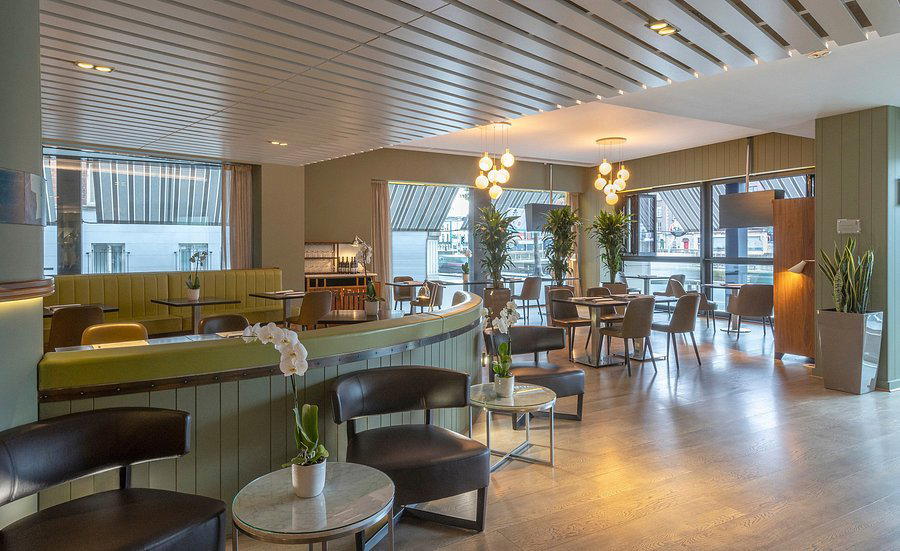
Morrison Grill occupies a prominent position on Ormond Quay Lower, one of the Liffey's north-bank addresses that has quietly accumulated serious dining credentials over the past decade. Set against the rhythm of river traffic and city footfall, it sits in a Dublin dining scene that increasingly rewards places willing to commit to a defined point of view. For visitors cross-referencing Dublin's grills against its broader restaurant offering, this is a name that surfaces with consistency.

Pearl is the En Primeur Club membership app — saves, bookings, and concierge access live there. Same editors, same standards.
- Address
- Ormond Quay Lower, North City, Dublin, Ireland
- Phone
- +35318872467
- Hours
- Daily 12–9:30 PM
- Website
- morrisonhotel.ie
- Directions
- Get directions
- Booking
- Book on OpenTable
The menu
What to order
- Ribeye Steak
- Garlic Butter Prawns
- Crab Cakes
- Filet Mignon
- Bailey Tiramisu
The Quays as a Dining Address
Dublin's relationship with the Liffey has always been ambivalent. For most of the twentieth century, the quays were transit routes rather than destinations, the river an afterthought between north and south. That changed incrementally, and Ormond Quay Lower now sits within a band of the city where independent restaurants, hotels, and bars have accumulated enough density to make the north bank a genuine consideration rather than a fallback. Morrison Grill's address here places it in a neighbourhood defined by footfall from the cultural quarter around Capel Street, proximity to the legal district, and easy access from the main hotel corridor along the quays.
This matters for understanding how the grill fits into Dublin's dining geography. The city's most-discussed restaurants tend to cluster in two zones: the south city centre (Stephens Green, Fitzwilliam, the canal) and the inner suburbs gaining traction with younger kitchens. The north quays occupy a middle position, drawing both locals and visitors who are willing to cross the river for the right table. For a frame of reference on where Dublin's serious dining energy currently sits, the full Dublin restaurants guide maps the spread across neighbourhoods and price tiers.
The Ritual of the Grill
In cities where tasting menus have become the dominant format for serious dining, the grill represents something deliberately counterproductive to that trend. It asks the diner to do more of the work: to choose, to prioritise, to engage with a menu that rewards knowledge of the product rather than passivity through courses. Dublin has never fully abandoned this format. The grill tradition here owes something to the city's historic relationship with beef and lamb from the midlands and west, and something to the pub dining culture that preceded the fine dining wave of the 1990s and 2000s.
What that means in practice, at the better end of the Dublin grill category, is a meal paced by the diner rather than the kitchen. You arrive, you settle, and the rhythm is yours to set. Sides arrive when the main is ready. Wine decisions happen at the table rather than being pre-sequenced by a sommelier's tasting arc. This is not a lesser form of dining; it is a different form, one that privileges conviviality and repetition over revelation. The regulars at a grill know what they want before they sit down. That familiarity is the point.
For a sense of how differently the ritual plays out at the other end of Dublin's restaurant spectrum, Chapter One by Mickael Viljanen operates a tasting menu format where the kitchen controls pacing entirely, and Patrick Guilbaud sits at the apex of the city's French-influenced fine dining tradition. Both represent a different contract between kitchen and guest.
Where Morrison Grill Sits in the Dublin Market
Dublin's mid-to-upper restaurant tier has become increasingly competitive since roughly 2015. The arrival of international hotel brands with serious food and beverage operations, the maturation of a generation of Irish chefs who trained abroad and returned, and the growth of a local dining public with higher expectations have all contributed. In that context, grill-format venues operate in a specific niche: they tend to attract a loyal repeat clientele, they are less dependent on the tourist conversion that tasting-menu restaurants rely on, and they live or die by the consistency of their product over novelty.
Within Dublin, the relevant comparison set for a north quay grill includes neighbourhood-anchored places like Bastible and technically focused rooms like Glovers Alley, though neither is a direct peer in format. The more useful comparisons might be drawn from the broader Irish scene: Bastion in Kinsale and Aniar in Galway both demonstrate how regional Irish kitchens have built reputations on defined product commitments rather than format complexity. Liath in Blackrock and dede in Baltimore show what happens when Irish kitchens push into more personal, less category-legible territory.
For visitors building a broader Irish itinerary beyond Dublin, the country's serious kitchens now extend well into Munster and Connacht: Terre in Castlemartyr, Campagne in Kilkenny, Chestnut in Ballydehob, Homestead Cottage in Doolin, House in Ardmore, and Lady Helen in Thomastown collectively represent a national dining scene that has moved well beyond the capital as its sole point of gravity.
Reading the Room on Ormond Quay
The physical setting of a quayside grill carries its own expectations. Light changes dramatically through a Dublin evening, from the flat grey of a late afternoon in November to the long amber of a June evening along the Liffey. That shift matters in a room that faces the river. The transition from lunch service to dinner on a quay address is rarely abrupt; the energy shifts rather than resets, and a table that starts as a business lunch can extend into the early evening without feeling out of place.
This is part of what distinguishes the quay as a dining format from the more hermetically sealed fine dining room. The street is present. You are aware of the city outside in a way that a basement restaurant or a hotel dining room rarely allows. That permeability is either an asset or a distraction, depending on what you're looking for in a meal. For comparison, D'Olier Street sits in a similar zone of the city and manages the same tension between urban setting and dining focus. Internationally, the question of how a city's fabric becomes part of the dining experience is one that places like Le Bernardin in New York and Atomix answer in entirely different registers, both choosing deliberate insulation from the street rather than engagement with it.
Do they accommodate allergies at Morrison Grill?
Allergy accommodation at Dublin restaurants is now governed by EU food information regulations, which require staff to be able to disclose the 14 major allergens in any dish. That baseline applies across the board. For specific dietary requirements, particularly those beyond the standard allergen categories, contacting Morrison Grill directly before visiting is the appropriate step.
Is Morrison Grill overpriced or worth every penny?
In the Dublin grill category generally, value perception tracks closely with product quality and portion approach: a grill that sources well and prices the main event honestly, without inflating the supporting cast, tends to hold its clientele. Dublin's mid-tier has become more competitive since 2018, and the venues that have retained loyalty are typically those where the repeat visit makes sense on its own terms, not just as a novelty.
Is Morrison Grill the right choice for a first serious Dublin dining experience?
That depends on what you're optimising for. If the priority is encountering the current direction of Irish kitchen technique, the tasting-menu rooms at Bastible or Chapter One will show you more of that. If the priority is a meal paced on your own terms, in a quayside setting that keeps the city in view, the grill format at an Ormond Quay address offers a different and legitimate introduction to Dublin at the table. Both are valid starting points; they answer different questions about what the city's dining culture has become.
Frequently asked questions
How do I find Morrison Grill?
Morrison Grill is located at Ormond Quay Lower, North City, Dublin, Ireland, Dublin.
Is Morrison Grill a good option for a business lunch on the north side of Dublin?
The Ormond Quay Lower address puts Morrison Grill within walking distance of the Four Courts and several north city office clusters, making it a practical option for a midday sitting. A grill format generally runs faster at lunch than a multi-course room, which suits a working meal with a fixed return time. Confirming current lunch hours directly with the venue is advisable before committing.
What should I eat at Morrison Grill?
In Dublin grill rooms generally, the format rewards sourcing-led cuts and simply prepared proteins over elaborate construction. When you arrive at Ormond Quay Lower, the best approach is to ask the floor team what is running that day rather than anchoring to a fixed expectation.
Do they take walk-ins at Morrison Grill?
No booking policy data is confirmed for Morrison Grill specifically. Grill-format venues in Dublin's North City corridor tend to be more accommodating of walk-ins mid-week than at weekend evenings, when covers fill earlier. Contacting the venue directly before arriving on a Friday or Saturday is the safest approach.
Do they accommodate allergies at Morrison Grill?
EU food information regulations require all Dublin restaurants, including those on Ormond Quay Lower, to disclose the 14 major allergens upon request, and staff are legally obliged to provide that information. For complex dietary requirements, contacting the venue ahead of your visit gives the kitchen the best opportunity to prepare.
Is Morrison Grill overpriced or worth every penny?
In the Dublin grill category generally, value perception turns on portion calibration and sourcing transparency rather than room theatrics. The quayside address on Ormond Quay Lower places it in a part of the city where rents have historically been lower than the south bank, which can work in the diner's favour.
Peers You’d Cross-Shop
Comparable venues nearby, for context on price, style, and recognition.
| Venue | Cuisine | Price | Notes |
|---|---|---|---|
| Morrison GrillThis venue — the venue you are viewing | Contemporary Irish Steakhouse with Josper Grill | $50–100 | Not listed |
| Beef & Lobster | Irish Beef & Lobster Steakhouse | $50–100 | Royal Exchange A |
| Trocadero | Contemporary Irish & Continental Steakhouse | $50–100 | Royal Exchange A |
| Hellfire | Flame-Fired Steakhouse | $50–100 | Royal Exchange A |
| La Maison | Classic French Brasserie with Modern Irish Influences | $50–100 | Royal Exchange A |
| Boeuf & Coq | French-Inspired Irish Steakhouse | $20–30 | Royal Exchange A |
Continue exploring
More in Dublin
Restaurants in Dublin
Browse all →
Bars in Dublin
Browse all →
Hotels in Dublin
Browse all →
Wineries in Dublin
Browse all →
Details
- Elegant
- Modern
- Sophisticated
- Business Dinner
- Date Night
- Special Occasion
- Group Dining
- Hotel Restaurant
- Live Music
- Extensive Wine List
- Craft Cocktails
- Beer Program
- Local Sourcing
- Waterfront
- A La Carte
- Cocktails
- Whiskeys
- Craft Beers
- Vegetarian Friendly
- Allergy Accommodating
Current opening hours
- Monday
- 12–9:30 PM
- Tuesday
- 12–9:30 PM
- Wednesday
- 12–9:30 PM
- Thursday
- 12–9:30 PM
- Friday
- 12–9:30 PM
- Saturday
- 12–9:30 PM
- Sunday
- 12–9:30 PM
Hours can change for holidays and private events. Last verified .
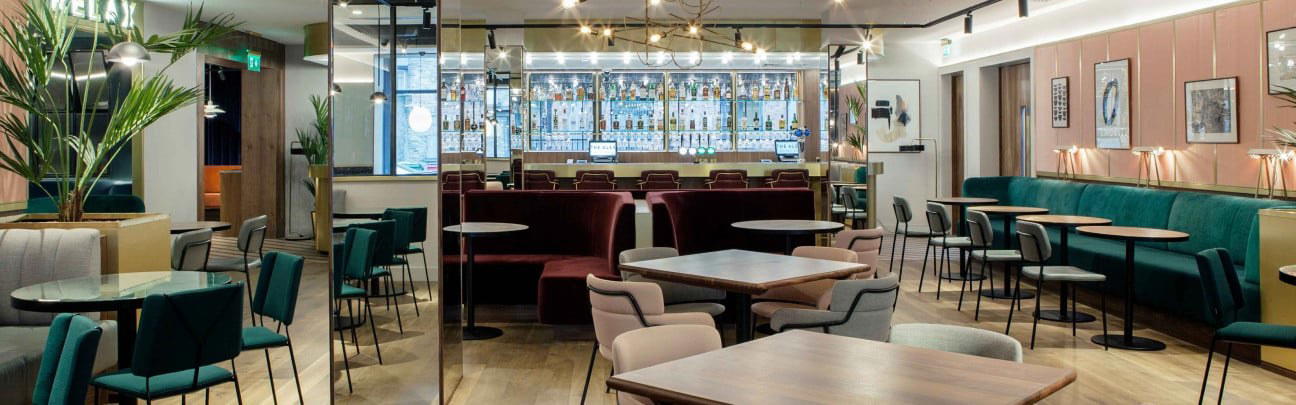
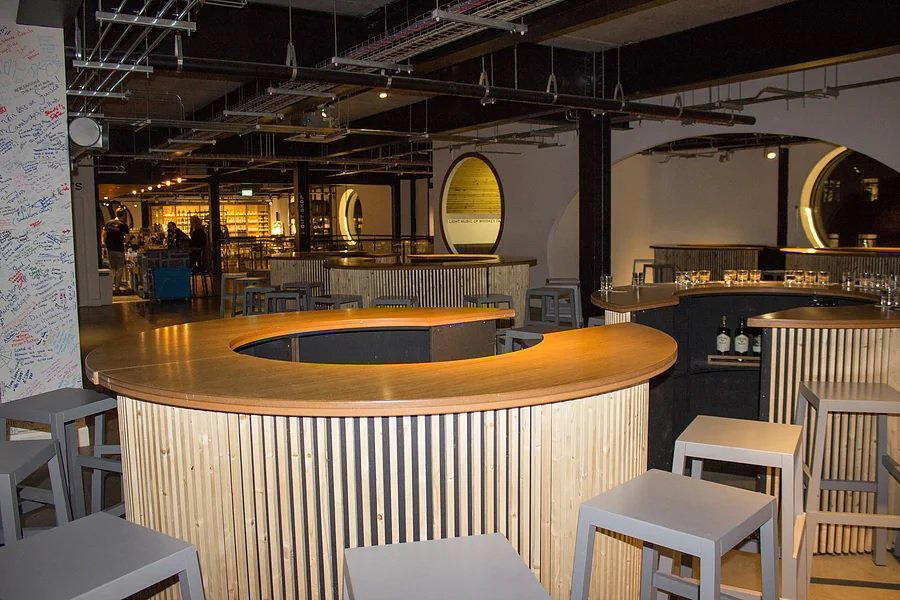
Bright, stylish, and relaxed dining space with river Liffey views, comfortable surroundings with contemporary design.