

Tabelog 100 #73
Our verdict
Kyoto’s sukiyaki and shabu-shabu tradition is at its strongest when the meal moves with discipline: beef, broth or sauce, rice, drinks, then a slower finish. Morita Ya Kiya machi ten sits in that formal hot-pot lane, with Tabelog 100 Hot Pot 2024 recognition and a Kiyamachi setting that suits multi-generational dinners as much as business meals.

Pearl is the En Primeur Club membership app, where members save venues, book tables and use the concierge.
The menu
What to order
- Sukiyaki
- Shabu-shabu
- Steak
- Oil-grilled Wagyu
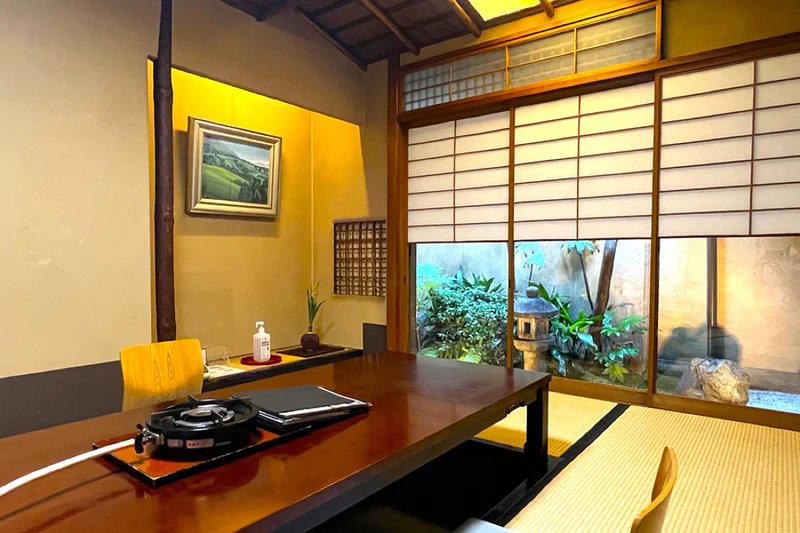
Kyoto shifts after dark: evening promenade, restaurant corridor, old city stage set once lanterns come on. Here, hot pot has a natural advantage. Sukiyaki and shabu-shabu are paced meals, built around heat, timing, and the social choreography of a shared table. Morita Ya Kiya machi ten belongs to Kyoto’s more composed dining side, where beef is not garnish and the table drives the meal.
Kyoto’s restaurant culture is often reduced to kaiseki, tofu, tea sweets, and temple-adjacent restraint, missing much of how the city eats. Beef restaurants, casual counters, noodle shops, old confectioners, and later dining rooms form a parallel map across the city. For a citywide read, Our full Kyoto restaurants guide is the broader lens; this address is best understood through the beef-and-hot-pot tradition, not as a generic Japanese dining room.
Hot pot in Kyoto works through sequence, not spectacle
The appeal of sukiyaki and shabu-shabu is structural. The meal opens with anticipation rather than a plated flourish: heat is established, meat comes first, vegetables and accompaniments follow, and the tempo settles into conversation. Sukiyaki leans sweet-soy; shabu-shabu is cleaner and more modular, with diners controlling doneness directly. Steak sits nearby as another listed category, but hot pot defines the room’s rhythm.
That progression suits Kyoto because the city rewards meals that let diners read the room. The strongest versions of the format encourage longer arcs, especially for family gatherings, business meals, and evenings when conversation matters as much as the order itself. Morita Ya Kiya machi ten is not framed here as the tiny-counter model; it reads instead as a beef-and-hot-pot restaurant where pacing, comfort, and the shared table are central.
Tabelog’s Hot Pot “Tabelog 100” 2024 selection gives the restaurant a useful marker inside Japan’s crowded sukiyaki and shabu-shabu field. The listed score is 3.69, less important as a lone number than as evidence of sustained diner approval in a category whose technique can look simple from outside. Hot pot exposes weak timing quickly. Overcooked beef, flat broth, rushed service, or poor table management cannot hide behind plating.
The meal language shows how the format should unfold. Richer beef and sweet soy seasoning change the dining calculus, while shabu-shabu offers a cleaner, more modular path through the same beef-led territory. Think in phases rather than courses: opening heat, first beef, vegetable rhythm, rice or closing starch, then a slower final stretch. The best strategy is to let the table set the pace.
Where it sits among Kyoto's central dining choices
Kyoto gives travelers several registers within the same trip. Other dining rooms speak to the city’s casual comfort lane; some contemporary restaurants show how Kyoto absorbs newer formats without losing local specificity. Traditional snack and sweet culture sits elsewhere, as do counters built around smaller, faster meals. The choice here is not simply “Japanese dinner”; it is one evening given to beef, heat, and a slower table.
Among the supplied Kyoto comparators, Oryori Menami, Kyoto Neze, Honke Gepaikeya Naomasa, Honke Funahashiya, and Yakiyasai Isoya help show how varied a Kyoto dining itinerary can be without turning every meal into the same format. Against that spread, Morita Ya Kiya machi ten is positioned by category rather than novelty: a hot-pot and beef address for diners wanting a composed sit-down meal without making the evening only about a tasting-menu framework.
This helps itinerary planning. Kyoto visitors often overfill evenings with temples by day and elaborate dinners by night, then miss the city’s everyday premium traditions. Sukiyaki and shabu-shabu fit especially well after a cold-weather afternoon or a long museum-and-walking day, not because the format is inherently heavy, but because it gives the table a clear beginning, middle, and end. In warmer months, shabu-shabu’s cleaner profile may feel more flexible than sukiyaki’s richer seasoning.
The right reader for this table
The restaurant makes most sense for travelers who value format over chef mythology. No chef biography is needed; credibility comes from category focus, Tabelog 100 Hot Pot 2024 recognition, and a beef-led menu built around sukiyaki, shabu-shabu, and steak. It is practical for diners who want a recognisable Kyoto hot-pot meal rather than a night organized around counter intimacy or chef performance.
There are tradeoffs. Diners seeking a tiny counter, chef-led tasting progression, or contemporary Kyoto tasting menu should look elsewhere. Those wanting a beef-centered meal with structure, table time, and a recognisable place in Kyoto’s hot-pot canon will understand the appeal quickly. The kitchen’s categories, sukiyaki, shabu-shabu, and steak, keep the decision focused. The meal is not trying to summarize Kyoto; it is one clear chapter in the city’s dining grammar.
For a wider trip, pair this dinner with another Kyoto register rather than repeating the category: an obanzai meal, a sweet shop visit, casual daytime dining, or a contemporary counter. Planning beyond restaurants can widen the stay: Our full Kyoto hotels guide, Our full Kyoto bars guide, Our full Kyoto wineries guide, and Our full Kyoto experiences guide map the other parts of the city. For comparison beyond this table, look to other dining in Kyoto generically rather than treating one hot-pot address as the city’s whole story.
Frequently asked questions
Where is Morita Ya Kiya machi ten in Kyoto?
Kyoto.
Is Morita Ya Kiya machi ten more mid-range or high-end?
Pricing at Morita Ya Kiya machi ten is listed as JPY 6,000 - JPY 7,999.
When can I go to Morita Ya Kiya machi ten?
Opening hours are not provided in the supplied venue facts, so confirm directly with Morita Ya Kiya machi ten before planning a visit.
What do critics highlight about Morita Ya Kiya machi ten?
The clearest recognition signal is its Tabelog 100 Hot Pot 2024 selection, which places it among the year’s recognised hot-pot addresses. The format is clear too: sukiyaki, shabu shabu, and steak. That combination suits diners who want a Kyoto hot-pot meal rather than a chef-led tasting counter.
Do they accommodate allergies at Morita Ya Kiya machi ten?
The venue listing gives a reservation phone line at +81-75-231-5118, which is the clearest contact point for special requests. Because the menu is built around sukiyaki and shabu shabu, allergy questions should be raised before booking, especially if soy, wheat, or beef are concerns. The restaurant is in Kyoto, so confirm details directly before visiting.
Recognition history
Dated appearances from independent guides and award organizations, with the underlying list record or original source where available.
Opinionated About Dining Top Restaurants in Japan Recommended
Opinionated About Dining
Tabelog 100 #73
Tabelog
Continue exploring
More in Kyoto
Restaurants in Kyoto
All restaurants in Kyoto →
Bars in Kyoto
All bars in Kyoto →
Hotels in Kyoto
All hotels in Kyoto →
Wineries in Kyoto
Browse all →
Details
- Classic
- Elegant
- Scenic
- Quiet
- Sophisticated
- Special Occasion
- Date Night
- Business Dinner
- Family
- Celebration
- Waterfront
- Private Dining
- Historic Building
- Standalone
- Waterfront
- A La Carte
Current opening hours
- Monday
- 11:30 AM–3:30 PM, 5–10 PM
- Tuesday
- 11:30 AM–3:30 PM, 5–10 PM
- Wednesday
- 11:30 AM–3:30 PM, 5–10 PM
- Thursday
- 11:30 AM–3:30 PM, 5–10 PM
- Friday
- 11:30 AM–3:30 PM, 5–10 PM
- Saturday
- 11:30 AM–3:30 PM, 5–10 PM
- Sunday
- 11:30 AM–3:30 PM, 5–10 PM
Hours can change for holidays and private events. Hours as of .
Traditional Japanese and calm, with Kyoto-style refinement, private-room dining, and a scenic riverside atmosphere.